 Fundraising Fox
Waabi
Toronto, CA · Founded 2021 · 342 employees on LinkedIn · 25 known investors
Find your way into Waabi
Sign up to see every warm intro you have to Waabi
- Paths you didn't know you had: your email and LinkedIn already hold routes to the Waabi team. We find them for you
- 2nd- and 3rd-degree connections: the friend-of-a-friend routes that take hours to manually find through your inbox or LinkedIn
- Answers now, not in days: momentum is everything in a raise. Skip asking around whether someone knows someone
Days of research, done the moment you sign in, with every route ranked by how warm it is.
Waabi develops autonomous vehicle technology using Physical AI for trucks and transportation. The company builds self-driving systems designed to improve road safety and operational efficiency in freight and mobility.
Also known as Waabi Innovation
Founders & leadership
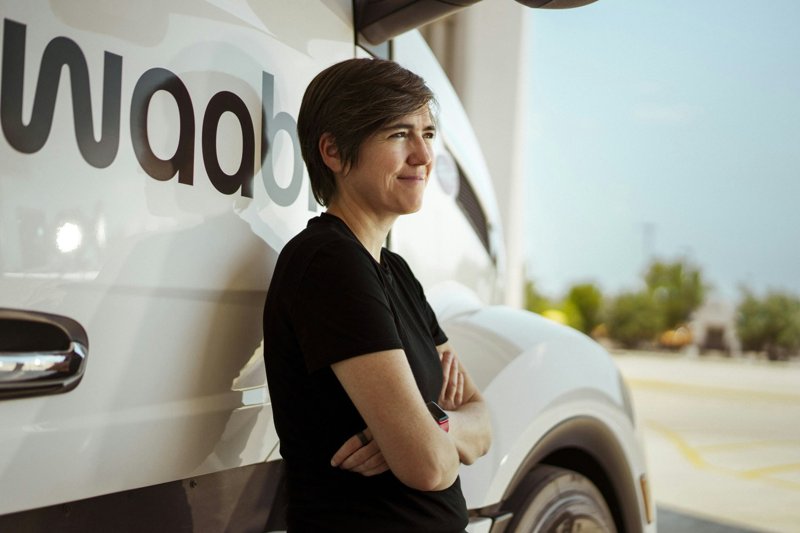
Waabi was founded in 2021 by Raquel Urtasun.
Investors · 25

How we know: Khosla Ventures's portfolio page · the company's own site · a partner's Signal profile · techcrunch.com · the VCSheet dataset · open dataset · 5k.vc investor directory · Not right? Tell us

How we know: the company's own site · Radical Ventures's portfolio page · research · cnbc.com · open dataset · 5k.vc investor directory · Not right? Tell us


How we know: 8VC's portfolio page · the VCSheet dataset · open dataset · 5k.vc investor directory · Not right? Tell us

How we know: G2 Venture Partners's portfolio page · a partner's Signal profile · techcrunch.com · open dataset · 5k.vc investor directory · Not right? Tell us

How we know: Golden Ventures's portfolio page · open dataset · 5k.vc investor directory · Not right? Tell us
How we know: Ingka Investments's portfolio page · Not right? Tell us

How we know: OMERS Ventures's portfolio page · the VCSheet dataset · Not right? Tell us

How we know: open dataset · 5k.vc investor directory · Not right? Tell us

How we know: a partner's Signal profile · Not right? Tell us
How we know: research · cnbc.com · Not right? Tell us

How we know: research · cnbc.com · Not right? Tell us
Also in the syndicate · 8
Funding
SEC filings, press & company announcements$750M disclosed across 1 of 2 rounds · 2024–2026
- $750MSeries CJan 2026 · 2 sources
G2 Venture Partners (lead), Khosla Ventures (lead), Abu Dhabi Investment Authority (ADIA) subsidiary, BDC Capital's Thrive Venture Fund, BlackRock, BMO Global Asset Management, Export Development Canada, HarbourVest Partners, Incharge Capital, Linse Capital, NVentures (NVIDIA), Porsche Automobil Holding SE, Radical Ventures, TELUS Global Ventures, Uber, Volvo Group Venture Capital
Source ↗
Source: company announcements and press reports — follow each round's link for the claim.
Company profile
researched Aug 2026Waabi is a Toronto-based autonomous driving company founded in 2021 by Raquel Urtasun, a computer science professor at the University of Toronto and formerly chief scientist at Uber's Advanced Technologies Group. The company develops what it calls a Physical AI Platform, pairing a verifiable end-to-end AI model capable of reasoning with a neural, closed-loop simulator. Waabi states that the same model acts as a shared brain across multiple vehicle types, generalizing to different form factors, geographies and environments, and that its capabilities span both highway and surface-street driving.
The company's first application was autonomous trucking. Its virtual driver, the Waabi Driver, has run commercial loads on public roads in Texas with a human safety driver present, and Waabi has developed trailer-hauling trucks in partnership with Volvo Autonomous Solutions and, earlier, Peterbilt. A planned fully driverless highway launch slated for the end of 2025 was pushed back, with Urtasun citing the need to complete truck validation. Alongside trucking, Waabi announced in January 2026 an expansion into robotaxis under an exclusive deployment partnership with Uber covering 25,000 or more Waabi Driver-powered vehicles over time.
Waabi's sensing approach combines lidar, camera and radar, which the company argues provides redundancy across differing failure modes. Its stated positioning is capital efficiency: Urtasun says Waabi does not require very large engineering teams, large data-collection fleets, massive data centres or extensive fleets of the newest chips to develop its technology.
Founding story
Raquel Urtasun, who spent more than two decades developing AI technologies and previously served as chief scientist at Uber's Advanced Technologies Group, started Waabi in 2021 to commercialize her vision of a single end-to-end AI system that can drive autonomously and be shown to be provably safe before deployment. She chose autonomous trucking as the first application, citing supply-chain inefficiency, a looming truck driver shortage, difficult working conditions and road safety concerns.
Business model
Waabi supplies the autonomy system (the Waabi Driver) for commercial vehicles rather than only operating vehicles itself. Having previously run a fleet of its own trucks hauling customers' freight, the company said in January 2026 it is shifting to a "driver as a service" model, and describes a direct-to-customer approach in which shippers and carriers buy trucks with Waabi's sensors and software integrated at the factory. In robotaxis, Waabi's driver is to be deployed exclusively on Uber's ride-hailing platform.
Commercial freight runs for shippers in Texas, a direct-to-customer model in which customers acquire Waabi-equipped trucks, and a driver-as-a-service arrangement for the autonomy stack; robotaxi deployment revenue is tied to the Uber platform partnership.
Traction
By mid-2024 the Waabi Driver was operating autonomously on public roads in Texas and regularly completing commercial runs for some of the largest shippers in North America. TechCrunch reported in January 2026 that Waabi had launched several commercial pilots in Texas with a human driver in the front seat over five years, and that a fully driverless public-highway launch originally planned for end-2025 had slipped by a few quarters. The company reported total funding of roughly $1.28 billion following its Series C.
Latest developments
In January 2026 Waabi announced an oversubscribed $750 million Series C co-led by Khosla Ventures and G2 Venture Partners, plus roughly $250 million of milestone-based future investment from Uber tied to a partnership to deploy 25,000 or more Waabi Driver-powered robotaxis exclusively on Uber's platform. Subsequent 2026 items include a CNBC Disruptor 50 listing for a second consecutive year, a Collaboration of the Year award with Volvo Autonomous Solutions in June 2026, and a June 2026 publication on crossing a further frontier of generalization for scalable autonomous vehicles.
▸Full profile — market position, technology, go-to-market, geography, history, risks & controversies
Market position
Waabi describes itself as a leader in Physical AI and positions itself as a late mover in autonomous driving able to reach market with less capital than earlier entrants; investor Vinod Khosla cited this capital efficiency and late-mover advantage. Its January 2026 Series C was reported as the largest single venture round in Canadian history. Reported total funding of roughly $1.28 billion compares with $3.46 billion raised by Aurora Innovation and $448 million by Kodiak Robotics. The company appeared on CNBC's Disruptor 50 list in 2025 (ranked 35) and again in 2026.
A single AI model and stack serving multiple verticals — trucks and robotaxis — rather than separate programs; a simulation-first development and validation approach intended to substitute for accumulating large volumes of real-world miles; reasoning-capable, interpretable models that Waabi says need fewer training examples; and vertical integration with OEMs so sensors and compute are built in from the factory with a fully redundant platform.
Technology
Waabi's platform centres on foundation models that perceive the environment, form interpretable abstractions and reason over them to select actions, which the company contrasts with black-box end-to-end architectures and says yields greater data efficiency and generalization. The second pillar is Waabi World, a high-fidelity closed-loop simulator powered by generative AI that builds digital twins from data, performs near real-time sensor simulation, automatically generates stress-test and safety-critical scenarios, and trains the Waabi Driver to learn from its own mistakes with near-zero domain gap to the real world. Waabi also uses mixed reality testing, and its sensor suite combines lidar, camera and radar. The stack runs on NVIDIA compute.
Go-to-market
Partnerships with OEMs and platform operators, including Volvo Autonomous Solutions for purpose-built autonomous trucks, Uber Freight in trucking, and an exclusive Uber partnership for robotaxi deployment; a direct-to-customer trucking sales model enabled by combined highway and surface-street capability; and commercial pilot runs with large North American shippers in Texas.
Freight shippers, carriers, logistics providers and retailers for autonomous trucking; ride-hailing passengers reached via Uber's platform for robotaxis; truck OEMs and hardware providers as development partners.
Geography
Headquartered in Toronto, Canada, with operations in Texas where its trucks run commercial routes on public roads.
History
Waabi was founded in 2021. It unveiled its Waabi World simulator in February 2022. In June 2024 it published its thesis on generative AI moving into the physical world and closed a $200 million Series B. In February 2025 it announced a partnership with Volvo Autonomous Solutions to jointly develop and deploy autonomous transportation solutions; in July 2025 it introduced mixed reality testing; in August 2025 it hired Lior Ron as chief operating officer; in October 2025 it demonstrated autonomous trucking with Volvo at NVIDIA GTC; and in November 2025 it announced surface-street driving capability enabling a direct-to-customer model. In January 2026 it closed a $750 million Series C and announced the Uber robotaxi partnership. In June 2026 it published results on further generalization, and with Volvo Autonomous Solutions won a Collaboration of the Year award.
Risks & controversies
Waabi's fully driverless truck launch on public highways, planned for the end of 2025, was delayed by several quarters pending full validation of the vehicles. The company had not disclosed the vehicle models or robotaxi OEM partner at the time of the Series C, and no timeline was provided for the 25,000-vehicle Uber deployment. Both of its target markets are competitive: trucking rivals include Aurora, Kodiak AI, Bot Auto and Tesla, while robotaxi competitors include Waymo, Nuro, WeRide, Tesla, Rivian and Chinese manufacturers; Waymo previously shut down its own freight program after pursuing both verticals.
Compiled by commissioned research from 8 cited public sources — announcements, filings, and press listed under research sources below.
Key figures
latest reportedCompany-reported or press-reported figures, each dated to when it was claimed — not independently audited.
Founder mafia
2 people who came through Waabi went on to found or lead other companies.


Related companies · 3

Companies working in the same space as Waabi.
Timeline · 11
launches, deals, and filingsWaabi closed an oversubscribed $750 million Series C co-led by Khosla Ventures and G2 Venture Partners and secured roughly $250 million in milestone-based future capital from Uber, described as the largest fundraise in Canadian history.
$1B source ↗
Waabi will deploy 25,000 or more Waabi Driver-powered robotaxis exclusively on the Uber platform, with Uber investing milestone-based capital to support development; no deployment timeline was given.
Waabi introduced Waabi World, a generative-AI-powered closed-loop simulator that builds digital twins from data, performs near real-time high-fidelity sensor simulation, generates stress-test scenarios and trains the Waabi Driver.
Dated company events from announcements, filings, and press; legal rows summarize public dockets and regulator releases.
▸Research sources · 8
primary sources listed
- Waabiwaabi.ai · web
8 public sources were cited for this profile; the first-party ones are listed here.
Frequently asked questions
- What does Waabi do?
- Waabi builds a Physical AI platform whose single AI model powers both autonomous trucks and robotaxis.
- Who founded Waabi?
- Waabi was founded by Raquel Urtasun in 2021.
- Who are Waabi's investors?
- Waabi's investors include Khosla Ventures, Radical Ventures, NVentures, 8VC, G2 Venture Partners, Golden Ventures, Ingka Investments, Linse Capital and 9 more.
- How much funding has Waabi raised?
- Waabi has disclosed $750M raised across 1 of its 2 known rounds.
- Where is Waabi headquartered?
- Waabi is headquartered in Toronto, CA.