 Fundraising Fox
Verdant Robotics
Hayward, US · Founded 2019 · 59 employees on LinkedIn · 11 known investors
Find your way into Verdant Robotics
Sign up to see every warm intro you have to Verdant Robotics
- Paths you didn't know you had: your email and LinkedIn already hold routes to the Verdant Robotics team. We find them for you
- 2nd- and 3rd-degree connections: the friend-of-a-friend routes that take hours to manually find through your inbox or LinkedIn
- Answers now, not in days: momentum is everything in a raise. Skip asking around whether someone knows someone
Days of research, done the moment you sign in, with every route ranked by how warm it is.
Verdant Robotics builds the SharpShooter, a precision agriculture system that uses machine vision to detect individual plants and apply targeted micro-shots of herbicide or other inputs, replacing broadcast spraying, manual weeding, and thinning. It serves specialty crop growers across organic, no-till, and conventional operations.
Also known as Verdant Robotics, Inc.
Founders & leadership
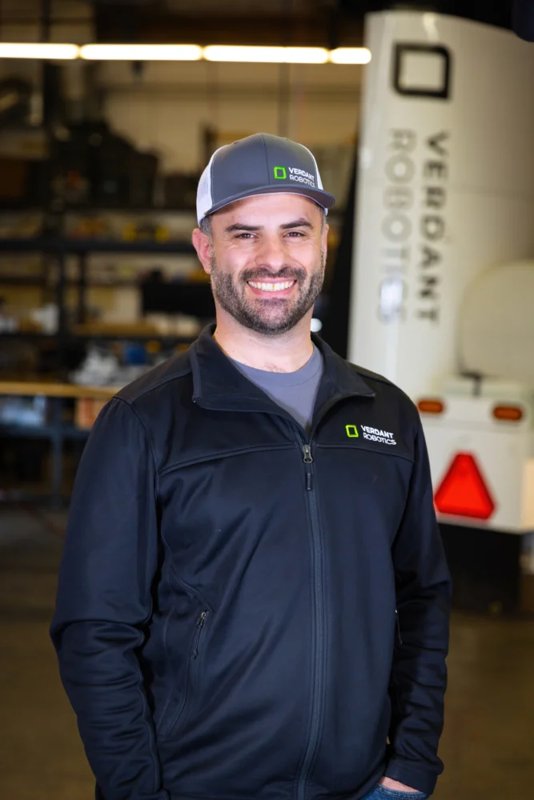
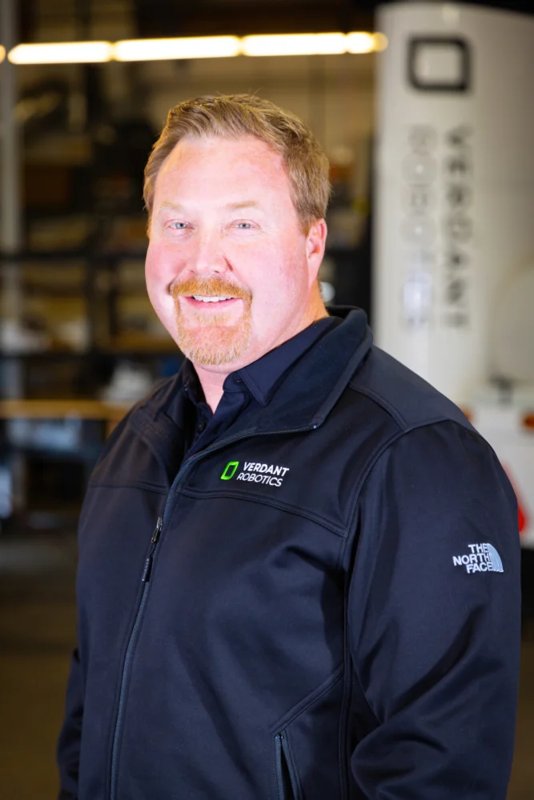
Verdant Robotics was founded in 2019 by Gabe Sibley, Curtis Garner, and Lawrence Ibarria.

Board
Investors · 11

How we know: ATEL Ventures's portfolio page · Not right? Tell us

How we know: research · therobotreport.com · open dataset · 5k.vc investor directory · Not right? Tell us

How we know: Cleveland Avenue's portfolio page · the VCSheet dataset · research · therobotreport.com · open dataset · 5k.vc investor directory · Not right? Tell us

How we know: the VCSheet dataset · open dataset · 5k.vc investor directory · Not right? Tell us
How we know: Future Ventures's portfolio page · the VCSheet dataset · research · therobotreport.com · Not right? Tell us

How we know: SeaX Ventures's portfolio page · research · therobotreport.com · open dataset · 5k.vc investor directory · Not right? Tell us
How we know: the VCSheet dataset · research · therobotreport.com · Not right? Tell us
How we know: research · therobotreport.com · Not right? Tell us
How we know: a partner's Signal profile · Not right? Tell us
Reported raises · per SEC filings
Form D private placements$11.5M disclosed across 1 of 3 rounds · 2019–2022
▶$11.5MraisedOct 2019 · 8 investors · OtherRule 506(b)
- Kiersten SteadDirector
- Gabe SibleyExecutive Officer, Director
- Curtis GarnerDirector
- Lawrence IbarriaExecutive Officer
- Offering amount
- $11.5M
- Amount sold
- $11.5M
- First sale
- Oct 2019
- Incorporated
- Corporation, Delaware, 2018
- Federal exemptions
- 06b
Source: SEC EDGAR Form D. Amounts as filed; amended filings shown once at their latest values.
Company profile
researched Aug 2026Verdant Robotics is a California agricultural robotics company that develops SharpShooter, a precision application implement for specialty crop growers. The system uses cameras, machine vision and AI to detect crops, weeds and other targets, tracks each target to predict its position at the moment of application, then fires targeted micro-shots from aimable turrets instead of broadcasting inputs across the field. The company markets this as Aim & Apply technology and applies it to three field tasks — weeding, thinning and targeted input applications (organic or conventional) — with a single machine. Additional software features include a real-time 3D "do-not-apply" zone around each plant (3D Crop Shield), adaptive shot placement and volume, control over where inputs land within the crop band, and an adjustable safety radius around crop centers.
The implement attaches to any 5-series tractor via a standard 3-point hitch and is offered in 20-foot and 24-foot widths. Verdant states coverage of up to 7 acres per hour, IP67+ waterproof components, power-wash-safe cleaning, quick-swap modular parts, turrets tested for over three years of normal use, and over-the-air updates that add crop models and improvements. The company positions the platform for 24/7 day-and-night operation and for earlier entry into damp fields due to lower weight and reduced compaction. Because it is a smart implement rather than a self-driving tractor, it can run behind either a manually driven or an autonomous tractor. Earlier coverage described the platform as a spraying and data-gathering system that indexes plants in real time, builds a 3D model of field conditions over time, and reports to an in-cab interface, supporting applications including herbicides, insecticides, fertilizer and pollen. The company also lists production grass seed and sod products on its website.
Founding story
Co-founders Gabe Sibley and Curtis Garner met through Moog, a hydraulic servo valve manufacturer that identified agriculture as the right vertical for Sibley's perception and autonomy technology. Sibley had previously worked at NASA's Jet Propulsion Laboratory, taught at Oxford and George Washington University, co-founded self-driving car company Zoox as chief science officer, and founded sidewalk delivery company Zippy, which he sold to Cruise Automation (General Motors). Garner brought operations and farming experience from California, the Pacific Northwest and Chile. The pair spent six months visiting farmers to identify which problems robotics could realistically address, and concluded that non-contact application — rather than dexterous harvesting, which carries higher cost and weaker gross margins — offered the best scalability. The company was founded in 2018 and targeted labor and input costs, farming's two largest expense lines.
Business model
Verdant sells and supports the SharpShooter implement, offering customized financing options, in-field and remote support, and over-the-air software updates. At the time of its Series A the company delivered its technology under a Robots-as-a-Service (RaaS) model, in which growers pay for the service rather than purchasing the fleet, shifting spend from capital to operating expense and keeping the fleet on Verdant's books for upgrades and maintenance.
Service-based Robots-as-a-Service contracts for crop application work, alongside equipment placement supported by flexible financing; the company also offers production grass seed and sod.
Traction
The company launched its RaaS technology in early 2022 and reported implementations across thousands of acres of US specialty crops, with a stated goal of reaching tens of thousands of acres. Published customer results include 60% hand-weeding labor reduction at NeuHouse Farms, $500,000 in first-year hand-labor savings and seven-month payback at TopFlavor Farms, and a 75% labor cost cut with 90% less chemistry at My T Acres. The company markets up to 99% herbicide savings, up to 85% lower manual labor costs and ROI in 6–18 months.
Latest developments
Verdant now markets the SharpShooter in 20-foot and 24-foot configurations with advanced features including 3D Crop Shield, Adaptive Aim & Apply, Crop Band Intelligence and Crop Proximity Control, and has added production grass seed and sod to its offering. It has published case studies from NeuHouse Farms, TopFlavor Farms and My T Acres, plus an independent university trial reporting equivalent weed control and yields up to 155% higher versus broadcast herbicide. The executive team includes Gabe Sibley (CEO), Curtis Garner (chief commercial officer), Frank Dellaert (chief AI officer), Gerardo Adame (CFO) and David Grant (chief product officer).
▸Full profile — market position, technology, go-to-market, geography, history, risks & controversies
Market position
Verdant operates in the smart implement segment of agtech precision application, differentiated from self-driving tractor developers. Its $46.5 million Series A was described as one of the largest raises in ag robotics to date. The company reported RaaS deployments on thousands of acres of US specialty crops and a contract to exclusively service roughly 40% of the US carrot market for five years.
Multi-action capability — weeding, thinning and input application from one machine — combined with plant-level aiming rather than broadcast spraying, simultaneous field scanning and data collection, and an implement form factor compatible with conventional or autonomous tractors. Independent trials by Rutgers New Jersey Agricultural Experiment Station and Cornell AgriTech reported weed control equivalent to broadcast herbicide application with higher yields.
Technology
Vision cameras image the ground beneath the implement; deep learning and machine vision classify crop plants, beneficials and weeds; a tracking layer predicts target position at the instant of application; and aimable turrets deliver sub-millimeter-accurate micro-shots. The company reports targeting weeds from 2mm up to 24 inches in diameter, including beneath the canopy and within the plant line, without crop damage. The stack combines computer vision, GPS navigation, AI and soil science, and continuously ingests field data to refine crop models delivered through over-the-air updates.
Go-to-market
Direct sales and demo requests through the company website, supported by tailored financing, in-field and around-the-clock remote support, published grower case studies and third-party university trial results. Deployment as a standard implement behind existing tractors lowers the adoption barrier for growers with no other automation.
Specialty crop growers operating organic, no-till and conventional systems. Named or described users include carrot, leafy green, vegetable, rose, plum, cherry, apple and onion operations, such as TopFlavor Farms (7,000 acres of leafy greens and specialty row crops), My T Acres (8,000-acre conventional vegetable operation in New York), NeuHouse Farms (4,000 acres in Wasco, California) and VLZ Ag.
Geography
Headquartered in Hayward, California (East Bay, east of San Francisco), with equipment designed and built in the USA. Deployments are in the United States, including California and New York.
History
Founded in 2018 and headquartered in Hayward, California, in the East Bay. Verdant raised $11.5 million in an early Series A tranche in 2019 and closed a total $46.5 million Series A in 2022 that had been assembled over three rounds across three years. It officially launched its RaaS platform in early 2022, initially reporting coverage of up to 4.1 acres per hour for precision weeding and spraying and chemical reductions of up to 96%; current product materials cite up to 7 acres per hour and up to 99% herbicide savings. Leadership has since expanded to include a chief AI officer, CFO and chief product officer, and the product line now includes production grass seed and sod.
Risks & controversies
The Robots-as-a-Service model requires sustained capital to build and maintain an owned fleet, implying a longer investment runway and larger funding rounds for the vendor. Grower adoption depends on tight farm margins, annual climate variability and willingness to trial new technology. The company's Series A was raised during a market downturn, and its addressable business remains concentrated in specialty crops, with broad-acre expansion still only under discussion.
Compiled by commissioned research from 8 cited public sources — announcements, filings, and press listed under research sources below.
Key figures
latest reportedCompany-reported or press-reported figures, each dated to when it was claimed — not independently audited.
Founder mafia
2 people who came through Verdant Robotics went on to found or lead other companies.

Related companies · 5



Companies working in the same space as Verdant Robotics.
Timeline · 4
launches, deals, and filingsVerdant Robotics lists production grass seed and sod as available products alongside the SharpShooter implement.
Verdant Robotics announced the close of a $46.5 million Series A, assembled over three rounds across three years, bringing total funding to $46.5 million. Cleveland Avenue led, joined by DCVC Bio, Future Ventures, SeaX Ventures and existing investors Autotech Ventures, Cavallo Ventures and AgFunder. Proceeds were earmarked for scaling the robot fleet and developing next-generation RaaS products.
$46.5M source ↗
The company reported being under contract to exclusively service approximately 40% of the US carrot market for the next five years.
Verdant officially launched its RaaS technology in early 2022, emphasizing multi-action capability: spraying for weeds, fertilizing and treating plants for pests while simultaneously scanning fields and collecting data.
Dated company events from announcements, filings, and press; legal rows summarize public dockets and regulator releases.
▸Research sources · 8
primary sources listed
- Verdant Roboticsverdantrobotics.com · web
8 public sources were cited for this profile; the first-party ones are listed here.
Frequently asked questions
- What does Verdant Robotics do?
- Verdant Robotics builds SharpShooter, a tractor-mounted precision application system that aims micro-shots at individual plants.
- Who founded Verdant Robotics?
- Verdant Robotics was founded by Gabe Sibley, Curtis Garner, Lawrence Ibarria in 2019.
- Who are Verdant Robotics's investors?
- Verdant Robotics's investors include ATEL Ventures, Cavallo Ventures, Cleveland Avenue, DCVC (Data Collective), Doon Capital, Future Ventures, SeaX Ventures, AgFunder and 3 more.
- How much funding has Verdant Robotics raised?
- Verdant Robotics has disclosed $11.5M raised across 1 of its 3 known rounds.
- Where is Verdant Robotics headquartered?
- Verdant Robotics is headquartered in Hayward, US.