 Fundraising Fox
Simile
Unicorn · $2BBrooklyn, US · Founded 2016 · Delaware corporation · 40 employees · 14 known investors
Find your way into Simile
Sign up to see every warm intro you have to Simile
- Paths you didn't know you had: your email and LinkedIn already hold routes to the Simile team. We find them for you
- 2nd- and 3rd-degree connections: the friend-of-a-friend routes that take hours to manually find through your inbox or LinkedIn
- Answers now, not in days: momentum is everything in a raise. Skip asking around whether someone knows someone
Days of research, done the moment you sign in, with every route ranked by how warm it is.
Simile builds AI-driven behavioral simulations that model how customers, employees, or populations respond to change, letting enterprises test concepts, pricing, and messaging in a controlled environment before launch. Its foundation model for human behavior is trained on data from real people and continuously validated against observed human responses, serving enterprise product, research, and private equity teams.
Also known as Simile AI
Founders & leadership
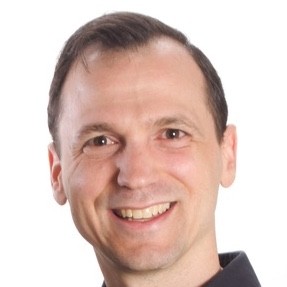
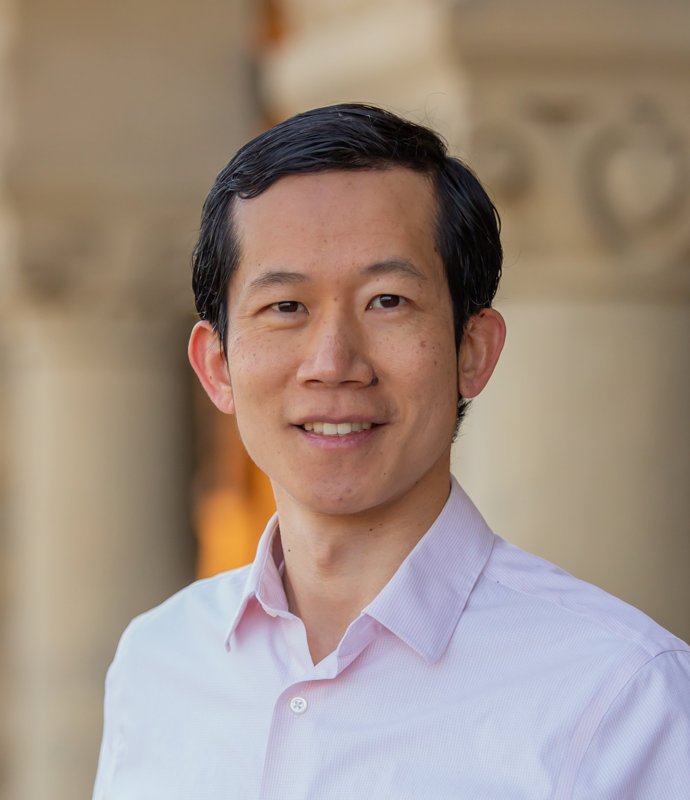
Simile was founded in 2016 by Joon Sung Park, Michael Bernstein, Percy Liang, and Lainie Yallen.


Board
Investors · 14

How we know: A*'s portfolio page · techcrunch.com · the VCSheet dataset · research · simile.com · open dataset · 5k.vc investor directory · Not right? Tell us

How we know: Bain Capital Ventures's portfolio page · techcrunch.com · research · simile.com · open dataset · 5k.vc investor directory · Not right? Tell us

How we know: Index Ventures's portfolio page · a partner's Signal profile · techcrunch.com · research · simile.com · open dataset · 5k.vc investor directory · Not right? Tell us
How we know: techcrunch.com · Not right? Tell us

How we know: techcrunch.com · open dataset · 5k.vc investor directory · Not right? Tell us

How we know: techcrunch.com · research · simile.com · open dataset · 5k.vc investor directory · Not right? Tell us
How we know: research · simile.com · Not right? Tell us
Also in the syndicate · 6
Funding
SEC filings, press & company announcements$704.6M disclosed across 5 of 6 rounds · 2018–2026
- $200MraisedAug 2026 · 2 sourcesSource ↗
- $200MSeries AJul 2026 · 3 sources
Index Ventures (lead), A*, Adam D'Angelo, Andrej Karpathy, Bain Capital Ventures, Fei-Fei Li, Guillermo Rauch, Hanabi, Scott Belsky
Source ↗ - $200MSeries BJul 2026 · 3 sources
Greenoaks (lead), Index Ventures (lead), A*, Bain Capital Ventures, CVS Health Ventures, Definition, Factory, Hanabi, Index
Source ↗ - $100MSeries AFeb 2026
Index (lead)
Source ↗
▶$4.6MraisedApr 2018 · 15 investors · OtherRule 506(b)
- James GeorgeExecutive Officer, Director
- Hadley HarrisDirector
- Alexander PorterExecutive Officer, Director
- Offering amount
- $4.6M
- Amount sold
- $4.6M
- Minimum investment
- $10K
- First sale
- Jan 2018
- Incorporated
- Corporation, Delaware, 2016
- Federal exemptions
- 06b
Source: SEC EDGAR Form D. Amounts as filed; amended filings shown once at their latest values.
Valuation · disclosed
Disclosed eventsSource: SEC prospectus filings, and round valuations the company or its investors disclosed — follow each entry's link for the claim.
Company profile
researched Aug 2026Simile develops AI simulation software that models how people — customers, patients, employees or citizens — are likely to respond to a decision, allowing organizations to run scenarios at scale before committing budget or shipping a change. The company describes its product as the first AI simulation of society, populated by generative agents grounded in real humans, and is building a foundation model intended to predict human behavior across situations and scales. Reported use cases include simulating a product launch, a price change or a campaign, rehearsing earnings calls, modeling litigation outcomes, and testing policy changes.
According to the company, each simulated population begins with real people: proprietary algorithms design large-scale studies on an ongoing basis, and the resulting data is combined with behavioral and transactional datasets to train the models. Simile says it validates weekly against real humans through more than 7,000 evaluations spanning subpopulations and enterprise use cases, measuring distributional distance, effect sizes and accuracy against observed behavior, and that a separate confidence model tags each result with a predicted accuracy level. Models are retrained continuously on new behavioral, macroeconomic, pricing and policy data, and agents are described as consuming media in real time. Enterprises can also opt in to contribute their own first-party data — loyalty, balance or telemetry records — to train custom models.
Coverage of the company reports tens of millions of simulations run for Fortune 100 organizations, revenue growth of 5x in the five months following the February 2026 public launch, and headcount above 50. Named customers and partners include CVS Health, Wealthfront, Deloitte, Gallup, Banco Itaú, Suntory Beverages & Food and Garnett Station Partners.
Founding story
Simile was founded by Joon Sung Park, a Stanford PhD graduate whose doctorate was advised by Michael Bernstein and Percy Liang, after his 'Smallville' research project in which 25 AI agents lived simulated lives in a virtual town. The resulting paper, 'Generative Agents: Interactive Simulacra of Human Behavior,' won the Best Paper Award at UIST 2023 and became the basis for the company. Park co-founded Simile with Bernstein (Stanford HCI professor), Liang (director of Stanford's Center for Research on Foundation Models) and Lainie Yallen; all four worked together at Stanford before spinning the company out.
Business model
Simile sells enterprise access to its simulation platform and foundation models, positioning itself against traditional market research and consumer insights spend. Customers can also contribute opt-in, customer-governed first-party data to train custom models. Sources do not disclose pricing or contract structure.
Enterprise commercial relationships with large organizations; sources report revenue grew fivefold in the five months after launch but do not disclose absolute revenue or pricing mechanics.
Traction
Reported traction includes tens of millions of simulations for Fortune 100 enterprises, 5x revenue growth in five months, more than 50 employees, and named customers and partners CVS Health, Wealthfront, Deloitte, Gallup, Banco Itaú, Suntory Beverages & Food and Garnett Station Partners. CVS Health is reported to have built 100,000 AI patient twins from 2.9 million records to test pharmacy experiences, and Wealthfront's head of user research states the platform expanded qualitative research scope 15x. Simile was also selected for the Disney Accelerator.
Latest developments
On 30 July 2026 Simile announced a $200 million Series B at a $2 billion valuation led by Greenoaks, with Index Ventures, Hanabi, Bain Capital Ventures, A*, Factory and CVS Health Ventures returning and Definition joining. The capital is intended to fund training of the core human-behavior foundation models, expansion of simulation compute infrastructure, and growth of commercial engineering teams across healthcare, financial services and media. The company also recently launched a product allowing organizations to act on predictions directly, and was selected for the Disney Accelerator.
▸Full profile — market position, technology, go-to-market, geography, history, risks & controversies
Market position
Simile competes in the emerging synthetic-user and behavioral simulation category. One source values the global market research and consumer insights industry at roughly $80 billion, another cites market research services at $96.77 billion in 2026, and reports that the synthetic user research category has attracted over $1.5 billion in venture funding. Named peers include Aaru, which raised a $50M Series A in December 2025 at a $1B valuation, and BluePill AI, which raised $6M in seed funding in November 2025. Coverage also contrasts Simile with enterprise AI companies such as Glean, Harvey and Writer, which focus on producing content or answers rather than predicting responses.
Sources emphasize grounding agents in real human interviews and transaction data rather than generic LLM personas, weekly validation against real humans, and a confidence model that scores each simulation's reliability — presented as a response to the criticism that synthetic respondents are only as good as their calibration. The academic lineage of the generative agents research is also cited as a technical anchor.
Technology
A foundation model for human behavior trained on consented interviews and behavioral, transactional, macroeconomic, pricing and policy data, used to generate 'agentic twins' — generative agents grounded in real individuals rather than prompt-engineered personas. A confidence model scores the predicted reliability of each simulation. The approach descends from the Stanford 'Smallville' generative agents research, in which 25 AI agents lived simulated lives, forming routines and conversations without human scripting.
Go-to-market
Direct enterprise sales supported by a demo-request motion on the company website, with commercial engineering teams being scaled across healthcare, financial services and media following the Series B. The company also uses partnerships — such as a policy research trend-modeling partnership with Gallup — and customer references from marquee accounts including CVS Health, which is both a customer and, via CVS Health Ventures, an investor.
Large enterprises and Fortune 100 organizations, particularly in healthcare, financial services, consumer goods and media, plus market research, product, marketing, user research and policy teams; private equity investors are also cited as users.
Geography
Sources give differing locations: Palo Alto and New York, Palo Alto (described as a Stanford spinout), and San Francisco, California. Headcount is described as more than 50 people globally, and named customers span the US, Brazil (Banco Itaú) and Japan (Suntory Beverages & Food).
History
One source states the company was founded in late 2025 and launched publicly in February 2026 alongside a $100 million Series A led by Index Ventures, having previously operated in stealth. Five months later, on 30 July 2026, Simile announced a $200 million Series B at a $2 billion valuation led by Greenoaks, bringing total disclosed funding to more than $300 million in under six months. (Note: the founding date in these sources conflicts with the internally recorded founding year.)
Risks & controversies
TechCrunch characterizes the company's stated mission of simulating all eight billion people on earth as 'preposterous,' arguing that market research exists precisely because humans are unpredictable, while allowing that simulated users for research is a promising area. Industry data cited elsewhere indicates a trust gap in the category: only 8% of researchers fully trust synthetic alternatives even though 89% now use AI tools. Sources also note that reliance on customer first-party data raises governance questions, which the company addresses by describing such data as opt-in and customer-governed. Reported location and founding-date details are inconsistent across sources.
Compiled by commissioned research from 8 cited public sources — announcements, filings, and press listed under research sources below.
Key figures
latest reportedCompany-reported or press-reported figures, each dated to when it was claimed — not independently audited.
Related companies · 9






Companies working in the same space as Simile.
Timeline · 6
launches, deals, and filingsSeries B of $200 million at a $2 billion valuation led by Greenoaks, with Index Ventures, Hanabi, Bain Capital Ventures, A*, Factory and CVS Health Ventures returning and Definition joining as a new investor. Proceeds are earmarked for training the core human-behavior foundation models, expanding simulation compute, and scaling commercial engineering in healthcare, financial services and media.
$200M source ↗
Simile launched publicly in February 2026, announcing a $100 million Series A led by Index Ventures with participation from Hanabi, A*, Bain Capital Ventures and angel investors including Andrej Karpathy, Fei-Fei Li and Adam D'Angelo.
$100M source ↗
Simile maintains a policy research trend-modeling partnership with Gallup; Gallup's Global Managing Partner describes the collaboration as focused on methodological rigor and transparency.
Simile launched a product that lets organisations act directly on model predictions rather than treating them as background research.
The research paper underlying the company, authored out of Stanford, won the Best Paper Award at UIST 2023.
Dated company events from announcements, filings, and press; legal rows summarize public dockets and regulator releases.
Legal entities · 1
corporate structureIn the news
 Simile Raises $200 Million for AI Digital Twin Service | PYMNTS.compymnts.com · Jul 2026
 Synthetic-user startup Simile raises $200M at $2B valuation 5 months after $100M Series Atechcrunch.com · Jul 2026
▸Research sources · 8
primary sources listed
- Similesimile.ai · web
8 public sources were cited for this profile; the first-party ones are listed here.
Frequently asked questions
- What does Simile do?
- Simile builds foundation models and generative agents that simulate human behavior so enterprises can test decisions before acting.
- Who founded Simile?
- Simile was founded by Joon Sung Park, Michael Bernstein, Percy Liang, Lainie Yallen in 2016.
- Who are Simile's investors?
- Simile's investors include A*, Bain Capital Ventures, Index Ventures, CVS Health Ventures, Definition, Greenoaks, Hanabi Capital, Scott Belsky.
- How much funding has Simile raised?
- Simile has disclosed $704.6M raised across 5 of its 6 known rounds.
- Where is Simile headquartered?
- Simile is headquartered in Brooklyn, US.