 Fundraising Fox
Reflection AI
Unicorn · $25BNew York City, US · 262 employees on LinkedIn · 29 known investors
Find your way into Reflection AI
Sign up to see every warm intro you have to Reflection AI
- Paths you didn't know you had: your email and LinkedIn already hold routes to the Reflection AI team. We find them for you
- 2nd- and 3rd-degree connections: the friend-of-a-friend routes that take hours to manually find through your inbox or LinkedIn
- Answers now, not in days: momentum is everything in a raise. Skip asking around whether someone knows someone
Days of research, done the moment you sign in, with every route ranked by how warm it is.
Reflection AI develops and releases open-weight AI models alongside published research and open-source software tools for customization and community building. The company focuses on making AI infrastructure accessible and adaptable rather than controlled by a single organization.
Also known as Reflection · Reflection AI, Inc.
Founders & leadership
Investors · 29
How we know: AIX Ventures's portfolio page · the VCSheet dataset · open dataset · 5k.vc investor directory · Not right? Tell us
How we know: ARA NEA Ventures (Brand: Dmz.Xyz)'s portfolio page · Not right? Tell us

How we know: the VCSheet dataset · Not right? Tell us
.jpeg)
How we know: B Capital Group's portfolio page · forgeglobal.com · Not right? Tell us

How we know: Battery Ventures's portfolio page · open dataset · 5k.vc investor directory · Not right? Tell us

How we know: CRV (Charles River Ventures)'s portfolio page · a partner's Signal profile · research · en.wikipedia.org · open dataset · 5k.vc investor directory · Not right? Tell us

How we know: Lightspeed Venture Partners's portfolio page · Wikidata · forgeglobal.com · research · en.wikipedia.org · open dataset · 5k.vc investor directory · Not right? Tell us

How we know: Lvna Capital's portfolio page · Not right? Tell us
How we know: Wikidata · funding news · company funding news (hacker news) · reuters.com · nvidia.com · Not right? Tell us

How we know: Sequoia Capital's portfolio page · a partner's Signal profile · Wikidata · forgeglobal.com · research · en.wikipedia.org · open dataset · 5k.vc investor directory · Not right? Tell us
How we know: Sierra Ventures's portfolio page · Not right? Tell us
How we know: SV Angel's portfolio page · forgeglobal.com · open dataset · 5k.vc investor directory · Not right? Tell us
How we know: forgeglobal.com · research · en.wikipedia.org · Not right? Tell us
How we know: open dataset · 5k.vc investor directory · Not right? Tell us
How we know: research · en.wikipedia.org · Not right? Tell us
How we know: forgeglobal.com · Not right? Tell us


How we know: forgeglobal.com · research · en.wikipedia.org · Not right? Tell us
How we know: Wikidata · research · en.wikipedia.org · Not right? Tell us
How we know: forgeglobal.com · Not right? Tell us
Also in the syndicate · 2
Funding
SEC filings, press & company announcements$2B disclosed across 1 of 4 rounds · 2025
- $2BLate-stage roundOct 2025 · 4 sources
1789 Capital, B Capital, Citi, CRV, Disruptive, DST Global, Eric Schmidt, Eric Yuan, GIC, Lightspeed Venture Partners, Nvidia, Sequoia Capital
Source ↗
Source: company announcements and press reports — follow each round's link for the claim.
Valuation · disclosed
Disclosed eventsSource: SEC prospectus filings, and round valuations the company or its investors disclosed — follow each entry's link for the claim.
Company profile
researched Aug 2026Reflection AI is an American artificial intelligence company that develops open foundation models and software agents, with early work centered on AI-assisted software development. It was founded in 2024 by former Google DeepMind researchers Misha Laskin and Ioannis Antonoglou, and is headquartered in Brooklyn, New York. The company positions itself as an open-model alternative to closed frontier labs such as OpenAI and Anthropic, and as a Western counterpart to Chinese open-model developers including DeepSeek and Qwen.
The company's stated open-intelligence commitments are to release open weights for its models, publish the research and technical reports behind them, and open source software that lets the community customize and build with the models, including reinforcement learning tools and environments. Its first product was Asimov, a code-comprehension agent for engineering teams that reads source code, emails, Slack messages, project updates and documentation to answer questions about how software systems are built. As of October 2025 the company had not yet released its first model, which was planned to be largely text-based with multimodal capabilities later, trained on tens of trillions of tokens and targeted for release in early 2026.
Founding story
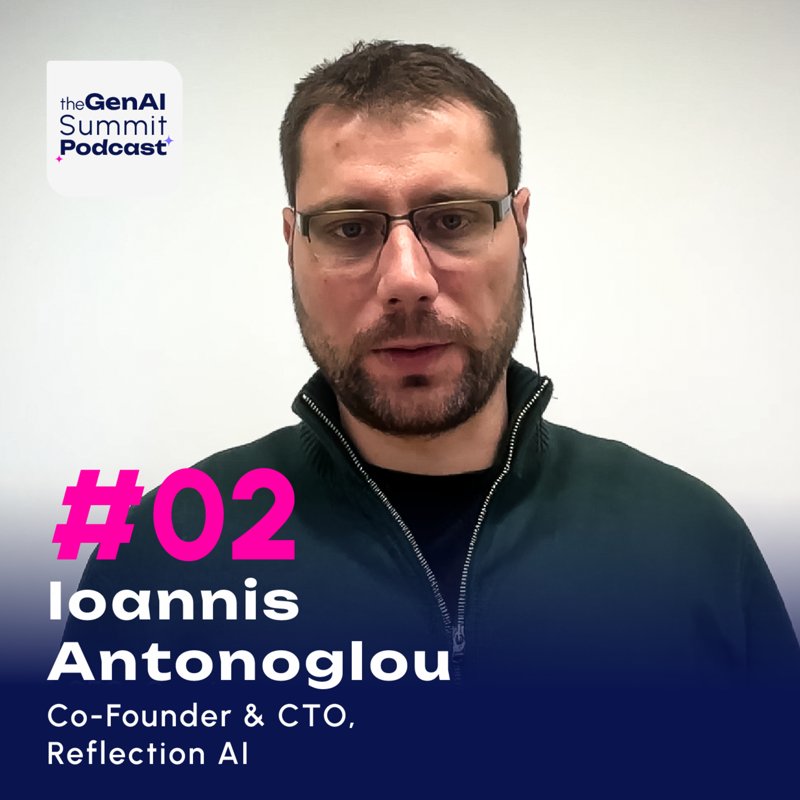
Reflection AI was launched in March 2024 by Misha Laskin, who led reward modeling for Google DeepMind's Gemini project and serves as CEO, and Ioannis Antonoglou, a co-creator of AlphaGo, the system that defeated the world champion at Go in 2016. Their pitch rests on the premise that the right AI research talent can build frontier models outside established technology giants. The company initially focused on tools that automate software development before broadening toward general agentic reasoning.
Business model
Researchers and developers can use Reflection's model weights freely, while revenue is intended to come from large enterprises building products on top of its models and from governments developing sovereign AI systems. The company releases model weights publicly but largely keeps datasets and full training pipelines proprietary. It has also stated it identified a scalable commercial model aligned with its open intelligence strategy.
Monetization is planned through enterprise customers and government/sovereign AI deployments licensing or building on Reflection's openly released models, rather than charging researchers for model access. As of March 2026, reporting noted the company had yet to generate substantial revenue.
Traction
Reflection reported a team of roughly 60 people, mostly AI researchers and engineers across infrastructure, data training and algorithm development, as of October 2025, along with hires from DeepMind and OpenAI and a secured compute cluster. It launched the Asimov code-comprehension agent in July 2025 and subsequently signed large compute agreements and government and enterprise partnerships, while reporting in March 2026 indicated it had yet to generate substantial revenue.
Latest developments
In March 2026 Reflection signed a memorandum of understanding with Shinsegae to build a 250-megawatt sovereign AI data center in South Korea with Nvidia supplying tens of thousands of chips, and was reported to be in talks to raise $2.5 billion at a $25 billion pre-money valuation with potential participation from JPMorgan Chase. In May 2026 it was reported as the AI model provider for the U.S. National Laboratories under the Department of Energy's Genesis Mission. In June 2026 it agreed to pay $150 million per month, from July 1, 2026 through 2029 after an initial ramp, for access to chips and hardware at the SpaceX Colossus data center, and in July 2026 it signed an agreement with Nebius for more than $1 billion in computing power including access to Nvidia GB300 chips through 2029.
▸Full profile — market position, technology, go-to-market, geography, history, risks & controversies
Market position
Reflection is described as an open-source-oriented frontier lab intended as an American alternative to Chinese open models such as DeepSeek and Qwen, and as an open counterpart to closed labs including OpenAI and Anthropic. Its valuation moved from about $545 million in March 2025 to $8 billion in October 2025 and $25 billion as of June 2026. Its October 2025 raise drew public support from figures including White House AI and Crypto Czar David Sacks and Hugging Face CEO Clem Delangue.
The company commits to publishing open model weights, research papers and open-source customization tooling, arguing that open systems innovate faster and are safer because external researchers can inspect weights and probe risks. It targets enterprises and sovereign customers that prefer models they can own, self-host, cost-control and customize, and that may avoid Chinese models for legal reasons.
Technology
The company's work spans large language model training, reinforcement learning, agentic AI and software engineering automation, with emphasis on reinforcement learning at scale and on both pre-training and post-training systems. In October 2025 it said it had built a large-scale LLM and reinforcement learning platform capable of training Mixture-of-Experts models at frontier scale, first applied to autonomous coding and then extended to general agentic reasoning. Its Asimov agent performs code comprehension over source code and workplace communication and documentation sources.
Go-to-market
Reflection combines open releases of model weights and research with direct enterprise and government agreements and infrastructure partnerships. Disclosed collaborations include Dell for on-premises AI factory deployments, the U.S. Department of Energy for the National Laboratories and Genesis Mission, and Shinsegae for a sovereign South Korean cloud. Large compute supply agreements with Nvidia-based providers underpin its model training roadmap.
Large enterprises that want ownership, on-premises deployment, cost control and customization of models; national governments pursuing sovereign AI; national laboratories and public research programs; and the broader research and developer community using open weights.
Geography
Headquartered in Brooklyn, New York, in the United States, with announced activity in South Korea via a 250-megawatt data center project with Shinsegae and U.S. federal engagements through the Department of Energy and National Laboratories.
History
Founded in 2024, the company emerged from stealth in March 2025 with $130 million in total financing at a roughly $545 million valuation. In July 2025 it launched Asimov, a code-comprehension agent. In October 2025 it announced a $2 billion round at an $8 billion valuation, disclosed the recruitment of researchers from DeepMind and OpenAI, and described a large-scale LLM and reinforcement learning platform capable of training Mixture-of-Experts models at frontier scale. During 2026 it signed infrastructure and government agreements, including a memorandum of understanding with Shinsegae for a 250-megawatt data center in South Korea (March 2026), a role as AI model provider to the U.S. National Laboratories under the Department of Energy's Genesis Mission (May 2026), a compute agreement tied to the SpaceX Colossus data center (June 2026), and an agreement with Nebius for more than $1 billion of computing power (July 2026). It was reported in March 2026 to be in talks to raise $2.5 billion at a $25 billion pre-money valuation, and was valued at $25 billion as of June 2026.
Risks & controversies
The company carried a $25 billion valuation as of mid-2026 despite reporting that it had yet to generate substantial revenue and had not released its first foundation model as of October 2025, and it has committed to multi-year compute obligations including $150 million per month through 2029 and over $1 billion with Nebius. Its openness is limited to model weights, with datasets and full training pipelines kept proprietary, and observers noted that it still needs to demonstrate a high velocity of open model and dataset releases.
Compiled by commissioned research from 8 cited public sources — announcements, filings, and press listed under research sources below.
Key figures
latest reportedCompany-reported or press-reported figures, each dated to when it was claimed — not independently audited.
Founder mafia
2 people who came through Reflection AI went on to found or lead other companies.


Related companies · 2
Companies working in the same space as Reflection AI.
Timeline · 8
launches, deals, and filingsReflection and Nebius signed an agreement for more than $1 billion in computing power, giving Reflection access to Nvidia GB300 chips through 2029.
$1B source ↗
Reflection signed a compute agreement with SpaceXAI for access to chips and hardware from the SpaceX Colossus data center, paying $150 million per month starting July 1, 2026 through 2029 after an initial ramp period.
Reflection was reported to be partnering with the U.S. Department of Energy to support the Genesis Mission, a federal scientific research initiative, serving as the AI model provider for the U.S. National Laboratories.
Reflection AI was reported to be in discussions to raise $2.5 billion at a $25 billion pre-money valuation, above a previously reported level of more than $20 billion, with possible participation from JPMorgan Chase alongside existing backer Nvidia.
Reflection and Shinsegae signed an MOU to build a 250-megawatt sovereign AI data center in South Korea, described as one of the country's largest AI facilities, with Nvidia supplying tens of thousands of chips.
Reflection AI raised $2 billion at an $8 billion valuation, with investors including Nvidia, Eric Schmidt, Citi, 1789 Capital, Lightspeed, Sequoia, Disruptive, DST, B Capital, GIC, Eric Yuan and CRV. The company also announced hires from DeepMind and OpenAI and a large-scale LLM and reinforcement learning training stack.
$2B source ↗
Reflection AI launched Asimov, an agent for code comprehension that reads source code, emails, Slack messages, project updates and documentation to answer questions about how software systems are built.
Reflection AI came out of stealth with $130 million total financing, comprising a $25 million seed round and a $105 million Series A, valuing the company at about $545 million.
$130M source ↗
Dated company events from announcements, filings, and press; legal rows summarize public dockets and regulator releases.
In the news

▸Research sources · 8
primary sources listed
- Reflection AIreflection.ai · web
8 public sources were cited for this profile; the first-party ones are listed here.
Frequently asked questions
- What does Reflection AI do?
- Reflection AI is a US company building open-weight frontier AI models and agents for enterprises and governments.
- Who founded Reflection AI?
- Reflection AI was founded by Ioannis Alexandros Antonoglou.
- Who are Reflection AI's investors?
- Reflection AI's investors include Access Ventures (New York), AIX Ventures, ARA NEA Ventures (Brand: Dmz.Xyz), Audacious, avra, B Capital Group, B4 Capital, Battery Ventures and 19 more.
- How much funding has Reflection AI raised?
- Reflection AI has disclosed $2B raised across 1 of its 4 known rounds.
- Where is Reflection AI headquartered?
- Reflection AI is headquartered in New York City, US.