 Fundraising Fox
Generalist
Unicorn · $3BBay Area, Boston, US · Founded 2024 · 99 employees on LinkedIn · 21 known investors
Find your way into Generalist
Sign up to see every warm intro you have to Generalist
- Paths you didn't know you had: your email and LinkedIn already hold routes to the Generalist team. We find them for you
- 2nd- and 3rd-degree connections: the friend-of-a-friend routes that take hours to manually find through your inbox or LinkedIn
- Answers now, not in days: momentum is everything in a raise. Skip asking around whether someone knows someone
Days of research, done the moment you sign in, with every route ranked by how warm it is.
Generalist develops embodied foundation models for robots, focusing on dexterity and enabling machines to intelligently interact with the physical world. The company aims to make general-purpose robots practical for industries and homes through advances in AI, robotics, data, models, and hardware.
Also known as Generalist AI
Founders & leadership
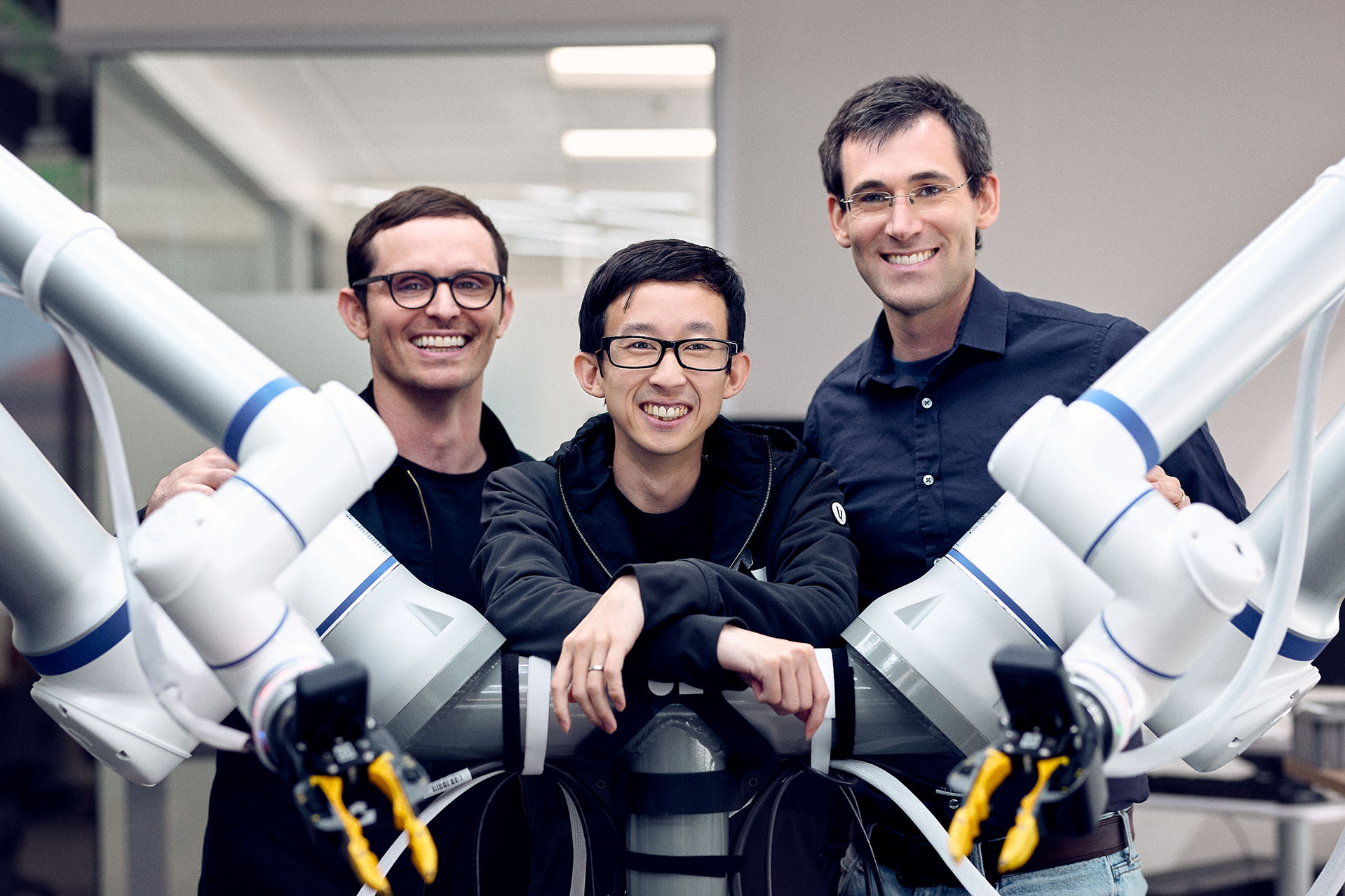
Generalist was founded in 2024 by Andy Zeng, Pete Florence, and Andrew Barry.



Board


Investors · 21

How we know: 8VC's portfolio page · press coverage · research · businessinsider.com · open dataset · 5k.vc investor directory · Not right? Tell us

How we know: boldstart ventures's portfolio page · press coverage · open dataset · 5k.vc investor directory · Not right? Tell us

How we know: Inspired Capital's portfolio page · open dataset · 5k.vc investor directory · Not right? Tell us

How we know: Interwoven Ventures's portfolio page · Not right? Tell us

How we know: open dataset · 5k.vc investor directory · research · businessinsider.com · Not right? Tell us

How we know: NVIDIA's portfolio page · press coverage · research · businessinsider.com · open dataset · 5k.vc investor directory · Not right? Tell us

How we know: Radical Ventures's portfolio page · press coverage · research · businessinsider.com · open dataset · 5k.vc investor directory · Not right? Tell us

How we know: Scale Venture Partners's portfolio page · Not right? Tell us

How we know: Spark Capital's portfolio page · board seat on SEC Form D · press coverage · open dataset · 5k.vc investor directory · Not right? Tell us

How we know: The Westly Group's portfolio page · Not right? Tell us
How we know: Transpose Platform Management's portfolio page · Not right? Tell us

How we know: Union Square Ventures (USV)'s portfolio page · press coverage · research · businessinsider.com · open dataset · 5k.vc investor directory · Not right? Tell us
How we know: press coverage · the VCSheet dataset · research · businessinsider.com · open dataset · 5k.vc investor directory · Not right? Tell us

How we know: press coverage · research · businessinsider.com · open dataset · 5k.vc investor directory · Not right? Tell us
How we know: press coverage · Not right? Tell us

How we know: the VCSheet dataset · Not right? Tell us
Also in the syndicate · 3
Reported raises · per SEC filings
Form D private placements$562M disclosed across 2 of 3 rounds · 2026
▶$198.2MraisedAug 2026 · 32 investors · Other TechnologyRule 506(b)
- Peter FlorenceExecutive Officer, Director, Promoter
- Andrew BarryExecutive Officer, Director
- Andy ZengExecutive Officer, Director
- Ellen ChisaDirector
- Fraser KeltonDirector
- Robert ToewsDirector
- Offering amount
- $208.2M
- Amount sold
- $198.2M
- First sale
- Aug 2026
- Incorporated
- Corporation, Delaware, 2024
- Federal exemptions
- 06b
▶$363.8MraisedJun 2026 · 39 investors · Other TechnologyRule 506(b)
- Andy ZengExecutive Officer, Director
- Andrew BarryExecutive Officer, Director
- Fraser KeltonDirector
- Peter FlorenceExecutive Officer, Director, Promoter
- Robert ToewsDirector
- Ellen ChisaDirector
- Offering amount
- $400M
- Amount sold
- $363.8M
- First sale
- May 2026
- Incorporated
- Corporation, Delaware, 2024
- Federal exemptions
- 06b
Source: SEC EDGAR Form D. Amounts as filed; amended filings shown once at their latest values.
Valuation · disclosed
Disclosed eventsSource: SEC prospectus filings, and round valuations the company or its investors disclosed — follow each entry's link for the claim.
Company profile
researched Aug 2026Generalist (also referred to in press as Generalist AI) is an AI research and product company building what it calls general intelligence for the physical world. Rather than manufacturing robots, it develops embodied foundation models — the "brains" — designed to run across different robot bodies and environments, from factories and laboratories to homes and space. Its stated focus is dexterity, which it says requires simultaneous advances in data, models, and hardware.
The company's public model line began with a June 2025 research preview of end-to-end neural networks for dexterous sensorimotor policies, followed by GEN-0 in November 2025, GEN-1 in April 2026, and GEN-1.5 in August 2026. GEN-0 is described as trained directly on high-fidelity raw physical interaction rather than primarily on vision-language pretraining, and introduces "Harmonic Reasoning," an approach in which asynchronous continuous-time streams of sensing and acting tokens let the model think and act simultaneously without System1-System2 architectures or inference-time guidance. The company reports scaling laws in which pretraining data and compute predictably improve downstream post-training performance, and a phase transition around 7B parameters, below which models exhibit ossification under data overload; GEN-0 was scaled past 10B parameters and tested on 6DoF, 7DoF, and 16+DoF semi-humanoid robots. GEN-1 is stated to have roughly 99% of its parameters trained from scratch and is positioned by the company as neither a vision-language-action model nor a world model, but a native foundation model for physical interaction.
Publicly demonstrated capabilities include folding laundry, sorting Lego bricks, whisking baking ingredients, one-shot Lego assembly from an example structure, and a long-horizon camera-kit packing task. The company ran a live demo at GTC in March 2026.
Founding story
Generalist was founded in 2024 by former Google DeepMind robotics researchers Pete Florence and Andy Zeng together with former Boston Dynamics roboticist Andrew Barry. Florence, the CEO, was previously a senior scientist at DeepMind where his work included RT-2, an early vision-language robotics model; Barry serves as CTO and came from Boston Dynamics.
Business model
Generalist develops and sells robot intelligence rather than robots: cross-embodiment foundation models intended to be deployed on third-party hardware across industrial and domestic settings. It also operates its own large-scale data collection apparatus, including hand-mimicking gripper devices distributed to contributors globally, as an input to model training.
Not disclosed in the sources. The company has stated it has customers using GEN-1 but has not identified them, and describes GEN-1 as beginning to cross into commercial viability for very simple, short (typically sub-minute) tasks.
Traction
Public traction indicators include an in-house dataset that grew from over 270,000 hours (November 2025) to over 500,000 hours (mid-2026) of real-world interaction data, a cadence of model releases from GEN-0 through GEN-1.5 within roughly ten months, unnamed customers using GEN-1, more than half a billion dollars raised in total, and a valuation that reportedly moved from $2 billion in June 2026 to a discussed $3 billion by late July 2026.
Latest developments
In August 2026 the company published GEN-1.5, presented as an embodied foundation model that can learn new tasks in context from about 12 seconds of demonstration. In July 2026 it described GEN-1 support for a broad range of end effectors, and was reported to be negotiating a new round at a $3 billion valuation led by 8VC, one month after announcing a $400 million round at a $2 billion valuation.
▸Full profile — market position, technology, go-to-market, geography, history, risks & controversies
Market position
Generalist is one of several well-capitalized entrants in the 'physical AI' segment. Business Insider positions it alongside Physical Intelligence (valued at more than $11 billion), Skild AI (more than $14 billion), Field AI ($2 billion), and Genesis AI (reported in talks at $3 billion), making Generalist a smaller-valued but rapidly repricing participant in that cohort.
The company distinguishes itself by training its models from scratch on robot physical-interaction data instead of bolting action outputs onto a pretrained vision-language model, and by explicitly declining the 'VLA' and 'world model' labels in favor of goal-driven milestones such as achieving 99%+ task success from roughly one hour of robot data. Its scale of proprietary real-world interaction data and its Harmonic Reasoning training approach are presented as the basis for cross-embodiment generalization.
Technology
The core technology is a family of embodied foundation models (GEN-0, GEN-1, GEN-1.5) trained multimodally on raw physical interaction data. Distinctive elements include Harmonic Reasoning for simultaneous thinking and acting over asynchronous continuous-time sensing and action token streams; training largely from scratch rather than fine-tuning a vision-language model; cross-embodiment architecture validated on 6DoF, 7DoF and 16+DoF semi-humanoid robots and on a broad range of end effectors; demonstrated scaling laws and an observed ossification phase transition around 7B parameters; and in-context/one-shot task acquisition in GEN-1.5 from roughly 12 seconds of demonstration data. Training rests on an in-house dataset of real-world manipulation data reported at over 270,000 hours in November 2025 and over 500,000 hours by mid-2026, growing at about 10,000 hours per week.
Go-to-market
The company publishes research blog posts and demonstration videos, appears at industry events such as GTC, and invites contact through its website for partnerships and hiring. It reports having undisclosed customers using GEN-1.
Operators of robots across factories, warehouses, laboratories, restaurants, farms, homes, and space, as well as robot hardware makers needing cross-embodiment intelligence.
Geography
Offices in the Bay Area, California and Boston, Massachusetts. Data collection devices are described as seeded with contributors globally.
History
Founded in 2024 by veterans of Google DeepMind and Boston Dynamics, the company published a research preview in June 2025, introduced GEN-0 in November 2025, demonstrated its models live at GTC in March 2026, released GEN-1 in April 2026, announced a $400 million round at a $2 billion valuation in June 2026, extended GEN-1 to a wide range of end effectors in July 2026, and published GEN-1.5 in August 2026. In late July 2026 it was reported to be in talks for a further round at a $3 billion valuation.
Risks & controversies
Reported risks include the industry-wide scarcity of robotics training data, which the company addresses with its own collection hardware and contributor network, and the fact that its performance claims (e.g., 99% reliability, 3x speed) and customer traction are company-stated and not independently verified in the sources. The reported $3 billion round was described as in progress with details subject to change, and the company did not respond to press requests for comment. It also operates in a segment with far larger-valued competitors.
Compiled by commissioned research from 8 cited public sources — announcements, filings, and press listed under research sources below.
Key figures
latest reportedCompany-reported or press-reported figures, each dated to when it was claimed — not independently audited.
Founder mafia
3 people who came through Generalist went on to found or lead other companies.
Related companies · 3

Companies working in the same space as Generalist.
Timeline · 8
launches, deals, and filingsPublished GEN-1.5, which the company says can in-context learn a new task from as little as 12 seconds of demonstration data or adapt with 1-10 gradient steps on minutes of data.
Business Insider reported the company was in talks for a new round at a $3 billion valuation, expected to be led by 8VC; the round was in progress and details could change.
Published 'Towards Machines with a Thousand Hands', describing GEN-1 support for a broad range of end effectors and transfer of a single model across different ways of interacting with the physical world.
Announced $400 million in funding at a $2 billion valuation, bringing total capital raised to more than half a billion dollars. Proceeds earmarked for next-generation models, expanded data collection infrastructure, and more compute.
$400M source ↗
Released GEN-1, described as scaling embodied foundation models to mastery of simple physical tasks; approximately 99% of its parameters are trained from scratch. Reported as designed for dexterous tasks with recovery from unexpected physical situations.
The company ran a live robot demo at GTC and published a post attributing the fast setup to GEN-0's generalization speed.
Introduced GEN-0, a class of embodied foundation models trained directly on raw physical interaction data, featuring Harmonic Reasoning, cross-embodiment support (6DoF, 7DoF, 16+DoF semi-humanoid robots), an observed phase transition at 7B parameters, and pretraining on 270,000+ hours of in-house manipulation data.
Generalist published a research preview showing end-to-end neural networks for dexterous sensorimotor policies across different embodiments, environments, and physical interactions.
Dated company events from announcements, filings, and press; legal rows summarize public dockets and regulator releases.
In the news
 Generalist AI Funding: Robotics Startup Hits $3B Valuationintelligentliving.co · Aug 2026
 Robot Brain Developer Generalist Raises Another $200M, Two Months After Its $400M Round - WOWTALEen.wowtale.net · Aug 2026
▸Research sources · 8
primary sources listed
- Generalistgeneralistai.com · web
8 public sources were cited for this profile; the first-party ones are listed here.
Frequently asked questions
- What does Generalist do?
- Generalist builds embodied foundation models — the GEN model family — that give robots dexterous, general-purpose physical intelligence.
- Who founded Generalist?
- Generalist was founded by Andy Zeng, Pete Florence, Andrew Barry in 2024.
- Who are Generalist's investors?
- Generalist's investors include 8VC, boldstart ventures, Inspired Capital, Interwoven Ventures, LMNT Ventures, Norwest Venture Partners, NVIDIA, Radical Ventures and 10 more.
- How much funding has Generalist raised?
- Generalist has disclosed $562M raised across 2 of its 3 known rounds.
- Where is Generalist headquartered?
- Generalist is headquartered in Bay Area, Boston, US.