 Fundraising Fox
Excelsior Sciences
26 employees on LinkedIn · 8 known investors
Find your way into Excelsior Sciences
Sign up to see every warm intro you have to Excelsior Sciences
- Paths you didn't know you had: your email and LinkedIn already hold routes to the Excelsior Sciences team. We find them for you
- 2nd- and 3rd-degree connections: the friend-of-a-friend routes that take hours to manually find through your inbox or LinkedIn
- Answers now, not in days: momentum is everything in a raise. Skip asking around whether someone knows someone
Days of research, done the moment you sign in, with every route ranked by how warm it is.
Excelsior Sciences develops automated chemistry technology for small-molecule discovery and manufacturing, targeting pharmaceutical and materials development. Its proprietary Blocc Chemistry platform uses AI-guided synthesis to accelerate drug discovery through machine-readable chemical building blocks and closed-loop learning.
Also known as Excelsior
Founders & leadership
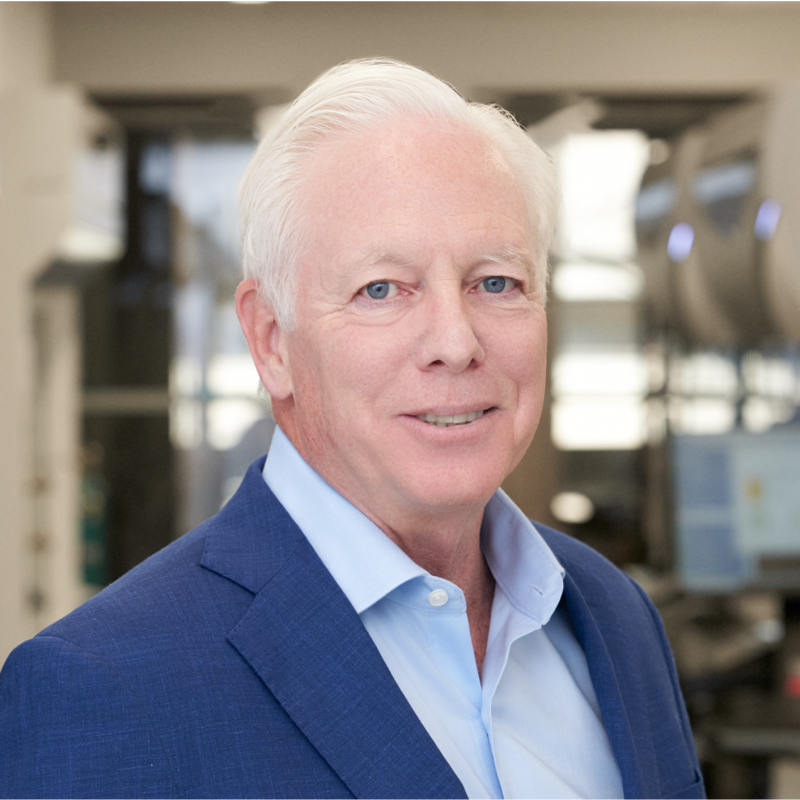
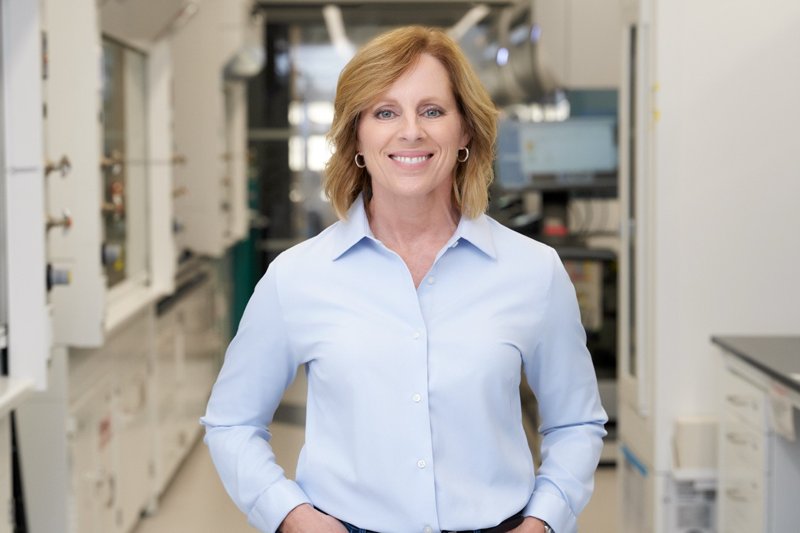
Investors · 8

How we know: the company's own site · Khosla Ventures's portfolio page · funding news · finance.yahoo.com · research · excelsiorsci.com · open dataset · 5k.vc investor directory · Not right? Tell us

How we know: Sofinnova Partners's portfolio page · the company's own site · finance.yahoo.com · research · excelsiorsci.com · open dataset · 5k.vc investor directory · Not right? Tell us
How we know: finance.yahoo.com · research · excelsiorsci.com · Not right? Tell us
How we know: Deerfield Management Company's portfolio page · a partner's Signal profile · funding news · finance.yahoo.com · open dataset · 5k.vc investor directory · Not right? Tell us

Also in the syndicate · 3
Funding
SEC filings, press & company announcements$165M disclosed across 2 of 4 rounds · 2025–2026
- $95MraisedDec 2025 · 2 sourcesSource ↗
- $70MSeries ADec 2025 · 2 sources
Deerfield Management (lead), Khosla Ventures (lead), Sofinnova Partners (lead), Cornucopian Capital, Eli Lilly and Company, Illinois Ventures
Source ↗
Source: company announcements and press reports — follow each round's link for the claim.
Company profile
researched Aug 2026Excelsior Sciences is a New York-based company developing a form of small-molecule chemistry designed to be executed by machines and used by AI systems. Its platform is built on "smart bloccs" — automated synthesis-friendly, function-infused chemical building blocks that permit iterative carbon–carbon bond formation. Molecules are assembled by repeatedly snapping carbon–carbon bonds together, in a manner the company compares to sequential assembly of peptides or DNA. The bloccs are treated as tokens in a modular chemical "language," forming the basis of a chemistry language model in which AI can combine building blocks to predict compound properties and propose candidates.
The company couples this chemistry with closed-loop learning and closed-loop discovery workflows: AI-guided automated synthesis and testing intended either to reduce uncertainty in foundation models predicting molecular properties such as solubility, permeability, toxicity and metabolism, or to optimize toward molecules with multiple targeted functional properties. Synthesis, purification and biological testing are co-located in one facility; the company reports running approximately 20 biological assays with daily controls, and describes making molecules and testing them roughly 40 feet away. Its technology begins from about 2,000 FDA-approved small-molecule drugs, which are decomposed into smart bloccs used as building blocks for new molecules — an approach management contrasts with generative-AI methods that enumerate large numbers of novel compounds.
Excelsior is developing its own proprietary therapeutic pipeline while also collaborating with partners in pharmaceuticals, materials science and agtech. The company positions the same modular process for both discovery and scale-up, from first milligrams to kilogram-level production, and frames domestic automated production as a means of reshoring US drug discovery and manufacturing.
Founding story
Michael Foley and Jana Jensen first worked together at Deerfield Discovery & Development, Deerfield's in-house R&D engine. During the COVID-19 pandemic they observed research shutting down globally and supply chains being disrupted, reinforcing Foley's view that chemistry's practice remained dependent on skilled human presence in laboratories, and prompting a focus on onshoring. Deerfield's company-building relationship with Marty Burke, whose University of Illinois lab discovered and patented the insights behind smart blocc technology, produced the idea that sparked the company. Foley and Jensen cofounded Excelsior in 2024 with Burke and other chemists and incubated it in Deerfield's research space, Cure, on Park Avenue in Manhattan. Foley previously founded three biotech companies and headed chemical biology research at the Broad Institute of MIT and Harvard; Jensen previously worked at Bristol Myers Squibb, Merck & Co. and Pfizer.
Business model
Excelsior develops an internal proprietary therapeutic pipeline while partnering with companies across sectors where small molecules matter, including pharmaceuticals, materials science and agtech. Management states it expects to generate most of its revenue by creating advanced leads in collaboration with drug and biotech companies that would otherwise send that work offshore, and it invites organizations, institutions and researchers to register interest in partnering.
The company expects most revenue to come from generating advanced leads for pharmaceutical and biotech partners, alongside value from its own internal pipeline and partnerships across industry sectors.
Traction
The company reports operating roughly 20 biological assays with daily controls, an automated synthesis and assay laboratory at Cure, and a team spanning chemistry, automation engineering, informatics, biology and ADME functions, supplemented by Deerfield personnel. As of the December 2025 C&EN report, its research team included one chemist with a second being hired. Investors and participants include Deerfield Management, Khosla Ventures, Sofinnova Partners, New York's Empire State Development, Cornucopian Capital, Eli Lilly and Company, Illinois Ventures and MIT. Named scientific publications underpin the platform.
Latest developments
On December 3, 2025 Excelsior announced $95 million in total financing — a $70 million Series A co-led by Deerfield Management, Khosla Ventures and Sofinnova Partners plus a $25 million Empire State Development grant — and unveiled its partners, with proceeds directed to scaling the smart bloccs platform, its internal pipeline and cross-sector partnerships. Board additions accompanying the financing include Nessan Bermingham (Khosla Ventures), Jim Flynn (Deerfield) and Edward Kliphuis (Sofinnova Partners). The company is recruiting for drug discovery automation and research informatics software engineering roles in New York.
▸Full profile — market position, technology, go-to-market, geography, history, risks & controversies
Market position
Excelsior positions itself as infrastructure that extends traditional chemistry rather than replacing it, addressing the gap between AI-designed molecules and the ability to synthesize and test them at speed. Coverage notes that AI molecular design has not yet yielded an FDA-approved drug and frames the company within the pharmaceutical industry's reshoring push, which the company says the industry is committing upwards of $250 billion to address.
Rather than building robots around traditional artisanal synthesis — an approach the company says has caused earlier chemistry-automation attempts to fail — Excelsior designed chemistry that is inherently automatable. It starts from roughly 2,000 FDA-approved small molecules broken into building blocks rather than using generative AI to enumerate large numbers of new compounds, and integrates discovery and scale-up chemistry in a single process, with synthesis, purification and biological testing physically co-located.
Technology
The core technology is "blocc chemistry": iterative carbon–carbon bond formation using smart bloccs — machine-ready chemical building blocks with specialized functional groups that regulate synthesis, based on insights discovered and patented in Martin Burke's laboratory at the University of Illinois. The bloccs act as tokens for a chemistry language model. Laboratories at Cure include fume hoods, robotic arms, an automated smart blocc storage system, automated synthesizers, an automated assay platform, mass spectrometry and NMR instrumentation. Robots move blocc powders to a weighing station and feed automated synthesizers; resulting compounds are tested and the data used to improve the company's AI models. Cited scientific foundations include publications on closed-loop transfer enabling AI to yield chemical knowledge, delocalized asynchronous closed-loop discovery of organic laser emitters, and automated iterative Csp3–C bond formation.
Go-to-market
The company pursues partnerships with pharmaceutical, materials science and agtech organizations alongside its internal pipeline, soliciting partnering inquiries directly, and uses its Series A proceeds to scale the smart bloccs platform and demonstrate it on discovery and manufacturing of small molecules.
Pharmaceutical and biotechnology companies seeking discovery and lead-optimization work, plus partners in materials science, agtech, and veterinary and agricultural products; the platform is also positioned for non-specialist users and for nations seeking secure domestic pharmaceutical supply chains.
Geography
Headquartered in custom-built laboratory space at Cure in Midtown Manhattan, New York City, with laboratories on the building's 12th floor on Park Avenue; open roles are listed in New York. The technology originates from Martin Burke's laboratory at the University of Illinois Urbana-Champaign, and the company emphasizes domestic US manufacturing and reshoring.
History
Excelsior Sciences was cofounded in 2024 by Michael Foley, Marty Burke, Bartosz Grzybowski and Jana Jensen, spun out of Deerfield Management and housed in custom-built laboratory space at Cure in New York City. It emerged from stealth in late 2025, announcing on December 3, 2025 that it had raised $95 million, comprising a $70 million Series A co-led by Deerfield Management, Khosla Ventures and Sofinnova Partners and a $25 million grant from New York's Empire State Development.
Risks & controversies
Coverage notes that AI-driven molecular design has not yet produced an FDA-approved drug, underscoring execution risk in bridging computational design and physical chemistry. The company operates with a very small human chemistry team (one chemist as of December 2025) and under physical space constraints in its Midtown Manhattan facility, and its reshoring thesis is exposed to geopolitical and pharmaceutical supply-chain shifts.
Compiled by commissioned research from 8 cited public sources — announcements, filings, and press listed under research sources below.
Key figures
latest reportedCompany-reported or press-reported figures, each dated to when it was claimed — not independently audited.
Timeline · 3
launches, deals, and filingsNew York's Empire State Development awarded a $25 million grant as part of the company's $95 million financing, supporting domestic drug supply chain and AI-powered chemistry work in New York.
$25M source ↗
The company announced $95 million in financing to reinvent small-molecule discovery and manufacturing: a $70 million Series A co-led by Deerfield Management, Khosla Ventures and Sofinnova Partners, plus a $25 million grant from New York's Empire State Development. Other participants included Cornucopian Capital, Eli Lilly and Company, Illinois Ventures and MIT.
$95M source ↗
The company, cofounded in 2024 and incubated at Deerfield's Cure research space in Manhattan, emerged from stealth in late 2025.
Dated company events from announcements, filings, and press; legal rows summarize public dockets and regulator releases.
In the news
▸Research sources · 8
primary sources listed
- Excelsior Sciencesexcelsiorsci.com · web
8 public sources were cited for this profile; the first-party ones are listed here.
Frequently asked questions
- What does Excelsior Sciences do?
- Excelsior Sciences builds automation- and AI-friendly modular chemistry to discover and manufacture small molecules.
- Who founded Excelsior Sciences?
- Excelsior Sciences was founded by Marty Burke, Bartosz Grzybowski.
- Who are Excelsior Sciences's investors?
- Excelsior Sciences's investors include Khosla Ventures, Sofinnova Partners, Cornucopian Capital Management, Deerfield Management Company, Illinois Ventures.
- How much funding has Excelsior Sciences raised?
- Excelsior Sciences has disclosed $165M raised across 2 of its 4 known rounds.