 Fundraising Fox
Axoft
Cambridge, US · Founded 2021 · Delaware corporation · 40 employees on LinkedIn · 11 known investors
Find your way into Axoft
Sign up to see every warm intro you have to Axoft
- Paths you didn't know you had: your email and LinkedIn already hold routes to the Axoft team. We find them for you
- 2nd- and 3rd-degree connections: the friend-of-a-friend routes that take hours to manually find through your inbox or LinkedIn
- Answers now, not in days: momentum is everything in a raise. Skip asking around whether someone knows someone
Days of research, done the moment you sign in, with every route ranked by how warm it is.
Axoft is developing soft, tissue-mimicking neural implants and supporting bidirectional electronics that record and stimulate brain activity through a minimally-invasive burr-hole procedure. The company also builds a Brain Foundation Model software to decode and interpret neural signals for brain-computer interface applications.
Also known as Axoft, Inc.
Founders & leadership
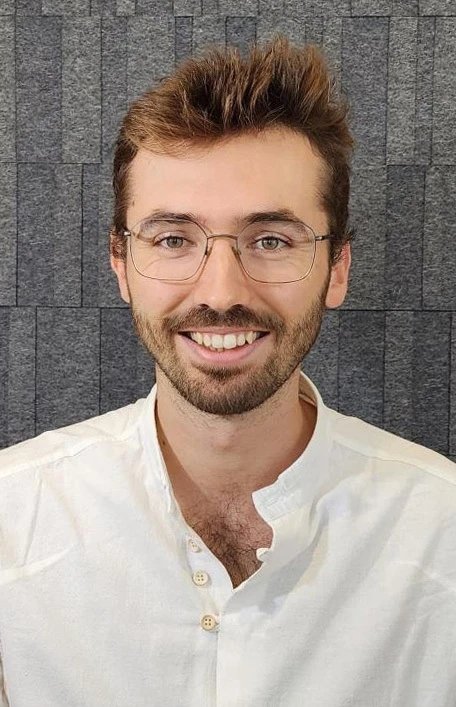
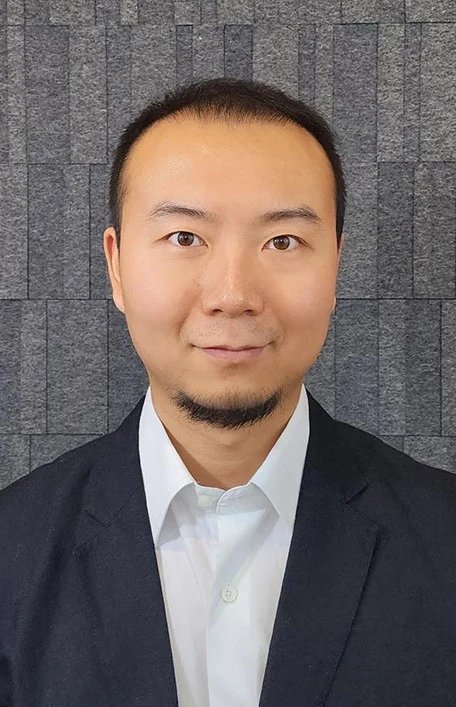
Axoft was founded in 2021 by Paul Le Floch and Tianyang Ye.
Board
Investors · 11

How we know: a partner's Signal profile · offering press articles · press coverage · av.vc · Not right? Tell us
-2.png)
How we know: aminocapital.com · Not right? Tell us

How we know: Archerman Capital's portfolio page · open dataset · 5k.vc investor directory · Not right? Tell us
How we know: Blindspot Ventures Management Co's portfolio page · open dataset · 5k.vc investor directory · Not right? Tell us
How we know: Castor Ventures's portfolio page · Not right? Tell us

How we know: Taihill Venture's portfolio page · Not right? Tell us

How we know: The Engine Ventures's portfolio page · open dataset · 5k.vc investor directory · Not right? Tell us

How we know: offering press articles · press coverage · Not right? Tell us
How we know: offering press articles · press coverage · Not right? Tell us
Reported raises · per SEC filings
Form D private placements$43.5M disclosed across 3 rounds · 2022–2026
▶$34.2MraisedMay 2026 · 13 investors · BiotechnologyRule 506(b)
- Paul Le FlochExecutive Officer, Director
- Chia An LeeDirector
- Benjamin PlessDirector
- Offering amount
- $34.2M
- Amount sold
- $34.2M
- First sale
- Apr 2026
- Incorporated
- Corporation, Delaware, 2021
- Federal exemptions
- 06b
▶$8.8MraisedMar 2024 · 12 investors · BiotechnologyRule 506(b)
- Benjamin PlessDirector
- Rachel ShaDirector
- Paul Le FlochExecutive Officer, Director
- Tianyang YeDirector
- Offering amount
- $9.3M
- Amount sold
- $8.8M
- First sale
- Mar 2022
- Incorporated
- Corporation, Delaware, 2021
- Federal exemptions
- 06b
▶$500KraisedMar 2024 · 1 investors · BiotechnologyRule 506(b)
- Benjamin PlessDirector
- Paul Le FlochExecutive Officer, Director
- Rachel ShaDirector
- Tianyang YeDirector
- Offering amount
- $5M
- Amount sold
- $500K
- First sale
- Feb 2024
- Incorporated
- Corporation, Delaware, 2021
- Federal exemptions
- 06b
Source: SEC EDGAR Form D. Amounts as filed; amended filings shown once at their latest values.
Company profile
researched Aug 2026Axoft is developing an implantable neural interface built from materials engineered to mimic the mechanical properties of soft brain tissue. The company states its implant is roughly 1,000,000 times softer than conventional rigid electronics while carrying about 1,000 times the electrode density of soft implants currently on the market. The stated design intent is to reduce implant drift and long-term tissue damage while preserving high channel counts.
The system is bidirectional: signals captured by the implant are processed by an integrated circuit and passed to software for interpretation, and the software can also drive electrical stimulation of the brain through the implant. Axoft's neural probes are designed to pass through a 2 mm-diameter burr hole and to work with standard neuronavigation tools, allowing access to brain regions including deep structures. Alongside the hardware, the company is building a Brain Foundation Model, software intended to improve decoding and interpretation of neural signals over time. The stated long-term goal is durable communication with any brain region at single-neuron resolution.
▸Full profile — market position, technology
Market position
Axoft positions its implant on two quantitative claims: material approximately 1,000,000 times softer than today's rigid electronics, and approximately 1,000 times greater electrode density than soft implants available on the market. The combination of tissue-like softness with high electrode density is presented as the means to limit implant drift and chronic tissue damage without sacrificing recording resolution, complemented by minimally invasive insertion through a 2 mm burr hole.
Technology
The core technology combines a soft, tissue-mimicking implant material with ultra-high-density electrode arrays, an integrated circuit for on-device signal processing, and interpretation software. The material approach is intended to improve biocompatibility, data resolution and signal stability over time relative to rigid electronics. The implant supports both recording and electrical stimulation. Probes are sized to fit a 2 mm-diameter burr hole and are compatible with standard neuronavigation tools for targeting superficial or deep brain regions. Axoft is also developing an in-house Brain Foundation Model for neural signal decoding.
Compiled by commissioned research from 1 cited public sources — announcements, filings, and press listed under research sources below.
Key figures
latest reportedCompany-reported or press-reported figures, each dated to when it was claimed — not independently audited.
Founder mafia
3 people who came through Axoft went on to found or lead other companies.
Related companies · 6
Companies working in the same space as Axoft.
Legal entities · 1
corporate structureIn the news
▸Research sources · 1
primary sources listed
- Axoftaxoft.us · web
1 public sources were cited for this profile; the first-party ones are listed here.
Frequently asked questions
- What does Axoft do?
- Axoft develops a soft, bioinspired brain implant designed for long-term, high-density neural recording and stimulation.
- Who founded Axoft?
- Axoft was founded by Paul Le Floch, Tianyang Ye in 2021.
- Who are Axoft's investors?
- Axoft's investors include Alumni Ventures, Amino Capital, Archerman Capital, Blindspot Ventures Management Co, Castor Ventures, Creative Destruction Lab (CDL), Safar Partners, Taihill Venture and 3 more.
- How much funding has Axoft raised?
- Axoft has disclosed $43.5M raised across 3 rounds.
- Where is Axoft headquartered?
- Axoft is headquartered in Cambridge, US.