 Fundraising Fox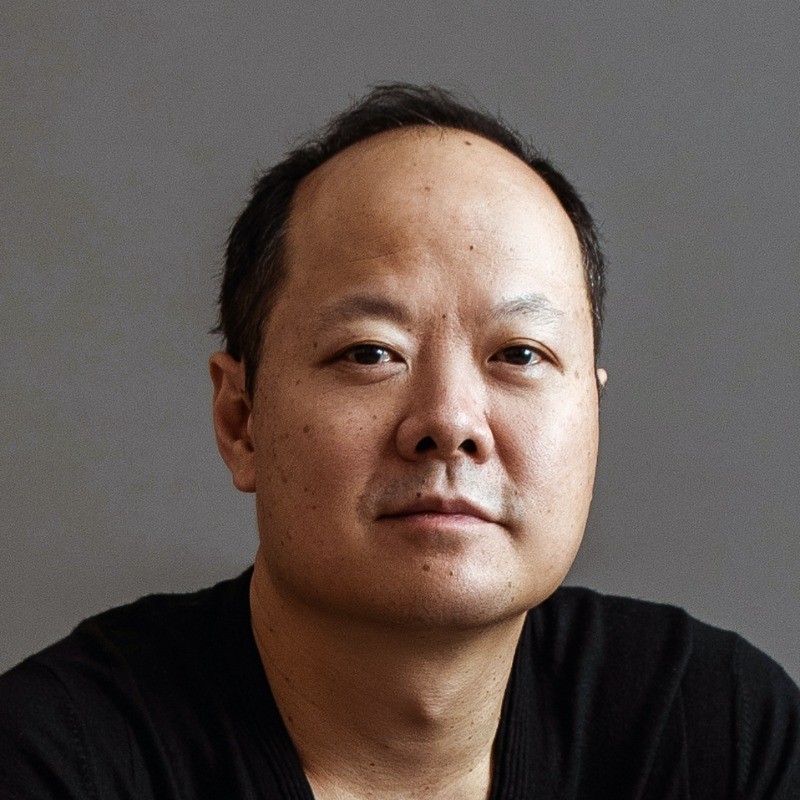
Find your path to Raymond
374 people in our graph share verified history with Raymond — schools, employers, funds. One of them is your warm intro.

About
Raymond Luk is a Toronto-based Canadian software, financial-services and startup-ecosystem founder, former venture investor, educator and conference chair. After earning a Bachelor of Music at McGill University in 1996, he founded HBE Software in 1997 and Opendesk Corporation in 2000, then served as vice-president of operations at Aptilon. His experience struggling to finance a Canadian startup led him to build Flow, a founder-focused consultancy that helped technology companies secure SR&ED tax credits, grants, loans and venture funding. BetaKit reported that Flow worked with thousands of founders and helped companies raise more than C$350 million over seventeen years. In 2010 Luk initiated the model that became Year One Labs with Ben Yoskovitz, Alistair Croll and Ian Rae. The privately funded, hands-on micro-VC and venture studio selected people before ideas, paired some founders, used hackathons and Lean Startup milestones, and invested up to US$50,000 in five companies. Three failed, Massive Damage continued, and Airbnb acquired Localmind. Luk currently describes the realized fund return as 7x, while one first-person essay says 7.5x; neither figure has independently published fund statements. The program stopped new investing after its planned year because the partners could not make its intensive model scalable or sustainable, although Luk’s professional profile carries portfolio management through 2023. He later co-founded bookkeeping-software company Scalability, which he says was sold to a private accounting firm, and founded Hockeystick, a private-market data and fundraising platform. Hockeystick raised reported equity financing, acquired LaunchSpot in 2017, built partnerships with Canadian and US innovation organizations, and in 2023 sold its data and software businesses to unidentified innovation funders; its education assets became Founder in Residence. Deloitte acquired Flow’s team in January 2024 for undisclosed terms and appointed Luk senior advisor and founder in residence. He now publishes and teaches through Founder in Residence, created the Swagger venture-capital board game, mentors Techstars and Antler founders, and founded Source Canada, a 2025–2026 summit designed to accelerate corporate and government procurement of Canadian technology, including sovereign and defence technology. His teaching emphasizes founder storytelling, financial literacy, ownership, critical consumption of startup advice, empathy in pitching, rigorous validation, contrarian founder selection and non-transactional mentorship. Techstars named him one of four inaugural Give First Award recipients in 2024. He has publicly identified Elle AyoubZadeh, founder of Zvelle, as his wife and previously served as Toronto Summer Music Foundation vice-chair. No reliable reviewed source establishes his birth date, birthplace, comprehensive personal angel portfolio, current willingness to invest, personal transaction proceeds or net worth.
Invests in
ConsumerEnterprise SoftwareFintechSector Agnostic
Beyond investing
- Founded
- A contemporaneous interview says Luk had made a couple of angel investments, found one-off checks difficult to structure and scale, and initiated discussions that became Year One Labs. The source does not name those personal angel companies.
- Communities
- Across Flow, Year One Labs, Hockeystick, Deloitte, Founder in Residence, Techstars and Source Canada, Luk has repeatedly worked on access to capital, founder capability, ecosystem data, mentoring and customer procurement. BetaKit directly records him describing founder support as his passion and a running career theme.
- Awards
- Techstars named Luk one of four 2024 Give First Award recipients for mentorship that supports founders without expectation of return. It was an inaugural mentor award, not an investment-performance prize.
- More
- The same Raymond Luk profile links Toronto, @rayluk, McGill music, Queen’s–Cornell business studies, HBE Software, Opendesk, Aptilon, Flow, Year One Labs, Hockeystick, Deloitte and Source Canada. A separate younger Raymond Luk associated with Sheridan Student Union is a namesake and was excluded. Luk told BetaKit that he started Flow after struggling to finance a Canadian startup, using grants to fill gaps and realizing that few founders handled non-dilutive funding properly. That founder problem became a seventeen-year services company. BetaKit reported that Flow worked with thousands of founders and helped companies raise more than C$350 million. Luk said the firm measured itself by what founders achieved with additional funding, not merely by advisory output. Year One Labs deliberately selected founders before ideas or incorporation. The partners used hackathons, intensive brainstorming and direct work to evaluate creativity, resilience, judgment, tenacity, interpersonal skill and coachability; some founders met and were paired through the program. The program offered founders up to US$50,000 over twelve months rather than paying it all up front. Capital was tied to Lean Startup milestones for problem validation, solution validation, traction and outside financing. Luk and another partner conducted customer interviews alongside Localmind’s founder. Founder retrospectives describe five investments: three failures, continuing game studio Massive Damage and Localmind’s acquisition by Airbnb. Luk’s profile and biography say 7x cash-on-cash; his December 2023 essay says 7.5x. No audited fund statement was found, so both are treated as first-person realized-return claims rather than independently verified precision. The planned experiment stopped making new investments in 2011. The partners took no salaries and concluded that increasing deal volume, staff, operating capital and fund capital would alter the hands-on model without assurance of comparable returns. Continuing portfolio management should not be mistaken for an active accelerator. Hockeystick sold data, deal-flow, reporting, CRM and dashboard tools to startups, funds, accelerators and governments. A 2018 Ivey profile reported C$1.5 million in total equity financing, including C$600,000 from BDC Venture Capital, LaunchPad Venture Group, York Angel Investors and Spark Angel Group, plus support for an open startup database. On November 29, 2017, Hockeystick acquired Waterloo accelerator-operations platform LaunchSpot for undisclosed terms. Luk said the combination would connect LaunchSpot’s operational workflows with Hockeystick’s private-market data network. Deloitte announced the transaction on January 29, 2024. Flow’s fifteen-person team joined the Global Innovation and Investment Incentives practice, Luk became senior advisor, and CEO Elaine Coopersmith became a Deloitte director. Consideration was undisclosed. His Bachelor of Music, Royal Conservatory performance credential and Toronto Summer Music board service demonstrate a sustained music connection. He also says he grew up playing strategy and family board games, an interest later reflected in creating Swagger. Public biographies and Toronto Summer Music identify Elle AyoubZadeh, founder of fashion company Zvelle, as Luk’s wife. An archived Hockeystick biography also mentioned their dog Chilby. No broader family history, birth information or private financial details are inferred.
From Raymond's own website — common ground for a warm intro.
Experience
- Source CanadaFounder and Conference Chaircurrent2025 — present
- Founder in ResidenceFoundercurrent2024 — presentCanada
- DeloitteSenior Advisorcurrent2024 — presentToronto, Ontario, Canada
- FlowFounder2005 — 2024Canada
- Year One LabsFounder, Managing Partner2010 — 2023
- Hockeystick.coFounder / CEO2014 — 2023Greater Toronto Area, Canada
- Scalability Inc.Co-Founder2012 — 2015Greater Toronto Area, Canada
- Anges QuébecMember of the Board2010 — 2011
- AptilonVP Operations2005 — 2008
- Opendesk CorporationFounder/CEO2000 — 2004
- HBE SoftwareFounder/CEO1997 — 2000



Skills & more
+12 more
Social MediaCompetitive AnalysisProduct ManagementStrategic PartnershipsLean StartupPublic RelationsSaaSMarketing StrategyManagement ConsultingOnline MarketingMergersManagementFrom Raymond's professional profile.
Investments
Investor
HighScore HouseLocalmindMassive Damage / Please Stay CalmMosoronCentiv.es
Per curated public sources.
Founder fit — who Raymond backs
Historically, the strongest Year One Labs fit was a pre-idea or pre-seed founder willing to be evaluated through action rather than pedigree: creative, resilient, technically or commercially capable, interpersonally strong, tenacious, self-aware, coachable and comfortable with intensive hands-on experimentation. In current educational or mentorship settings, fit includes founders who want to improve narrative clarity, understand cap tables and ownership, model financing honestly, test assumptions, communicate with empathy and learn through simulation. A founder seeking capital should first confirm whether Luk is investing personally; public evidence establishes teaching, coaching and mentoring availability, not an open fund.
['Seeking a new investment from the defunct Year One Labs program', 'Assuming Techstars or Antler mentorship means Luk controls accelerator capital', 'Attributing Deloitte Ventures investments to his Deloitte advisory role', 'Using pedigree, employer brands or fashionable markets as substitutes for founder evidence', 'Wanting passive capital without milestone-driven validation or active collaboration', 'Treating a polished pitch deck as a substitute for empathy, logic and evidence', 'Presenting projections without understanding the assumptions beneath them', 'Confusing a corporate directorship, founded company or advisory role with a personal angel check', 'Relying on commercial investor-directory check-size claims that contradict the historical US$50,000 program model']
How to pitch
Identify the channel before pitching: coaching or workshops through Founder in Residence, Techstars or Antler mentorship, Deloitte startup advice, Source Canada procurement access, or a genuinely personal investment conversation. Do not present Year One Labs as active. Explain the founder’s motivation, what has been built or tested, the problem and customer in concrete terms, what evidence changed the team’s mind, and why the founder can learn faster than peers. Tell the story with empathy: connect a vivid future to present milestones and make the investor or buyer understand the human stakes. Show ownership, financing and projection assumptions rather than hiding behind spreadsheet precision. Ask for criticism, distinguish advice from fund fit, and verify investment authority. Luk’s public teaching and mentoring are current; availability for new angel checks is not.
Stages: Pre-idea (historical Year One Labs), Pre-seed (historical Year One Labs), Founder education and mentorship (current) · Sectors: Sector-agnostic founder formation, Consumer and mobile startups in the Year One Labs cohort, Fundraising and private-market software, Startup financial services and non-dilutive capital, Canadian sovereign, defence and enterprise technology through Source Canada programming
Editorial inference from Raymond's portfolio, writing and public record — not a published mandate.
Investment themes
13 documented themes from Raymond's essays, talks and portfolio, grouped by what they say about founders.
▶Founders & company building2
Founder-first investing before idea or pedigree
Year One Labs selected and sometimes paired people before they had ideas or companies, evaluating qualities through hackathons, brainstorming and direct work rather than pitch-deck credentials.
For founders: Demonstrate creativity, resilience, judgment, tenacity, interpersonal ability and coachability through action.
Fundraising, ownership, cap tables and projection literacy
His educational archive treats projections, SAFEs, notes, options, dilution and board governance as founder responsibilities rather than specialist details to outsource blindly.
For founders: Understand the assumptions and stakeholder consequences behind every financing instrument and ownership change.
▶More themes10
Contrarian selection and skepticism toward consensus signals
Luk argues that elite pedigree, fashionable sectors, network filters and rapid markups often reward consensus-right choices rather than the outlier selection venture returns require.
For founders: Explain the non-consensus insight and why the team can be right without imitating conventional A-player signals.
Lean Startup milestones, customer development and measurable validation
Year One Labs released capital against explicit problem, solution, traction and financing milestones and worked alongside founders on customer discovery.
For founders: Tie capital and execution to tests that can disprove assumptions, not merely to output or time elapsed.
Founder storytelling as strategy and trust signal
A strong pitch makes a future vivid, works backward through credible milestones, creates empathy and signals that the founder understands how to navigate uncertainty.
For founders: Connect a high-resolution future to present evidence and communicate why customers, recruits and investors should care now.
Critical consumption of startup advice and investor feedback
Luk warns that startup information is noisy, expert status can substitute for evidence and investor rejection language may obscure actual fund constraints or uncertainty.
For founders: Interrogate advice, identify the speaker’s incentives and test recommendations against the company’s specific facts.
Removing barriers to capital through services, software and education
Flow, Year One Labs, Hockeystick and Founder in Residence addressed different parts of the same problem: helping founders understand, find, secure and use capital.
For founders: Treat financing access as a system involving readiness, data, matching, literacy and multiple capital types.
Non-dilutive capital for Canadian startups
Flow helped technology companies combine SR&ED credits, grants and government loans with venture financing so equity was not the only source of growth capital.
For founders: Map tax credits, grants and loans early enough to reduce financing gaps without treating them as substitutes for customer demand.
Private-market data and ecosystem infrastructure
Hockeystick sought to standardize company, portfolio and ecosystem data and connect startups with angels, VCs, accelerators and public funders.
For founders: Reliable shared data can reduce reporting friction, improve matching and make private-capital decisions more transparent.
Give First mentorship
His stated mentorship default is to help founders enthusiastically without requiring an immediate transaction, a practice Techstars formally recognized.
For founders: Seek and provide candid support that is not conditioned on an investment, sale or reciprocal favor.
Buying Canadian innovation and procurement velocity
Source Canada frames slow, risk-averse domestic procurement as a central constraint on Canadian startup scale and convenes buyers, founders and investors to turn pilots into contracts.
For founders: Treat enterprise readiness, buyer access and shorter procurement cycles as core scale-up infrastructure.
Sovereign, defence, AI, cyber, quantum and deep-technology capacity
His current event thesis links domestic purchasing and financing to Canadian capacity in strategically important technologies and defence supply chains.
For founders: For strategic technology, show procurement readiness, security and quality credentials, allied-market access and a credible domestic scaling path.
▶Health, frontier & community1
Simulation and games as founder education
Swagger uses a board-game simulation to make fund construction, startup outcomes and investor incentives tangible rather than purely theoretical.
For founders: Use simulation to understand counterpart incentives and second-order financing effects before decisions become irreversible.
Podcasts & interviews
featuring Raymond LukRaymond Luk
Startupfest · startupfest.com
Canada will get a national summit in October to back procurement of homegrown tech
BetaKit · betakit.com
Startup consulting firm Flow acquired by Deloitte Canada
BetaKit · betakit.com
Investor Connect: Raymond Luk of Hockeystick
Investor Connect · investorconnect.org
Year One Labs: A Look Back
Raymond Luk / LinkedIn · linkedin.com
Year One Labs: An Accelerator / Venture Studio 10 Years in the Making
Highline Beta · highlinebeta.com
2 more appearances
Writing
Founder-teaching essay arguing that a pitch should make a future vivid, work backward through milestones and signal clarity and trust.
First-person notice explaining that after Flow’s acquisition the A Leap of Faith archive and subscriber base were moving to Founder in Residence.
Essay on career incentives, LP expectations, groupthink, markups and other structural pressures that push early-stage funds toward consensus-right deals.
Essay using Year One Labs and Hummingbird Ventures to challenge pedigree, elitism, stereotypes and consensus filters in early-stage founder selection.
Conversation with a founder used to demonstrate how an effective pitch creates empathy and connects audience understanding to the problem.
Self-published book or guide about pitch decks and founder storytelling, announced in his LinkedIn writing archive. Publisher, ISBN, edition and distribution are unresolved.
2 more posts
Colleagues at Deloitte Ventures





Frequently asked questions
- What is Raymond Luk doing now?
- His verified public work includes founding and chairing Source Canada, running Founder in Residence, advising startups as a Deloitte Canada senior advisor and founder in residence, teaching and coaching, mentoring through Techstars and Antler, and developing the Swagger venture-capital board game.
- Is Raymond Luk currently a venture capitalist?
- He calls himself an ex-VC. Year One Labs stopped making new investments in 2011, and no active personal fund or open 2026 angel program was verified. His current Deloitte role is advisory and should not be confused with Deloitte Ventures’ investment authority.
- What return did Year One Labs generate?
- Luk’s current biography and profile say 7x cash-on-cash; his December 2023 essay says 7.5x. These are first-person claims and no audited statement was found, so the dossier does not force false precision.
- Why was there no Year Two Labs?
- The accelerator was designed as a one-year experiment. Its hands-on model produced value but the partners could not find a sustainable way to scale deal count, staff, operations and capital without changing the economics, so new investing ended in 2011 while portfolio support continued.
- Which investments can be attributed to him?
- The five Year One Labs fund investments are Localmind, Massive Damage, HighScore House, nCentiv.es and Mosoro. Sources say he made at least two earlier angel investments, but reliable reviewed evidence does not name them. Commercial directories mix founded companies, directorships and fund deals, so Assemblio, Qidiq, Aptilon, Scalability and Hockeystick are not labeled personal checks.
- What happened to Hockeystick?
- Luk says its data and software businesses were acquired by innovation funders in 2023 and its educational resources were spun out as Founder in Residence. The buyers, price, transaction structure and exact assets have not been disclosed in a reviewed announcement.
- What happened to Flow?
- Deloitte Canada acquired Flow’s team in January 2024 for undisclosed consideration, integrated fifteen employees into its Global Innovation and Investment Incentives practice, appointed CEO Elaine Coopersmith a director and appointed Luk senior advisor.
- What does he look for in founders?
- His historical model prioritized observed creativity, resilience, work ethic, technical and interpersonal skill, judgment, tenacity and coachability over pedigree or a pre-existing idea. His current writing adds critical thinking, empathy, narrative clarity, financial literacy and evidence-based milestones.
- How should a founder approach him?
- First identify whether the request is for education, mentorship, Deloitte advice, Source Canada procurement access or a personal investment discussion. Do not pitch Year One Labs as active. Bring a clear founder story, customer evidence, milestone logic, honest financing assumptions and specific questions; verify investment authority before treating feedback as fund interest.
- What did he study?
- Public profiles report a Bachelor of Music from McGill in 1996, a Royal Conservatory associate credential in music performance, and the 2007–2009 Queen’s–Cornell Executive MBA program, represented on his profile as MBA credentials from both institutions.
- What award did Techstars give him?
- He was one of four 2024 Give First Award recipients, recognized for unusually generous, non-transactional mentorship of Techstars founders.
- What is Source Canada?
- It is a curated annual Toronto summit founded by Luk to shorten sales and procurement cycles between Canadian technology companies and enterprise, government and investment buyers. The 2026 program emphasizes defence and sovereign technologies including AI, cybersecurity, quantum and deep tech.
- What public personal background is reliable?
- He is Toronto-based, has a music education, says his parents were teachers and entrepreneurs, says he grew up playing many board games, and publicly identifies Zvelle founder Elle AyoubZadeh as his wife. No reliable reviewed source establishes his birth date, birthplace, children, net worth or broader private family history.
- Who is Raymond Luk?
- Raymond Luk is a Toronto-based Canadian software, financial-services and startup-ecosystem founder, former venture investor, educator and conference chair. After earning a Bachelor of Music at McGill University in 1996, he founded HBE Software in 1997 and Opendesk Corporation in 2000, then served as vice-president of operations at Aptilon. His experience struggling to finance a Canadian startup led him to build Flow, a founder-focused consultancy that helped technology companies secure SR&ED tax credits, grants, loans and venture funding. BetaKit reported that Flow worked with thousands of founders and helped companies raise more than C$350 million over seventeen years. In 2010 Luk initiated the model that became Year One Labs with Ben Yoskovitz, Alistair Croll and Ian Rae. The privately funded, hands-on micro-VC and venture studio selected people before ideas, paired some founders, used hackathons and Lean Startup milestones, and invested up to US$50,000 in five companies. Three failed, Massive Damage continued, and Airbnb acquired Localmind. Luk currently describes the realized fund return as 7x, while one first-person essay says 7.5x; neither figure has independently published fund statements. The program stopped new investing after its planned year because the partners could not make its intensive model scalable or sustainable, although Luk’s professional profile carries portfolio management through 2023. He later co-founded bookkeeping-software company Scalability, which he says was sold to a private accounting firm, and founded Hockeystick, a private-market data and fundraising platform. Hockeystick raised reported equity financing, acquired LaunchSpot in 2017, built partnerships with Canadian and US innovation organizations, and in 2023 sold its data and software businesses to unidentified innovation funders; its education assets became Founder in Residence. Deloitte acquired Flow’s team in January 2024 for undisclosed terms and appointed Luk senior advisor and founder in residence. He now publishes and teaches through Founder in Residence, created the Swagger venture-capital board game, mentors Techstars and Antler founders, and founded Source Canada, a 2025–2026 summit designed to accelerate corporate and government procurement of Canadian technology, including sovereign and defence technology. His teaching emphasizes founder storytelling, financial literacy, ownership, critical consumption of startup advice, empathy in pitching, rigorous validation, contrarian founder selection and non-transactional mentorship. Techstars named him one of four inaugural Give First Award recipients in 2024. He has publicly identified Elle AyoubZadeh, founder of Zvelle, as his wife and previously served as Toronto Summer Music Foundation vice-chair. No reliable reviewed source establishes his birth date, birthplace, comprehensive personal angel portfolio, current willingness to invest, personal transaction proceeds or net worth.
Same school
Also attended Cornell Johnson Graduate School of Management195






+ 189 more
Also attended Queen's University471





+ 465 more
Also attended McGill University771





+ 765 more





Shared employers
Also worked at Year One Labs2

Also worked at Anges Québec32




+ 26 more