 Fundraising Fox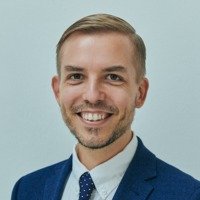
Kristian Ranta
InvestorFounderCEO at Meru Health
San Mateo, California, United States
FoundedMeru Health · YC

Find your path to Kristian
Sign up to see every warm intro you have to Kristian
- Paths you didn't know you had: your email and LinkedIn already hold routes to Kristian. We find them for you
- 2nd- and 3rd-degree connections: the friend-of-a-friend routes that take hours to manually find through your inbox or LinkedIn
- Answers now, not in days: momentum is everything in a raise. Skip asking around whether someone knows someone
Days of research, done the moment you sign in, with every route ranked by how warm it is.
About
Kristian Ranta is the founder and CEO of Meru Health, a company that participated in Y Combinator's Summer 2018 batch. His stated values include positivity, perseverance, and integrity.
Invests in
AI & Machine LearningDigital HealthHealthtechMarketplacesSector Agnostic
Beyond investing
- Founded
- Ranta and Jukka Planman, Tuomas Planman, Henri Andell and Juho Konsti founded Mendor after a Venture Cup entry in late 2005/2006. The company developed compact glucose meters and diabetes-data software; sources differ between December 2005 and operational founding in 2006. The three co-founders began with a workplace-stress/wellness concept called Blooming in late 2015 or early 2016. Ranta says a pre-founding values workshop established shared motivation from mental-health struggles in all three families. The company was incorporated/established in the United States in early 2016 and renamed Meru Health by summer 2016.
- Communities
- Aalto University says Ranta called Aaltoes board member Niko Laukkanen and assembled a student/founder team to build an immersion program for Finnish entrepreneurs in the Bay Area. SILTA is a nonprofit founder-development initiative, not evidence of a venture fund or a personal investment. Ranta records visiting lectures at Aalto, Helsinki and Turku universities on entrepreneurial leadership, new-venture development and medical-device development/innovation from 2012 to 2016. This is teaching activity, not a faculty appointment.
- Awards
- Mendor won Deloitte Finland's Rising Stars category in 2014 and Meru Health won Best Mental Health Company at the 2019 UCSF Digital Health Awards, according to Ranta's professional profile and conference biography. They are company recognitions during his leadership, not personal lifetime-achievement awards.
- Hobbies
- Ranta joined the Finnish melodic-death-metal band around its renaming from Requiem to Norther, played guitar on its full-length albums and added clean vocals from the mid-2000s. In a first-person band interview he said he found the name by browsing a dictionary. Discography and songwriting credits are music achievements, not health-company milestones.
- Family
- Ranta says his oldest brother Peter lived with depression and substance-use difficulties, received psychiatric treatment and died by suicide in 2005. He has said medication worsened Peter's experience and that years of asking why available care did not help became a direct motivation for Meru. This is Ranta's first-person family account, not a clinical reconstruction of Peter's care.
- More
- Music references identify him as Kristian Heikki Ranta, born in Helsinki in 1981 and known as Kride. The commonly repeated date is 13 May, but Finnish Wikipedia previously displayed 13 March; no civil or other authoritative birth record was reviewed, so the exact day is not treated as registry-verified. TMC News says both parents had business careers. Ranta played guitar in Norther for roughly a decade while studying and entering technology work, later describing music as an early leadership and creative chapter rather than a separate namesake identity. His professional profile records system administration, IT projects and project management at electronic-clinical-outcomes company CRF Health from April 2005 to May 2007. Employer archives were not located to independently verify the month-level record. His professional profile dates board service from 2006, business-development leadership from 2007 and the CEO role from October 2010 to October 2015. Helsinki Times confirms him as CEO by 2012 and describes UK, Swedish and Baltic expansion. Ranta told Helsinki Times that an October 2010 board meeting confronted a real bankruptcy possibility. He described frantic work and sleep problems before new and existing investors supplied enough capital. The episode is an attributable operating setback and a source of his later culture lessons. By 2012 Mendor had launched in the UK with Merck Serono and entered Sweden and the Baltics. It won first place in Deloitte Finland's 2014 Rising Stars category. These are company outcomes under Ranta's CEO tenure, not individual awards detached from Mendor. Finnish reporting and Ranta biographies say Mendor sold its glucose-monitoring equipment/business to Korean diagnostics company i-SENS in 2015 and Ranta left that year. This was a business/asset transaction, not a verified full-company acquisition or disclosed personal liquidity event. Mendor later filed for bankruptcy in January 2017, after his departure. TMC News reports that Ranta went through years of therapy after Peter's death and hoped to make similarly meaningful help easier to access. He also credits Peter with teaching him philosophy and an appreciation for classical music. Ranta has said fear initially led him toward the easier coach-led wellness model. Listening to the underlying mission, the team replaced coaching with licensed therapist support while retaining app-based learning and daily practice, turning Meru into a healthcare provider rather than only a wellness product. Meru's core 12-week program combines video and asynchronous therapist contact, digital CBT and behavioral-activation material, mindfulness, sleep and nutrition practices, anonymous peer support and HRV biofeedback. It is a blended clinical-service model; reviewed sources do not establish the app as an FDA-cleared prescription digital therapeutic. A 2019 peer-reviewed observational study of 117 participants found the mobile intervention feasible and associated with depression reduction. It lacked randomization and a control, relied on self-report and had extensive company conflicts: Ranta and several authors were Meru executives, employees, shareholders or option holders. A 2019 quasi-experimental pre/post study reported depression and anxiety improvements maintained up to 18 months. Its authors explicitly said the uncontrolled design precluded causal inference, effect sizes likely overstated effects versus active control, antidepressant use and natural recovery could explain part of change, and all authors had Meru financial relationships. A 2020 peer-reviewed study examined adding heart-rate-variability biofeedback to Meru's remote intervention and supported feasibility and potential benefit. It contributed to product development but was not a large independent definitive trial of the full commercial program. A 124-patient randomized trial in Finland compared the therapist-guided app plus treatment as usual with usual care alone. Depression outcomes did not significantly differ through follow-up, although some secondary resilience, mindfulness and sleep findings favored intervention subgroups. Limitations included unknown usual-care content, no participant/provider blinding and an unprespecified antidepressant-status analysis. This negative/mixed trial is important counterevidence to promotional summaries. A 2021 intent-to-treat analysis of 218 participants with PHQ-9 scores of at least 15 reported a mean 8.30-point reduction and large within-group effect; 34% met the study's response/remission combination. The study lacked a control and diagnostic/impairment data, so spontaneous change and concurrent care cannot be excluded. Ranta and most authors had Meru employment/equity conflicts. The registered NCT04738084 trial randomized 100 Colorado participants with elevated depressive symptoms to Meru or a 12-week waitlist. Depression decreased more with Meru (d=-0.8), and 39.1% versus 9.8% reached a minimal clinically important difference; anxiety, insomnia, resilience and quality-of-life outcomes also favored Meru. Limitations were self-report, no durability follow-up, unmeasured concurrent treatment, waitlist rather than active control, 95% women and single-state recruitment. A preregistered single-arm study of 778 2020 participants found fewer respondents endorsing suicidal ideation through six months and estimated a 30.49% reduction in attempts/deaths using external associations. It did not observe actual attempts or deaths, used PHQ-9 item 9 rather than a gold-standard suicidality assessment, excluded severe active suicidal plans and had no control. All authors were Meru employees receiving salary and stock options. The result is preliminary and should not be restated as proof that Meru prevented a measured number of deaths. NIMH awarded Meru $2 million under R44MH126836-01A1 to study 300 U.S. primary-care patients with major-depression symptoms. This is competitive public research support, not a commercial investment in Ranta or proof of efficacy by itself. Ranta argues that mental and physical health are inseparable and that care should address sleep, nutrition, movement, breathing, social connection and physiology alongside psychotherapy and psychiatry. He presents measurement as necessary for quality and value-based contracting. These are founder views with commercial alignment to Meru's product. Ranta says Peter's antidepressant experience and low response rates made him skeptical of medication checks as psychiatry's default entry point. His 2026 Advanced launch frames continuing medication as a last resort after physiological assessment, while retaining psychiatrists and medical treatment in the pathway. His numerical comparisons and broad claims of traditional-care failure should be read as advocacy from a competing provider, not clinical consensus that antidepressants or talk therapy are unnecessary. Ranta says discussing suicide initially felt taboo but sharing his family story revealed many similar losses. He has continued to use Peter's story to encourage earlier access and destigmatized conversation, while Meru's crisis exclusions mean its routine program is not a replacement for emergency services. Ranta says the co-founders defined passion, integrity, courage and compassion before founding, then used those values in hiring, decisions and performance management. He links that intentionality to difficult people lessons at Mendor; the podcast claim of roughly 90% fewer people problems is his own estimate, not an audited HR metric. Meru announced a $4.2 million seed in 2019, $8.1 million Series A in 2020 and $38 million 2021 financing comprising $30 million equity and $8 million J.P. Morgan debt. Industry Ventures, Foundry, Freestyle, Bold, FMZ, Leksell, Slack Fund, Y Combinator and others backed Meru. They are company investors, not Ranta's outbound investments. TechCrunch reported Meru's customer base grew tenfold and revenue about 700% during 2020 as remote-care demand rose. These figures came from the private company and were not audited in the reviewed source. Meru announced in 2024 that fees would be at risk against clinical, access and engagement guarantees. Ranta later said many payer systems could not readily administer the arrangement and that bundled care does not fit standard fee-for-service structures. The commitment is commercially meaningful, but contract terms, thresholds and dollars actually forfeited are not public. In May 2026 Ranta launched a coordinated program for treatment-resistant and complex conditions combining psychiatric intake, broad laboratory testing, therapist, dietitian, coach, care navigation, lifestyle medicine and wearable/HRV data. It extends Meru's philosophy, but new Advanced-specific outcome evidence was not located and broad biomarker/root-cause claims require prospective validation. Meru's privacy policy says Meru Health Inc. is not itself a medical group; telemedicine is provided by independent practitioners including Meru Health Medical, P.A. The secure platform handles PHI under applicable HIPAA rules and provider notices. This legal distinction matters when attributing clinical responsibility and privacy obligations. Meru-affiliated papers say care data are stored in HIPAA-compliant electronic medical records and encrypted in transit and at rest. These are published disclosures, not a reviewed independent security audit. No material Meru privacy enforcement action was found in the research performed for this dossier. Independent market assessment places Meru among blended-care providers that combine digital content and clinicians, contrasting them with named FDA-cleared prescription digital therapeutics. No reviewed FDA clearance for Meru's core app was located. Meru's clinical-provider, payer and state-practice obligations should not be conflated with device clearance. His professional profile and patent databases list Mendor-era glucose-measurement inventions including US 8,781,752 and later health-monitoring/autonomic-nervous-system inventions including US 10,960,174. Patent grant establishes inventorship on claims, not commercial efficacy of a treatment. Ranta publicly discusses his parents' business careers and Peter's influence and death. No reliable source reviewed establishes spouse or children, and low-quality celebrity relationship pages were excluded. Private household detail is not inferred.
Mentioned above: the Y Combinator mafia → · the Aalto University mafia →
From Kristian's own website — common ground for a warm intro.
CEO at Meru HealthYC S18
Intro paths
Kristian went through Y Combinator (Summer 2018) — any YC alum in your network can reach them through the YC community.
In turn, Kristian can intro founders to Meru Health's investors below.
Meru Health's investors · 19






Co-founders at Meru Health


Investments
Board seats
Mendor
Investor
AiatellaBreathe Well-beingJunctionJunction, formerly VitalMighty HealthSoluSpot HealthVenuuVeri
Per curated public sources.
Founder fit — who Kristian backs
Best inferred fit is a mission-driven early-stage founder in digital health, diagnostics, health data infrastructure, medical imaging, genomics or metabolic health who can show clinical value, regulatory awareness, credible evidence and a path from Finland into international markets. A values-led healthcare team that welcomes operator input on research, payer sales and U.S. expansion is more strongly supported than a generic consumer or late-stage opportunity. Venuu shows he is not exclusively healthcare-focused, but one marketplace check is insufficient to infer a broad marketplace thesis.
['claims supported only by scraped investor directories', 'requests for a documented standard check size', "round totals represented as Ranta's personal checks", 'Meru Health investors represented as his portfolio', 'Mendor or Meru founder equity represented as outbound angel investing', 'SILTA nonprofit activity represented as a venture fund', 'late-stage or geography-wide mandates inferred from five observations', 'unvalidated clinical claims without conflict disclosures', 'consumer wellness pitches that avoid healthcare evidence or regulation']
How to pitch
Lead with the patient problem, why the product improves on existing care, measurable clinical or operational evidence, conflicts and study limits, and a credible regulatory/reimbursement plan. For Finnish founders, explain the concrete U.S. market bridge. Connect the ask to his Mendor/Meru operating experience or one of the named portfolio themes. Do not quote database-estimated check ranges, confuse Meru's funding with his capital, or overstate company-sponsored research. Ask whether he is currently investing before assuming an active mandate.
Stages: pre-seed, observed, seed, repeatedly observed, later stages not established · Sectors: digital health, metabolic health, health-data infrastructure, genomics, medical imaging AI, diagnostics, marketplaces, one early observation
Editorial inference from Kristian's portfolio, writing and public record — not a published mandate.
Investment themes
8 documented themes from Kristian's essays, talks and portfolio, grouped by what they say about founders.
▶Health, frontier & community2
Accessible care must be effective, not merely available2016
Family loss led Ranta to pair access with measurable outcomes rather than treat virtual delivery itself as the innovation.
For founders: A health founder should define both the access bottleneck and the evidence showing that the new care model actually improves outcomes.
Bridge Finnish founders into Silicon Valley2021
SILTA reflects a belief that immersion, market validation, customers and founder networks can accelerate Finland-based companies.
For founders: International expansion benefits from on-the-ground learning and network access rather than remote assumptions.
▶More themes6
Whole-person mental health2016
His central product thesis combines psychological treatment with sleep, nutrition, movement, breath, connection, physiology and HRV biofeedback.
For founders: Integrative claims should map each component to evidence, care ownership and measurable benefit rather than bundle wellness language.
Publish outcomes and disclose limitations2019
Ranta made publication a company-building strategy. The resulting evidence base includes a positive waitlist RCT, mixed independent RCT evidence and many affiliated observational studies.
For founders: Clinical credibility requires preregistration, appropriate controls, representative samples, long follow-up and explicit commercial conflicts.
Values before scale2015
The co-founders defined passion, integrity, courage and compassion before launch and use them in hiring and operating decisions.
For founders: Translate values into observable hiring, feedback and termination practices, then test whether claimed culture benefits hold.
Choose the healthcare mission over the easier wellness path2016
Ranta describes replacing coaches with licensed therapists and accepting clinical, regulatory and reimbursement complexity.
For founders: Product category should follow the promised patient outcome; a treatment claim carries obligations that a wellness product does not.
Align payment with measurable value2024
Meru placed fees at risk against clinical, access and engagement guarantees while encountering practical payer-administration limits.
For founders: Outcome contracts need auditable definitions, data access, attribution rules and payer workflows, not only principled intent.
Health technology with data and clinical leverage2021
Veri, Junction, Solu and AIATELLA suggest interest in health measurement, infrastructure, genomics and diagnostics, with limited deal-level evidence.
For founders: Most plausible fit is a technically strong health platform whose evidence and regulatory path are integral to the business.
Podcasts & interviews
featuring Kristian RantaHow Defining Core Values Created 90% Fewer of People Problems
World's Greatest Boss · hiring-school.captivate.fm
Healing vs. Managing: Why the Next Era of Digital Health Must Address Biological Foundations
Behavioral Health Tech · behavioralhealthtech.com
Cigna, Meru Health Tackle Behavioral Health's Quality Conundrum
Behavioral Health Business · bhbusiness.com
What every founder should know about building culture in a startup
Aaltoes Stories · innohub.fi
Healing Minds, Changing Lives: The Meru Health Experience
Giant Robots Smashing Into Other Giant Robots / thoughtbot · podcast.thoughtbot.com
Bringing mental health to the masses
Texas Medical Center News · tmc.edu
2 more appearances
Writing
Forbes Business Council contributor listing for an article arguing that session- and medication-centered systems struggle to incorporate lifestyle factors.
First-person launch essay linking Peter's death, Mendor/biohacking experience, whole-person psychiatry and complex-care ambitions.
Company-authored comparison claiming superior depression outcomes. It is advocacy using cross-study comparisons, not a head-to-head randomized trial, and should be interpreted with that limitation.
Buyer-oriented article emphasizing medical validity, engagement, confidentiality, outcome measurement and return on investment.
Co-authored with Pamela Greenberg; argues that virtual access must be paired with evidence-based scalable care.
Founder argument for nutrition, sleep, exercise, breathing and relaxation alongside psychological care; cites Meru research.
Frequently asked questions
- Who is Kristian Ranta?
- He is a Finnish health-technology entrepreneur, Meru Health co-founder/CEO, former Mendor co-founder/CEO and former guitarist, vocalist and songwriter for Norther.
- Why did he found Meru Health?
- He says his oldest brother Peter's 2005 death by suicide, his own years of therapy and all three co-founders' family experience of mental illness made effective, accessible care a shared mission.
- Who co-founded Meru Health with him?
- Riku Lindholm and Albert Nazander. Ranta led as CEO, Lindholm as COO and Nazander initially as CTO, later moving to Chief Product Officer.
- Was Meru Health always a clinical-care company?
- No. It began as Blooming, a coach-led workplace wellness/stress concept. Ranta says the team pivoted to healthcare by replacing coaching with licensed therapist support while keeping structured app-based learning.
- What did Ranta do before Meru?
- He worked in IT at CRF Health, co-founded and led diabetes-technology company Mendor, advised Kaiku Health, lectured at Finnish universities and played guitar/sang/wrote songs in Norther.
- Where did he study?
- His professional record lists a BBA in IT Business from Haaga-Helia, work-psychology and leadership studies at Aalto, and an MSc in Information Systems Science and Entrepreneurship from the University of Jyväskylä, completed in 2019, plus Y Combinator S18.
- Did Mendor have a successful exit?
- Mendor sold its glucose-monitoring business/equipment to i-SENS in 2015, but reviewed sources do not establish a full-company acquisition, price or Ranta's proceeds. Mendor later filed for bankruptcy in 2017 after he had left.
- Is Meru Health clinically proven?
- There is real peer-reviewed evidence, including a positive 100-person 2024 waitlist-controlled RCT. However, many studies are Meru-affiliated single-arm analyses; an earlier independent 124-person Finnish RCT did not show a significant primary depression advantage over usual care. The accurate conclusion is promising evidence with remaining active-control, representativeness, durability and conflict limitations.
- Did Meru Health prove a 30% reduction in suicide attempts and deaths?
- No actual attempts or deaths were measured in that study. A single-arm analysis observed reduced PHQ-9 suicidal-ideation responses and estimated a 30.49% change in downstream events using external associations. The authors called the evidence preliminary; all were Meru employees receiving salary and options.
- What are his public views on mental-health treatment?
- He favors licensed, measurement-based whole-person care incorporating psychotherapy, psychiatry, sleep, nutrition, movement, breathing and physiology. He criticizes medication-first and episodic talk-therapy systems, but Meru still employs psychiatrists and includes medication when clinically appropriate.
- Is Meru Health FDA cleared?
- No reviewed source established FDA clearance for the core Meru app. Independent assessment classifies it as blended care combining digital content with clinician delivery, distinct from named FDA-cleared prescription digital therapeutics.
- What personal investments are verified?
- Strong named reporting supports Venuu, Veri, Junction/Vital and Solu. AIATELLA is supported by a named funding-participant post and directories but is less directly issuer-confirmed. No personal check amount is public.
- Are Meru Health's investors part of Ranta's portfolio?
- No. Funds and companies financing Meru invested in his company. They are not outbound investments by Ranta, and Meru's round totals cannot be used to infer his personal check size.
- Does he have a public fund or check size?
- No verified public fund, standard allocation or formal investment mandate was found. Seed health technology is an inference from observed deals, not a published solicitation.
Founder mafias
Y Combinator mafia10,594
Also came through, then founded or led a company.





Aalto University mafia84
Also came through, then founded or led a company.



University of Jyväskylä mafia18
Also came through, then founded or led a company.


Haaga-Helia University of Applied Sciences mafia6
Also came through, then founded or led a company.



About this profile. Compiled from public sources — Meru Health's own website, press coverage and public professional profiles — and summarised by Fundraising Fox; every fact is kept with where it came from. Spotted an error, or would rather not be listed? Email privacy@fundraisingfox.com · How we build profiles · Your rights