 Fundraising Fox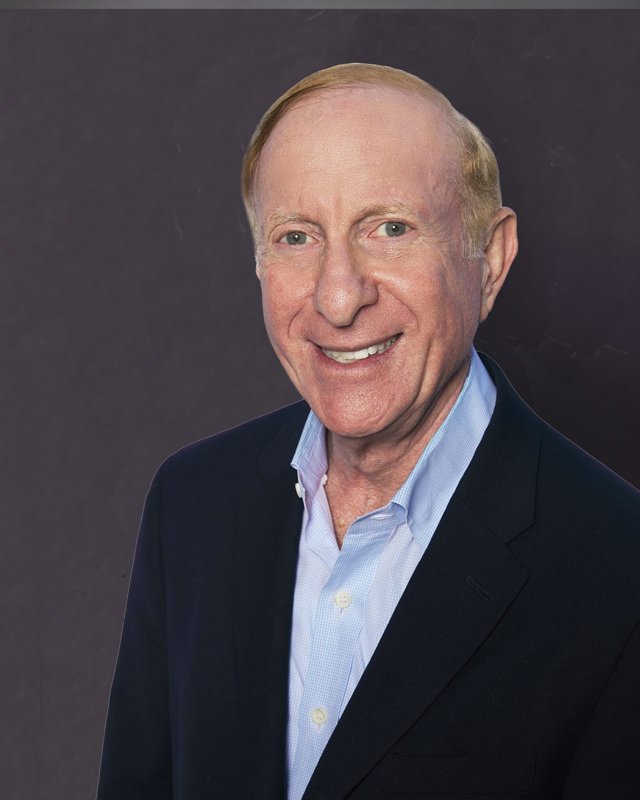
Howard Morgan
InvestorCo-Founder, Chair and General Partner at B Capital Group · Board of Directors at Idealab
New York
Find your path to Howard
Sign up to see every warm intro you have to Howard
- Paths you didn't know you had: your email and LinkedIn already hold routes to Howard. We find them for you
- 2nd- and 3rd-degree connections: the friend-of-a-friend routes that take hours to manually find through your inbox or LinkedIn
- Answers now, not in days: momentum is everything in a raise. Skip asking around whether someone knows someone
Days of research, done the moment you sign in, with every route ranked by how warm it is.
About
Howard Lee Morgan is a New York-based computer scientist, quantitative-finance executive, company builder, angel investor and venture capitalist. He earned a B.S. in physics from City College of New York in 1965 and a Cornell Ph.D. in operations research in 1968, then taught computer science and operations research at Cornell before holding dual academic appointments in Wharton's Decision Sciences department and Penn's Moore School from 1972 through 1985. His distributed-database, user-interface and office-automation work—supported in part by DARPA, the Navy and the Office of Naval Research—helped connect Penn as ARPANET node 50 in the 1970s; he became the first editor of ACM Transactions on Database Systems and also edited Communications of the ACM, Management Science and Transactions on Office Information Systems. Morgan invested in an early microprocessor-terminal company that later became Neoware, helped build first-commercial-Unix-licensee Interactive Systems, and in 1982 joined Jim Simons to start Renaissance Technologies as president. Morgan says Renaissance initially split roughly $70 million between quantitative strategies and venture investments; when quant capacity grew by 1989, he moved venture work into Arca Group, which he still owns. He made the first outside check into Bill Gross's Idealab in 1996 and remains a director, with documented involvement in GoTo/Overture, CarsDirect/Internet Brands, Evolution Robotics, eToys, Savage Beast/Pandora and other studio projects. After backing Josh Kopelman's Infonautics, Half.com and TurnTide, Morgan and Kopelman launched First Round in 2004 around $250,000-$500,000 seed checks. Morgan led its New York presence, served on boards including TechForward, and planned his partner transition from inception; he stepped down at the end of 2016, retained advisory/legacy-board work, and later ceased the formal special-advisor role as B Capital entered early stage. He joined B Capital as chair in 2017 and is now officially described as co-founder, chair and general partner; he helped found its $250 million Ascent early-stage strategy. His current stated interests include AI, space, brain-computer interfaces and quantum computing. Morgan's first-person framework prioritizes six P's—people, product/market, plans, profits, passion and persistence—along with large markets, coachability, positive unit economics, deliberate constraint relaxation, fast/cheap failure and long-term founder partnership. Attribution is bounded carefully: Renaissance, Idealab, First Round and B Capital outcomes are institutional unless a source directly identifies Morgan's check, board role or leadership. Directly supported relationships include Infonautics, Half.com, TurnTide, Aggregate Knowledge, Odeo, Square, TechForward, Openwater, MemSQL, Precision Neuroscience, EeroQ, MyndYou, Augury and Star Catcher; wider firm portfolios are not automatically Morgan-led. Counterweights include eToys' collapse and negative unit economics, missed Twitter and Airbnb investments, First Round's failed Odeo thesis, TechForward's operating failure before a favorable $27 million verdict, and the inherently self-reported nature of Renaissance return recollections. Morgan and his wife Eleanor have endowed two Cornell professorships; he has served Cornell, Cornell Tech, the New York Public Library, Cold Spring Harbor Laboratory and Math for America, and received NVCA's 2025 Venture Vanguard Award.
Contact· published on Howard's own website
Invests in
AI & Machine LearningCloud ComputingConsumerData & InfrastructureEdTechEnterprise SoftwareFintechHealthtechLogistics & Supply ChainQuantum Computing
Beyond investing
- Founded
- Morgan co-founded Renaissance Technologies. Morgan co-founded First Round Capital as one of the first institutional seed funds.
- Education
- Studied at City College of New York (B.S., Physics) Studied at Cornell University (Ph.D., Operations Research) Studied at University of Pennsylvania (M.S.(hc)) Morgan says Penn was ARPANET machine/node 50; Cornell and First Round materials place the connection in 1974, while First Round's interview header says 1972. The safe conclusion is early-1970s work culminating in the documented 1974 Philadelphia connection, not sole invention of networking technology. Published on telephone time-sharing, management information systems, disk allocation, distributed database location, natural-language interfaces and office automation. He describes Navy, DARPA and Office of Naval Research support; publication metadata identifies 38 works and roughly 520 citations, but citation counts are dynamic. B Capital and Cornell biographies identify Morgan as the first TODS editor; he also edited Communications of the ACM, Management Science and Transactions on Office Information Systems and led an early Very Large Data Bases conference.
- Boards
- Morgan serves as a Trustee of Cornell University. Morgan is a Foundation Director of the New York Public Library. Morgan is a Trustee of Cold Spring Harbor Laboratories. Morgan is a Director and Executive Committee member of Math for America. Morgan is Chair of the Mabel Mercer Foundation.
- Charities
- Cornell reports that Howard and Eleanor Morgan endowed the Howard and Eleanor Morgan Professorship at Cornell Tech and the Eleanor and Howard Morgan Professorship in ORIE. Exact gift amounts were not public in the reviewed announcement.
- Awards
- Morgan was named Delaware Valley Entrepreneur of the Year in the Ernst & Young competition. SALT reports a Delaware Valley Ernst & Young Entrepreneur of the Year award, commonly dated 1997 in company biographies. NVCA named him to its 2025 Venture Vanguard class for early-stage investing, internet-era work and ecosystem service. The award is recognition, not return verification.
- More
- Morgan brought the ARPAnet to Philadelphia in 1974 as a computer science professor. Morgan was a founding investor in Idealab in 1996. Morgan says he financed a Penn computer-center colleague's microprocessor-terminal company; the business later became Neoware and went public. No reviewed filing establishes his check, ownership or proceeds. Morgan recalls that in 1982 Jim Simons had grown approximately $2 million to $70 million, with only about half supportable by then-current quantitative capacity, so the firm paired quant trading with venture investing. By 1989, he says quant capacity supported roughly $1 billion and venture activity was separated. These figures are recollections, not audited fund returns. Morgan says Proximity Technology built a fuzzy-search chip until Bill Gates warned software would catch up; the team shifted toward software and the Franklin Spelling Ace, which Morgan says generated $100 million in the late 1980s. Revenue and personal economics were not independently audited here. Morgan contrasts about $5 million to first product at Infonautics, about $2 million for Half.com and $750,000 for TurnTide. Kopelman proposed $250,000 startup checks; Morgan funded half, the two traveled extensively and made 14 first-year investments before institutionalizing the firm. Figures are first-person estimates and not fund audits. Morgan describes Idealab's eToys as conceptually right but overvalued and unable to achieve positive gross margin before the dot-com financing window closed. Bill Gross reported revenue growth followed by overbuilt warehouses, a failed follow-on financing assumption and collapse. It is an Idealab loss lesson, not evidence that Morgan alone controlled management. Morgan says First Round backed Odeo, received capital back when Apple commoditized podcasting, then declined Twitter at a $20 million pre-money valuation because its cap was $10 million. He and Kopelman also rejected Airbnb after asking their spouses whether they would rent a couch to a stranger. He distinguishes the personal benefit of being an LP in Union Square Ventures, which backed Twitter, from a First Round investment. After missing Twitter, Morgan says First Round broke its former valuation ceiling to back Jack Dorsey's Square and realized roughly 25-30x. The multiple is his recollection, not an audited fund-level return or personal proceeds. Morgan wrote that he had planned to step down around age 70 from the firm's beginning, both to make room in carry and to preserve institutional succession. He remained available for questions and legacy investments rather than portraying retirement as an abrupt break.
From Howard's own website — common ground for a warm intro.
Investments
Board seats
Evolution RoboticsFranklin Electronic PublishersgustIdealabInternet BrandsInternet BrandsInternet Brands, Inc.
Investor
AbraAggregate KnowledgeAktivateAltruikAmbient DevicesApptronikAuguryAugury SystemsBase OperationsBezarBlock IncBoundless MindBroader First Round and B Capital portfoliosCambrian Asset ManagementCapital Technologies Solutions, Inc.ConcertioCurbWasteDeliciousDogVacayEeroQEnvelop VRFabFairtilityFranklin Computer / Franklin Electronic PublishersGardenGemGoTo / Overture; CarsDirect / Internet Brands; Evolution Robotics; eToys; Savage Beast / Pandora; Energy VaultGrace Investment MachineGumGumHalf.comHATCHHavoc AIHemisphericIdealabInfonauticsInvisible TechnologiesKnoxLex CheckLidwaveLightning LabsMemSQLMerlin LabsMoxieMyndyouNeoware predecessor / early microprocessor-terminal companyNeuroKaireNeurovigilNifty ThriftyNimble TVNorbert HealthNumeraiOdeoOpenwaterOrdinalsBotPepoPinrosePit.AIPrecision NeurosciencePrecision Neuroscience; EeroQ; MyndYou; Augury SystemsSpoon UniversityStar CatcherTechForwardThe Climate Corporation (Bayer Crop Science)Tiny OrganicsTruverisTurnTideTwitter; AirbnbUpdateAIWATERFXX1
Sources: curated public sources · the firm's website.
Controversies & responses
Where Howard has drawn public criticism — with what happened, their response, and the criticism itself, side by side.
▶Backed TechForward litigation after operating failure2011
- What happened
- Morgan sat on TechForward's board when Best Buy's actions allegedly dealt the startup a fatal blow. After TechForward sold assets to SquareTrade, First Round and NEA retained and funded the claim. A jury awarded $22 million plus $5 million punitive damages for trade-secret misappropriation and breach; Best Buy said it would challenge the verdict. This was legal vindication after a failed standalone business, not a conventional portfolio exit.
Founder fit — who Howard backs
Best fit is an honest, highly intelligent and coachable founder with strong chemistry, a decade-scale commitment, a giant market, intense passion and persistence, and enough operational literacy to model cash and unit economics. He is particularly useful where deep technical history, databases, networks, hardware/software cost curves or regulated frontier technology matter. Founders should be able to state the science-fiction end state, identify the technical/cost/knowledge/time constraints, find adjacent experts when the exact talent does not exist, ship within roughly a year where appropriate, diversify acquisition channels, delegate as the team scales and accept that timing or founder-role changes may require a pivot. Repeat founders can justify valuation exceptions more readily in his stated framework.
Small markets that cannot produce venture-scale outcomes; negative unit economics rationalized by volume; founders who cannot explain cash needs; brittle plans tied to today's cost or bandwidth; science fiction that violates physical reality or requires an irrelevant 50-year horizon; uncoachable or dishonest teams; low passion; founders unable to persist or delegate; single-channel acquisition dependence; companies unable to ship in an appropriate early window; inflated valuation disconnected from stage, especially for first-time founders; oversized rounds that force style drift; and teams unwilling to fail cheaply when timing is wrong. These are synthesized from first-person frameworks, not a current exclusion policy or promise of funding.
How to pitch
Lead with the people and why this team can spend a decade together: demonstrate honesty, coachability, relevant judgment, passion and persistence. Define a very large market and the end-state 'what if,' then name each technical, cost, knowledge and time constraint and show a bridge product that works now. Present unit economics, gross margin, cash plan, minimum capital to cash neutrality, launch timing, customer-acquisition alternatives and the tests that could disprove the thesis cheaply. Explain which skills do not yet exist and the closest talent analogs. Be ready for off-list references and questions about weaknesses. Ask explicitly whether Morgan is acting through B Capital's Ascent team, a later-stage B Capital vehicle, Arca/MFCIF/personal capital or merely advising; who leads diligence; current check and ownership targets; board expectations; BCG/platform support; follow-on reserves; and whether the opportunity overlaps First Round. Do not cite historic $250,000-$500,000 checks as a current B Capital quote.
Stages: historical angel and company formation, pre-seed, seed, early stage through B Capital Ascent, growth stage, select later-stage global investing, public-company and private-board mentoring · Sectors: artificial intelligence, space infrastructure, brain-computer interfaces and neuroscience, quantum computing, enterprise software, databases and data infrastructure, computer networks and communications, digital health, biotech and medtech, fintech and quantitative finance, logistics and supply chain, robotics, energy and climate technology, consumer internet and marketplaces, advertising and search technology
Editorial inference from Howard's portfolio, writing and public record — not a published mandate.
Investment themes
14 documented themes from Howard's essays, talks and portfolio, grouped by what they say about founders.
▶Founders & company building3
The six P's begin with people2022
People, product/market, plans, profits, passion and persistence organize his diligence; honesty, intelligence, chemistry and coachability precede the rest.
For founders: Show character and learning through concrete decisions, then connect product, planning, economics, passion and resilience.
Relax knowledge constraints through analogs2018
Frontier fields have no perfectly trained hires; recruit smart people with adjacent expertise and train them while respecting physical limits.
For founders: Map each unprecedented problem to the nearest proven skill pool and define the learning system.
Time to customers replaced time to product2018
Cheap software infrastructure shortened product build time, making hiring and rapid customer growth the more important constraints.
For founders: Explain the first-year shipping plan, hiring throughput and diversified channels to reach meaningful scale.
▶More themes10
Large markets forgive product evolution2022
The day-one product will change; a giant market creates room to morph toward product-market fit and venture-scale value.
For founders: Size the market honestly and explain adjacent positions available when early assumptions fail.
You cannot make up negative unit economics in volume2022
eToys and the dot-com cycle reinforced positive gross margin, cash planning and the difference between growth and durable profits.
For founders: Bring contribution economics, burn and a credible minimum-capital path to cash neutrality.
Relax technical and cost constraints2018
Imagine bandwidth, storage, processors or software costs after the next curve, but build a product that operates under current constraints.
For founders: Name what is missing, when it plausibly arrives and how today's architecture avoids being stranded.
Founders must stop being the constraint2018
As the company scales, founders should give away jobs, institutionalize hiring and consider management or ownership changes that advance the mission.
For founders: Identify decisions that remain founder-only and the process that will safely delegate each one.
Fail fast and cheap, then reuse learning2022
Idealab could test a project for about $50,000, shut it down and redeploy talented operators; institutional venture commitments make this psychologically harder.
For founders: Design cheap falsification tests and distinguish loyalty to a mission from attachment to one implementation.
Correct ideas can still be way too early2022
Bandwidth, adoption and capital-market timing can defeat a correct prediction, as Z.com, SixDegrees and eToys illustrated.
For founders: Prove that enabling infrastructure and customer behavior exist now, not merely that they eventually will.
Keep dollars per partner bounded to avoid style drift2022
First Round resisted oversized funds that would force bigger checks and later-stage investing, targeting roughly $30-$35 million per partner historically.
For founders: Understand which vehicle is investing and whether its scale, ownership needs and stage fit the company.
Founder networks can scale venture support2022
First Round's early CEO/CTO network let peers solve operational problems faster than partners alone, including Mint's MySQL scaling crisis.
For founders: Diligence peer access and institutional support separately from a famous partner's personal time.
The great sin is not seeing the deal2022
Morgan accepts wrong decisions such as Twitter and Airbnb; he considers a sourcing failure worse because no reasoned choice was possible.
For founders: Warm context may help visibility, but founders should still identify the actual sponsoring partner and decision process.
Plan generational transition before it is urgent2016
Morgan stepped away from First Round's voting partnership to create room, retain motivation for successors and prevent founder control from becoming an institutional constraint.
For founders: Discuss role evolution, carry/equity renewal and succession while relationships and performance are healthy.
▶Governance & network states1
Protect startups when counterparties exploit them2012
Morgan's TechForward board experience convinced First Round and NEA to fund litigation after operating assets were sold, producing a favorable jury award.
For founders: Preserve contracts, trade-secret controls, governance records and legal rights even when the operating company is distressed.
Podcasts & interviews
featuring Howard MorganFounding Renaissance Technologies & First Round Capital, the Origins of Idealab
The Full Ratchet · fullratchet.net
The Imperative Practice of Relaxing Constraints
First Round Review · review.firstround.com
Howard Morgan Teams with Facebook Co-founder
Axios · axios.com
First Round Capital Says Goodbye to Co-Founder, Hello to New Fund
Fortune · fortune.com
Moving On: Generational Change at First Round
Medium / Howard L. Morgan · medium.com
Why First Round Capital Funded a Lawsuit
First Round / Redeye VC · redeye.firstround.com
Writing
Personal essay on planned succession, LP continuity, carry renewal and continuing advisory work.
IFIP Congress paper connecting office-automation research to practical use.
Government-indexed paper with David J. Root on persistent organizational information.
Describes Penn office-automation work integrating split-screen displays, databases, word processing and process tracking.
Operations Research paper with K. Dan Levin extending distributed-database location work.
Communications of the ACM paper with K. Dan Levin on optimizing program and data placement in networks.
Colleagues at B Capital Group
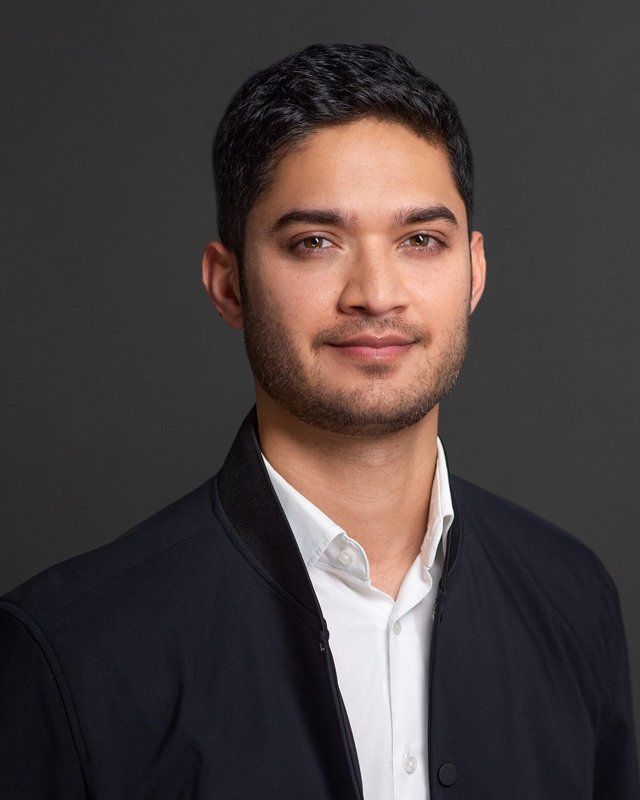
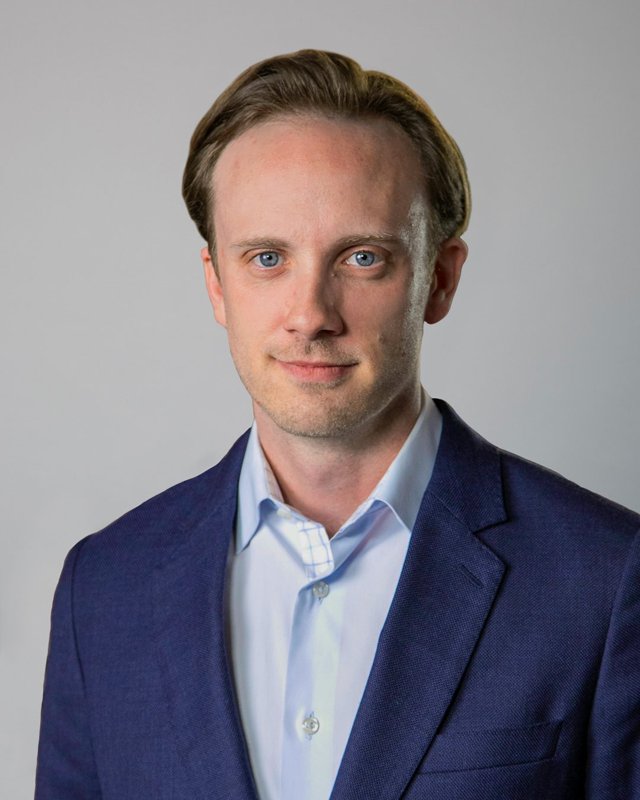
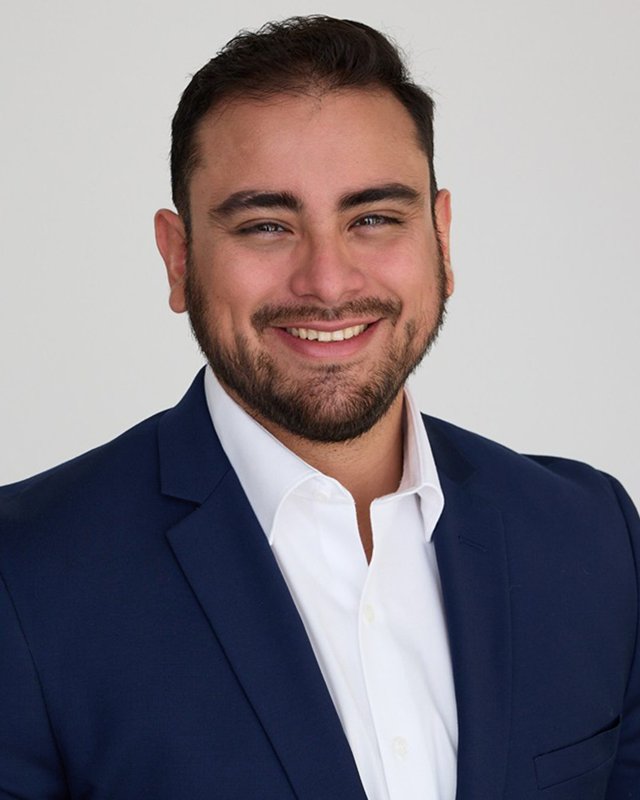
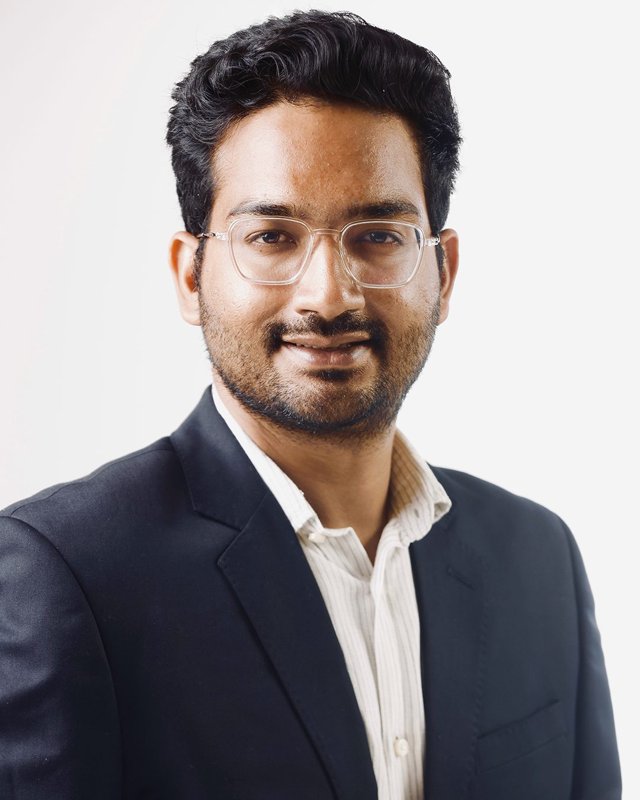
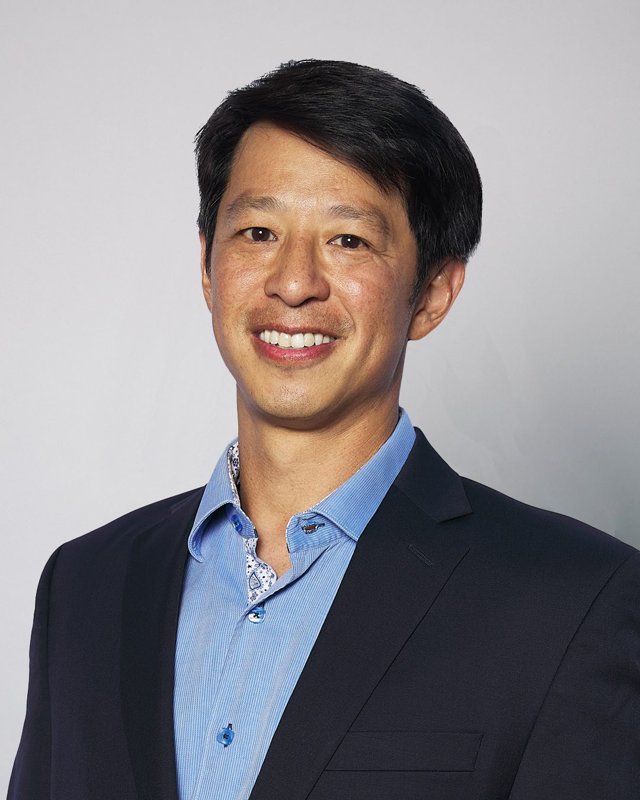
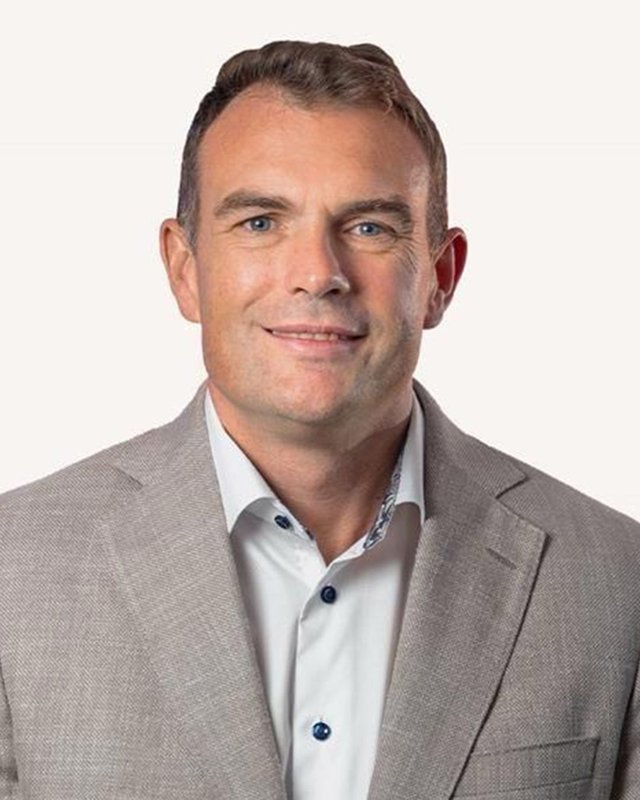

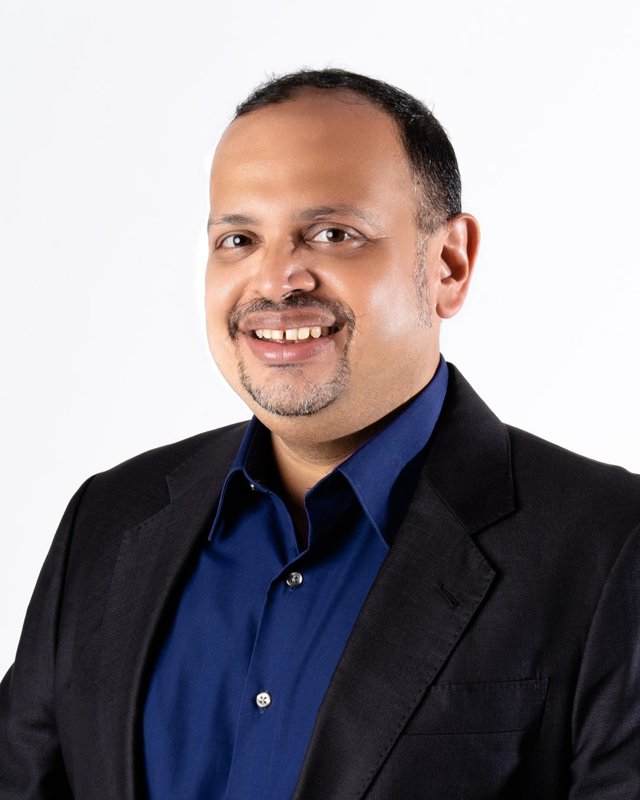
Network24



▶12 more connections
Dalton Ang · scoutDavid Bohnett · scoutDavid Magerman · scoutDeepanshu Pattanayak · scoutDhruv Jain · scoutDon Wood · scoutEddie Lou · scoutEric Gossart · scoutEric Ver Ploeg · scoutGabe Greenbaum · scoutGenevieve Gilbreath · scoutJason Goldberg · scout
Investors connected to Howard in public investor directories — a warm-intro map.
Frequently asked questions
- Who is Howard Lee Morgan?
- He is a computer scientist and investor who taught at Cornell and Penn, helped connect Penn to ARPANET, served as Renaissance Technologies' founding president, founded Arca Group, became Idealab's first outside investor, co-founded First Round and now chairs B Capital.
- What did Howard Morgan study?
- He earned a B.S. in physics from City College of New York in 1965 and a Ph.D. in operations research from Cornell in 1968; Penn awarded him an honorary M.A. in 1974.
- What was his role in ARPANET?
- His Penn research in networks, interfaces and office automation led him to bring ARPANET node/machine 50 to Philadelphia in the early 1970s, commonly dated 1974. This is a connection and applied-research contribution, not a claim that he invented ARPANET.
- Did Howard Morgan found Renaissance Technologies?
- He was an original team member and founding president with Jim Simons, who is the principal founder. Morgan helped formalize the 1982 firm and its early venture portfolio, leaving in 1989 when the venture activity was separated.
- What was his role at Idealab?
- Morgan says Bill Gross's in-laws made the first family investment and he made the first outside investment in 1996. He helped establish the studio, held vice-chair/Idealab New York roles and remains a director; Gross and operating teams retain company-creation credit.
- How did First Round begin?
- After Morgan backed Kopelman's Infonautics, Half.com and TurnTide, falling software and infrastructure costs convinced them companies could start with roughly $250,000. They launched in 2004 with two half-time partners, made 14 first-year investments and expanded from one-year funds into an institutional seed firm.
- Is Howard Morgan still at First Round?
- No current formal role is established. He left the investment partnership at the end of 2016, continued as special adviser and with legacy investments, then says he relinquished the role when B Capital entered early-stage investing. He remains a substantial First Round LP by his account.
- Did Howard Morgan co-found B Capital?
- Current B Capital sources call him co-founder, chair and general partner, but Axios reported contemporaneously that in 2017 he joined a growth firm led by Eduardo Saverin and Raj Ganguly as part-time chair. The dossier preserves both rather than erasing the chronology.
- Which investments are directly attributable to Howard Morgan?
- First-person or official sources directly support checks or active relationships with an early Neoware predecessor, Franklin, Infonautics, Half.com, TurnTide, Idealab, Aggregate Knowledge, Odeo, Square, TechForward, MemSQL, Openwater, Precision Neuroscience, EeroQ, MyndYou, Augury and Star Catcher, but legal vehicles remain unclear for several. Entire First Round, Idealab and B Capital portfolios are not automatically his.
- What investment failures or misses has he discussed?
- He discusses eToys' collapse and negative margins, Odeo's superseded podcast product, missing Twitter because of a valuation cap, rejecting Airbnb on adoption judgment and many Idealab projects shut down cheaply. TechForward's operating business failed before retained litigation produced a favorable verdict.
- What are the six P's?
- People, product, plans, profits, passion and persistence. Morgan reframes product partly as the ability to operate in a giant market and profits as positive unit economics; he rates people and market most important, with passion close behind.
- What does relaxing constraints mean?
- Founders should periodically imagine technical, cost, knowledge and time constraints disappearing, build toward that future while surviving current limits, recruit adjacent talent where experts do not exist and ensure the founder does not become the company's bottleneck.
- What should a founder include in a pitch to him?
- Evidence of honest and coachable people, a giant market, passion and persistence; a cash and unit-economics plan; the constraints that block the end state; a near-term bridge product; cheap falsification tests; and explicit vehicle, lead-partner and board expectations.
- What check size does Howard Morgan write?
- No reliable current Morgan-specific range is public. First Round historically targeted $250,000-$500,000 initial checks, but Morgan now works across B Capital early and growth vehicles plus separate entities; founders should ask which vehicle and current mandate applies.
About this profile. Compiled from public sources — B Capital Group's own website, press coverage and public professional profiles — and summarised by Fundraising Fox; every fact is kept with where it came from. Spotted an error, or would rather not be listed? Email privacy@fundraisingfox.com · How we build profiles · Your rights