 Fundraising Fox
Weave
YC W25San Francisco, US · Founded 2024 · 14 employees · Hiring · 13 known investors
Find your way into Weave
Sign up to see every warm intro you have to Weave
- Paths you didn't know you had: your email and LinkedIn already hold routes to the Weave team. We find them for you
- 2nd- and 3rd-degree connections: the friend-of-a-friend routes that take hours to manually find through your inbox or LinkedIn
- Answers now, not in days: momentum is everything in a raise. Skip asking around whether someone knows someone
Days of research, done the moment you sign in, with every route ranked by how warm it is.
Weave provides an engineering intelligence platform that measures and optimizes software development team productivity by analyzing code impact and engineering work patterns, integrating AI assistance to help engineers ship faster.
Also known as WorkWeave · Weave (workweave.dev) · WorkWeave Inc.
Founders & leadership· Y Combinator alumni (W25)
Weave was founded in 2024 by Adam Cohen and Andrew Churchill.


Investors · 13

How we know: Album VC's portfolio page · Not right? Tell us
How we know: Y Combinator's founder network · eightcapital.com · Not right? Tell us

How we know: Moonfire Ventures's portfolio page · research · workweave.dev · Y Combinator's founder network · Not right? Tell us
How we know: Y Combinator's founder network · pioneerfund.vc · Not right? Tell us
How we know: Y Combinator's founder network · Not right? Tell us

How we know: Standard Capital's portfolio page · research · workweave.dev · Y Combinator's founder network · Not right? Tell us

How we know: the Y Combinator directory · research · workweave.dev · Not right? Tell us

How we know: Y Combinator's founder network · Not right? Tell us

How we know: research · workweave.dev · Y Combinator's founder network · Not right? Tell us
How we know: Y Combinator's founder network · Not right? Tell us

How we know: funding news · Not right? Tell us
Also in the syndicate · 2
The YC application· Winter 2025 batch
Weave's Application Video for YC W14
Y Combinator
Company profile
researched Aug 2026Weave (WorkWeave Inc., workweave.dev) builds an engineering-intelligence platform that measures the output of software teams and the AI tools and agents they use. The platform connects to development systems such as GitHub and Jira and applies large language models together with domain-specific machine learning to analyze code, pull requests, reviews, deployments, and project data, classifying work (for example new feature, bug fix, or refactor) and estimating the effort and impact behind each change rather than counting activity such as lines of code, commits, or story points. Outputs are normalized into a single unit intended to be comparable across individuals, teams, programming languages, and organizations, and are combined with established frameworks including DORA and SPACE plus survey data in one dashboard.
Product areas described by the company include engineering intelligence (team and individual output, code quality, cycle time, review throughput, deployment frequency, and bottleneck identification), code intelligence, token intelligence and model observability (tracking AI spend, cost per unit of completed engineering work, and benchmarking return on token spend against other organizations), and a prompt router distributed as an npm package (@workweave/router) that classifies each prompt and routes it to a lower-cost model while claiming to preserve quality and speed, learning from individual and organizational feedback. An agent called Wooly answers questions about a customer's data in-app or via MCP, citing the underlying records. Weave positions its analytics as separating AI-generated work from human-led effort using a two-stage AI pipeline, so leaders can see AI adoption and impact down to the team and individual level.
The company frames its market thesis around ending "tokenmaxxing" — optimizing AI coding tools for token volume rather than meaningful engineering progress — arguing legacy metrics reward code volume over outcomes. Weave states SOC 2 Type II certification with third-party audits, GDPR and HIPAA compliance claims, SSO via SAML and OIDC, SCIM provisioning, and role-based access.
Founding story
WorkWeave was founded by Andrew Churchill and Adam Cohen, whose backgrounds in engineering and software product development shape the platform's focus on data-driven insights for teams working with AI tooling. Adam Cohen serves as Co-Founder and CEO and Andrew Churchill as CTO. The company describes its mission as helping engineers pair with AI to ship faster by first understanding the work engineers do and then pinpointing team-level optimizations.
Business model
Weave sells a software platform to engineering organizations, offering a free entry tier ("Get Started for Free") alongside demo-led and enterprise sales motions. The company states its pricing has always been monthly, with no annual lock-in.
Subscription software sold to engineering organizations; the company states monthly pricing rather than annual contracts. Specific price points and revenue figures are not disclosed in the sources.
Traction
Company and press figures as of mid-2026: 500+ engineering organizations as customers, 2M+ pull requests / human and AI code contributions analyzed, 20,000-25,000 engineers covered, 50M+ prompts analyzed, and 50+ AI tools supported. Named customers include Robinhood, Reducto, PostHog, Telnyx, and Mycroft. Weave cites Reducto reaching a 19% increase in measured engineering output and a first executive report 14 days after install, and states teams using the platform see 19% higher output with proper AI implementation.
Latest developments
On July 28, 2026, Weave announced a $13.5 million Series A led by Standard Capital, with Y Combinator, Moonfire, Burst Capital, IrregEx, and the Agent Fund participating; Dalton Caldwell of Standard Capital commented on the investment. The company said proceeds would fund product development and expanded operations, with the stated goal of becoming the system of record for how engineering teams and AI agents affect business outcomes and development velocity. A April 2026 company blog post details the platform's AI measurement, AI-tooling impact, developer-experience, and dashboard features.
▸Full profile — market position, technology, go-to-market, geography, history, risks & controversies
Market position
Weave competes in the engineering analytics and developer-productivity measurement market, which sources describe as increasingly competitive and historically focused on delivery metrics such as deployment frequency and cycle time. Weave differentiates by targeting the measurement of AI-assisted development and AI-spend ROI. As of July 2026 the company reported 500+ customer organizations and analysis of 2M+ code contributions across 20,000+ engineers.
Rather than activity proxies such as lines of code, commit counts, or story points, Weave analyzes the substance and impact of each code change with LLMs and ML, and normalizes human and AI work into one comparable unit applied uniformly across engineers, repositories, and languages. It also attributes AI-generated versus human work, quantifies AI cost per unit of engineering output, benchmarks against other organizations, and bundles a prompt router that shifts workloads to cheaper models.
Technology
Large language models combined with domain-specific machine learning models trained for software engineering. A two-stage AI pipeline separates AI-generated work from human-led effort; models analyze each pull request for complexity, scope, and type to estimate real effort. The prompt router classifies prompts and proxies them to cost-efficient models across Anthropic, OpenAI, and Google clients with low added overhead, installed via npx and configured with per-provider environment variables. The Wooly agent surfaces recommendations grounded in and citing the customer's own records, and is accessible in-app or through MCP.
Go-to-market
Self-serve free signup and "Book a Demo" motions on the website, an enterprise track emphasizing security and compliance, a developer-installable router via a single npx command, content marketing on engineering analytics, and high-touch support in which the company says every customer gets a shared Slack channel. Funding announcements in July 2026 included customer testimonials from Telnyx and Reducto.
Engineering leaders, CTOs, VPs of engineering, and engineering managers, plus finance leaders concerned with AI spend, at organizations ranging from seed-stage startups to Fortune 100 companies. Named customers include Robinhood, Reducto, PostHog, Telnyx, and Mycroft.
Geography
Headquartered in San Francisco, California, United States. No other offices are described in the sources.
History
Public sources capture the company as a five-person San Francisco startup offering AI analytics for engineering teams, then as an engineering-intelligence platform that announced a $13.5M Series A led by Standard Capital on July 28, 2026, with participation from Y Combinator, Moonfire, Burst Capital, IrregEx, and the Agent Fund. Product scope by 2026 had expanded from engineering measurement to include token intelligence, model observability, a prompt router, and the Wooly agent. Sources also associate the company with a second domain, weaveos.com.
Risks & controversies
Sources note the engineering analytics market is competitive and that measuring developer productivity in the AI era is contested, with legacy metrics described as unreliable. Weave's measurement of individual engineers (per-engineer AI usage, quality, and output scores) touches on sensitive workforce-monitoring territory. Traction figures are largely self-reported and inconsistent across sources (20,000+ versus 25k+ engineers). Sources also list two different corporate websites (workweave.dev and weaveos.com), and the name "Weave" is shared with unrelated companies. Employee count of 5 comes from a third-party directory that may predate the Series A.
Compiled by commissioned research from 8 cited public sources — announcements, filings, and press listed under research sources below.
Key figures
latest reportedCompany-reported or press-reported figures, each dated to when it was claimed — not independently audited.
Images
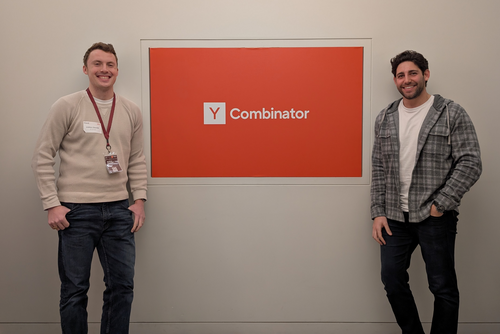
Founder mafia
2 people who came through Weave went on to found or lead other companies.
Related companies · 10









Companies working in the same space as Weave.
Timeline · 1
launches, deals, and filingsWeave announced a $13.5 million Series A led by Standard Capital with participation from Y Combinator, Moonfire, Burst Capital, IrregEx, and the Agent Fund. The company said funds will go toward product development, expanding operations, and scaling its engineering-intelligence platform.
$13.5M source ↗
Dated company events from announcements, filings, and press; legal rows summarize public dockets and regulator releases.
Legal entities · 1
corporate structureIn the news
▸Research sources · 8
primary sources listed
- Weaveworkweave.dev · web
8 public sources were cited for this profile; the first-party ones are listed here.
Frequently asked questions
- What does Weave do?
- Weave is a San Francisco engineering-intelligence platform that measures human and AI software output and AI-spend ROI.
- Who founded Weave?
- Weave was founded by Adam Cohen, Andrew Churchill in 2024.
- Who are Weave's investors?
- Weave's investors include Album VC, Eight Capital, Moonfire Ventures, Pioneer, Roar Ventures, Standard Capital, Y Combinator, Andreessen Horowitz and 3 more.
- Where is Weave headquartered?
- Weave is headquartered in San Francisco, US.