 Fundraising Fox
Unicorn Bio
Entrepreneur First '21London, GB · Founded 2021 · 18 known investors
Find your way into Unicorn Bio
Sign up to see every warm intro you have to Unicorn Bio
- Paths you didn't know you had: your email and LinkedIn already hold routes to the Unicorn Bio team. We find them for you
- 2nd- and 3rd-degree connections: the friend-of-a-friend routes that take hours to manually find through your inbox or LinkedIn
- Answers now, not in days: momentum is everything in a raise. Skip asking around whether someone knows someone
Days of research, done the moment you sign in, with every route ranked by how warm it is.
Unicorn is building technology to automate biology, developed by a team of scientists and engineers.
Also known as Unicorn Bio · Unicorn Biotechnologies
Founders & leadership
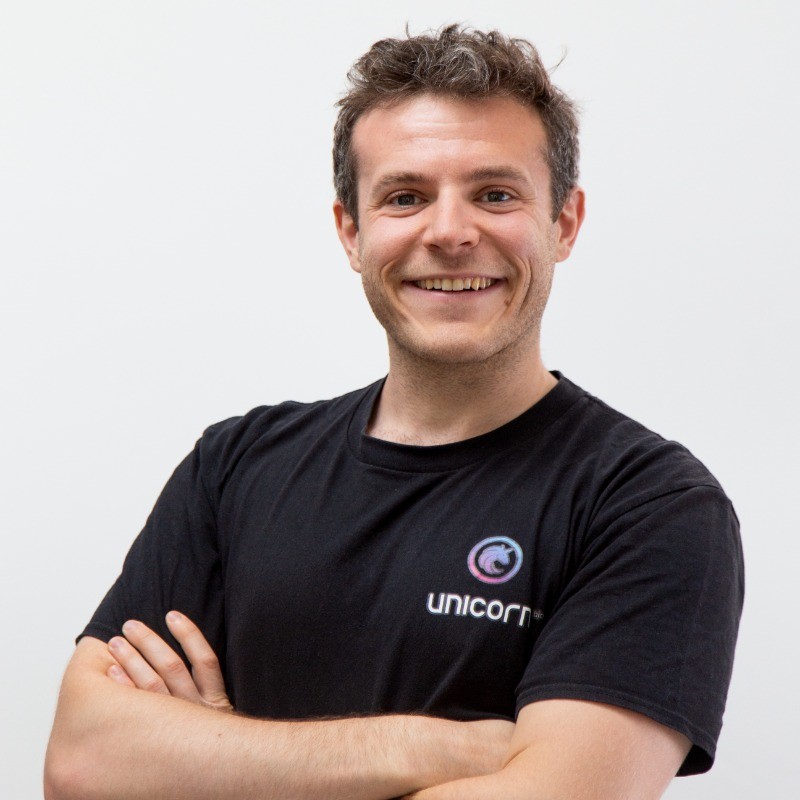
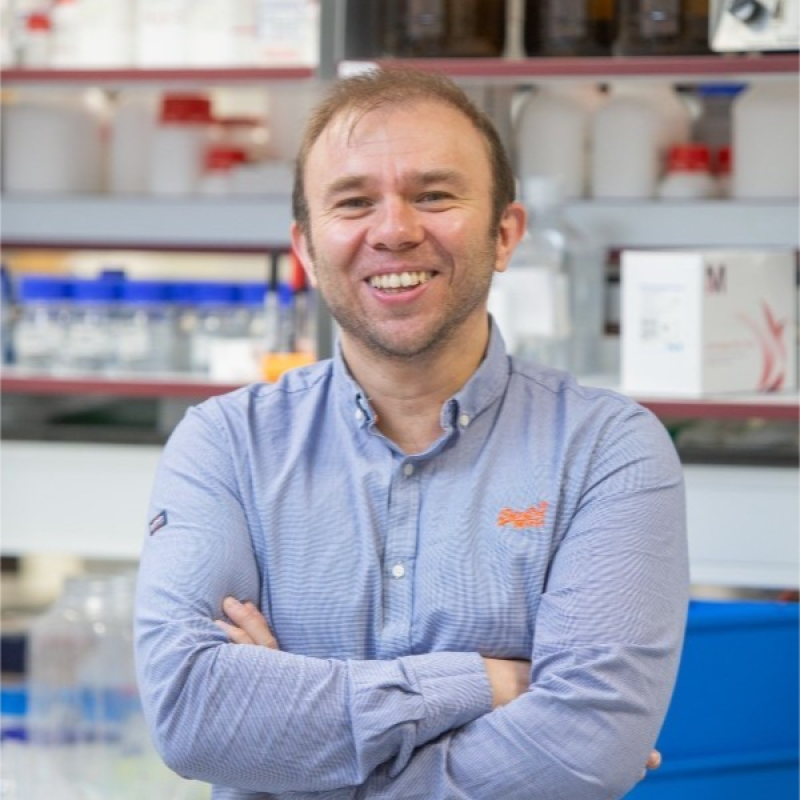
Unicorn Bio was founded in 2021 by Jack Reid and Adam Glen.
Investors · 18

How we know: research · startupintros.com · av.vc · Not right? Tell us

How we know: the Entrepreneur First portfolio · open dataset · 5k.vc investor directory · Not right? Tell us
.jpeg)

How we know: research · startupintros.com · open dataset · 5k.vc investor directory · sosv.com · Not right? Tell us

How we know: Unruly Capital's portfolio page · Not right? Tell us


How we know: research · startupintros.com · Not right? Tell us

.jpeg)
Also in the syndicate · 7
Company profile
researched Aug 2026Unicorn Biotechnologies (Unicorn Bio) develops automated cell culture systems — machines, consumables and services — intended to standardize and industrialize mammalian cell culture workflows, with particular focus on induced pluripotent stem cells (iPSCs). Its stated aim is to remove manual liquid-handling and flask-transfer work from laboratory workflows so that scientists can concentrate on experimental design and analysis, and to provide processes that transfer to linearly scalable systems from bench through pilot and commercial manufacturing [0][1][6].
The company's first product is Emmet, described as an intelligent benchtop instrument that automates tissue-culture flask workflows through a unified hardware and software stack and applies machine learning in the tissue culture lab [2]. Published application notes report automated expansion of hiPSCs from a T25 to a T225 flask in a closed, automated benchtop system, and automated hiPSC differentiation into cardiomyocytes at greater than 96% purity [0][5]. Third-party profiles describe a pipeline that also includes GMP-ready and early-discovery systems, along with contract R&D services such as cell line engineering, bioassays and LNP delivery [6].
Secondary sources characterize the addressable applications as drug discovery, regenerative medicine, cell and gene therapy, and cultivated meat [6][7]. Note that reported firmographics differ across sources: Startup Intros lists founding in 2020 and an HQ in Cambridge, UK with an employee range of 1001-5000, while Caplight lists founding in 2020, an HQ in Sheffield and roughly 15 employees; the company's own materials place its laboratory operations in Sheffield [0][5][6][7].
Founding story
Startup Intros reports the company was co-founded by Adam Glen and Jack Reid, with Glen described as holding a PhD in cancer research and prior experience in academia, GE Healthcare and biotech startups, specializing in stem cell biology, tissue engineering and hardware for life sciences. The stated origin was frustration with manual cell culture methods described as largely unchanged since the 1950s, and the view that these methods constrain both scientific progress and the scalability of cell-based therapies [6]. The company's own mission page frames the goal as creating tools to standardize and industrialize cell biology [4].
Business model
B2B supplier of laboratory hardware to life-science organizations, characterized by Caplight as combining hardware sales, services and consulting, and hardware plus subscription [7]. Startup Intros describes a "picks and shovels" positioning supplying tools to other biology organizations rather than developing therapeutics itself [6].
Reported revenue streams include sales of instruments and consumables, contract R&D and cellular/molecular biology services, near-term licensing of engineered cell lines, and a "Cell-manufacturing-as-a-Service" offering aimed at cell and gene therapy, pharma and cultivated meat customers [6][7].
Traction
Publicly verifiable traction is limited. The company has published two Emmet application notes (January and July 2025) demonstrating automated hiPSC expansion and cardiomyocyte differentiation [5], relocated its scientists and engineers into a refurbished Sheffield city-centre laboratory in September 2024 [0][5], and lists a team of roughly nine named staff on its site [3]. Caplight records a single market signal of monthly website visitors reaching about 4,000, up 85% month over month [7]. Customer testimonials on the website are attributed to individuals at MedTech Solutions, BioGenix Labs and PharmaVentures Inc., but no independent confirmation of these relationships appears in the sources [0].
Latest developments
Most recent dated company output is a July 2025 application note reporting that Emmet automates hiPSC differentiation into cardiomyocytes at greater than 96% purity, following a January 2025 note on automated hiPSC expansion from T25 to T225 in a closed benchtop system [0][5]. Caplight records a market signal dated June 2026 noting monthly website visitors up 85% month over month to about 4,000, and lists the April 2022 seed as the most recent funding round [7].
▸Full profile — market position, technology, go-to-market, geography, history, risks & controversies
Market position
An early-stage instrument supplier in cell culture and biomanufacturing automation. Caplight classifies it under Healthcare & Life Sciences with verticals in biotech equipment, smart manufacturing and industrial robotics, and lists Scinus Cell Expansion and Astraveus as the closest comparables by similarity score [7]. Reported total disclosed funding of roughly $3.0-3.2M places it well below later-stage bioprocess equipment vendors [6][7].
Positioning rests on a closed, automated benchtop system that runs complete cell culture workflows (expansion and differentiation) rather than isolated liquid-handling steps, with protocols intended to transfer directly to larger, linearly scalable systems and thereby avoid tech-transfer steps when moving to pilot and commercial manufacturing [0][6]. Secondary sources cite claimed reductions of 80%+ in labor, 50%+ in variability and 25-50% in cost versus manual methods [6].
Technology
A benchtop instrument, Emmet, that automates tissue-culture flask workflows with an integrated hardware and software stack and applies machine learning to the tissue culture lab [2]. Third-party description adds fluidics, biochemical sensing and adaptive AI control in a modular, digitized architecture intended to permit linear scaling without technology transfer between scales [6]. The company frames this as bringing "physical AI" to the biology lab to decouple biology from manual labor [4].
Go-to-market
Direct, consultative B2B engagement: the website invites prospective users to describe their work so a purpose-built solution can be scoped, and segments content by user type and application area [0]. Technical application notes on hiPSC expansion and cardiomyocyte differentiation serve as published evidence for prospective buyers [5]. Accelerator and investor networks including HAX, SOSV and Entrepreneur First are cited as early channels and supporters [3][6].
Research scientists, laboratory managers and manufacturing directors in life sciences; biotech firms in drug discovery, regenerative medicine, cell and gene therapy, and cultivated meat [6]. The company's site addresses teams running cell culture workflows that need to scale from R&D through pilot and commercial manufacturing [0].
Geography
Sources disagree on headquarters: Caplight lists Sheffield, while Startup Intros lists Cambridge, United Kingdom; both indicate UK operations, and the company's own news item describes its scientists and engineers working from Sheffield city-centre laboratories [0][6][7].
History
Third-party profiles date the founding to 2020 — Startup Intros gives 2020 and Startup Intros' deep-dive cites incorporation on 9 December 2020 in Sheffield, England, while Caplight also lists 2020 [6][7]. A pre-seed round is recorded in August 2021 and a seed round in April 2022 [7]. The team participated in the HAX and SOSV accelerator programs [6]. In September 2024 the company moved into refurbished laboratory space in a former Sheffield nightclub [0][5], and in 2025 published application notes covering Emmet's hiPSC expansion and cardiomyocyte differentiation performance [5].
Risks & controversies
Public data is thin and internally inconsistent: founding year, headquarters city and employee count differ materially between Startup Intros (2020, Cambridge, 1001-5000 employees) and Caplight (2020, Sheffield, 15 employees), and total funding is reported as $3.0M by one source and $3.2M by the other [6][7]. Startup Intros' profile is partly synthesized from other aggregators. The customer testimonials on the company site name individuals and organizations that are not corroborated elsewhere in the sources [0]. No funding round has been reported since April 2022, and no revenue, customer count or order-book figures appear in any source [6][7].
Compiled by commissioned research from 8 cited public sources — announcements, filings, and press listed under research sources below.
Key figures
latest reportedCompany-reported or press-reported figures, each dated to when it was claimed — not independently audited.
Timeline · 5
launches, deals, and filingsApplication note reporting automated hiPSC differentiation into cardiomyocytes on Emmet with greater than 96% purity and reproducible results.
Published application note showing expansion of hiPSCs from a T25 to a T225 flask in a closed, automated bench-top system (Emmet).
Company moved its team of scientists and engineers into newly refurbished laboratory space in a former nightclub in Sheffield city centre.
Seed financing reported at $3.2M by Caplight and $3.0M by Startup Intros, led by Acequia Capital with participation from SOSV, Verve Ventures, Karma Ventures, CULT Food Science, Marinya Capital, Curiosity VC, C3 and others.
$3.2M source ↗
Caplight lists a Pre-Seed round dated 25 August 2021; amount and investors not disclosed in the source.
Dated company events from announcements, filings, and press; legal rows summarize public dockets and regulator releases.
▸Research sources · 8
primary sources listed
- Unicorn Biounicornb.io · web
8 public sources were cited for this profile; the first-party ones are listed here.
Frequently asked questions
- What does Unicorn Bio do?
- UK biotech building Emmet, a benchtop robot that automates and standardizes mammalian cell culture workflows.
- Who founded Unicorn Bio?
- Unicorn Bio was founded by Jack Reid, Adam Glen in 2021.
- Who are Unicorn Bio's investors?
- Unicorn Bio's investors include Alumni Ventures, Entrepreneur First, Juniper, SOSV, Unruly Capital, Almaz Capital, Cult Food Science, Karma Ventures and 3 more.
- Where is Unicorn Bio headquartered?
- Unicorn Bio is headquartered in London, GB.