 Fundraising Fox
Subconscious
Founded 2022 · 33 employees on LinkedIn · 3 known investors
Find your way into Subconscious
Each arrow is one introduction. Sign up to fill in the first one.
Ask Stacy Swider to introduce you to Jack O'Brien
You →Stacy · together at Subconscious →Jack
Sign up to find every way you can get introduced to Subconscious
- Your email: who you already know at Subconscious, and who your contacts know
- 2nd- and 3rd-degree connections: people you know who worked, studied or invested with the Subconscious team
- Your LinkedIn: the connections who can make the intro for you
We rank every route by how warm it is, so you raise on warm intros instead of cold emails.
Subconscious runs causal AI simulations of a company's market, using discrete choice models to run randomized experiments that predict customer behavior around pricing, messaging, and product decisions. It serves product, strategy, and GTM teams across sectors such as pharma, CPG, telecom/media, and policy, offering an API-first behavioral simulation platform as an alternative to traditional market research.
Also known as Subconscious.ai
Founders & leadership
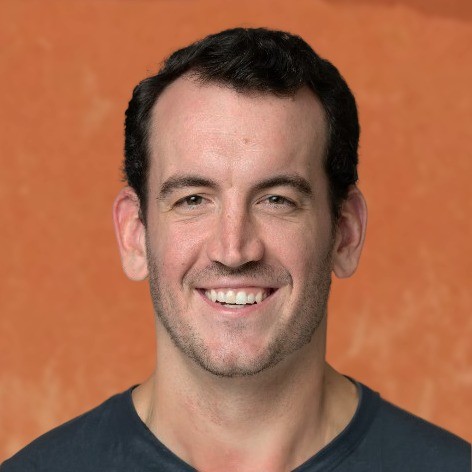
Subconscious was founded in 2022 by Jack O'Brien.
Investors · 3

How we know: funding news · Not right? Tell us
How we know: funding news · Not right? Tell us
Company profile
researched Aug 2026Subconscious (subconscious.ai) operates a simulation platform that runs randomized experiments on a model of a company's market in order to estimate which actions change business outcomes. Users randomize price, product configuration and messaging across simulated buyers, receive an estimated effect with a confidence interval, and are given a recommended action along with guardrails such as retaining the current offer as a control. Outputs are graded for confidence and stated limits, and the company labels simulated results as simulated buyer responses rather than customer evidence.
The platform maps business decisions to established market-research methods: discrete choice with price for willingness-to-pay, demand curves and revenue-optimal pricing; MaxDiff/best-worst scaling for ranked feature and claim priorities; build-your-own and adaptive choice exercises for product or pack configuration; category shelf simulation to separate category growth from brand switching; volumetric choice for unit, basket and repeat forecasts; concept testing with complete ranking; preference-based segmentation; and a market simulator built on the fitted model for competitor scenarios such as a price cut. The company frames its loop as randomize an action, estimate the effect and interval, validate against real behavior, then update a shared causal model used by subsequent decisions, with weekly validation against observed behavior.
The company positions the offering as a self-improving research function that replaces consultants and static reports, with each completed decision intended to improve later reports.
Business model
Subconscious sells access to a simulation-based research platform that produces experiment-based reports and recommendations for business decisions, positioned as a replacement for consultant-led studies and static one-time research reports.
Traction
Publicly cited results include a validation comparison against a 2,000-person Mintel conjoint (similarity 0.79-0.88), a working paper reporting 0.73 mean rank agreement across 43 design-filtered human studies in nine domains, a customer pricing outcome described as a 2.73x annual price change from $348 to $950, and a $60 launch price derived from five iterative experiments for New Age Floral. Named references include Finta CEO Kevin Siskar, Mintel's Ezeugo Chukukere and fractional CMO Aaron Ziemann.
▸Full profile — market position, technology, go-to-market, history
Market position
The company describes its work as part of a shift from one-time market research to continuous simulated-society research, citing a16z commentary on simulated societies, and states that Gartner named Subconscious one of four leaders in causal modeling.
The company emphasizes decision-first method selection, explicit effect sizes with confidence intervals and stated limits, weekly validation of simulated results against real behavior, and a shared causal model that is updated after each decision. It publishes comparisons to human studies, including a reported 0.79-0.88 similarity to a 2,000-person Mintel conjoint and a working paper reporting 0.73 mean rank agreement across 43 design-filtered human studies in nine domains with failures included.
Technology
The system runs randomized experiments over simulated buyer populations using discrete choice and related conjoint-style methods (discrete choice with price, MaxDiff/best-worst, adaptive and build-your-own choice, volumetric choice, complete ranking, preference-based segmentation) and fits models that feed a market simulator for scenario analysis. Each report carries an effect size, confidence interval and graded statement of confidence and limits. Results are validated against real behavior on a weekly cadence and used to update a shared causal model; the company describes autonomous AI research agents running experiments, learning from outcomes and updating that causal model for use in subsequent decisions.
Go-to-market
Teams making pricing, product, messaging and go-to-market decisions, including revenue teams; cited users span consumer-facing brands and market research organizations.
History
The company's published timeline records selection for the University of Chicago's Transform Cohort 2, run by the Polsky Center and the Data Science Institute, in 2023; the start of its validation record in 2024 with 43 design-filtered human studies across nine domains published as a working paper; a 2025 market shift toward continuous simulated research; and a 2026 milestone in which Gartner named the company one of four leaders in causal modeling.
Compiled by commissioned research from 1 cited public sources — announcements, filings, and press listed under research sources below.
Key figures
latest reportedCompany-reported or press-reported figures, each dated to when it was claimed — not independently audited.
Founder mafia
2 people who came through Subconscious went on to found or lead other companies.
Timeline · 3
launches, deals, and filingsGartner named Subconscious one of four leaders in causal modeling (Gartner document G00838481).
Company began its published validation record with 43 design-filtered human studies across nine domains, including failures; released as a working paper that is not peer reviewed.
Selected for the University of Chicago's Transform Cohort 2, run by the Polsky Center and the Data Science Institute.
Dated company events from announcements, filings, and press; legal rows summarize public dockets and regulator releases.
▸Research sources · 1
primary sources listed
- Subconscioussubconscious.ai · web
1 public sources were cited for this profile; the first-party ones are listed here.
Frequently asked questions
- What does Subconscious do?
- Subconscious runs randomized experiments on AI simulations of a market to estimate how price, product and message changes affect outcomes.
- Who founded Subconscious?
- Subconscious was founded by Jack O'Brien in 2022.
- Who are Subconscious's investors?
- Subconscious's investors include Geek Ventures, Entrepreneur First, YourNest Venture Capital.