 Fundraising Fox
Pretzel Therapeutics
51 employees on LinkedIn · 12 known investors
Find your way into Pretzel Therapeutics
Sign up to see every warm intro you have to Pretzel Therapeutics
- Paths you didn't know you had: your email and LinkedIn already hold routes to the Pretzel Therapeutics team. We find them for you
- 2nd- and 3rd-degree connections: the friend-of-a-friend routes that take hours to manually find through your inbox or LinkedIn
- Answers now, not in days: momentum is everything in a raise. Skip asking around whether someone knows someone
Days of research, done the moment you sign in, with every route ranked by how warm it is.
Pretzel Therapeutics develops therapeutics targeting bioenergetic dysfunction and mitochondrial disease by addressing defects in mitochondrial DNA function and gene expression. The company leverages expertise in mitochondrial biology and drug discovery to create treatments for diseases associated with mitochondrial dysregulation.
Also known as Pretzel · Pretzel Tx
Founders & leadership






Investors · 12

How we know: ARCH Venture Partners's portfolio page · the company's own site · a partner's Signal profile · the VCSheet dataset · research · pretzeltx.com · open dataset · 5k.vc investor directory · Not right? Tell us

How we know: the company's own site · a partner's Signal profile · the VCSheet dataset · research · pretzeltx.com · open dataset · 5k.vc investor directory · Not right? Tell us
How we know: the company's own site · research · pretzeltx.com · open dataset · 5k.vc investor directory · Not right? Tell us

How we know: Angelini Ventures's portfolio page · research · pretzeltx.com · open dataset · 5k.vc investor directory · Not right? Tell us

How we know: GV (Google Ventures)'s portfolio page · a partner's Signal profile · research · pretzeltx.com · open dataset · 5k.vc investor directory · Not right? Tell us

How we know: HealthCap's portfolio page · a partner's Signal profile · research · pretzeltx.com · Not right? Tell us
How we know: research · pretzeltx.com · Not right? Tell us


Also in the syndicate · 3
Funding
SEC filings, press & company announcements- Undisclosed amountSeries ASep 2022Source ↗
Source: company announcements and press reports — follow each round's link for the claim.
Company profile
researched Aug 2026Pretzel Therapeutics is a biotechnology company developing medicines that target novel mechanisms within the mitochondria, the organelles responsible for producing and regulating cellular energy. The company frames its work as "bioenergetics," building a pipeline intended to address high unmet need indications spanning neurological disease, muscular atrophies, metabolic conditions and rare disease. Its stated rationale is that dysfunctional mitochondria are involved in more than 50 diseases, including rare genetic mitochondrial disorders as well as common aging-related conditions such as Alzheimer's and Parkinson's, and that mitochondrial modulation may also be relevant in conditions not directly caused by mitochondrial dysfunction, such as cancer and metabolic disease.
At launch the company described a platform with three primary technology pillars: genome correction, using specialized gene-editing tools to reduce mutated mitochondrial DNA and increase levels of healthy mtDNA; genome expression modulation, using small molecules acting on enzymes involved in mtDNA replication, transcription and translation; and mitochondrial quality control, using small molecules that modulate the organelle's built-in quality control system. More than five research programs were planned at launch.
By April 2025 the pipeline was organized into franchises. The bioenergetics restoration franchise is led by PX578, a small molecule activator of mitochondrial DNA polymerase (POLG) positioned for mitochondrial DNA depletion syndromes (MDDS) and broader neurodegenerative disease; it entered Phase 1. The energetics modulation franchise is led by a POLRMT program targeting mitochondrial RNA polymerase for metabolic conditions including obesity, described as being in late preclinical development.
Founding story
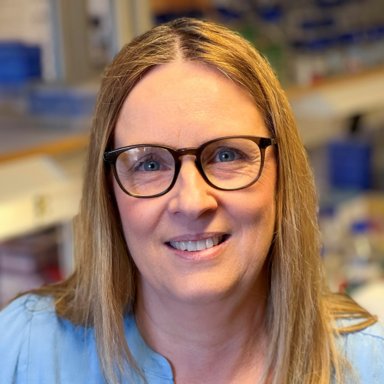
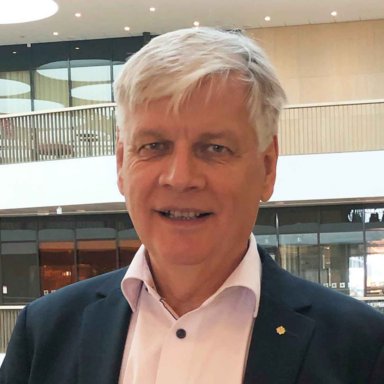
The company was founded by three academic researchers in mitochondrial biology — Claes Gustafsson (professor of medical biochemistry, University of Gothenburg), Michal Minczuk (Group Leader and MRC Investigator, MRC Mitochondrial Biology Unit, University of Cambridge), and Nils-Göran Larsson (professor of mitochondrial genetics, Karolinska Institutet) — together with Gabriel Martinez and Paul Thurk, who played formative roles based on biotechnology industry experience. The company also credits Gunther Kern, Jeremy Green and Christina Trojel-Hansen for contributions to its formation. Its name is a reference to the twisted shape of mitochondria.
Business model
Pretzel operates as a preclinical-to-clinical stage drug developer, funding internal discovery and development of proprietary therapeutic candidates through venture financing and, in at least one case, non-dilutive grant funding from a disease charity. No product revenue or commercial partnerships are described in the sources.
Traction
Raised a $72.5 million Series A at launch in September 2022 with plans for more than five research programs. As of April 2025, PX578 had entered Phase 1 clinical testing in healthy adults with a patient trial in MDDS planned for 2026, and a second lead program targeting POLRMT was in late preclinical development. The company also secured grant funding from Parkinson's UK.
Latest developments
On April 3, 2025 Pretzel announced initiation of recruitment in a randomized, double-blind, placebo-controlled Phase 1 study of PX578, evaluating safety, tolerability and pharmacokinetics of single and multiple ascending doses in healthy adults, with a potential MDDS patient trial in 2026. Concurrently it announced grant funding from Parkinson's UK to evaluate its POLG activation mechanism in Parkinson's disease models with Dr. Roberta Filograna's lab at the Karolinska Institute.
▸Full profile — market position, technology, go-to-market, geography, history, risks & controversies
Market position
Pretzel entered a field with several other mitochondria-focused developers, including Stealth BioTherapeutics (late-stage candidate, with a prior Phase 3 failure and an FDA rejection), Mitobridge (acquired by Astellas in 2017, with two drugs in clinical testing), Vincere Biosciences (small molecules for mitochondrial quality) and Reneo Pharmaceuticals (rare genetic diseases caused by mitochondrial dysfunction). Company management asserted a broader approach to mitochondrial disease than others in the field.
The company positions itself on the combination of academic founders recognized in mitochondrial DNA biology, a scientific advisory board including Nobel laureates John Walker and Roger Kornberg, and a multi-modality platform spanning gene editing and small molecules that addresses mitochondrial genome correction, expression and quality control rather than a single mechanism.
Technology
Three platform technologies were described at launch: gene-editing tools designed to reach and reduce mutated mitochondrial DNA that techniques such as CRISPR cannot address due to the organelle's characteristics, thereby raising the proportion of healthy mtDNA; small molecules acting on enzymes involved in mtDNA replication, transcription and translation to modulate mitochondrial genome expression; and small molecules that modulate mitochondrial quality control mechanisms. Named targets include POLG (mitochondrial DNA polymerase, addressed by PX578) and POLRMT (mitochondrial RNA polymerase).
Go-to-market
Patients with rare genetic mitochondrial disorders, including mitochondrial DNA depletion syndromes for which no disease-modifying treatments exist, and patients with more common neurodegenerative and metabolic conditions such as Parkinson's disease, Alzheimer's disease and obesity.
Geography
Headquartered in Waltham, Massachusetts, with research facilities in Sweden — described as Mölndal in the 2025 company release and as Gothenburg in 2022 coverage. Research collaboration ties extend to the Karolinska Institute in Stockholm, and founders are affiliated with institutions in Sweden and the UK.
History
ARCH Venture Partners and Mubadala Capital began building the company in early 2020 with the aim of creating a platform biotechnology company. Paul Thurk, the ARCH partner leading the project, died in January 2021; Jay Parrish, ARCH managing director Kristina Burow and Mubadala executive director Alaa Halawa continued the effort. Pretzel launched publicly on September 12, 2022 with a $72.5 million Series A. At launch the company said it would consider raising another private round in one to two years and hoped to begin research on applications beyond diseases directly caused by mitochondrial dysfunction, such as rare cancers. In April 2025 it announced initiation of Phase 1 recruitment for PX578 and a grant from Parkinson's UK.
Risks & controversies
Development risk is substantial: the lead asset is only in a Phase 1 healthy-volunteer study and the second program remains preclinical, with patient trials not planned until 2026. The sources note that mitochondria have historically been difficult to target therapeutically and that a leading peer, Stealth BioTherapeutics, experienced a Phase 3 failure and an FDA rejection. The company's founding was also disrupted by the death in January 2021 of ARCH partner Paul Thurk, who had been leading the project. Company communications include standard forward-looking-statement cautions.
Compiled by commissioned research from 8 cited public sources — announcements, filings, and press listed under research sources below.
Key figures
latest reportedCompany-reported or press-reported figures, each dated to when it was claimed — not independently audited.
Related companies · 5



Companies working in the same space as Pretzel Therapeutics.
Timeline · 3
launches, deals, and filingsParkinson's UK awarded grant funding to support evaluation of Pretzel's POLG activation mechanism in Parkinson's disease models, in collaboration with Dr. Roberta Filograna's lab at the Karolinska Institute, Stockholm.
Pretzel began recruitment for a randomized, double-blind, placebo-controlled Phase 1 study evaluating safety, tolerability and pharmacokinetics of single and multiple ascending doses of PX578, a small molecule POLG activator, in healthy adult participants; a trial in MDDS patients is planned for 2026.
Company launched publicly with a $72.5M Series A co-led by ARCH Venture Partners and Mubadala Capital, each of which invested $15 million, with participation from HealthCap, Cambridge Innovation Capital, Cambridge Enterprise, Angelini Ventures, GV, Invus, Eir Ventures, GU Ventures and Karolinska Institutet Holding. Proceeds were designated for preclinical development across the pipeline and team expansion.
$72.5M source ↗
Dated company events from announcements, filings, and press; legal rows summarize public dockets and regulator releases.
In the news
▸Research sources · 8
primary sources listed
- Pretzel Therapeuticspretzeltx.com · web
8 public sources were cited for this profile; the first-party ones are listed here.
Frequently asked questions
- What does Pretzel Therapeutics do?
- Biotech developing first-in-class small molecule and gene-editing therapies targeting mitochondrial function and cellular bioenergetics.
- Who founded Pretzel Therapeutics?
- Pretzel Therapeutics was founded by Michal Minczuk, Gabriel Martinez, Claes Gustafsson, Maria Falkenberg, Nils-Göran Larsson, Gabriel Martinez, Ph.D., Michal Minczuk, Ph.D., Claes Gustafsson, M.D., Ph.D., Maria Falkenberg, Ph.D., Nils-Göran Larsson, M.D., Ph.D..
- Who are Pretzel Therapeutics's investors?
- Pretzel Therapeutics's investors include ARCH Venture Partners, Cambridge Innovation Capital, EIR Ventures, Angelini Ventures, GV (Google Ventures), HealthCap, Invus, Mubadala Capital and 1 more.