 Fundraising Fox
PlasmaLeap Technologies
Founded 2019 · 27 employees on LinkedIn · 13 known investors
Find your way into PlasmaLeap Technologies
Sign up to see every warm intro you have to PlasmaLeap Technologies
- Paths you didn't know you had: your email and LinkedIn already hold routes to the PlasmaLeap Technologies team. We find them for you
- 2nd- and 3rd-degree connections: the friend-of-a-friend routes that take hours to manually find through your inbox or LinkedIn
- Answers now, not in days: momentum is everything in a raise. Skip asking around whether someone knows someone
Days of research, done the moment you sign in, with every route ranked by how warm it is.
PlasmaLeap builds plasma-based, zero-emissions chemical reactors for the synthesis of green fuels and chemicals and for treating hazardous industrial waste. It serves industrial and academic research customers within the Power-to-X and green chemical production space.
Also known as PlasmaLeap · Plasmaleap Technologies
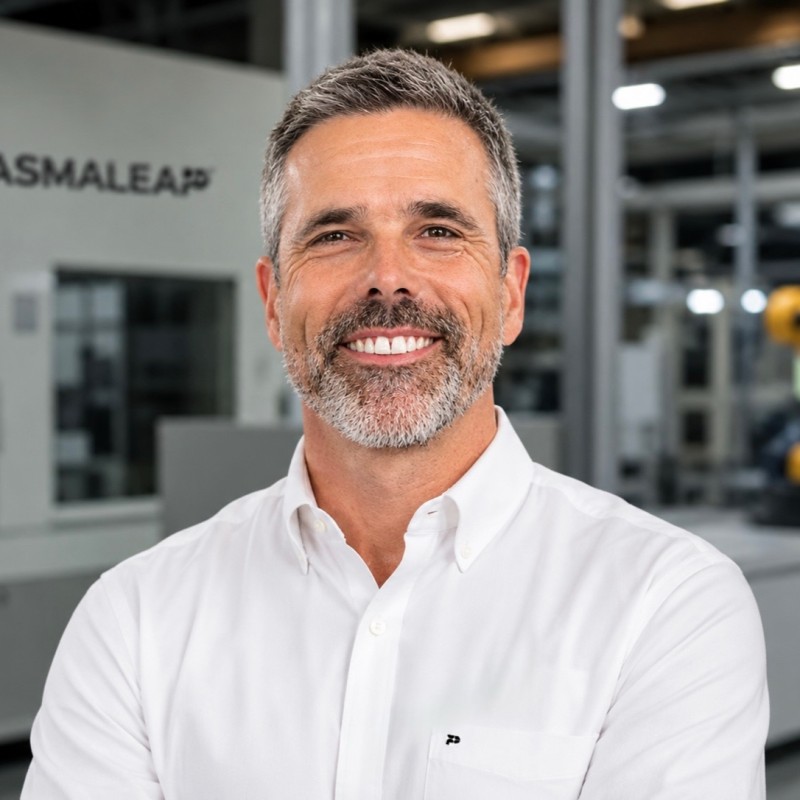
Founders & leadership
Investors · 13

How we know: Artesian's portfolio page · research · plasmaleap.com · open dataset · 5k.vc investor directory · Not right? Tell us
How we know: GrainCorp Ventures's portfolio page · research · plasmaleap.com · Not right? Tell us
How we know: NSW Clean Technology Innovation Grants's portfolio page · Not right? Tell us

How we know: SVG Ventures | THRIVE's portfolio page · Not right? Tell us

How we know: UniSeed Pty Ltd.'s portfolio page · Not right? Tell us
How we know: funding news · afr.com · Not right? Tell us
Also in the syndicate · 5
Funding
SEC filings, press & company announcements$20M disclosed across 1 of 4 rounds · 2023–2026
- Undisclosed amountSeries AMar 2026Source ↗
- $20MraisedMar 2026 · 3 sources
Gates Foundation (lead), Investible (lead), Yara Growth Ventures (lead)
Source ↗
Source: company announcements and press reports — follow each round's link for the claim.
Company profile
researched Aug 2026PlasmaLeap Technologies is a Sydney, Australia-based company that designs, manufactures and distributes modular, non-thermal plasma chemical reactors for on-site production of fertilisers, fuels and industrial chemicals. Its patented reactor technology produces ammonia, nitric acid and nitrate products such as calcium nitrate, potassium nitrate, ammonium nitrate and NPK using only air, water and electricity, without fossil fuel feedstock or combustion. Systems are supplied as containerised, closed-loop skid units intended for rapid deployment and incremental scaling as demand grows, and are positioned for use on farms, at renewable energy hubs and within industrial facilities.
Beyond fertiliser, the company targets fuel applications including sustainable aviation fuel, diesel, petrol and methanol, and markets an R&D platform for researchers covering additional applications. It is also exploring production of synthetic hydrocarbons from biogas, syngas and other low-carbon feedstocks as a decarbonisation route for hard-to-abate sectors in agriculture, energy and transport. The technology originated in research led by Professor P.J. Cullen on an energy-efficient, plasma-driven pathway for synthesising ammonia and nitrate fertilisers from air, water and renewable electricity.
Founding story
PlasmaLeap was incorporated in 2019 by Frere Byrne (CEO), Professor P.J. Cullen (Chief Science Officer) and Sam Cullen (Chief Commercial Officer) after Cullen's plasma research demonstrated an energy-efficient, plasma-driven route to ammonia and nitrate fertilisers. The founders identified an opportunity to apply the approach to cost-effective bulk chemical synthesis. Supported by Australian Research Council Fellowships and University of Sydney research funding, the technology was spun out via the Sydney Knowledge Hub, with intellectual property structured through licensing and assignment agreements across both UNSW and the University of Sydney.
Business model
PlasmaLeap builds and designs plants for local production of fertilisers, fuels and chemicals, deployed as containerised modular units. Its commercial model in agriculture centres on supplying an equivalent nitrogen product at reduced cost rather than selling or leasing hardware, which the company says preserves quality control, predictable pricing, supply certainty and long-term operational reliability.
Early revenue was generated by selling high-performance plasma power systems to research groups, which bootstrapped foundational development. The agricultural commercial model is based on supplying nitrogen product to growers rather than hardware sales or leases. Management has also cited the potential to generate carbon credits.
Traction
Field trials have been run on barley at Oaklands NSW (14.3 ha, May-November 2025), greenhouse baby cucumbers at Cobbitty NSW (900 m2, December 2023-February 2024), sorghum at Gunnedah NSW (10.1 ha, October 2025-February 2026, where calcium nitrate plots showed longer roots, thicker stems, more leaves and earlier growth than a UAN control) and potatoes at Port Adelaide SA (8.1 ha, July-December 2025). The company closed a US$20 million (A$30 million) Series A in January 2026, received a NSW Clean Technology Innovation grant, won three SVG THRIVE Global Impact Challenge 2025 awards, was a finalist in Petronas Future Tech 4.0 and a 2024 Australian nominee for the Earthshot Prize.
Latest developments
In March 2026 PlasmaLeap announced a US$20 million (A$30 million) Series A round that closed in January 2026, co-led by the Gates Foundation, Investible and Yara Growth Ventures, with Twynam, GrainCorp Ventures, Uniseed/UniSuper, Artesian, SVG Ventures and Agnition Ventures participating. Proceeds are directed to first-of-a-kind fertiliser hubs in New South Wales and Tasmania, expanded field trials and further development of the core technology, with longer-term work on sustainable fuels and energy systems. In December 2025 the company won three awards at the SVG THRIVE Global Impact Challenge, and in August 2026 co-founder and CCO Samantha Cullen was named an AusMumpreneur Awards finalist.
▸Full profile — market position, technology, go-to-market, geography, history, risks & controversies
Market position
The company positions itself in green ammonia and distributed sustainable fertiliser production. Coverage cites a global ammonia market of approximately US$69 billion projected to triple over the next two decades, with nitrogen fertiliser production and transport accounting for roughly 2.5% of global CO2e emissions; other coverage puts the annual market at around $100 billion and fertiliser manufacture, movement and use at up to 10% of global greenhouse gas emissions. Investible described the technology as defining a new category in distributed sustainable fertiliser production, and Yara Growth Ventures characterised it as a breakthrough fertiliser platform with step-change energy efficiency improvements.
The company contrasts its electrically driven, room-temperature plasma route with conventional fossil-fuel-based, high-heat and high-pressure petrochemical production, claiming world-leading energy performance for plasma technology. Modular containerised units allow production at or near the point of use, removing long transport supply chains and offering price stability. Supplying product rather than hardware differentiates its commercial approach, and the company also markets a low-ammonium calcium nitrate compared with existing high-ammonium products.
Technology
The core technology is a patented, modular non-thermal plasma reactor that drives chemical reactions with renewable electricity instead of fossil fuels, operating processes that conventionally require extreme heat and pressure at room temperature. Inputs are air, water and electricity; outputs include nitric acid, nitrate fertilisers, ammonia and hydrocarbon fuels. The company describes the platform as energy efficient, compatible with renewables and many industrial processes, rapidly deployable in containerised closed-loop units, and modularly scalable. Development has drawn on partnerships with UNSW and the University of Sydney for laboratory access and materials science expertise.
Go-to-market
Initial market entry used an online expression of interest to growers in early 2024, followed by pilot deployments and field trials to provide validation for a conservative customer base. The company is deploying first commercial systems and first-of-a-kind fertiliser hubs in New South Wales and Tasmania, and plans regional manufacturing partnerships and regional production hubs internationally rather than exporting units from Australia. Investor relationships include strategic corporate backers Yara Growth Ventures, GrainCorp Ventures and Ravensdown's Agnition Ventures; Investible first met the team through its Greenhouse Tech Hub in Sydney.
Farmers and growers seeking locally produced nitrogen fertiliser, businesses in the chemicals and fuels sectors, renewable energy developers, global fertiliser producers, and academic and industrial researchers buying plasma R&D systems. Hard-to-abate industries including agriculture, energy and transport are the stated end markets.
Geography
Headquartered in Sydney, Australia, with field trials in New South Wales and South Australia and planned first-of-a-kind fertiliser hubs in New South Wales and Tasmania. The company plans international expansion through regional production hubs and manufacturing partnerships.
History
Incorporated in 2019 as a University of Sydney spin-out, the company scaled from academic-scale prototypes to industrial systems by expanding engineering, electronics and manufacturing capability and running structured testing with in-house engineers and external specialists. Its first formal engagement with the agricultural market was an expression of interest posted online in early 2024, which drew demand from Australian growers as well as renewable developers and global fertiliser producers. Field trials of calcium nitrate and potassium nitrate products ran across New South Wales and South Australia between 2023 and 2026. In 2025 the company received a NSW Clean Technology Innovation grant and won multiple SVG THRIVE Global Impact Challenge awards, and in January 2026 it closed a Series A round announced in March 2026.
Risks & controversies
The company operates in a conservative customer market with "show me" expectations, requiring early pilot deployments to build confidence, and it has raised capital amid volatile market conditions. Scaling from laboratory prototypes to industrial systems required substantial new engineering, electronics and manufacturing capability and iterative design and testing. Impact figures published on the company website, including 180 million tonnes of CO2 emissions saved, 225 thousand skid units deployed, 43 million people alleviated from hunger and 46 countries served, are presented as vision targets rather than achieved results.
Compiled by commissioned research from 8 cited public sources — announcements, filings, and press listed under research sources below.
Key figures
latest reportedCompany-reported or press-reported figures, each dated to when it was claimed — not independently audited.
Timeline · 5
launches, deals, and filingsCo-founder and Chief Commercial Officer Samantha Cullen was named a finalist in the AusMumpreneur Awards, a national program recognising Australian female founders.
PlasmaLeap announced a Series A of US$20 million (A$30 million) that closed in January 2026, co-led by the Gates Foundation, Investible and Yara Growth Ventures, with Twynam, GrainCorp Ventures, Uniseed/UniSuper, Artesian, SVG Ventures and Agnition Ventures (Ravensdown) participating. Proceeds fund first-of-a-kind fertiliser hubs in New South Wales and Tasmania, expanded field trials and core technology development.
$20M source ↗
From over 2,000 global applicants, PlasmaLeap received three awards: Category Winner for Clean Energy & Climate Tech, the People's Choice Award, and Overall Winner.
PlasmaLeap was named among 13 NSW projects receiving Clean Technology Innovation grants supporting technologies that reduce emissions and assist the state's net zero target; the company's site references $2.58m and separate coverage cites a NSW Clean Tech $1.5m grant, delivered in collaboration with academic partners UNSW and the University of Sydney, to extend the technology beyond green nitrates to ammonia.
The technology was spun out via the Sydney Knowledge Hub with intellectual property structured through licensing and assignment agreements across UNSW and the University of Sydney; PlasmaLeap was incorporated in 2019.
Dated company events from announcements, filings, and press; legal rows summarize public dockets and regulator releases.
In the news
▸Research sources · 8
primary sources listed
- PlasmaLeap Technologiesplasmaleap.com · web
8 public sources were cited for this profile; the first-party ones are listed here.
Frequently asked questions
- What does PlasmaLeap Technologies do?
- Australian company building modular plasma reactors that make fertilisers, fuels and chemicals from air, water and renewable electricity.
- Who are PlasmaLeap Technologies's investors?
- PlasmaLeap Technologies's investors include Artesian, GrainCorp Ventures, Melt Ventures, NSW Clean Technology Innovation Grants, SVG Ventures | THRIVE, UniSeed Pty Ltd., SVG Ventures, Yara Growth Ventures.
- How much funding has PlasmaLeap Technologies raised?
- PlasmaLeap Technologies has disclosed $20M raised across 1 of its 4 known rounds.