 Fundraising Fox
Mahzi Therapeutics
South San Francisco, US · Founded 2020 · Delaware corporation · 6 known investors
Find your way into Mahzi Therapeutics
Sign up to see every warm intro you have to Mahzi Therapeutics
- Paths you didn't know you had: your email and LinkedIn already hold routes to the Mahzi Therapeutics team. We find them for you
- 2nd- and 3rd-degree connections: the friend-of-a-friend routes that take hours to manually find through your inbox or LinkedIn
- Answers now, not in days: momentum is everything in a raise. Skip asking around whether someone knows someone
Days of research, done the moment you sign in, with every route ranked by how warm it is.
Mahzi develops therapies for patients with under-diagnosed and under-served rare genetic neurodevelopmental disorders, working with patient and family groups, academic researchers, and industry partners. The company operates across biopharmaceutical research, development, and manufacturing.
Also known as Mahzi · Mahzi Therapeutics Inc.
Founders & leadership
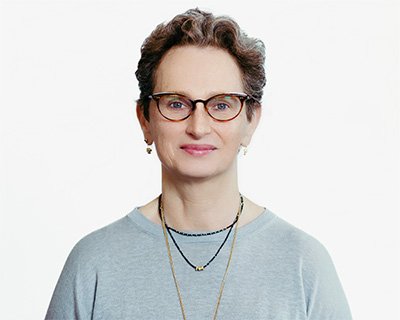
Mahzi Therapeutics was founded in 2020 by Yael Weiss.
Board
Investors · 6
How we know: Droia Ventures's portfolio page · the VCSheet dataset · open dataset · 5k.vc investor directory · Not right? Tell us
How we know: HBM Healthcare Investments's portfolio page · Not right? Tell us
How we know: HBM Partners's portfolio page · Not right? Tell us



Reported raises · per SEC filings
Form D private placements$52.6M disclosed across 1 round · 2021
▶$52.6MraisedJul 2024 · 11 investors · BiotechnologyRule 506(b)
- Camille SamuelsDirector
- Shalini SharpDirector
- Stephen FarrDirector
- Marten SteenDirector
- Yael WeissExecutive Officer, Director
- Offering amount
- $52.6M
- Amount sold
- $52.6M
- First sale
- Oct 2021
- Incorporated
- Corporation, Delaware, 2020
- Federal exemptions
- 06b
Source: SEC EDGAR Form D. Amounts as filed; amended filings shown once at their latest values.
Company profile
researched Aug 2026Mahzi Therapeutics is a clinical-stage biotechnology company developing precision therapies, including gene therapy and RNA-based approaches, for rare genetic neurodevelopmental disorders that have few or no treatment options. The company's name derives from the Greek word for "together," reflecting a structure built around uniting patient and family advocacy groups, academic researchers, other industry participants, and an internal team experienced across biopharmaceutical research, development, and manufacturing.
The pipeline is focused exclusively on rare neurogenetic disorders, with the therapeutic modality selected per disease. The lead program, MZ-1866, is a novel AAV9-TCF4 gene replacement therapy for Pitt Hopkins syndrome (TCF4 deficiency), created by inserting TCF4 isoform B into an AAV9 expression cassette regulated by multimer E box sequences, and developed in collaboration with UCSD and the laboratory of Prof. Alysson Muotri. The Phase 1/2 UNITE trial is an open-label study of a single intracerebroventricular dose of MZ-1866, designed to enroll approximately 12 participants with genetically confirmed Pitt Hopkins syndrome across five sites in the United States, Israel, and Spain, with primary safety objectives plus exploratory developmental, communication, cognitive, and motor endpoints. Earlier-stage programs include an AAV9-based gene replacement approach for WWOX deficiency (WOREE and SCAR12) with the Aqeilan lab at Hebrew University of Jerusalem, and an antisense oligonucleotide (ASO) approach for CHD2 deficiency with the Ulitsky lab at the Weizmann Institute of Science. Mahzi also maintains a compassionate use and expanded access policy for its investigational products.
Founding story
Yael Weiss, MD, PhD, founded the company after working at another rare disease biotech, where she observed that parents and patient advocacy groups were funding and driving much of the early academic research in rare disease but generally lacked the resources and expertise to advance therapies beyond the laboratory. Mahzi was created to take such academically originated programs forward into development, and the company was launched in 2021 according to an interview-based account with Weiss.
Business model
Mahzi in-licenses or co-develops therapeutic programs originating in academic laboratories and advances them through preclinical development, IND-enabling work, and clinical trials, choosing the modality (AAV gene therapy or ASO) per disease. Development is co-funded by venture investors, non-dilutive grant awards, disease foundations, and, more recently, retail investment from affected families; patient advocacy groups that previously funded the underlying academic research can invest in the corresponding Mahzi program rather than donate to it.
No product revenue is described; the company is pre-commercial and funded by equity investment and non-dilutive grants, with the stated intent to advance therapeutics through clinical trials and eventually to market.
Traction
The lead program MZ-1866 has received Orphan Drug, Fast Track, and Rare Pediatric Disease designations from the FDA, and the Phase 1/2 UNITE trial has dosed its first patient. Two additional discovery/preclinical programs are in progress with academic collaborators. The company reports $60 million raised from institutional investors plus $8 million in non-dilutive grant awards from the California Institute for Regenerative Medicine, and roughly half of early reservations in its community round came from parents of rare-disease children. Yael Weiss was named to the Class of 2022 Henri Termeer Fellows.
Latest developments
As reported in July 2026, Mahzi is dosing patients in the Phase 1/2 UNITE trial of MZ-1866 for Pitt Hopkins syndrome and is raising a $10 million bridge round on its Series A terms to reach clinical data, using a Regulation Crowdfunding community round (branded Werunder, administered by Capital Department) to cover part of that amount, with a $250 minimum investment. MZ-1866 has also been granted FDA Rare Pediatric Disease Designation.
▸Full profile — market position, technology, go-to-market, geography, history, risks & controversies
Market position
Mahzi operates in a segment that has attracted limited institutional capital: in 2023 only about 2% of all seed and Series A biotech dollars went to rare disease companies. The company positions itself around disorders with recently identified causative genes and with under-diagnosed patient populations expected to grow as genetic testing expands, and states its UNITE study is the first gene therapy trial for Pitt Hopkins syndrome.
The company writes patients and advocacy organizations into its capitalization table rather than treating them solely as advisors or donors, using Regulation Crowdfunding to let affected families and foundations become shareholders. It treats patient input as design input, employing a clinical outcomes researcher to build disease concept models and setting trial endpoints from what caregivers say matters most rather than assuming clinician-default measures such as seizure reduction.
Technology
AAV9-based gene replacement therapy and antisense oligonucleotide (RNA-based) approaches for monogenic neurodevelopmental disorders. MZ-1866 uses TCF4 isoform B, the longest known and one of the most abundant brain isoforms, in an AAV9 expression cassette under multimer E box regulatory control, delivered by intracerebroventricular administration. Human brain organoid models of Pitt-Hopkins syndrome, which revealed human-specific TCF4-dependent abnormalities and the reversibility of TCF4 mutation effects, underpinned development of the regulated AAV gene therapy. The company also constructs a "disease concept model" for each disorder and runs natural history studies in parallel with clinical development to define endpoints.
Go-to-market
Mahzi partners closely with disease-specific advocacy groups, holding monthly meetings with the communities for its lead indications (SCAR12/WOREE, Pitt-Hopkins, CHD2), and interviews families in depth before writing trial protocols so that parent-prioritized outcomes become measured endpoints. It works with global nonprofits including Global Genes and the Rare Epilepsy Network on workshops aimed at accelerating new therapies, and collaborates with CRO CTI Clinical Trial & Consulting Services and the Pitt Hopkins Research Foundation on clinical development. A Regulation Crowdfunding community round, run by Capital Department, opens equity participation to affected families at a $250 minimum.
Patients with under-diagnosed and under-served rare genetic neurodevelopmental disorders and their families, including those affected by Pitt Hopkins syndrome (TCF4), WWOX-related disorders (WOREE, SCAR12), and CHD2 deficiency; the company works alongside disease advocacy foundations and academic investigators.
Geography
Headquartered in South San Francisco, California. Clinical and research activities extend internationally, with UNITE trial sites planned in the United States, Israel, and Spain, and academic collaborations at UC San Diego, Hebrew University of Jerusalem, and the Weizmann Institute of Science in Rehovot, Israel.
History
Founded by Yael Weiss to advance rare neurodevelopmental disease programs originating in academic labs, the company assembled programs in Pitt Hopkins syndrome (with UCSD), WWOX-related disorders (Hebrew University), and CHD2 deficiency (Weizmann Institute). Weiss was recognized as a 2022 Henri Termeer Fellow. In 2025 the company described an imminent IND filing for its AAV9 TCF4 program; it subsequently announced a collaboration with CTI Clinical Trial & Consulting Services and the Pitt Hopkins Research Foundation, dosed the first patient in the Phase 1/2 UNITE study of MZ-1866, and received FDA Rare Pediatric Disease Designation for MZ-1866, which had previously received Orphan Drug and Fast Track designations.
Risks & controversies
Rare disease biotech financing is constrained, with only about 2% of seed and Series A biotech dollars going to rare disease companies in 2023, and the CEO describes the 2025 fundraising environment as substantially harder than during the pandemic, prompting reliance on non-traditional capital. The lead indications have never been studied in clinical trials, so endpoints and natural history must be established de novo, and target patient populations are small and uncertain in size — estimates for Pitt-Hopkins range from roughly 500 individuals worldwide (Cleveland Clinic) to about 1,500 affected families (Pitt Hopkins Research Foundation).
Compiled by commissioned research from 8 cited public sources — announcements, filings, and press listed under research sources below.
Key figures
latest reportedCompany-reported or press-reported figures, each dated to when it was claimed — not independently audited.
Related companies · 2

Companies working in the same space as Mahzi Therapeutics.
Timeline · 5
launches, deals, and filingsMahzi launched a Regulation Crowdfunding round (the Werunder community round, run by Capital Department) allowing families affected by rare neurodevelopmental disorders and advocacy groups to invest at a $250 minimum, as part of a $10 million bridge round on Series A terms intended to fund the company to clinical data.
Mahzi announced the first patient dosed in the Phase 1/2 UNITE study of MZ-1866, described as the first investigational gene therapy trial for Pitt Hopkins syndrome; the open-label study evaluates a single intracerebroventricular dose in approximately 12 genetically confirmed participants across five sites in the US, Israel and Spain.
CTI, Mahzi and the Pitt Hopkins Research Foundation announced a collaboration aimed at accelerating clinical development of a therapy for Pitt Hopkins syndrome.
MZ-1866, the company's investigational AAV9-TCF4 gene therapy, received Rare Pediatric Disease Designation from the FDA, having previously been granted Orphan Drug Designation and Fast Track Designation.
The Termeer Foundation announced the Class of 2022 Henri Termeer Fellows, a recognition program for life science innovators, with Mahzi represented among the recipients.
Dated company events from announcements, filings, and press; legal rows summarize public dockets and regulator releases.
Legal entities · 1
corporate structure▸Research sources · 8
primary sources listed
- Mahzi Therapeuticsmahzi.com · web
8 public sources were cited for this profile; the first-party ones are listed here.
Frequently asked questions
- What does Mahzi Therapeutics do?
- Clinical-stage biotech developing gene and RNA therapies for under-served rare genetic neurodevelopmental disorders.
- Who founded Mahzi Therapeutics?
- Mahzi Therapeutics was founded by Yael Weiss in 2020.
- Who are Mahzi Therapeutics's investors?
- Mahzi Therapeutics's investors include Droia Ventures, HBM Healthcare Investments, HBM Partners, HealthCap, Mitsui Global Investment, Venrock.
- How much funding has Mahzi Therapeutics raised?
- Mahzi Therapeutics has disclosed $52.6M raised across 1 round.
- Where is Mahzi Therapeutics headquartered?
- Mahzi Therapeutics is headquartered in South San Francisco, US.