 Fundraising Fox
Johnson & Johnson
NYSE: JNJNew Brunswick, US · Incorporated in New Jersey · Public · 7 known investors
Find your way into Johnson & Johnson
Sign up to see every warm intro you have to Johnson & Johnson
- Paths you didn't know you had: your email and LinkedIn already hold routes to the Johnson & Johnson team. We find them for you
- 2nd- and 3rd-degree connections: the friend-of-a-friend routes that take hours to manually find through your inbox or LinkedIn
- Answers now, not in days: momentum is everything in a raise. Skip asking around whether someone knows someone
Days of research, done the moment you sign in, with every route ranked by how warm it is.
Johnson & Johnson develops prescription medicines and medical technology across areas including oncology, immunology, neuroscience, cardiopulmonary, cardiovascular, orthopaedics, surgery, and vision. Its two main businesses, Innovative Medicine and MedTech, focus on treating complex diseases through science-based drugs and less invasive, personalized medical devices.
Also known as J&J · JNJ · Johnson and Johnson
Founders & leadership
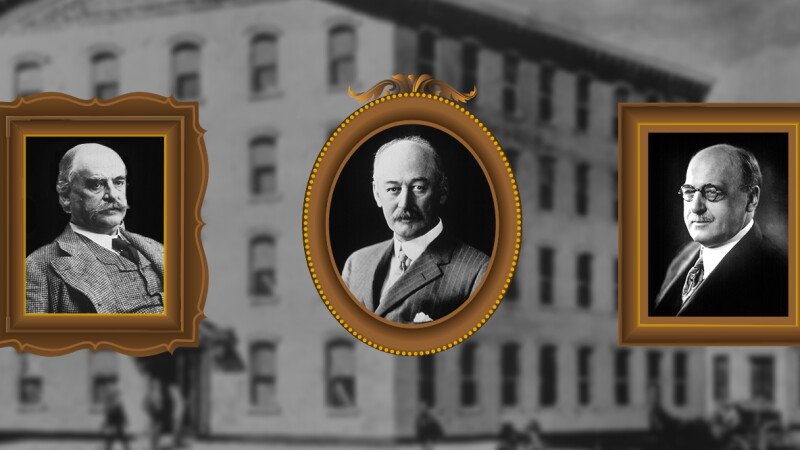
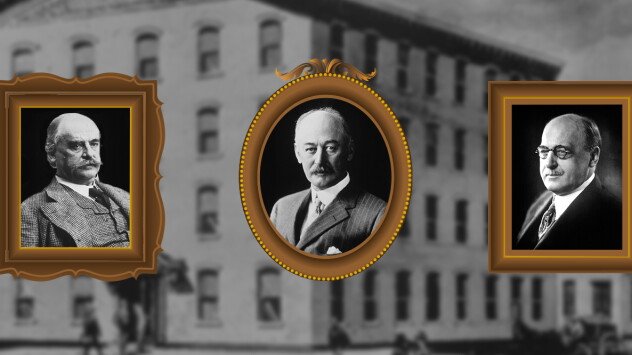

Investors · 7
How we know: Aisling Capital's portfolio page · Not right? Tell us

How we know: Atlas Venture's portfolio page · Not right? Tell us

How we know: the VCSheet dataset · Not right? Tell us


Company profile
researched Aug 2026Johnson & Johnson is an American multinational pharmaceutical, biotechnology and medical technology corporation headquartered at Johnson and Johnson Plaza in New Brunswick, New Jersey, and serving markets worldwide. It operates in two segments: Innovative Medicine and MedTech. Innovative Medicine covers oncology, immunology, neuroscience and cardiopulmonary (including pulmonary hypertension), infectious diseases, and cardiovascular and metabolism, with prescription products distributed through retailers, wholesalers, distributors, hospitals and healthcare professionals. MedTech spans cardiovascular, orthopaedics, surgery and vision, including joint reconstruction, trauma, spine and sports-injury products; open, laparoscopic and robotic surgical procedures; instrumentation, energy devices, stapling systems, wound closure and biosurgery; digital and robotic technologies; breast aesthetics and reconstruction; ACUVUE contact lenses; and TECNIS intraocular lenses for cataract and refractive procedures.
The company was founded in 1886 and reported approximately 140,000 employees globally and 64 manufacturing facilities. It states a target of 70 novel therapies and/or product expansions by 2030. Subsidiaries include Janssen Pharmaceuticals, Janssen Vaccines, Actelion Pharmaceuticals, Alza, Cilag, MorphoSys, Ortho-McNeil and Tibotec under Innovative Medicine, and Abiomed, DePuy Synthes, Ethicon, Synthes, Mentor and Johnson & Johnson Vision under MedTech. Corporate decision-making is guided by Our Credo, a values statement in use for eight decades. The company also runs the Johnson & Johnson Institute, which provides surgical education and robotics-system training for healthcare professionals, and the Sight For Kids global eye-care partnership, which conducts vision screening in markets including Kenya.
Founding story
Robert Wood Johnson, who had trained as a pharmacy apprentice from age 16 and later co-founded the medicated-plaster maker Seabury & Johnson in 1873, was influenced by Joseph Lister's presentation on antiseptic surgery at the 1876 Centennial Exposition in Philadelphia. After separating from his partner George Seabury in 1885, he joined his brothers James Wood Johnson and Edward Mead Johnson to create a line of ready-to-use sterile surgical dressings, founding Johnson & Johnson in January 1886 in New Brunswick, New Jersey with 14 employees. The first factory occupied the former Janeway and Carpenter building on Neilson Street, and early products carried a logo resembling James Wood Johnson's signature.
Business model
Johnson & Johnson operates as a focused healthcare company organized into two reportable segments. Innovative Medicine researches, develops, manufactures and sells prescription medicines across therapeutic areas including oncology, immunology, neuroscience, pulmonary hypertension, infectious diseases, and cardiovascular and metabolism. MedTech develops and sells medical devices, instruments and enabling technologies for surgery, orthopaedics, cardiovascular care and vision. The company supplements internal R&D with acquisitions and external collaborations, and operates through a large network of subsidiaries including Janssen Pharmaceuticals, Actelion, DePuy Synthes, Ethicon, Abiomed, Mentor and Johnson & Johnson Vision.
Revenue is generated from sales of prescription pharmaceuticals in the Innovative Medicine segment and of medical devices, implants, instrumentation, contact lenses and intraocular lenses in the MedTech segment. Reported 2025 revenue was $94.19 billion with net income of $26.80 billion; trailing-twelve-month revenue as of late August 2026 was $97.93 billion with a profit margin of about 21.5%. The company pays a dividend, with a forward dividend of $5.36 per share and a yield of approximately 1.99%.
Traction
Reported 2025 revenue of $94.19 billion, operating income of $25.29 billion, net income of $26.80 billion, total assets of $199.2 billion and 138,200 employees. Second-quarter fiscal 2026 revenue was $25.31 billion with earnings of $5.53 billion, and trailing-twelve-month revenue reached $97.93 billion. The company reports 64 manufacturing facilities and a goal of 70 novel therapies and/or product expansions by 2030, and cites 25 years of multiple myeloma research including a target that led to an approved bispecific therapy.
Latest developments
In 2026 the FDA approved IMAAVY (nipocalimab-aahu), an immunoselective FcRn blocker, as the first treatment for warm autoimmune hemolytic anemia. On July 30, 2026, subcutaneous RYBREVANT FASPRO (amivantamab and hyaluronidase-lpuj) received U.S. FDA Priority Review for advanced head and neck cancer. On July 29, 2026, the company completed its acquisition of Firefly Bio, Inc. and announced a collaboration with Sail Biomedicines on in vivo CAR-T programs for autoimmune disease. The company reported second-quarter 2026 revenue of $25.31 billion and earnings of $5.53 billion, and in July 2026 named three awardees of the Polyphonic AI Fund for Surgery QuickFire Challenge.
▸Full profile — market position, technology, go-to-market, geography, history
Market position
Described as the world's largest healthcare company by its own leadership materials, Johnson & Johnson ranked No. 42 on the 2026 Fortune 500 and 43rd on the 2026 Forbes Global 2000. Its shares trade on the NYSE under JNJ and are components of the Dow Jones Industrial Average, S&P 100 and S&P 500, with a market capitalization of approximately $640 billion as of August 27, 2026. It is classified in the Drug Manufacturers - General industry alongside peers including Merck, Pfizer, AbbVie, AstraZeneca, Bristol-Myers Squibb, Eli Lilly, Amgen, Gilead, Novo Nordisk and GSK.
The company positions itself as spanning the full spectrum of healthcare across both pharmaceuticals and medical technology, combining biology and technology in less invasive, precision and personalized treatments. It cites deep therapeutic expertise built over 140 years, a broad subsidiary portfolio, and first-in-class or first-ever approvals such as IMAAVY (nipocalimab-aahu), the first approved treatment for warm autoimmune hemolytic anemia. Along with Microsoft, it is one of only two U.S.-based companies holding a prime AAA credit rating from S&P Global.
Technology
Innovative Medicine develops biologics and small molecules including bispecific and next-generation multispecific antibody approaches, FcRn blockers such as nipocalimab, EGFR/MET-targeted therapies such as amivantamab, and in vivo CAR-T programs pursued with partners; it also invests in precision medicine and data science and digital health. MedTech develops robotic and digital surgery technologies, energy devices, stapling and wound closure systems, biosurgery products, orthopaedic implants, cardiovascular devices, and vision products including ACUVUE contact lenses and TECNIS intraocular lenses.
Go-to-market
Innovative Medicine products are prescription medicines distributed through retailers, wholesalers, distributors, hospitals and healthcare professionals. MedTech products are distributed through wholesalers, hospitals and retailers and used by physicians, nurses, eye care professionals and clinics. The company supports adoption through professional education such as the Johnson & Johnson Institute, patient resources and clinical trial programs, and pursues external innovation through partnerships, acquisitions and initiatives such as the Polyphonic AI Fund for Surgery QuickFire Challenge.
Patients and caregivers; prescribers and physicians; hospitals, clinics and health systems; surgeons, nurses and eye care professionals; and wholesalers, distributors and retailers that carry its medicines and medical technology products.
Geography
Headquartered in New Brunswick, New Jersey, with a worldwide area served, approximately 140,000 employees globally and 64 manufacturing facilities around the world. Programs such as the Sight For Kids eye-care partnership operate in markets including Kenya.
History
Robert Wood Johnson entered the pharmaceutical trade as an apprentice at the Wood & Tittamer pharmacy in Poughkeepsie, New York, in 1861, later working as a pharmaceutical wholesaler in New York City and co-founding Seabury & Johnson with George Seabury in 1873, a business known for medicated plasters. After hearing Joseph Lister describe antiseptic surgery at the 1876 Centennial Exposition in Philadelphia, Johnson turned toward sterile surgical products; he parted with Seabury in 1885 and founded Johnson & Johnson with his brothers in 1886. Early products included sterile sutures, absorbent cotton and gauze, medicated plasters, the first commercial first aid kit (1888), Johnson's Baby Powder and Dr. Simpson's Maternity Packet (both 1894), Lister's Towels sanitary napkins and Lister's Sanitary Diapers (1904). The company published "Modern Methods of Antiseptic Wound Treatment" (85,000 copies distributed in 1888) and the Handbook of First Aid (1901), and hired pharmacist Fred Kilmer as its first scientific director in 1889, who developed its industrial sterilization process and remained until 1934. Headcount grew from 14 employees at founding to more than 400 by 1894 and over 1,200 by 1910. The company supplied and donated dressings during the Spanish–American War and disaster relief for the 1900 Galveston hurricane and 1906 San Francisco earthquake, and ran round-the-clock production for Allied forces in World War I, acquiring Chicopee Manufacturing Company in 1916. Robert Wood Johnson served as first president until his death in 1910 and was succeeded by his brother James Wood Johnson.
Compiled by commissioned research from 8 cited public sources — announcements, filings, and press listed under research sources below.
Key figures
latest reportedCompany-reported or press-reported figures, each dated to when it was claimed — not independently audited.
Founder mafia
The Johnson & Johnson mafia →140 people who came through Johnson & Johnson went on to found or lead other companies.










Acquisitions · 9
Early investors' stakes continue via these dealsAmbrx was a San Diego-based clinical-stage biopharmaceutical company that used a synthetic biology platform incorporating engineered amino acids to develop precision antibody-drug conjugates for cancer treatment.
Developer of drug-eluting stents for coronary artery disease; IPO'd in 2004 and acquired by J&J in 2007.
Developed next-generation protein drugs for inflammatory diseases and cancer; acquired by J&J in 2014.
Developed a bio-erodable femoral closure device; acquired by Johnson & Johnson for up to $90M.
Micrus Endovascular developed and manufactured implantable coil, catheter, and stent devices used to treat cerebral aneurysms and stroke via minimally invasive endovascular procedures.
Momenta Pharmaceuticals was a Cambridge, MA biotech developing therapies for rare immune-mediated diseases, including the antibody nipocalimab, and previously built complex generic versions of Copaxone and Lovenox.
Developer of the EmboTrap stroke treatment device for removing clots from the brain; acquired by Johnson & Johnson.
Shockwave Medical developed intravascular lithotripsy (IVL) catheter devices that use sonic pressure waves to break up calcified plaque in coronary and peripheral arteries, easing angioplasty and stenting procedures.
Originator of Inlexzo (gemcitabine intravesical system), an FDA-approved treatment for certain bladder cancers; acquired by Johnson & Johnson in 2019.
Timeline · 7
launches, deals, and filingsRYBREVANT FASPRO (amivantamab and hyaluronidase-lpuj) received U.S. FDA Priority Review as a potential first-in-class EGFR- and MET-targeted subcutaneous treatment for recurrent or metastatic head and neck cancer; reported responses included a 42 percent overall response rate with one-third achieving complete response.
Johnson & Johnson announced completion of its acquisition of Firefly Bio, Inc., positioned by the company as advancing next-generation oncology innovation.
Johnson & Johnson announced a collaboration with Sail Biomedicines to advance in vivo CAR-T programs targeting autoimmune disease through immune reset.
Johnson & Johnson was ranked No. 42 on the 2026 Fortune 500 list of largest U.S. corporations and 43rd in the 2026 Forbes Global 2000.
The U.S. FDA approved IMAAVY (nipocalimab-aahu), an immunoselective FcRn blocker that reduces pathogenic immunoglobulin G autoantibodies while preserving B-cell function, as the first treatment for warm autoimmune hemolytic anemia (wAIHA).
During World War I, the company acquired Chicopee Manufacturing Company in Chicopee Falls, Massachusetts, to meet demand for sterile dressings, gauze and sutures.
The company began producing Johnson's Baby Powder, its first baby product, and introduced Dr. Simpson's Maternity Packet, described as the world's first maternity kit.
Dated company events from announcements, filings, and press; legal rows summarize public dockets and regulator releases.
▸Research sources · 8
primary sources listed
- Johnson & Johnsonjnj.com · web
8 public sources were cited for this profile; the first-party ones are listed here.
Frequently asked questions
- What does Johnson & Johnson do?
- Johnson & Johnson is a New Jersey-based multinational healthcare company operating Innovative Medicine and MedTech segments.
- Who founded Johnson & Johnson?
- Johnson & Johnson was founded by Edward Mead Johnson, James Wood Johnson, Robert Wood Johnson I.
- Who are Johnson & Johnson's investors?
- Johnson & Johnson's investors include Aisling Capital, Atlas Venture, NaviMed Capital, Portland Seed Fund, SPRINGROCK VENTURES, The Column Group, venBio Partners.
- Is Johnson & Johnson publicly traded?
- Yes — Johnson & Johnson trades on NYSE under the ticker JNJ.
- Where is Johnson & Johnson headquartered?
- Johnson & Johnson is headquartered in New Brunswick, US.