 Fundraising Fox
HydRegen
Thame, GB · Founded 2020 · 18 employees on LinkedIn · 6 known investors
Find your way into HydRegen
Sign up to see every warm intro you have to HydRegen
- Paths you didn't know you had: your email and LinkedIn already hold routes to the HydRegen team. We find them for you
- 2nd- and 3rd-degree connections: the friend-of-a-friend routes that take hours to manually find through your inbox or LinkedIn
- Answers now, not in days: momentum is everything in a raise. Skip asking around whether someone knows someone
Days of research, done the moment you sign in, with every route ranked by how warm it is.
Hydregen develops biocatalysis platform technologies that integrate into existing chemical manufacturing infrastructure, aiming to cut process costs by 40-50% while lowering energy use and carbon emissions. It sells to chemical manufacturers, supporting UK and EU needs for secure critical chemical supply chains.
Also known as HydRegen Limited · HydRegen Ltd
Founders & leadership


Investors · 6

How we know: research · hydregenoxford.com · Not right? Tell us
How we know: Future Planet Capital's portfolio page · the VCSheet dataset · Not right? Tell us

Also in the syndicate · 1
Reported raises · per SEC filings
Form D private placements▶$1.9MraisedOct 2026 · 2 investors · Other TechnologyRule 506(b)
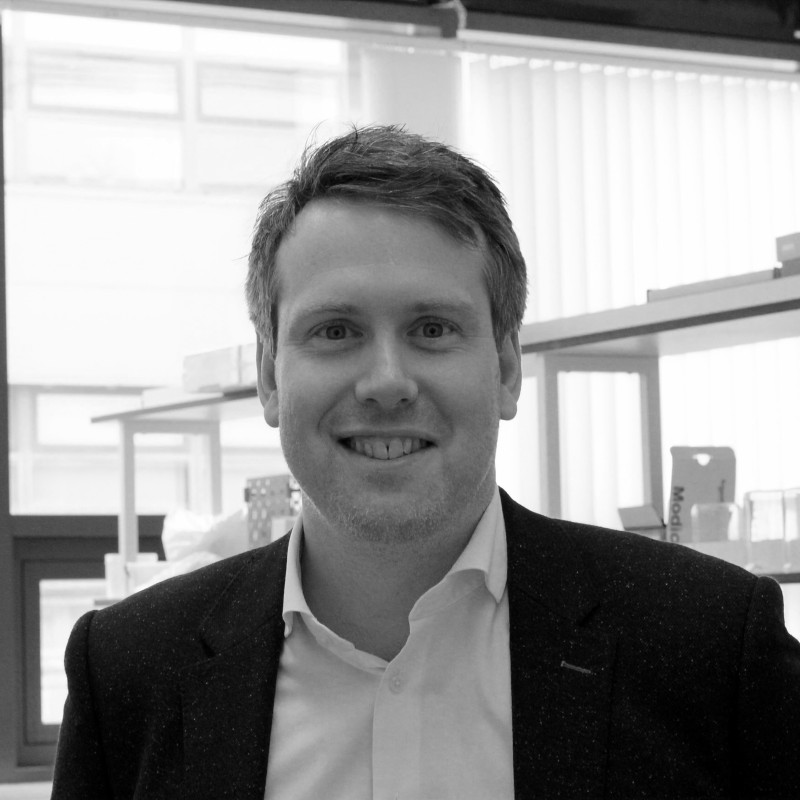
- Holly ReeveExecutive Officer, Director
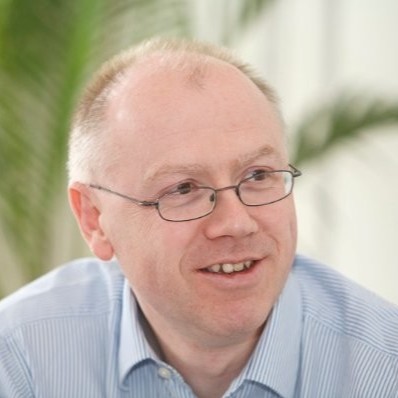
- Matthew HodgesExecutive Officer
- Jose De SousaDirector
- Kevin MatthewsDirector
- Connor DuffyDirector
- Jenny RookeDirector
- William BartonPromoter
- Kylie VincentPromoter
- Offering amount
- $4.8M
- Amount sold
- $1.9M
- Sales commissions
- $75K
- Placement agents
- ERG Securities (US) LLC/Rapid Innovation Group Ltd
- First sale
- Sep 2026
- Incorporated
- Other, United Kingdom
- Federal exemptions
- 06b
Source: SEC EDGAR Form D. Amounts as filed; amended filings shown once at their latest values.
Company profile
researched Aug 2026HydRegen is an Oxford, UK-based biotechnology company developing bio-based catalysts intended to replace toxic and expensive metal catalysts used in hydrogenation reactions in chemical and pharmaceutical manufacturing. Its system combines multiple enzymes immobilised on a conductive carbon bead: an NADH-dependent enzyme performs the target reduction, a hydrogenase splits hydrogen gas into protons and electrons, and an NAD+ reductase uses those electrons to regenerate NADH. Because hydrogen gas rather than glucose powers cofactor regeneration, the process is described as generating essentially no carbon-based waste, achieving high atom economy and simplifying product isolation; the enzyme-loaded beads can be recovered and reused.
The technology has been translated into flow chemistry, in which reactants pass over a packed bed of the heterogeneous biocatalyst, offering efficient mixing, safer handling of small volumes of pressurised hydrogen, automation and process control, and high productivity in small reactor footprints. Another application area is selective deuteration: [4-2H]-NADH can be recycled by the HydRegen system using standard hydrogen gas with D2O as solvent, enabling production of α-deuterium-labelled chiral molecules relevant to deuterated pharmaceuticals.
The company positions its approach as reducing both the carbon footprint and operating costs of chemical and pharmaceutical manufacturing by lowering the temperatures and pressures required in syntheses. Analysis by investor Clean Growth Fund suggested that applying HydRegen's approach to a first target process, paracetamol production, would save hundreds of thousands of tonnes of CO2e per annum, with millions of tonnes annually if broadly adopted across the sectors.
Founding story
The HydRegen system — a portmanteau of hydrogen and regeneration — was developed at the University of Oxford by Professor Kylie Vincent and Dr Holly Reeve, with the biotechnologies first demonstrated during Reeve's undergraduate and doctoral research in the Vincent Group. Reeve became project manager for a 2016 IB Catalyst grant and then CEO of the incorporated company, and is listed as a co-founder alongside Vincent.
Business model
HydRegen develops patent-protected, enzyme-based catalyst technology and plans to license it to companies manufacturing pharmaceutical and chemical products worldwide, positioning its biotechnology as part of the 'advanced manufacturing tool-box' for the chemical manufacturing industry.
Licensing of its biocatalyst technology to pharmaceutical and chemical manufacturers.
Traction
The project builds on more than ten years of fundamental and applied research and has attracted grant and venture funding, including a £2.9 million IB Catalyst grant in 2016, £385,000 from UKI2S with private investors in March 2022, and a £2.6 million round led by Clean Growth Fund announced in April 2023. Paracetamol production is cited as a first target process.
Latest developments
In April 2023 HydRegen announced a £2.6 million investment led by Clean Growth Fund alongside existing investors, to fund commercial development and deployment of its technologies over the following 18 months and to expand the team. The company also announced the appointment of Dr Willem Breukelaar as a scientist specialising in biocatalysis.
▸Full profile — market position, technology, go-to-market, geography, history
Market position
HydRegen is an early-stage university spin-out addressing industrial decarbonisation of hydrogenation chemistry, an area investor Clean Growth Fund characterises as a sizeable market opportunity within UK clean technology.
The platform switches the power source for biocatalysis from glucose to hydrogen gas, avoiding carbon-based waste and low atom economy associated with glucose-driven cofactor regeneration, while retaining the chemical selectivity of enzymes relative to metal catalysts. The immobilised, reusable carbon-bead format and compatibility with continuous flow chemistry are intended to allow biological precision to be implemented within existing chemical manufacturing infrastructure.
Technology
A patent-protected, enzyme-based biocatalysis platform using three enzymes immobilised on a conductive carbon bead: an NADH-dependent enzyme catalysing selective reductions, a hydrogenase that splits H2 into protons and electrons transferred via an iron-sulfur relay, and an NAD+ reductase that regenerates NADH. Inputs are hydrogen gas and the reactant, giving 100% atom economy in theory; the beads are removable and reusable. The system has been implemented in continuous flow reactors and supports biocatalytic deuteration using D2O.
Go-to-market
The company works in collaboration with pharmaceutical and fine chemical companies seeking to reduce costs and environmental impact, and intends to commercialise through licensing its technology to manufacturers globally. Proceeds from its 2023 round were earmarked for commercial development and deployment over an 18-month period and for team expansion over 12 months.
Pharmaceutical, fine chemical and broader chemical manufacturers, including producers of medicines, flavours and fragrances, seeking lower-carbon and lower-cost hydrogenation processes.
Geography
Based in Oxford, United Kingdom, with plans to license technology to chemical and pharmaceutical manufacturers internationally; its work is described as spanning UK and EU chemical manufacturing and bio-manufacturing ecosystems.
History
The underlying research was developed over roughly a decade in Prof Kylie Vincent's group at the University of Oxford, with the technology pioneered by Vincent and developed through Holly Reeve's Part II and DPhil projects. A pitch on the research won the Royal Society of Chemistry Emerging Technology prize in 2013, and in 2016 a £2.9 million IB Catalyst grant funded further development, with Reeve serving as project manager. The company was incorporated in December 2020 following an award of spin-out funding, with R&D work set to begin in March 2021, and is described as a 2021 spin-out from the University of Oxford. In March 2022 it received £385,000 from the UK Innovation & Science Seed Fund (UKI2S) alongside private investors, and in April 2023 it announced a £2.6 million round led by Clean Growth Fund.
Compiled by commissioned research from 7 cited public sources — announcements, filings, and press listed under research sources below.
Key figures
latest reportedCompany-reported or press-reported figures, each dated to when it was claimed — not independently audited.
Timeline · 6
launches, deals, and filingsHydRegen received £385,000 from the UK Innovation & Science Seed Fund (UKI2S) alongside private investors to work with pharmaceutical and fine chemical companies seeking to reduce costs and environmental impact.
HydRegen spun out of the University of Oxford in 2021, based on research from Prof Kylie Vincent's group.
HydRegen was awarded funding to spin out of the University of Oxford and became an incorporated company as of December 2020, with R&D work set to begin in March 2021.
A £2.9 million IB Catalyst grant was awarded in 2016 for development of the HydRegen project, allowing the team to expand.
A pitch about the underlying research was awarded the Royal Society of Chemistry Emerging Technology 2013 prize.
Dated company events from announcements, filings, and press; legal rows summarize public dockets and regulator releases.
▸Research sources · 7
primary sources listed
- HYDREGEN RAISE £2.6M — HydRegenhydregenoxford.com · web
7 public sources were cited for this profile; the first-party ones are listed here.
Frequently asked questions
- What does HydRegen do?
- Oxford spin-out developing hydrogen-driven enzyme biocatalysts that replace metal catalysts in pharmaceutical and chemical manufacturing.
- Who are HydRegen's investors?
- HydRegen's investors include Clean Growth Fund, Future Planet Capital, Oxford Investment Opportunity Network (OION), Oxford Technology Management, UK Innovation & Science Seed Fund.
- Where is HydRegen headquartered?
- HydRegen is headquartered in Thame, GB.