 Fundraising Fox
Harmonic
Unicorn · $1.4BFounded 2023 · 50 employees on LinkedIn · 18 known investors
Find your way into Harmonic
Sign up to see every warm intro you have to Harmonic
- Paths you didn't know you had: your email and LinkedIn already hold routes to the Harmonic team. We find them for you
- 2nd- and 3rd-degree connections: the friend-of-a-friend routes that take hours to manually find through your inbox or LinkedIn
- Answers now, not in days: momentum is everything in a raise. Skip asking around whether someone knows someone
Days of research, done the moment you sign in, with every route ranked by how warm it is.
Harmonic builds an advanced reasoning engine, a mathematical and computational tool for solving complex problems across scientific and technical domains.
Also known as Harmonic (harmonic.fun) · Harmonic AI
Founders & leadership
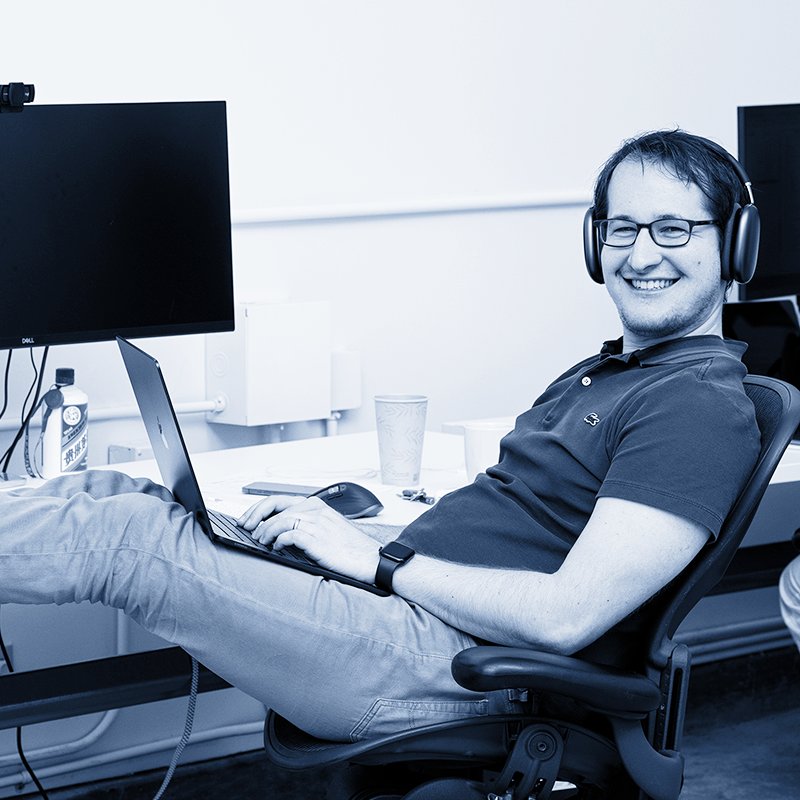
Harmonic was founded in 2023 by Tudor Achim and Vlad Tenev.

Investors · 18
How we know: Blossom Capital's portfolio page · open dataset · 5k.vc investor directory · Not right? Tell us

How we know: Firestreak Ventures's portfolio page · Not right? Tell us

How we know: GreatPoint Ventures's portfolio page · the VCSheet dataset · open dataset · 5k.vc investor directory · Not right? Tell us

How we know: Index Ventures's portfolio page · funding news · research · harmonic.fun · open dataset · 5k.vc investor directory · Not right? Tell us

How we know: Kleiner Perkins's portfolio page · research · harmonic.fun · open dataset · 5k.vc investor directory · Not right? Tell us
How we know: nvidia.com · Not right? Tell us
How we know: Paradigm's portfolio page · the VCSheet dataset · research · harmonic.fun · open dataset · 5k.vc investor directory · Not right? Tell us

How we know: Rainfall Ventures's portfolio page · the VCSheet dataset · Not right? Tell us
How we know: samsungnext.com · Not right? Tell us

How we know: Sequoia Capital's portfolio page · funding news · research · harmonic.fun · open dataset · 5k.vc investor directory · Not right? Tell us
How we know: the VCSheet dataset · open dataset · 5k.vc investor directory · Not right? Tell us

How we know: open dataset · 5k.vc investor directory · Not right? Tell us
How we know: funding news · Not right? Tell us

How we know: research · harmonic.fun · open dataset · 5k.vc investor directory · Not right? Tell us

How we know: funding news · Not right? Tell us
Also in the syndicate · 1
Funding
SEC filings, press & company announcements- Undisclosed amountSeed RoundJan 2026Source ↗
- Undisclosed amountSeries CNov 2025Source ↗
- Undisclosed amountSeries BJul 2025Source ↗
Source: company announcements and press reports — follow each round's link for the claim.
Valuation · disclosed
Disclosed eventsSource: SEC prospectus filings, and round valuations the company or its investors disclosed — follow each entry's link for the claim.
Company profile
researched Aug 2026Harmonic is an artificial intelligence company building what it describes as the world's most advanced mathematical reasoning engine, with the stated goal of achieving Mathematical Superintelligence (MSI). Its principal product is Aristotle, a model whose outputs are intended to be formally verifiable rather than merely plausible; the company works extensively with the Lean theorem-proving ecosystem and has built internal reinforcement learning infrastructure, including a Lean execution "REPL service," to continuously improve theorem-proving performance.
The company publishes research and engineering results publicly. Aristotle reached gold medal-level performance at the 2025 International Mathematical Olympiad, and Harmonic subsequently released technical detail on how that result was obtained and open-sourced the Yuclid geometry system (later Yuclid+Newclid 3.0). In December 2025 Harmonic extended Aristotle from mathematics into verified software, reporting a 96.8% state-of-the-art score on the VERINA code verification benchmark. Its infrastructure team has also open-sourced developer tooling including pbcc, a Protobuf compiler generating specialized C++ code for Python workloads, and python-memtools, a memory analyzer for Python programs.
Harmonic funds external mathematical work as part of its strategy, committing $1 million in sponsorships to students and researchers in January 2026 and making an inaugural $300,000 donation to the Lean FRO in February 2026. Company values published on its site emphasize truth-seeking, tenacity, craftsmanship, and human direction of mathematical and scientific progress.
Founding story
Per the company's About page, Tudor Achim and Vlad Tenev co-founded Harmonic in 2023 to build a reasoning engine whose outputs can be formally verified. Achim, previously co-founder and CTO of Helm.ai, holds a B.S. in Computer Science from Carnegie Mellon University and was a Ph.D. candidate in computer science at Stanford; Tenev, co-founder and CEO of Robinhood Markets, holds a B.S. in mathematics from Stanford and an M.S. in mathematics from UCLA. The company's timeline separately marks June 2024 as when Harmonic was founded and produced its first state-of-the-art result.
Business model
Harmonic develops a proprietary AI reasoning model, Aristotle, and distributes it through an API made available to developers, mathematicians, researchers and the general public as of October 2025. The sources do not describe pricing or contract structures.
Not disclosed in the available sources; the company offers Aristotle via an API but no pricing or revenue information is provided.
Traction
Reported traction is primarily technical and financial: gold medal-level performance at the 2025 IMO, a 96.8% state-of-the-art result on the VERINA code verification benchmark in December 2025, public availability of the Aristotle API from October 2025, and three disclosed venture rounds culminating in a $120 million Series C at a $1.45 billion valuation. No customer counts, usage or revenue figures are disclosed in the sources.
Latest developments
The most recent items in the sources are a February 2026 inaugural $300,000 donation to the Lean FRO and a January 2026 announcement of $1 million in mathematician sponsorships. These follow the December 2025 VERINA benchmark result (96.8%), the November 2025 $120 million Series C at a $1.45 billion valuation, and open-source releases of python-memtools (January 2026) and pbcc (December 2025).
▸Full profile — market position, technology, go-to-market, history
Market position
Harmonic describes itself as building the world's most advanced mathematical reasoning engine and states it was among the first AI models to achieve gold medal-level performance at the International Mathematical Olympiad. The available sources do not name competitors or provide market share data.
Harmonic positions Aristotle around formal verifiability: the company states its charter is a reasoning engine whose outputs can be formally verified, using Lean-based proof checking rather than unverified generative output. Benchmarked results cited by the company include IMO gold medal-level performance in 2025 and a 96.8% state-of-the-art score on the VERINA code verification benchmark.
Technology
Harmonic builds large reasoning models whose outputs can be formally verified, centered on the Lean theorem prover. Its infrastructure includes a custom automated reinforcement learning system for improving Lean theorem-proving models and a REPL service that mediates all interactions between models and Lean execution. The company has open-sourced Yuclid (and Yuclid+Newclid 3.0) for geometry, pbcc, a streamlined Protobuf compiler generating specialized C++ code for Python high-performance workloads, and python-memtools, a Python memory analyzer. Aristotle has been extended from mathematical proof to code verification.
Go-to-market
Harmonic distributes Aristotle through a public API and maintains a newsroom publishing research, engineering and community posts. It also open-sources tools (Yuclid/Newclid, pbcc, python-memtools) and sponsors mathematicians and the Lean FRO, which serve as community-facing channels. Press contact is pr@harmonic.fun; the company is active on X and YouTube.
The Aristotle API is described as serving developers, mathematicians, researchers and the general public. Harmonic also directs sponsorship funding to students and researchers in mathematics.
History
Harmonic's founder biographies state that Tudor Achim and Vlad Tenev co-founded the company in 2023 to build a reasoning engine whose outputs can be formally verified; the company's own timeline dates its founding and first state-of-the-art result to June 2024. A Sequoia Capital-led Series A followed in September 2024, with Index Ventures participating. In July 2025 Aristotle reached gold medal-level performance at the International Mathematical Olympiad, and in the same month Kleiner Perkins led a Series B with participation from Paradigm, Sequoia Capital and Index Ventures. The Aristotle API was opened to the public in October 2025, and in November 2025 Ribbit Capital led a $120 million Series C at a $1.45 billion valuation, joined by Emerson Collective, Sequoia Capital, Index Ventures and Kleiner Perkins. In December 2025 Harmonic reported a 96.8% state-of-the-art result on the VERINA code verification benchmark, and in early 2026 it announced $1 million in mathematician sponsorships and a $300,000 donation to the Lean FRO.
Compiled by commissioned research from 8 cited public sources — announcements, filings, and press listed under research sources below.
Key figures
latest reportedCompany-reported or press-reported figures, each dated to when it was claimed — not independently audited.
Founder mafia
4 people who came through Harmonic went on to found or lead other companies.


Related companies · 3

Companies working in the same space as Harmonic.
Timeline · 12
launches, deals, and filingsHarmonic made an inaugural $300,000 donation to the Lean FRO to support the future of mathematical superintelligence.
$300K source ↗
Harmonic announced $1 million in sponsorships directly to students and researchers to accelerate progress toward Mathematical Superintelligence.
$1M source ↗
Harmonic's engineering team open-sourced python-memtools, a memory analyzer for Python programs.
Harmonic's infrastructure team released pbcc, a custom Protocol Buffers implementation that generates specialized C++ code for Protobuf messages to handle large in-memory datasets in high-performance workloads.
Harmonic reported that Aristotle achieved a new state-of-the-art result of 96.8% on the VERINA code verification benchmark, extending the model from mathematics into verified software.
Harmonic announced a $120 million Series C led by Ribbit Capital valuing the company at $1.45 billion, with significant participation from Sequoia Capital, Index Ventures, Emerson Collective and Kleiner Perkins.
$120M source ↗
The Aristotle API opened verified reasoning access to developers, mathematicians, researchers and the general public.
Harmonic's Aristotle model achieved gold medal-level performance at the 2025 IMO; the company later open-sourced Yuclid and published details of the result.
Kleiner Perkins led the Series B, with backing from Paradigm and continued support from Sequoia Capital and Index Ventures.
Sequoia Capital led Harmonic's Series A, with significant participation from Index Ventures.
Harmonic's own timeline marks June 2024 as the point when the company was founded and posted its first state-of-the-art result, beginning work on mathematical superintelligence. (Founder bios on the same page state the company was co-founded in 2023.)
Dated company events from announcements, filings, and press; legal rows summarize public dockets and regulator releases.
In the news
▸Research sources · 8
primary sources listed
- About | Harmonicharmonic.fun · web
8 public sources were cited for this profile; the first-party ones are listed here.
Frequently asked questions
- What does Harmonic do?
- AI company building Aristotle, a formally verifiable mathematical reasoning engine, aiming at mathematical superintelligence.
- Who founded Harmonic?
- Harmonic was founded by Tudor Achim, Vlad Tenev in 2023.
- Who are Harmonic's investors?
- Harmonic's investors include Blossom Capital, Firestreak Ventures, GreatPoint Ventures, Index Ventures, Kleiner Perkins, NVIDIA, Paradigm, Rainfall Ventures and 9 more.