 Fundraising Fox
Gambit
Valley Village, US · Founded 2023 · 37 employees on LinkedIn · 7 known investors
Find your way into Gambit
Sign up to see every warm intro you have to Gambit
- Paths you didn't know you had: your email and LinkedIn already hold routes to the Gambit team. We find them for you
- 2nd- and 3rd-degree connections: the friend-of-a-friend routes that take hours to manually find through your inbox or LinkedIn
- Answers now, not in days: momentum is everything in a raise. Skip asking around whether someone knows someone
Days of research, done the moment you sign in, with every route ranked by how warm it is.
Gambit builds an adaptive intelligence software platform for autonomous systems that enables teams to deploy and evolve autonomous behaviors across multiple hardware platforms. The system supports real-time multi-robot control and coordination for defense, aerospace, and infrastructure applications.
Also known as Gambit AI
Founders & leadership
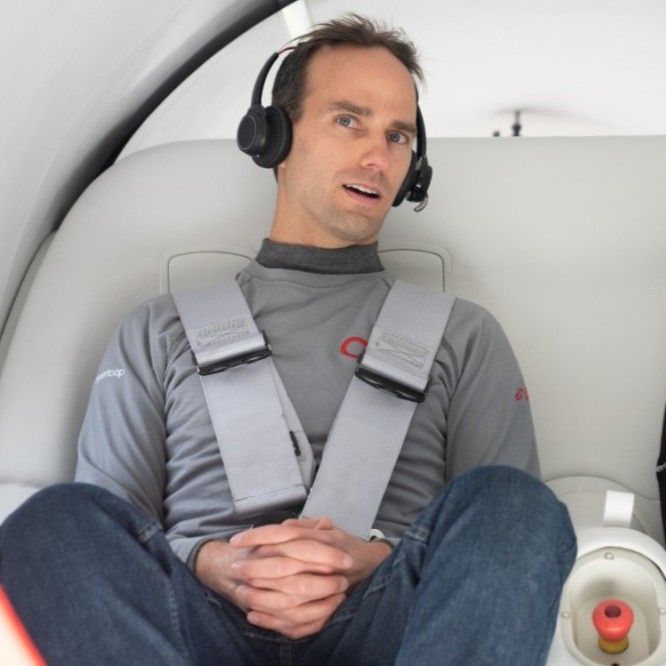
Gambit was founded in 2023 by Josh Giegel.
Board

Investors · 7

How we know: the company's own site · manaventures.vc · Not right? Tell us

How we know: Next Frontier Capital's portfolio page · open dataset · 5k.vc investor directory · Not right? Tell us
How we know: the company's own site · Riphean Investments's portfolio page · Not right? Tell us

How we know: Cyberstarts's portfolio page · funding news · press coverage · Not right? Tell us

How we know: Kleiner Perkins's portfolio page · funding news · press coverage · Not right? Tell us

How we know: a partner's Signal profile · board seat on SEC Form D · open dataset · 5k.vc investor directory · Not right? Tell us

How we know: funding news · press coverage · Not right? Tell us
Reported raises · per SEC filings
Form D private placements$6.5M disclosed across 1 round · 2023
▶$6.5MraisedMar 2023 · 2 investors · Other TechnologyRule 506(b)
- Joshua GiegelExecutive Officer, Director, Promoter
- Greg ReichowDirector
- Offering amount
- $6.5M
- Amount sold
- $6.5M
- Proceeds to insiders
- $3.2K
- First sale
- Feb 2023
- Incorporated
- Corporation, Delaware, 2023
- Federal exemptions
- 06b
Source: SEC EDGAR Form D. Amounts as filed; amended filings shown once at their latest values.
Company profile
researched Aug 2026Gambit develops what it describes as a software-first, platform-agnostic "Physical AI Stack" for autonomous systems. The product is positioned as an adaptive intelligence layer that lets teams build, deploy and evolve autonomous behaviors across different hardware environments rather than a single vendor's robots. Its stated components are a Behavior Builder for creating and training behaviors, an edge runtime that executes adaptive intelligence in real time, and an interface for monitoring and controlling missions.
The company frames its capability set around four functions: modeling (learning behaviors across missions), adaptation (real-time multi-robot control), operation (cross-platform execution across air, land and sea domains), and interface (translating human intent into collective action). Gambit describes a spectrum of autonomy running from automated (script-following) through autonomous (independent navigation) and collaborative (coordination within a controlled stack) to what it calls adaptive systems that learn, collaborate and adapt as a single unified intelligence, positioning its own product at that highest tier.
Gambit states its technology has been validated in defense and is intended to scale to other industry and infrastructure uses. Its public activity centers on U.S. defense customers and integrators, including work with the U.S. Air Force, the U.S. Army Ground Vehicle Systems Center, and partners such as ModalAI, Reach Power and VICTUS.
Business model
Gambit sells software rather than hardware, offering an intelligence stack that is deployed onto third-party autonomous platforms. Public disclosures indicate revenue and program activity through U.S. government contracting vehicles, including Other Transaction Agreements (OTAs) and multi-million-dollar U.S. Air Force contracts, alongside integration partnerships with hardware vendors that make Gambit's software deployable on their platforms.
Traction
Publicly announced traction includes two multi-million-dollar U.S. Air Force contracts, an OTA with the U.S. Army Ground Vehicle Systems Center for C-UAS simulation and coordinated autonomy, an additional OTA to advance coordinated autonomous operations, OECIF funding awarded jointly with Reach Power for the SWARM effort, and partnerships with ModalAI and VICTUS. Specific contract values, customer counts and deployment figures are not disclosed in the sources.
Latest developments
In March 2026 Gambit announced an integration and partnership with ModalAI, placing its adaptive intelligence layer on the VOXL 2 autopilot/AI compute platform so its software can run on uncrewed systems built on the VOXL SDK ecosystem, including ModalAI's Seeker Vision FPV platform selected for Drone Dominance Phase 1. Other recent announcements include an OTA from U.S. Army GVSC for C-UAS simulation and coordinated autonomy, an OTA to advance coordinated autonomous operations, two multi-million-dollar U.S. Air Force contracts, a partnership with VICTUS, and OECIF funding won with Reach Power for the SWARM project combining adaptive intelligence with wireless power beaming.
▸Full profile — market position, technology, go-to-market, geography, history, risks & controversies
Market position
An early-stage defense-technology software company operating in the autonomy and coordinated uncrewed-systems segment, with disclosed U.S. government awards and integration partnerships. Sources do not provide revenue, headcount or market share data.
Gambit positions itself against single-stack or single-vendor autonomy by emphasizing hardware agnosticism and multi-agent coordination: rather than automating individual machines, it claims to orchestrate heterogeneous systems as a unified, adaptive intelligence spanning air, land and sea domains.
Technology
The platform is described as a software-first, platform-agnostic intelligence stack with three named elements: Behavior Builder (creating and training behaviors), adaptive intelligence at the edge (real-time execution), and an operator interface for mission monitoring and control. It supports real-time multi-robot control and cross-domain execution across air, land and sea. Gambit's adaptive intelligence layer has been integrated with ModalAI's VOXL 2, a Blue UAS Framework autopilot and onboard AI compute platform built on the Qualcomm QRB5165, allowing deployment on uncrewed systems built with the VOXL SDK ecosystem. The company has also integrated its adaptive AI platform into simulation environments for testing coordinated autonomy in counter-UAS scenarios.
Go-to-market
Gambit pursues government contracting vehicles (OTAs, service contracts, and innovation funding such as OECIF) and partners with hardware and technology providers—such as ModalAI, Reach Power and VICTUS—so its software layer can be embedded in existing uncrewed platforms. It maintains an advisory board of senior former military and government officials focused on national security, acquisition and special operations to guide strategy and, implicitly, defense market access.
Primarily U.S. defense and national security organizations, including U.S. Air Force and U.S. Army Ground Vehicle Systems Center programs, plus teams operating uncrewed air, ground and maritime systems. The company states it also targets broader industry and infrastructure applications where coordinated autonomous systems are used.
Geography
The ModalAI partnership announcement is datelined Los Angeles, California; customers and programs referenced are U.S. federal defense organizations. No other locations are disclosed in the sources.
History
The available sources do not state a founding date or funding history. The company's site lists a leadership team of Josh Giegel (Founder & CEO), Ben Richardson (CCO) and Andrew Kemendo (CTO), an advisory board including H.R. McMaster, Katharina McFarland and Jim Smith, and a set of backers: GenLab, Mana Ventures, Next Frontier Capital, Eclipse, Ethos, Riphean Investments and Marlinspike. Announced milestones visible on the site span U.S. Air Force contracts, U.S. Army GVSC and other OTAs, OECIF funding with Reach Power, and partnerships with VICTUS and ModalAI (announced March 2026).
Risks & controversies
No controversies, litigation or negative events are reported in the available sources. The sources disclose no funding amounts, revenue, headcount or contract values, and the company's traction appears concentrated in U.S. government programs.
Compiled by commissioned research from 8 cited public sources — announcements, filings, and press listed under research sources below.
Founder mafia
2 people who came through Gambit went on to found or lead other companies.


Related companies · 2

Companies working in the same space as Gambit.
Timeline · 6
launches, deals, and filingsGambit's adaptive intelligence layer was integrated with ModalAI's VOXL 2 Blue UAS Framework autopilot and onboard AI computing platform (Qualcomm QRB5165), enabling Gambit software to be deployed on uncrewed systems built on the VOXL SDK ecosystem, including ModalAI's Seeker Vision FPV platform selected for Drone Dominance Phase 1. Announced from Los Angeles, CA.
Gambit received an Other Transaction Agreement from the U.S. Army Ground Vehicle Systems Center to integrate its adaptive AI platform into advanced simulation environments for scalable testing of coordinated autonomous systems in complex counter-UAS scenarios.
Company news item announcing an Other Transaction Agreement to advance coordinated autonomous operations; awarding organization and amount not specified.
Company news item states Gambit was awarded two multi-million dollar contracts by the U.S. Air Force to advance adaptive intelligence for autonomous systems. Contract values are not specified.
Gambit and Reach Power jointly won OECIF funding for SWARM, which pairs Gambit's adaptive intelligence with wireless power beaming intended to remove battery limits on autonomous drone operations. Amount not disclosed.
Company news item announcing a partnership with VICTUS to advance coordinated autonomy in contested environments. Terms not disclosed.
Dated company events from announcements, filings, and press; legal rows summarize public dockets and regulator releases.
▸Research sources · 8
primary sources listed
- Gambitgambit.us · web
8 public sources were cited for this profile; the first-party ones are listed here.
Frequently asked questions
- What does Gambit do?
- Gambit builds a platform-agnostic adaptive intelligence software stack that coordinates autonomous systems across air, land and sea.
- Who founded Gambit?
- Gambit was founded by Josh Giegel in 2023.
- Who are Gambit's investors?
- Gambit's investors include Mana Ventures, Next Frontier Capital, Riphean Investments, Cyberstarts, Kleiner Perkins, Eclipse Ventures, Spark Capital.
- How much funding has Gambit raised?
- Gambit has disclosed $6.5M raised across 1 round.
- Where is Gambit headquartered?
- Gambit is headquartered in Valley Village, US.