 Fundraising Fox
Flow Medical
Chicago, US · 8 employees on LinkedIn · 8 known investors
Find your way into Flow Medical
Sign up to see every warm intro you have to Flow Medical
- Paths you didn't know you had: your email and LinkedIn already hold routes to the Flow Medical team. We find them for you
- 2nd- and 3rd-degree connections: the friend-of-a-friend routes that take hours to manually find through your inbox or LinkedIn
- Answers now, not in days: momentum is everything in a raise. Skip asking around whether someone knows someone
Days of research, done the moment you sign in, with every route ranked by how warm it is.
Flow Medical develops technology for catheter-directed thrombolysis treatment of pulmonary embolism, aiming to improve precision in lytic medication dosing to reduce readmission rates. The company targets interventional cardiologists and radiologists managing acute PE cases.
Also known as FLOW Medical
Founders & leadership
Investors · 8

How we know: chicagoearly.com · Not right? Tell us

How we know: Everywhere Ventures's portfolio page · research · flowmedical.co · Not right? Tell us


Also in the syndicate · 2
Company profile
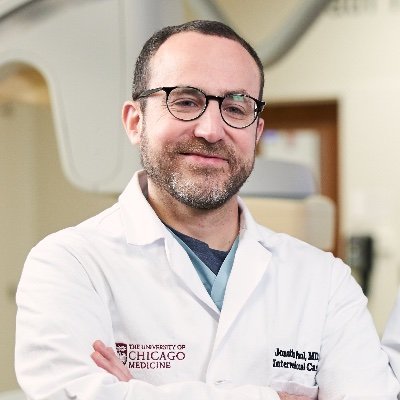
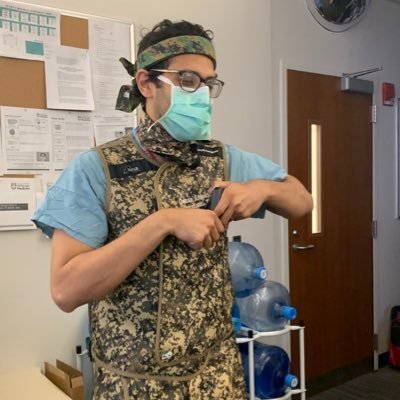
researched Aug 2026Flow Medical is a Chicago, Illinois-based medical device company developing a catheter-directed thrombolysis (CDT) system designed specifically for treating acute pulmonary embolism (PE). The company was founded in 2020 by University of Chicago physicians Dr. Jonathan Paul, an interventional cardiologist and director of the pulmonary embolism response team at UChicago Medicine, and Dr. Osmanuddin (Osman) Ahmed, a vascular and interventional radiologist, together with health tech entrepreneur Jennifer Fried, who joined as CEO and co-founder in 2023. Paul serves as chief scientific officer and Ahmed as chief medical officer; both continue to practice at the University of Chicago Medical Center.
The company's device is a steerable, multi-function catheter intended to combine diagnosis, therapy delivery and monitoring in a single system. It performs diagnostic-quality pulmonary angiography to locate clots, deploys an adjustable-length nitinol basket that engages and disrupts the clot while delivering tissue plasminogen activator (tPA) directly into the blockage, and incorporates a sensor that measures pulmonary artery pressure in real time so clinicians can personalize and terminate the lytic dose rather than infusing for a preset interval. The team has targeted an 8 Fr catheter profile, with earlier prototypes in the 10–11 Fr range, and has worked with contract development and manufacturing organization Medical Murray and with Ontogen Medtech co-founder Tyler Panian.
As of December 2024 the company had frozen its system design and begun verification and validation testing, following more than a dozen animal studies and roughly a year of design refinement. It had an FDA Pre-Submission meeting scheduled for January to determine the regulatory pathway, planned an investigational device exemption application in 2025, and aimed for first human use approximately a year out, to be followed by a pivotal study in more than 100 patients.
Founding story
The concept originated in December 2020, when Jonathan Paul and Osman Ahmed — colleagues who had jointly built a venous thrombosis and pulmonary embolism program at the University of Chicago — sat together during the observation period after receiving their first COVID-19 vaccine doses. Both were treating a surge of DVT and PE cases associated with COVID-19 and were dissatisfied with existing devices, which had largely been designed for other purposes such as small-vessel arterial thrombolysis and repurposed for the larger pulmonary arteries. As users of those products, they set out to design their own device and to make catheter-directed thrombolysis a more data-driven procedure with better feedback and control over when to stop drug infusion. Jennifer Fried, whose prior company Explorer Surgical also came out of the University of Chicago, was introduced to the founders by Polsky Science Ventures consulting director and Flow Medical advisor/board member Dr. Steve Gould; after initially exploring an advisory role, she joined as CEO and co-founder in 2023.
Traction
The device has been tested in more than a dozen animal studies and refined over approximately a year of design work. The company had frozen its design and started verification and validation testing as of December 2024, with an FDA Pre-Sub meeting scheduled for January, an IDE application planned for 2025, a first-in-human study targeted for roughly a year later and a subsequent pivotal study in more than 100 patients. It received NIH SBIR funding, was a finalist for the Polsky Center's George Shultz Innovation Fund, participated in Polsky I-Corps and the Compass accelerator, and was a runner-up for the 2024 MedTech Innovator accelerator grand prize. Cumulative disclosed capital includes a $1 million strategic investment from an unnamed medical device manufacturer and a $5 million seed round.
Latest developments
In December 2024 Flow Medical closed an oversubscribed $5 million seed round led by UChicago Medicine's UCM Ventures — that fund's first direct med-tech investment — with participation from Everywhere Ventures and inclusive of $2 million previously raised from friends and family. Proceeds are earmarked for design verification and validation testing, an FDA investigational device exemption filing in 2025, initiation of a first-in-human study, and partnerships intended to support adoption and accessibility.
▸Full profile — market position, technology, go-to-market, geography, history, risks & controversies
Market position
The company positions its initial product as the first catheter-directed thrombolytic catheter designed specifically for the pulmonary arteries, in contrast to catheters originally developed for other applications such as small-vessel arterial thrombolysis. Management cites roughly 900,000 venous thromboembolism cases annually in the U.S., about two-thirds of which become pulmonary embolism, with an estimated one-third of those patients considered good candidates for this type of procedure; it describes the intermediate-risk PE segment eligible for endovascular intervention as underpenetrated, with only about 15%–20% of eligible patients currently receiving therapy.
Technology
The product is a three-in-one angiography, infusion and monitoring catheter-directed thrombolysis system for the pulmonary arteries. A steerable catheter navigates to the clot and deploys a superelastic nitinol basket whose length is adjustable to the clot size; the basket engages and disrupts the thrombus while delivering tPA into it, then recompresses into the catheter for removal. Built-in angiography capability provides diagnostic-quality pulmonary angiograms without a separate device exchange, and an integrated sensor measures pulmonary artery pressure in real time to guide when to discontinue lytic infusion. The company targets an 8 Fr catheter size — slightly larger than existing CDT devices but smaller than mechanical thrombectomy catheters — with prototypes previously at 10–11 Fr.
Go-to-market
Interventional cardiologists, interventional radiologists and hospital pulmonary embolism response teams treating patients with acute, intermediate-risk pulmonary embolism.
Geography
Headquartered in Chicago, Illinois, with clinical ties to the University of Chicago Medical Center; commercial focus is on the U.S. market.
History
FLOW Medical was founded in 2020 out of the University of Chicago. By March 2022 it was finalizing its prototype, participating in the Polsky Center's I-Corps program, selected for Cohort 4 of the Compass deep tech accelerator, a finalist for the Polsky Center's George Shultz Innovation Fund, and had received a favorable impact score on a submitted NIH SBIR grant; at that time it planned animal studies and a 510(k) filing within about 18 months. It won SBIR funding from the National Institutes of Health and raised $1 million from an unnamed medical device manufacturer acting as a strategic investor. Jennifer Fried joined as CEO and co-founder in 2023. In 2024 the company was a runner-up for the MedTech Innovator accelerator grand prize, completed a $2 million friends-and-family round, and in December 2024 announced an oversubscribed $5 million seed round inclusive of that earlier $2 million.
Risks & controversies
The product is pre-market and pre-clinical in humans; the regulatory pathway was still being determined via an FDA Pre-Submission meeting as of December 2024, and earlier plans had contemplated a 510(k) filing while the 2024 plan referenced an investigational device exemption. Engineering challenges include miniaturizing the multi-function system from 10–11 Fr prototypes to the targeted 8 Fr profile, and the company has cited design pivots driven by material interactions and size constraints as well as supply chain shortages.
Compiled by commissioned research from 8 cited public sources — announcements, filings, and press listed under research sources below.
Key figures
latest reportedCompany-reported or press-reported figures, each dated to when it was claimed — not independently audited.
Related companies · 1

Companies working in the same space as Flow Medical.
Timeline · 7
launches, deals, and filingsThe company scheduled an FDA Pre-Sub meeting for January to help determine the appropriate regulatory pathway and timing.
Flow Medical announced the closing of an oversubscribed $5 million seed round, including $2 million previously secured from friends and family plus $3 million from institutional investors, led by the University of Chicago Medical Center's UCM Ventures in that fund's first direct med-tech investment; Everywhere Ventures also participated. Funds are for design verification and validation testing, a first-in-human study, an IDE application in 2025 and adoption partnerships.
$5M source ↗
The company raised $2 million in a friends-and-family round to fund R&D and regulatory activities. Investors included Harvard Business School Angels of Chicago.
$2M source ↗
Flow Medical raised $1 million from an unnamed medical device manufacturer described by CEO Jennifer Fried as a strategic investor, and had also won Small Business Innovation Research funding from the National Institutes of Health.
$1M source ↗
Jennifer Fried, previously co-founder and CEO of Explorer Surgical (sold to GHX in 2021), joined Flow Medical as CEO, co-founder and investor.
FLOW Medical participated in the Polsky I-Corps program, was selected for Cohort 4 of the Compass deep tech accelerator and was a finalist in the Polsky Center's George Shultz Innovation Fund, which provides up to $250,000 in co-investment funding.
Dated company events from announcements, filings, and press; legal rows summarize public dockets and regulator releases.
▸Research sources · 8
primary sources listed
- Flow Medical Secures $5 Million Seed Funding to Advance Innovative Pulmonary Embolism Therapy — Flow Medicalflowmedical.co · web
8 public sources were cited for this profile; the first-party ones are listed here.
Frequently asked questions
- What does Flow Medical do?
- Chicago medtech startup developing a multi-function catheter-directed thrombolysis system for acute pulmonary embolism.
- Who founded Flow Medical?
- Flow Medical was founded by Jonathan Paul, Osman Ahmed.
- Who are Flow Medical's investors?
- Flow Medical's investors include Chicago Early Growth Ventures (CEGV), Everywhere Ventures, HARPER COURT VENTURES, Harvard Business Angels of Chicago, Josephine Collective, The Innovation Space.
- Where is Flow Medical headquartered?
- Flow Medical is headquartered in Chicago, US.