 Fundraising Fox
Droplette
Boston, US · Founded 2017 · Delaware corporation · 7 known investors
Find your way into Droplette
Sign up to see every warm intro you have to Droplette
- Paths you didn't know you had: your email and LinkedIn already hold routes to the Droplette team. We find them for you
- 2nd- and 3rd-degree connections: the friend-of-a-friend routes that take hours to manually find through your inbox or LinkedIn
- Answers now, not in days: momentum is everything in a raise. Skip asking around whether someone knows someone
Days of research, done the moment you sign in, with every route ranked by how warm it is.
Droplette develops a delivery system that converts active skincare and clinical ingredients into a barrier-penetrating mist for application to the skin. Founded by MIT-trained scientists, the company's technology originated from research on epidermolysis bullosa, a rare genetic skin condition, and was adapted for skincare.
Also known as Droplette Inc.
Founders & leadership
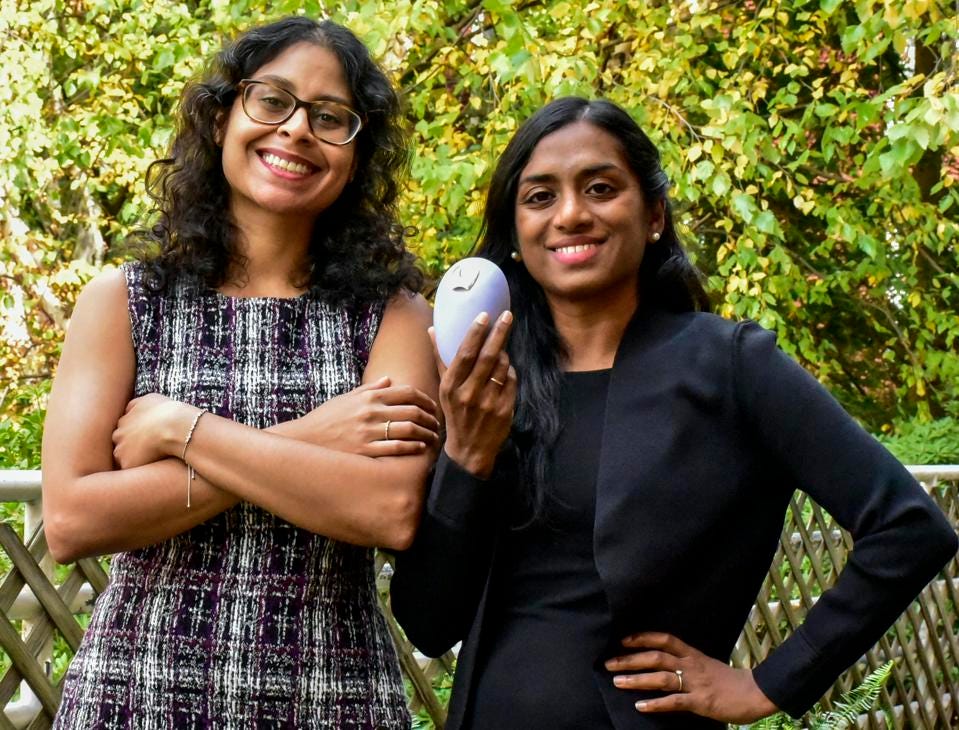
Droplette was founded in 2017 by Rathi Srinivas and Madhavi Gavini.
Board

Investors · 7

How we know: the VCSheet dataset · Not right? Tell us

How we know: Visible Ventures's portfolio page · the VCSheet dataset · Not right? Tell us

How we know: Zühlke Ventures's portfolio page · Not right? Tell us

How we know: board seat on SEC Form D · funding news · the VCSheet dataset · research · forbes.com · Not right? Tell us

How we know: funding news · press coverage · Not right? Tell us
Also in the syndicate · 1
Reported raises · per SEC filings
Form D private placements$29.9M disclosed across 2 of 4 rounds · 2017–2021
▶$21MraisedMar 2023 · 18 investors · OtherRule 506(b)
- Lori CashmanDirector
- Nancy GoDirector
- Santo PolitiDirector
- Rathi SrinivasDirector
- Madhavi GaviniExecutive Officer, Director
- Offering amount
- $30M
- Amount sold
- $21M
- First sale
- Nov 2021
- Incorporated
- Corporation, Delaware
- Federal exemptions
- 06b
▶$8.8MraisedAug 2019 · 10 investors · OtherRule 506(b)
- Rathi SrinivasExecutive Officer, Director
- Madhavi GaviniExecutive Officer, Director
- Santo PolitiDirector
- Offering amount
- $8.8M
- Amount sold
- $8.8M
- First sale
- Aug 2019
- Incorporated
- Corporation, Delaware, 2017
- Federal exemptions
- 06b
Source: SEC EDGAR Form D. Amounts as filed; amended filings shown once at their latest values.
Company profile
researched Aug 2026Droplette Inc. is a Boston-area skincare technology company that sells a handheld delivery device (marketed as a Microinfuser, current model "Droplette Device Ultra") together with single-use serum capsules. The device aerosolizes serum into a mist of particles under five microns in diameter and accelerates them so that active ingredients pass through the skin barrier without needles; the company attributes this to the pairing of a piezo element that reduces droplet size with a pump that further reduces size and increases velocity, a combination it describes as patent protected (US Patent #US20170274159A1). The company states the system delivers ingredients roughly 20x deeper than topical products, citing research that more than 90% of conventional serums and moisturizers do not penetrate beyond the outermost skin layer.
The product line consists of the device plus color-coded capsule types: Collagen Boosting Hydrofiller (hydrating/plumping), Retinol Renewer (anti-aging), Glycolic Illuminator (resurfacing), Tranexamic Eraser (dark spots/redness), Growth Factors / Stem Cell Concentrate with Exosomes and Growth Factors (advanced anti-aging), a hydrating Lip Plumper that requires the Droplette app, and device cleaning capsules. Bundles include an Ultra Starter Set with Collagen Boosting Hydrofiller ($350), a Reset & Resurface Duo ($200) and dermatologist-developed Prescriptive Regimens ($100-$115). The device is engineered to work only with Droplette capsules; the company states other products cannot be used because of viscosity requirements and safety considerations at greater infusion depths.
The company positions the technology as originating in medical research rather than cosmetics, citing peer-reviewed publications (FASEB 2018; Pharmaceutics 2022; Biomedical Engineering Technologies 2022), validation by NASA and the National Institutes of Health, and a partnership with the Walter Reed Army Institute to apply the device to blast-wound treatment. Its founders have also described longer-term ambitions to deliver medications such as antibiotics and steroids through the skin.
Founding story
Droplette was founded by Madhavi Gavini and Rathi Srinivas, both trained as chemical engineers at MIT. Srinivas was completing a PhD at MIT while Gavini had developed an algorithm for predicting protein structures and an associated anti-fibrotic drug compound. The pair learned about epidermolysis bullosa, a rare genetic condition causing extremely fragile skin, at a medical conference in London, and considered whether missing genetic material could be sprayed back into the skin; topical creams were ineffective or painful for EB patients and intravenous delivery distributed drugs systemically. They set out to build a needle-free, non-irritating transdermal delivery method, prototyping at Gavini's kitchen table in Cambridge, Massachusetts using pumps, humidifiers and electronic components ordered from eBay, then filing patents and iterating through at least 11 or 12 prototypes with consultants, aided by NASA grant funding.
Business model
Direct-to-consumer sale of a durable device plus recurring consumable serum capsules, with capsule subscriptions offered at a 20% discount. The site also lists authorized practices and stockists searchable by ZIP code, indicating a professional/retail channel alongside online sales.
Hardware sales (Droplette Device Ultra $250; Ultra Starter Set with 28 Collagen Boosting Hydrofiller capsules $350) plus repeat purchases and subscriptions of capsules priced from $15 for cleaning capsules to $300 for the Stem Cell Concentrate with Exosomes and Growth Factors pack; regimens at $100-$115. Free shipping is included with orders.
Traction
The site reports over 7 million treatments sold and aggregates thousands of product reviews (e.g., 758 reviews at 4.8/5 for Collagen Boosting Hydrofiller, 242 at 4.9/5 for Retinol Renewer). Claimed clinical outcomes include hydration improvement of up to 94% and fine-line reduction of 87%, with visible results reported as soon as two weeks; for the exosome formula, 100% of users agreed skin was more hydrated, 76% that skin looked younger and 75% that skin looked more resilient. Media coverage includes Vogue, Allure, InStyle, Time and Skin Anarchy. Headcount was 16 at the time of the 2020 launch.
Latest developments
The product catalog now includes a Stem Cell Concentrate with Exosomes and Growth Factors capsule ($300) and the Droplette Device Ultra, alongside prescriptive regimens; the site promotes an exosome-based regenerative formula featured in Skin Anarchy, a companion app used with the Lip Plumper capsule, and a practice/stockist locator.
▸Full profile — market position, technology, go-to-market, geography, history, risks & controversies
Market position
Describes itself as the only at-home skincare system that delivers ingredients into the skin without damaging the skin barrier or causing pain, and as the first skincare delivery system powered by technology validated by NASA and the National Institutes of Health. It acknowledges other misting devices exist but claims the piezo-plus-pump pairing is novel and patent protected.
Needle-free, mechanical transdermal delivery claimed to reach roughly 20x deeper than topical application; a closed capsule system restricted to Droplette's own tested formulations; medical-research provenance (EB research, NASA/NIH grants, Walter Reed partnership) and peer-reviewed publications supporting the delivery platform.
Technology
A handheld device that aerosolizes serum from a capsule into a high-velocity micromist with particle sizes below five microns (described as 100x smaller than the width of a hair). Delivery is purely mechanical, using a piezo mesh to shrink droplets and a pump to shrink and accelerate them further, with no chemical propellants; the company says laboratory aerosol-deposition testing showed the mist cannot travel into the lungs. Formulations use pharmaceutical-grade actives including collagen, peptides, retinol, glycolic acid, salicylic acid, tranexamic acid, exosomes and growth factors. The company holds US Patent #US20170274159A1 and cites peer-reviewed publications on transdermal delivery of large molecules, high-molecular-weight antibiotics and nucleic acid therapeutics.
Go-to-market
Sells online through its own storefront with promotional discounting (e.g., 50% off serums), a referral program, capsule subscriptions, a two-year limited device warranty and 30-day returns. Marketing leans on consumer-press coverage (Vogue, Allure, InStyle, Time, Skin Anarchy), clinical study claims, dermatologist endorsement and customer reviews, and the company directs shoppers to nearby authorized practices and stockists.
Consumers seeking at-home anti-aging and skin-hydration treatments, segmented on the site by concern (anti-aging, fine lines, dullness, dark spots, dry skin, oily skin, blemishes, redness), including users with sensitive skin. Adjacent non-consumer use is pursued through the Walter Reed Army Institute partnership for battlefield blast-wound treatment.
Geography
Founded and prototyped in Cambridge/Boston, Massachusetts. Sales are United States only; the company states it does not ship internationally, with Growth Factors capsules restricted to the 48 contiguous states.
History
After early prototyping and patent filings, the founders raised $800,000 in 2017 from investors including MIT Alumni Angels in Boston and Bolt, and later received approximately $900,000 in grant funding from Walter Reed, the National Institutes of Health and NASA. A Series A of $8.8 million led by Spark Capital closed in the fall of 2019, and the consumer product formally launched in late October 2020 at a price of $299 with three capsule types (retinol; collagen and peptides; glycolic and salicylic acid). By that launch the team numbered 16 people and was building a companion app for logging usage and tracking skin progress. The current catalog has expanded to roughly 12 products including exosome and growth-factor capsules, regimens and an Ultra device, and the company reports over 7 million treatments sold.
Risks & controversies
Efficacy and clinical claims (20x deeper delivery, 94% hydration improvement, 87% fine-line reduction) are company-stated and not independently verified in the available sources. The closed capsule ecosystem limits use to Droplette's own serums, and the company notes that ingredients delivered far below the surface can produce undesirable side effects. Several products are listed as sold out, distribution is limited to the United States, and Growth Factor capsules are final sale and cannot be returned. A separate drug compound from co-founder Gavini's research is described as in pre-IND review before FDA submission.
Compiled by commissioned research from 8 cited public sources — announcements, filings, and press listed under research sources below.
Key figures
latest reportedCompany-reported or press-reported figures, each dated to when it was claimed — not independently audited.
Founder mafia
2 people who came through Droplette went on to found or lead other companies.

Related companies · 5



Companies working in the same space as Droplette.
Timeline · 3
launches, deals, and filingsDroplette received roughly $900,000 in grants from Walter Reed, the National Institutes of Health and NASA.
$900K source ↗
Walter Reed Army Institute partners with Droplette and is working to use the device for treating soldiers' blast wounds; the company also lists this collaboration on its site.
Droplette officially launched its at-home misting device, priced at $299 and offered with three capsule types: retinol; collagen and peptides; and glycolic acid with salicylic acid.
Dated company events from announcements, filings, and press; legal rows summarize public dockets and regulator releases.
Legal entities · 1
corporate structureIn the news
▸Research sources · 8
primary sources listed
- Droplettedroplette.io · web
8 public sources were cited for this profile; the first-party ones are listed here.
Frequently asked questions
- What does Droplette do?
- Droplette sells a patented at-home device that aerosolizes capsule serums into a barrier-penetrating mist for skincare.
- Who founded Droplette?
- Droplette was founded by Rathi Srinivas, Madhavi Gavini in 2017.
- Who are Droplette's investors?
- Droplette's investors include Alumni Ventures, Bantam Group, Visible Ventures, Zühlke Ventures, Spark Capital, Victress Capital.
- How much funding has Droplette raised?
- Droplette has disclosed $29.9M raised across 2 of its 4 known rounds.
- Where is Droplette headquartered?
- Droplette is headquartered in Boston, US.