 Fundraising Fox
Appmap
12 known investors
Find your way into Appmap
Sign up to see every warm intro you have to Appmap
- Paths you didn't know you had: your email and LinkedIn already hold routes to the Appmap team. We find them for you
- 2nd- and 3rd-degree connections: the friend-of-a-friend routes that take hours to manually find through your inbox or LinkedIn
- Answers now, not in days: momentum is everything in a raise. Skip asking around whether someone knows someone
Days of research, done the moment you sign in, with every route ranked by how warm it is.
AppMap records runtime traces—function calls, SQL queries, HTTP traffic, exceptions, and code paths—from tests and running applications in development and CI, then exposes them to coding agents over MCP and to developers as visual maps. It is aimed at developers and AI coding agents who need to review and verify the actual runtime behavior of code changes, particularly AI-generated code, in pull requests.
Also known as AppMap, Inc. · getappmap
Founders & leadership

Investors · 12

How we know: av.vc · Not right? Tell us

How we know: Argon Ventures's portfolio page · the VCSheet dataset · research · finsmes.com · Not right? Tell us
How we know: Dell Technologies Capital's portfolio page · the VCSheet dataset · Not right? Tell us

How we know: the VCSheet dataset · research · finsmes.com · Not right? Tell us

How we know: research · finsmes.com · Not right? Tell us

How we know: research · finsmes.com · Not right? Tell us

How we know: a partner's Signal profile · the VCSheet dataset · Not right? Tell us
Also in the syndicate · 4
Company profile
researched Aug 2026AppMap builds developer tooling that records how an application actually behaves at runtime and turns those traces into inspectable maps and diagrams. Its language agents instrument code running on developer machines and in CI to capture function calls, SQL queries, HTTP calls, exceptions, timing, code objects and their relationships. The resulting traces are rendered as sequence diagrams, call trees, flame graphs and code-object views inside VS Code and JetBrains IDEs, and can also be produced from the command line via the AppMap CLI.
Beyond visualization, the product compares behavior across revisions: it records fresh traces after a change, diffs them against the base revision, and reports what moved — API changes, query changes, new dependencies, performance regressions such as N+1 or repeated SQL, and security or correctness problems including authorization gaps, exceptions, unsafe calls and unexpected side effects. Findings and a behavioral write-up can be posted into the pull request so reviewers see behavioral change rather than only code diffs. The company frames its positioning against production observability: broad, sampled telemetry in production versus deep, code-level execution capture in development before merge.
More recently AppMap has oriented the same trace data toward AI-assisted development. Coding agents query the traces through MCP, and the vendor states compatibility with Claude Code, Cursor, GitHub Copilot, Windsurf and other MCP-capable agents. An earlier in-editor assistant, Navie, answers questions about a codebase and can be pointed at several LLM providers, including GitHub Copilot's model, OpenAI, Anthropic Claude, Gemini and local models. Deployment options include local, self-hosted and airgapped installations, organization-wide Git and CI controls, and sanitized repository-owned "Gold Traces."
Founding story
AppMap was founded by Elizabeth Lawler (CEO) and Kevin Gilpin (CTO), who had previously co-founded Conjur, the secrets-management company acquired by CyberArk; Lawler subsequently served as VP of DevOps Security at CyberArk and earlier was Chief Data Officer at Generation Health, acquired by CVS Caremark. One report dates the founding to 2020 under CEO Elizabeth Lawler. The premise was that developers should be able to see software behavior as they write code; as Lawler told TechCrunch, "When we don't know how our software works, we're making best guesses when we write code."
Business model
AppMap distributes free editor extensions and open-source language agents to build developer adoption, then monetizes through paid tiers and organizational deployments. Community includes Gold Traces and team Git workflows at no cost; a Professional tier adds priority support for individual developers; Enterprise adds organization-wide deployment, configuration, controls, integrations, training and support. Enterprise buyers engage the company directly.
Tiered software licensing: a free Community tier, a paid Professional tier for individual developers with priority support, and a paid Enterprise tier covering organizational deployment, controls, integrations, training and support.
Traction
The company reports approximately 140,000 installs across the VS Code and JetBrains marketplaces and a developer community exceeding 100,000, with five-star marketplace ratings. At the time of its 2023 funding announcement, its language-specific libraries had been distributed to codebases in 160 countries with more than 1 million downloads. Public GitHub repositories show ongoing activity across 67 repositories, with the VS Code extension at 156 stars, the Ruby client at 101, the Java agent at 88 and the JS client libraries at 53. A third-party profile estimates annual revenue in the $1M-$10M range as of July 2026. Named users cited by the company include developers at Cognitive Zen, CodeCrafters, Lombard Odier Bank and MaxMine.
Latest developments
Current positioning centers on runtime evidence for AI-assisted development: AppMap records traces during development and CI, compares behavior between base and head revisions, and writes a behavioral review into the pull request for consumption by both developers and coding agents over MCP, with named compatibility for Claude Code, Cursor, GitHub Copilot and Windsurf. The company reports approximately 140,000 editor installs and a community of more than 100,000 developers, and publishes an internal benchmark in which agents supplied with AppMap traces reached 100% root-cause accuracy under a three-tool-call limit versus 28% for source-only agents, using 3.4 times less model spend. A July 2025 partnership with MongoDB Atlas targets MongoDB deployment performance tuning.
▸Full profile — market position, technology, go-to-market, geography, history
Market position
AppMap operates in software development tooling, at the intersection of runtime analysis, code visualization, code review and AI coding-agent context. Third-party comparison lists place it alongside error-monitoring and code-quality vendors such as Sentry, Rollbar, Bugsnag, Raygun, DeepSource and OverOps, and APM vendors including Dynatrace and AppDynamics, though AppMap positions itself in pre-merge development rather than production monitoring. It remains a small company — roughly 4 employees per a third-party profile — with a large free-user base and $10M in disclosed funding.
AppMap's stated distinction is depth of runtime capture in the development phase rather than lightweight sampled telemetry in production: it records the full code-level execution path, queries, HTTP calls and exceptions for a given run, then diffs that behavior between revisions. The evidence presented in review comes from the running application rather than from a model evaluating its own output. The same trace data serves two consumers — diagrams for human developers and MCP-queryable context for coding agents — and can run entirely inside customer-controlled infrastructure, including airgapped environments, with model-independent agent access.
Technology
Client libraries and agents instrument running applications to emit AppMap traces according to a published trace specification authored by the CTO; open-source repositories cover Ruby, Java, JavaScript/Node.js, .NET, Python and a macro-based Swift recording library, plus VS Code and IntelliJ/JetBrains plugins and shared client libraries. Captured data includes function calls, SQL, HTTP requests, exceptions, timing, code objects and relationships, rendered as sequence diagrams, call trees, flame graphs and OpenAPI definitions. Behavioral comparison diffs traces between base and head revisions. Coding-agent access is provided through MCP, with model-independent LLM connectivity and an LLM proxy for regulated environments; deployment supports local, self-hosted and airgapped configurations. Website infrastructure reported by a third party includes Jekyll, Nginx, Google Cloud, Cloudflare CDN and Zendesk.
Go-to-market
Distribution is developer-led through free extensions in the Visual Studio Code and JetBrains marketplaces and an open-source CLI and language agents on GitHub, supported by documentation, a YouTube channel, a Slack community, a technical blog and community-user highlights. Ecosystem integrations extend reach: a GitHub Action for CI/pull-request review, MCP connections to coding agents, AppMap for Confluence, SwaggerHub/SmartBear OpenAPI publishing, and a MongoDB Atlas partnership. Larger organizations needing controlled deployment, internal distribution, enterprise configuration, training and support are handled through direct engagement, with a published pricing page covering Community, Professional and Enterprise tiers.
Individual developers and engineering teams working in VS Code, JetBrains IDEs and CI pipelines across Java, Ruby, Python, Node.js, .NET and Swift codebases, including users of frameworks such as Ruby on Rails, Java Spring and FastAPI. Enterprise targets are organizations requiring controlled or airgapped deployment, organization-wide Git and CI controls, and handling of sensitive or regulated data, as well as security-conscious teams concerned with authorization gaps and data leakage.
Geography
The company is based in Boston, Massachusetts, United States, with staff spanning North America and Europe according to a third-party profile. Its language libraries have been distributed to codebases in 160 countries.
History
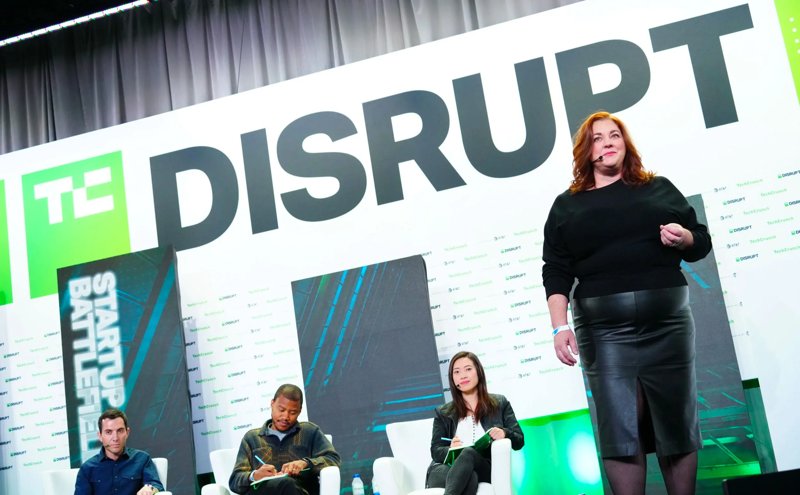
The founders, Elizabeth Lawler and Kevin Gilpin, previously co-founded the secrets-management company Conjur, which was acquired by CyberArk. AppMap was founded in 2020 (one third-party profile lists 2019), open-sourced its code beginning in 2020, and launched the AppMap product in 2021. In October 2022 the company competed in TechCrunch Disrupt Startup Battlefield as a top-5 finalist among 200 selected startups, alongside releases for sharing, performance analysis and security analysis. In 2023 it shipped sequence-diagram filtering and flame graphs, then a GitHub Action-based Runtime Code Review integration, and raised $10M in November 2023. Later work centered on the Navie AI assistant and, more recently, on supplying runtime evidence to MCP-capable coding agents and writing behavioral reviews into pull requests.
Compiled by commissioned research from 8 cited public sources — announcements, filings, and press listed under research sources below.
Key figures
latest reportedCompany-reported or press-reported figures, each dated to when it was claimed — not independently audited.
Related companies · 6





Companies working in the same space as Appmap.
Timeline · 8
launches, deals, and filingsAppMap partnered with MongoDB Atlas to help tune MongoDB deployments for performance.
AppMap released Navie, a chat-based AI assistant in the AppMap extension that answers questions about an application and works with multiple LLMs including GitHub Copilot's LLM, OpenAI, Anthropic Claude, Gemini, and local models; the company also published results on the SWE-Bench leaderboard.
$10M source ↗
AppMap released a GitHub integration called Runtime Code Review, its first CI release via a GitHub Action, delivering runtime insights in the pull request.
AppMap announced a filtering feature for its sequence diagram tool and made flame graphs available in the AppMap extensions for VS Code and JetBrains editors.
Coinciding with TechCrunch Disrupt, AppMap launched collaboration/sharing, performance analysis alerting on code changes affecting performance and scalability, and security analysis identifying runtime issues such as data and secret leakage into logs and missing or improper authentication/authorization.
AppMap competed in TechCrunch Disrupt Startup Battlefield in October 2022, finishing as a top-5 finalist among 200 selected startups; TechCrunch described the product as 'Google Maps for developers.'
The AppMap product launched in 2021; code has been open source since 2020.
Dated company events from announcements, filings, and press; legal rows summarize public dockets and regulator releases.
▸Research sources · 8
primary sources listed
- Appmapappmap.io · web
8 public sources were cited for this profile; the first-party ones are listed here.
Frequently asked questions
- What does Appmap do?
- AppMap records application runtime behavior and diffs it across revisions to give developers and coding agents pre-merge evidence.
- Who founded Appmap?
- Appmap was founded by Elizabeth Lawler, Kevin Gilpin.
- Who are Appmap's investors?
- Appmap's investors include Alumni Ventures, Argon Ventures, Dell Technologies Capital, ForgePoint Capital, Secure Octane, Uncorrelated Ventures, Unusual Ventures, Work-Bench.