 Fundraising Fox
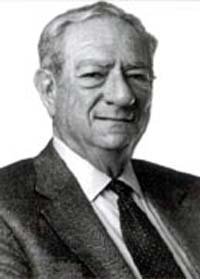
Thomas James Perkins
InvestorFounderCo-founder at Kleiner Perkins
Belvedere, Marin County, California, United States (at death)
FoundedKleiner Perkins

Find your path to Thomas
Sign up to see every warm intro you have to Thomas
- Paths you didn't know you had: your email and LinkedIn already hold routes to Thomas. We find them for you
- 2nd- and 3rd-degree connections: the friend-of-a-friend routes that take hours to manually find through your inbox or LinkedIn
- Answers now, not in days: momentum is everything in a raise. Skip asking around whether someone knows someone
Days of research, done the moment you sign in, with every route ranked by how warm it is.
About
Thomas James 'Tom' Perkins was an engineer, entrepreneur, corporate executive, venture capitalist, director, author and yachtsman. Born January 7, 1932, he grew up in a family without the means or precedent for college; high-school physics teacher Mr. Wilson helped him win an MIT scholarship. He earned an MIT electrical-engineering degree in 1953 and a Harvard M.B.A. in 1957, where Georges Doriot became an important mentor. After engineering work at General Radio, Perkins joined Hewlett-Packard in 1957, trained in its machine shop and moved into marketing. Restlessness led to a short, unhappy Booz Allen consulting period and roughly four years running the business side of Optics Technology; he left before its IPO, surrendered his stock and described the episode as a failure. Returning to HP in 1963, he became administrative manager of the new HP Laboratories, then turned the HP 2116 from an unsold instrument controller into a rapidly growing computer business by creating a specialist sales force, learning its software and challenging centralized practices. He became the first general manager of HP's computer division and later director of corporate development beside Bill Hewlett. With Dave Packard's permission, he simultaneously founded University Laboratories around his low-cost helium-neon laser invention, financed initially from household savings, merged it into Spectra-Physics and served there as a director. He regarded that founder-operator-liquidity sequence as his apprenticeship in venture capital. In 1972 he and Fairchild co-founder Eugene Kleiner raised an $8 million first partnership. Their original plan promised early entry near the 'big bang' of an idea, small staged investments to isolate the largest technical, market, legal or people risk, team building and direct long-term operating help. Tandem Computers and Genentech became the first fund's defining outcomes. Perkins helped conceive Tandem's fault-tolerant computer plan, recruited Jimmy Treybig, chaired Tandem from 1974 through its 1997 sale to Compaq and later helped arrange Compaq's acquisitions by HP. At Genentech, Bob Swanson and Herb Boyer were the founders; Perkins and Kleiner supplied institutional backing, Perkins served on the board and chaired it for about fifteen years, and he helped frame staged technical proof and scientist-friendly publishing. Acuson was another directly described Perkins investment: he backed first-time manager Sam Maslak on the strength of the ultrasound technology, recruited the senior team and chaired the company before leaving over product-roadmap disagreement. His documented boards also included Applied Materials, Compaq, Corning, Hewlett-Packard, Hybritech, LSI Logic, News Corporation, Philips, Spectra-Physics and Symantec. This record does not convert the later Kleiner portfolio—Amazon, AOL, Google, Netscape, Sun and hundreds of others—into personal Perkins deals. Failures were part of the method: first-fund Advanced Recreation Equipment/Snow-Job and American Athletic Shoe/Tread-Two failed; Perkins acknowledged many unnamed losses and warned that abundant capital could depress returns. At HP he returned as a director around the Compaq merger, supported Carly Fiorina's removal, then resigned in May 2006 after opposing the board leak investigation; HP later disclosed that investigators used pretexting to obtain phone records, including his, and his protest helped force public scrutiny. On News Corp's board during the 2011 phone-hacking crisis he strongly supported Rupert Murdoch and management and argued the facts differed from HP, a position criticized as overly credulous; he did not stand for reelection. In 2014 he was broadly condemned for comparing hostility toward the wealthy to Nazi persecution of Jews. He apologized for the Nazi analogy while maintaining his class-demonization argument; Kleiner said he had not been involved with the firm for years. He publicly disputed billionaire estimates, calling himself a multimillionaire, while displaying substantial wealth through homes, classic vehicles, yachts and the 289-foot Maltese Falcon. He authored the novel Sex and the Single Zillionaire and memoir Valley Boy, appeared in Something Ventured and on 60 Minutes, and endowed the Thomas J. and Gerd Perkins Professorship at MIT. His first wife Gerd Thune-Ellefsen died in 1994; they had children Tor and Elizabeth. His brief second marriage to novelist Danielle Steel ended in divorce, and they remained publicly friendly. Perkins died at his Belvedere, California home on June 7, 2016 after a prolonged illness.
Likely email· guessed from name + firm domain, not firm-published
- t•••@kleinerperkins.comreveal70% confident
Invests in
BiotechEnterprise SoftwareHardwareMedia & EntertainmentSemiconductors
Beyond investing
- Education
- Perkins said nobody in his family had attended college and finances were limited; physics teacher Mr. Wilson persuaded his parents and helped him seek a scholarship. MIT offered the better scholarship.
- Charities
- Tom and Gerd Perkins endowed the Thomas J. and Gerd Perkins Professorship of Electrical Engineering at MIT.
- More
- Born January 7, 1932; died June 7, 2016 at his Belvedere home after a prolonged illness, aged 84. Reliable obituaries conflict on whether the birthplace was Oak Park, Illinois or White Plains, New York, so birthplace remains unresolved. Harvard professor Georges Doriot taught trust, conduct and leadership and later invited Perkins to work for and eventually run ARD; Perkins identified Dave Packard as his most important operating mentor. Designed and patented a low-cost helium-neon laser with cavity mirrors integrated into the plasma tube, intended to work without adjustment and be replaced like a light bulb. Kleiner and Perkins raised $8 million rather than their $10 million target. Perkins described Henry Hillman as the first large investor and retained the original business plan, which specified idea-stage, team-building and hands-on investing. HP's amended Form 8-K says Perkins resigned after the board addressed identified leaker George Keyworth, then learned that investigators had used pretexting for phone-record information and requested an inquiry. Reporting credits his protest with bringing the methods under public scrutiny. Press estimates varied and were not substantiated by filings. Perkins publicly rejected an $8 billion characterization, saying in 2014 that he was a multimillionaire, not a billionaire. Company transaction values and fund returns are therefore not treated as personal wealth. A competitive sailor, he and Gerd crossed the Atlantic in eleven days. He later commissioned the 289-foot Maltese Falcon and used a sports submarine and expedition yacht for ocean observation.
From published sources — common ground for a warm intro.
Co-founder at Kleiner Perkins
Intro paths
In turn, Thomas can intro founders to Kleiner Perkins's investors below.
Kleiner Perkins's investors · 4


Co-founders at Kleiner Perkins
Investments
Board seats
Hewlett-PackardLSI LogicSymantecTandem Computers
Investor
AcusonAdvanced Recreation Equipment / Snow-JobAmazon, AOL, Google, Netscape and Sun MicrosystemsAmerican Athletic Shoe / Tread-TwoCompaq ComputerGenentechLSI LogicQumeTandem ComputersUniversity Laboratories
Per curated public sources.
Controversies & responses
Where Thomas has drawn public criticism — with what happened, their response, and the criticism itself, side by side.
▶Wealth and Nazi analogy2014
- What happened
- In 2014 Perkins compared what he called demonization of the wealthy with Nazi persecution of Jews. The analogy was widely condemned; he apologized for invoking Nazi Germany but defended his broader claim about class hostility. Kleiner distanced itself and said he had not been involved for years.
Founder fit — who Thomas backs
Technically credible, candid and self-confident inventors who want an active long-term partner, accept staged financing and dilution tied to evidence, welcome help recruiting a management team, and will call immediately when a crisis appears.
Founders seeking money without involvement, ventures whose central risk cannot be isolated cheaply, committee-driven corporate venture rationales, fully priced opportunities that require large capital before evidence, weak or derivative ideas, and management teams that hide crises or reject board-level partnership.
How to pitch
Begin with the core idea and why the technology works, not an exhaustive business-plan binder. Name the single largest risk and propose the cheapest milestone that can retire it. Show the eventual market and economics, the essential team gaps, what help is wanted from an active chair or director, and how a small first round followed by evidence-based financing improves both ownership and survival odds. Be explicit that close governance and possible leadership evolution are acceptable.
Stages: idea formation, incubation, seed, early stage, staged follow-on, post-IPO board support · Sectors: computing systems, fault-tolerant computing, semiconductors, electronics, lasers and optics, biotechnology, medical imaging, enterprise hardware, select media governance
Editorial inference from Thomas's portfolio, writing and public record — not a published mandate.
Investment themes
8 documented themes from Thomas's essays, talks and portfolio, grouped by what they say about founders.
▶More themes7
Risk removal before capital scale
Structure the first small investment to remove the largest identifiable risk; stop cheaply if evidence fails and increase capital and valuation when it succeeds.
For founders: Pitch a decisive learning milestone and staged ownership model rather than one large undifferentiated budget.
Idea quality can precede management credentials
Perkins departed from people-first venture orthodoxy by arguing that exceptional ideas can come from inexperienced founders who may grow into leadership.
For founders: Technical novelty can compensate for a thin résumé if the founder is coachable and the team can be built.
Money plus deep involvement
Because money is interchangeable, the partnership's differentiator was product, marketing, sales, recruiting and crisis help.
For founders: Specify where investor operating work changes outcomes and decide whether that involvement is genuinely wanted.
An IPO is not an exit from partnership
Perkins promised long support and joked that founders could not get rid of Kleiner by going public.
For founders: Expect governance and learning to continue as the company's problems change with scale.
Challenge without hierarchy
As managing partner he expected peers to challenge him in fast, candid and often humorous weekly meetings; no partner was meant to outrank the others intellectually.
For founders: Strong disagreement can coexist with trust when status is kept out of the argument.
Operate and found before becoming an investor2011
His closing advice was to learn inside a successful large company, then become a successful entrepreneur, and only afterward consider venture capital.
For founders: Operating pattern recognition and founder empathy were, in his view, prerequisites for investor judgment.
Partnership legacy is not personal deal credit
Perkins shaped the institution, but later Kleiner investments should be credited to their actual sponsoring partners and vehicles rather than retrospectively assigned to the co-founder.
For founders: Ask which partner, fund and board member actually owns the relationship.
▶Governance & network states1
Trust requires immediate bad-news disclosure
Every company eventually faces crisis; the useful board relationship is one in which management calls immediately rather than shielding directors.
For founders: Demonstrate candor and define escalation norms before financing.
Podcasts & interviews
featuring Thomas James Perkins4 Tech Giants Nurtured by Tom Perkins
The New York Times · nytimes.com
Something Ventured: VC Titans Don Valentine And Tom Perkins
TechCrunch · techcrunch.com
Oral History of Thomas J. Perkins
Computer History Museum · archive.computerhistory.org
News Corp. board: Murdoch not going anywhere
Associated Press via CBS News · cbsnews.com
Leak, Inquiry and Resignation Rock a Boardroom
The New York Times · nytimes.com
Making Waves
MIT Technology Review · technologyreview.com
Writing
Memoir covering his business, technology and personal history; retrospective self-attribution is corroborated where possible with filings, institutions and company histories.
Comic romance novel derived from a proposed wealthy-bachelor reality-show premise; the public record says proceeds were intended for Harvard.
Perkins said he wrote the plan and recovered a copy from first major investor Henry Hillman; the reviewed source describes but does not reproduce it.
Frequently asked questions
- Is Tom Perkins deceased?
- Yes. He died June 7, 2016 at his home in Belvedere, California, after a prolonged illness. He was 84.
- What did Tom Perkins do before venture capital?
- He worked at General Radio, Hewlett-Packard, Booz Allen and Optics Technology; returned to establish HP Labs administratively and build HP's computer business; and founded the laser company University Laboratories.
- What did Tom Perkins study?
- Electrical engineering at MIT, graduating in 1953, followed by an M.B.A. from Harvard Business School in 1957.
- Who founded Kleiner Perkins?
- Tom Perkins and Eugene Kleiner founded the original partnership in 1972. Frank Caufield and Brook Byers joined in 1977, creating Kleiner Perkins Caufield & Byers.
- What was Tom Perkins's venture method?
- Invest near the original idea, isolate the biggest risk, finance a small proof stage, add capital after evidence, help recruit the team, stay active through crises and remain involved beyond IPO.
- What founder did Tom Perkins prefer?
- A technically credible inventor with a powerful idea who wanted deep involvement, would disclose bad news quickly and accepted that leadership might evolve as the company scaled.
- What check size did Tom Perkins write?
- No reliable standard range is public. His oral history illustrates staged historical financings—often describing a hypothetical roughly $500,000 first tranche—but that is teaching context, not a fixed policy or personal check size.
- Did Tom Perkins found Genentech?
- No. Herbert Boyer and Robert Swanson founded Genentech. Perkins was the key Kleiner backer, director and longtime chairman; Eugene Kleiner also joined the board.
- Which investments are directly attributable to Tom Perkins?
- The strongest direct record covers University Laboratories, Tandem, Genentech and Acuson, with board-linked evidence for LSI Logic and Compaq. Later Kleiner successes such as Amazon and Google are firm-wide legacy, not automatically Perkins-led.
- What failed investments were associated with Tom Perkins?
- First-fund failures he recalled include Advanced Recreation Equipment/Snow-Job and American Athletic Shoe/Tread-Two. He also described Optics Technology as a bad operating experience in which he surrendered his stock, though it later went public, and acknowledged many unnamed venture losses.
- What happened in the HP pretexting scandal?
- Perkins resigned in May 2006 over the board leak investigation, later learned investigators had obtained phone records through pretexting, and pressed HP to disclose and investigate the methods. HP's amended filing and contemporaneous reporting document the sequence.
- What was Tom Perkins's News Corp role?
- He was an independent director from 1996 to 2011. During the phone-hacking crisis he strongly defended Rupert Murdoch and management and argued it differed from HP, drawing criticism about board oversight; he then did not seek reelection.
- Why were Tom Perkins's 2014 political comments criticized?
- He compared hostility toward rich Americans with Nazi persecution of Jews. Critics condemned the analogy as historically offensive and disproportionate. He apologized for the Nazi comparison but retained his concern about class demonization; Kleiner distanced itself.
- Was Tom Perkins a billionaire?
- Published estimates varied, but he said publicly in 2014 that he was a multimillionaire rather than a billionaire. No audited personal balance sheet supports a precise figure, so this dossier does not present one.
About this profile. Compiled from public sources — Kleiner Perkins's own website, press coverage and public professional profiles — and summarised by Fundraising Fox; every fact is kept with where it came from. Spotted an error, or would rather not be listed? Email privacy@fundraisingfox.com · How we build profiles · Your rights