 Fundraising Fox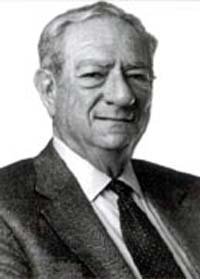
Eugene Kleiner
Died 2003InvestorFounderCo-founder at Kleiner Perkins
Los Altos Hills, California, United States (at death)
FoundedKleiner Perkins

Photo, Fair use, via Computer Hope ↗
About
Eugene 'Gene' Kleiner was an Austrian-born American engineer, entrepreneur, investor and mentor whose career joined the formative semiconductor and venture-capital eras of Silicon Valley. Born May 12, 1923 into a middle-class Jewish family in Vienna, he fled Nazi rule with his family in 1938 through France, Belgium and Portugal, reaching the United States and settling in New York in 1941. After U.S. Army service near the end of World War II, he used the GI Bill to earn a B.S. in mechanical engineering from the Polytechnic Institute of Brooklyn in 1948 and later an M.S. in industrial engineering from New York University. He briefly taught engineering and worked at Western Electric's Kearny, New Jersey plant, where he met manufacturing engineer Julius Blank. William Shockley recruited both men to California in 1956. When Shockley's management and technical direction alienated seven colleagues, Kleiner proposed finding work for the group; his wife Rose typed the letter to his father's broker that reached Arthur Rock. Rock and Alfred Coyle persuaded the group to form a company and, after roughly 35 rejections, obtained Fairchild Camera and Instrument backing. The resulting $1.38 million agreement formed Fairchild Semiconductor in September 1957. Kleiner and Blank built or improvised production and test equipment that could not then be purchased; contemporary oral histories place Kleiner in engineering, manufacturing, administration, personnel and recruiting. Fairchild-wide achievements—the commercial double-diffused silicon mesa transistor, planar process and monolithic integrated circuit—were collective company outcomes with specific technical credit belonging principally to teams led by Gordon Moore, Jean Hoerni, Jay Last and Robert Noyce, not inventions attributable to Kleiner alone. Sources disagree on whether Kleiner left in 1961 or January 1962 and suggest Charlie Sporck's rise left him without a clearly consequential management role. In 1962 he founded Edex Teaching Machines, which made classroom and military response/training systems and was acquired by Raytheon in the mid-1960s. He then became a Davis & Rock limited partner and consultant, personally joined Intel's first financing in 1968, and supplied financing recalled by Microma co-founder Robert Robson. In 1972, after an introduction to Hewlett-Packard executive and entrepreneur Tom Perkins, Kleiner co-founded an $8 million venture partnership. The partners emphasized technical understanding, staged risk, customer demand, management quality, active boards and patient company building. Frank Caufield and Brook Byers joined in 1977, and the firm became Kleiner Perkins Caufield & Byers. Kleiner joined Genentech's board after Robert Swanson and Herbert Boyer founded it; an official firm history credits Swanson with originating the company and Perkins and Kleiner as directors, while a Guardian obituary says Kleiner led Genentech and Tandem investments. Because Perkins's oral history and Tandem records give Perkins the clearest direct Tandem formation and chair role, this dossier treats both as shared partnership successes and preserves the attribution conflict. Kleiner remained active through 1981 or 1982, became partner emeritus in the mid-1980s and continued advising. Amazon, AOL, Compaq, Google, Netscape, Sun Microsystems and the firm's hundreds of other investments illustrate institutional legacy, not automatic personal deal credit. His aphorisms, later collected as 'Kleiner's Laws,' favored product demand ('the dog wants to eat the dog food'), one business at a time, early risk tests, outside board perspective, skepticism of boom-time performance, genuine domain understanding and investing in people as well as products. No reliable inventor patent under his name was located; that absence reinforces the distinction between his manufacturing/company-building contribution and colleagues' patented inventions. He served as a Polytechnic trustee, received its honorary Doctor of Engineering in 1989 and Outstanding Mechanical Engineer of the Century recognition in 2000, and was inducted with Perkins into the Bay Area Business Hall of Fame. He and Rose Wassertheil, a Polish Jewish refugee whom he married in 1947, had Robert and Lisa and four grandchildren; Rose became a social worker and geriatric-care pioneer, and their family foundation supported education and aging. Kleiner died of heart failure at the Los Altos Hills home he had built, on November 20, 2003, aged 80.
Likely email· guessed from name + firm domain, not firm-published
- g•••@kleinerperkins.comreveal70% confident
Invests in
BiotechEdTechHardwareSemiconductors
Beyond investing
- Founded
- Kleiner proposed contacting his father's broker so the dissatisfied Shockley group could remain together. Arthur Rock recalled that Rose Kleiner actually wrote the letter; it reached Rock at Hayden, Stone and initiated meetings that changed the objective from group employment to company formation. CHM's institutional history records $1.38 million from Fairchild Camera and Instrument; Rock often recalled the commitment as $1.5 million. Fairchild received control and an option to buy founder shares, so this was not a modern independent startup financing.
- Charities
- The Eugene and Rose Kleiner Family Foundation was a private grantmaking foundation; family notices directed memorial gifts to Polytechnic University. Rose and the family foundation also supported an endowed aging chair and aging-services research at UC Berkeley.
- Awards
- Kleiner joined fellow Fairchild founders Jay Last, Sheldon Roberts and Julius Blank at Fairchild's Maine plant in September 1999 to preview a U.S. Postal Service stamp celebrating the integrated circuit. The stamp honored the technology, not a personal Kleiner patent.
- More
- Born May 12, 1923 in Vienna, Austria; died of heart failure at home in Los Altos Hills, California on November 20, 2003, aged 80. He is deceased. His middle-class Viennese Jewish family fled after the 1938 German occupation, traveling through France, Belgium and Portugal before reaching the United States and settling in New York in 1941. Some secondary accounts say arrival was 1940; the detailed family notice says 1941. Kleiner and Julius Blank improvised manufacturing and test machinery unavailable commercially. Moore and Last recalled Kleiner in equipment building, manufacturing, engineering, wafer processing, administration and personnel; former employee Robert Robson said Kleiner hired him. The eight were Julius Blank, Victor Grinich, Jean Hoerni, Eugene Kleiner, Jay Last, Gordon Moore, Robert Noyce and Sheldon Roberts. Later lore says Shockley called them 'traitorous,' but the origin is uncertain; Julius Blank denied they betrayed Shockley, and reputable histories often prefer 'Fairchild Eight.' Kleiner and Perkins targeted $10 million and raised $8 million in 1972. Later accounts identify Henry Hillman as the largest early limited partner. Firm return claims in secondary histories are not treated as audited personal proceeds. Retrospectives describe a calm, low-profile mentor with a rich baritone who continued calling himself an engineer despite financial success. These are character recollections, not measurable performance claims.
From published sources — common ground for a warm intro.
Co-founder at Kleiner Perkins
Intro paths
In turn, Eugene can intro founders to Kleiner Perkins's investors below.
Kleiner Perkins's investors · 4


Co-founders at Kleiner Perkins
Investments
Board seats
Tandem Computers
Investor
Compaq, Sun Microsystems, AOL, Amazon, Netscape and GoogleGenentechIntelMicromaTandem Computers
Per curated public sources.
Founder fit — who Eugene backs
Technically fluent founders who know their industry deeply, can build a complementary management team, welcome patient and candid board guidance, focus tightly on a real customer problem, and are willing to test the decisive risk before scaling.
Technology searching for demand, scattered multi-business plans, founders who confuse a few learned tricks with industry mastery, copycat strategies, boom-dependent economics, weak management teams, and entrepreneurs seeking capital without outside perspective.
How to pitch
Show first that the customer wants the product. Explain the engineering advantage and why the team understands the trade deeply. Name the riskiest assumption, the smallest early test that resolves it, and the one business to build first. Identify management gaps, board help sought and how the economics perform without favorable market wind.
Stages: company formation, seed, early stage, staged follow-on, board and advisory support · Sectors: semiconductors, electronics manufacturing, computing systems, education technology, information technology, biotechnology
Editorial inference from Eugene's portfolio, writing and public record — not a published mandate.
Investment themes
8 documented themes from Eugene's essays, talks and portfolio, grouped by what they say about founders.
▶More themes7
Make sure the dog wants to eat the dog food
Groundbreaking technology and a strong team are insufficient unless customers want the product.
For founders: Lead with observed customer demand rather than market-size abstraction.
Build one business at a time
Early companies should concentrate on a single mission before expanding into adjacent experiments.
For founders: Define one wedge and the evidence required before broadening scope.
Risk up front, out early
A maxim attributed to Kleiner favors testing the decisive risk before committing full capital and time.
For founders: Design the first financing around the cheapest decisive proof.
Even turkeys can fly in a high wind
Strong markets can temporarily make weak businesses appear successful.
For founders: Separate company quality from favorable capital and demand cycles.
Know the trade, not only its tricks
Superficial familiarity should not be mistaken for durable industry understanding.
For founders: Demonstrate mechanisms, constraints and operating insight that copycats lack.
Invest in people, not just products
Kleiner's experience under Shockley made management quality and interpersonal judgment central to investment evaluation.
For founders: Show a team capable of adapting when the initial product or market changes.
Institutional legacy is not personal deal credit
Kleiner co-created Fairchild and Kleiner Perkins, but institutional outcomes must be separated from his own inventions, investments and boards.
For founders: Ask which inventor, founder, partner, vehicle and director actually performed each part of the work.
▶Governance & network states1
Outside the frame
It is difficult to see the full picture from inside; a strong board supplies perspective rather than ceremony.
For founders: Choose directors for independent judgment and use them before a crisis.
Podcasts & interviews
featuring Eugene KleinerFairchild Semiconductor: The 60th Anniversary of a Silicon Valley Legend
Computer History Museum · computerhistory.org
An evening with legendary venture capitalist Arthur Rock
Computer History Museum · archive.computerhistory.org
Oral history interview with Robert Robson
Science History Institute · digital.sciencehistory.org
Oral history interview with Gordon E. Moore and Jay T. Last
Science History Institute · digital.sciencehistory.org
Eugene Kleiner
The Guardian · theguardian.com
Remembering Eugene Kleiner
Inc. · inc.com
1 more appearances
- Fairchild founder, engineer to the end2003-11-26
Writing
Letter initiated by Eugene and physically written/typed by Rose Kleiner to his father's broker; the original text was not located in reviewed archives, so sole authorship should not be assigned to Eugene.
Posthumously collected oral aphorisms rather than a verified Kleiner-authored publication; provenance and wording vary across later compilations.
Frequently asked questions
- Is Eugene Kleiner deceased?
- Yes. He died of heart failure at his Los Altos Hills home on November 20, 2003, aged 80.
- What was Eugene Kleiner's immigration history?
- Born into a Jewish family in Vienna in 1923, he fled Nazi rule with his family in 1938 through France, Belgium and Portugal and settled in New York in 1941; some shorter secondary accounts give 1940.
- What did Eugene Kleiner study?
- Mechanical engineering at the Polytechnic Institute of Brooklyn, graduating in 1948, and industrial engineering at New York University at master's level.
- What did Eugene Kleiner do at Fairchild?
- He helped initiate financing, co-founded the company, built or improvised production equipment with Julius Blank, and worked in manufacturing, engineering, administration, personnel and recruiting.
- Did Eugene Kleiner invent the integrated circuit or planar process?
- No reliable reviewed record supports that claim. Fairchild's company created major semiconductor advances, but Jean Hoerni is credited with the planar process, Robert Noyce with the monolithic integrated-circuit concept, and other teams with diffusion, masking and device work. Kleiner's documented strength was manufacturing equipment and company administration.
- Who were the Fairchild Eight?
- Julius Blank, Victor Grinich, Jean Hoerni, Eugene Kleiner, Jay Last, Gordon Moore, Robert Noyce and Sheldon Roberts.
- Did William Shockley call them the Traitorous Eight?
- That familiar story is not securely documented. The phrase's origin is disputed, and Julius Blank later said the group had not betrayed Shockley; 'Fairchild Eight' is the neutral label.
- What did Kleiner do between Fairchild and Kleiner Perkins?
- He founded Edex Teaching Machines, which Raytheon acquired, became a limited partner and consultant with Davis & Rock, personally joined Intel's first financing and supplied early money recalled by Microma co-founder Robert Robson.
- Who founded Kleiner Perkins and when?
- Eugene Kleiner and Tom Perkins founded the original partnership in 1972 with an $8 million fund. Frank Caufield and Brook Byers joined in 1977.
- Which investments are directly attributable to Eugene Kleiner?
- Intel has the strongest personal-investment evidence; Robert Robson directly recalled Kleiner financing Microma. Genentech and Tandem were Kleiner Perkins investments with Kleiner involvement, but sole leadership is disputed and the clearest operating-lead evidence often points to other partners.
- Did Eugene Kleiner lead Genentech and Tandem?
- The Guardian obituary says he led both investments. Official and first-person histories establish Robert Swanson and Herbert Boyer as Genentech founders, Kleiner and Perkins as Genentech directors, and Tom Perkins as the best-documented Tandem formation/chair lead. The dossier therefore preserves the conflict and treats both as shared partnership outcomes.
- Did Eugene Kleiner invest in Amazon or Google?
- Kleiner Perkins invested in those companies, but reviewed evidence does not show Eugene Kleiner personally led those later deals. He had left active partnership management years earlier, so they are firm-wide legacy only.
- What was Eugene Kleiner's investment philosophy?
- Verify customer demand, focus on one business, test risk early, invest in people as well as products, seek board perspective, know the trade deeply and discount results inflated by a favorable market.
- What check size did Eugene Kleiner write?
- No reliable standard range is public. Intel's 1968 memorandum contemplated $50,000-$100,000 from each of six Fairchild founders, but it does not name Kleiner's exact amount; institutional rounds and fund sizes are not personal checks.
About this profile. Compiled from public sources — Kleiner Perkins's own website, press coverage and public professional profiles — and summarised by Fundraising Fox; every fact is kept with where it came from. Spotted an error, or would rather not be listed? Email privacy@fundraisingfox.com · How we build profiles · Your rights