 Fundraising Fox
Xenex
San Antonio, US · Founded 2009 · 109 employees on LinkedIn · 5 known investors
Find your way into Xenex
Sign up to see every warm intro you have to Xenex
- Paths you didn't know you had: your email and LinkedIn already hold routes to the Xenex team. We find them for you
- 2nd- and 3rd-degree connections: the friend-of-a-friend routes that take hours to manually find through your inbox or LinkedIn
- Answers now, not in days: momentum is everything in a raise. Skip asking around whether someone knows someone
Days of research, done the moment you sign in, with every route ranked by how warm it is.
Xenex builds pulsed Xenon UV light disinfection robots that deactivate pathogens missed during manual cleaning, used by hospitals to reduce environmental contamination and healthcare-associated infections. The company sells to hospital infection control programs as part of a device-plus-service offering.
Also known as Xenex Disinfection Services Inc.
Founders & leadership
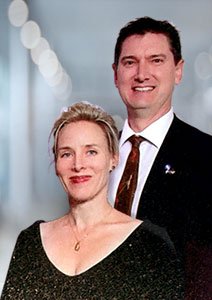
Xenex was founded in 2009 by Mark (Tuck) Stibich, Julie Stachowiak, Morris Miller, and Mark "Tuck" Stibich, MHS PHD FIDSA.


Investors · 5

How we know: press coverage · open dataset · 5k.vc investor directory · Not right? Tell us

How we know: press coverage · Not right? Tell us

How we know: Tectonic Ventures's portfolio page · funding news · the VCSheet dataset · open dataset · 5k.vc investor directory · Not right? Tell us
How we know: funding news · ewhealthcare.com · Not right? Tell us
Also in the syndicate · 1
Funding
SEC filings, press & company announcements$38M disclosed across 1 round · 2017
- $38MraisedFeb 2017 · 3 sources
Essex Woodlands (lead), Piper Jaffray Merchant Banking (lead)
Source ↗
Source: company announcements and press reports — follow each round's link for the claim.
Company profile
researched Aug 2026Xenex Disinfection Services Inc. develops and sells ultraviolet whole-room microbial reduction systems for healthcare facilities. Its core product line is the LightStrike family of "Germ-Zapping" robots, built on a patented pulsed xenon UV system, which the company states is the first and only FDA-authorized broad spectrum UV robot for whole room microbial reduction. Xenex reports that treatment deactivates at least 99% of pathogens on treated surfaces, citing figures for organisms including Acinetobacter baumannii, Clostridioides difficile, MRSA and Enterobacter cloacae, with cycle times as fast as two minutes for vegetative bacteria.
Beyond the devices, Xenex positions its offering as a program rather than a standalone purchase, bundling training, advanced workflow consulting intended to speed room turnover and improve throughput, and data support for facility quality programs. Its catalog spans LightStrike+ and LightStrike6 robots, the earlier LightStrike PXUV4, a handheld LED unit branded Deactivate, the TrackMate digital tracking system, and Xtra Care service plans. The company emphasizes evidence-based claims and collaboration with clinicians and scientific experts, and it maintains customer success materials featuring infection preventionists, quality directors and clinicians.
Founding story
Co-founders Mark (Tuck) Stibich and Julie Stachowiak, both epidemiologists, met while pursuing doctoral studies at Johns Hopkins University and shared an interest in research and public health impact. Seeking to give healthcare facilities a more effective way to prevent pathogen transmission, and to ensure that scientific evidence underpinned all company claims, they co-founded Xenex in 2008.
Business model
Xenex sells and supports UV microbial reduction hardware for healthcare and other facilities, pairing the LightStrike robots with service and support offerings such as staff training, workflow consulting, data support, and Xtra Care service plans. Complementary products include a handheld LED unit (Deactivate) and TrackMate, a digital tracking system, and the company offers government procurement options and account programs.
Revenue comes from sales of UV disinfection devices and related products together with attached services, including Xtra Care service plans, training and workflow consulting, and digital tracking via TrackMate.
▸Full profile — market position, technology, go-to-market, geography, history
Market position
Xenex presents itself as a specialist in whole-room UV microbial reduction for healthcare, anchored on claims of being the first and only FDA-authorized broad spectrum UV robot in that category and the only UVC technology authorized for healthcare use across North America following Health Canada registration of LightStrike6.
Xenex differentiates on its patented pulsed xenon UV technology and on regulatory authorizations, stating it offers the first and only FDA-authorized broad spectrum UV robot for whole room microbial reduction and, with Health Canada registration of LightStrike6, the only UVC technology authorized for healthcare use across North America. Testimonial material references a facility switching from mercury UV to Xenex LightStrike robots. The company also stresses evidence-based scientific validation of its claims and the depth of its service, training and data support.
Technology
The core technology is a patented pulsed xenon ultraviolet (PXUV) system used in the LightStrike Germ-Zapping Robot for whole-room microbial reduction, described as broad spectrum UV and contrasted with mercury UV systems. Product generations include LightStrike PXUV4, LightStrike+ (models MXSUV1-FT and MXSUV1-SL) and LightStrike6 (models LSMUV6-FT and LSMUV6-SL). Supporting technology includes the Deactivate handheld LED unit and TrackMate, a digital tracking system for disinfection activity.
Go-to-market
Xenex sells directly to healthcare facilities and infection prevention programs, supported by customer success stories, clinician testimonials, product demonstrations ("Watch Demo"), toll-free sales and customer service lines, a client login portal, and dedicated government accounts and procurement options. Sales are accompanied by training, workflow consulting and service plans.
Primary customers are healthcare facilities and their infection prevention, infection control and quality teams, including hospital surgical suites; the company also addresses hospitality and transportation segments and serves government accounts.
Geography
Xenex is headquartered at 1074 Arion Circle, Suite 116, San Antonio, Texas, USA, and maintains separate United States and international website channels along with an international phone line with a UK dialing code (+44). Its regulatory footprint spans the United States (FDA authorization) and Canada (Health Canada registration of LightStrike6), and the company describes collaboration with clinicians and scientific experts around the world.
History
The company was co-founded in 2008 by Mark (Tuck) Stibich and Julie Stachowiak, who had met as doctoral students at Johns Hopkins University. It operates as Xenex Disinfection Services Inc. from San Antonio, Texas, and has developed successive generations of its pulsed xenon UV robots, including the LightStrike PXUV4, LightStrike+ (MXSUV1-FT and MXSUV1-SL) and LightStrike6 (LSMUV6-FT/LSMUV6-SL). Xenex has announced Health Canada registration for the LightStrike6 UV robot, which it describes as the first and only UVC technology authorized for healthcare use across North America.
Compiled by commissioned research from 1 cited public sources — announcements, filings, and press listed under research sources below.
Key figures
latest reportedCompany-reported or press-reported figures, each dated to when it was claimed — not independently audited.
Non-dilutive funding · 2 SBIR/STTR awards
Federal grants — no equity taken| Agency | Phase | Year | Amount |
|---|---|---|---|
| National Institutes of Health (NIH)National Institutes of Health | Phase II | 2018 | $942.2K |
| National Institutes of Health (NIH)National Institutes of Health | Phase I | 2016 | $146.9K |
Source: SBIR.gov award data (U.S. Small Business Administration). SBIR/STTR awards are competitive federal R&D grants and contracts — non-dilutive capital alongside any venture rounds above.
Timeline · 1
launches, deals, and filingsXenex announced Health Canada registration for its LightStrike6 UV robot, which the company describes as the first and only UVC technology authorized for healthcare use across North America.
Dated company events from announcements, filings, and press; legal rows summarize public dockets and regulator releases.
▸Research sources · 1
primary sources listed
- Xenexxenex.com · web
1 public sources were cited for this profile; the first-party ones are listed here.
Frequently asked questions
- What does Xenex do?
- Xenex makes pulsed xenon UV LightStrike robots for whole-room microbial reduction in hospitals and other facilities.
- Who founded Xenex?
- Xenex was founded by Mark (Tuck) Stibich, Julie Stachowiak, Morris Miller, Mark "Tuck" Stibich, MHS PHD FIDSA in 2009.
- Who are Xenex's investors?
- Xenex's investors include Battery Ventures, Targeted Technology Funds, Tectonic Ventures, Essex Woodlands Healthcare Partners.
- How much funding has Xenex raised?
- Xenex has disclosed $38M raised across 1 round.
- Where is Xenex headquartered?
- Xenex is headquartered in San Antonio, US.