 Fundraising Fox
WingXpand
Techstars '22St. Louis, US · 18 employees on LinkedIn · 1 known investors
Find your way into WingXpand
Sign up to see every warm intro you have to WingXpand
- Paths you didn't know you had: your email and LinkedIn already hold routes to the WingXpand team. We find them for you
- 2nd- and 3rd-degree connections: the friend-of-a-friend routes that take hours to manually find through your inbox or LinkedIn
- Answers now, not in days: momentum is everything in a raise. Skip asking around whether someone knows someone
Days of research, done the moment you sign in, with every route ranked by how warm it is.
WingXpand provides AI-powered drone technology with detection filters designed for defense, agriculture, disaster response, and inspection applications. The company emphasizes affordability and scalability of advanced drone capabilities.
Also known as WINGXPAND, Inc.
Founders & leadership
Investors · 1

How we know: the Techstars portfolio · open dataset · Top 3000 Accelerator Startups (no YC) 2026-08 · Not right? Tell us
Company profile
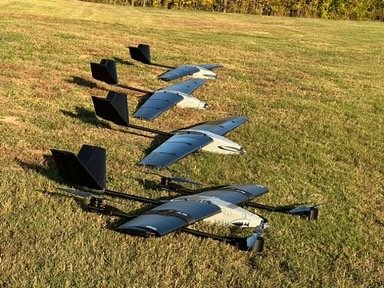
researched Sep 2026WingXpand is a St. Louis, Missouri-based robotics and uncrewed systems manufacturer that develops a "universal smart autonomous system" spanning air, ground, and water platforms. Its product family consists of xRAI, a smart plane; xTRAIL, a smart rover; and xSAIL, a smart watercraft. All three are built around xPAIR, a shared robotic core that allows customers to mix platforms in a single fleet, share intelligence and payloads across vehicles, and consolidate training, support, and upgrades. Customers can start with one platform and add interoperable robots as requirements grow.
The systems run a common autonomy and AI detection stack offering real-time object classification with configurable alerts, autonomous navigation, and mission planning. The xRAI plane has an 8 ft (2.3 m) wingspan, roughly 2 hours of flight time (1.25 hours in ISR configuration), and a range of about 63 miles (100+ km); the company describes a single-person carry-and-operate form factor, deployment in under five minutes, more than 100 configurations, and AI detection in under one second. The xTRAIL rover carries up to 40 lbs at a 90 lb maximum weight, operates up to 4 hours with up to 24 hours on station, and targets subterranean and GPS-denied operations, breach support through mapping of dark or confined spaces, and supply transport over difficult terrain. The xSAIL watercraft carries 33 lbs, reaches 6 knots, operates up to 18 hours with up to 62 hours on station, and provides sonar detection and autonomous search for coastline, port infrastructure, and waterway missions. WingXpand states its systems are built in the United States and are NDAA compliant.
Alongside hardware, WingXpand sells swappable camera, sensor, and communications payloads, software, and a set of xPAND services: data analysis and reporting, operator training including preparation for the FAA Part 107 licensing exam, flight support using Part 107-certified pilots who handle flight planning and approvals, and warranty and parts replacement care.
Business model
WingXpand sells robotic vehicle platforms together with interchangeable payloads, software, and paid services. The website routes prospective buyers through a "Get Quote" flow rather than published pricing, indicating direct, configuration-based sales. Recurring or add-on revenue lines include analysis and reporting, operator training, contracted flight support with certified pilots, and warranty/parts programs.
Quote-based sales of vehicles, payloads, and software, supplemented by service packages covering analysis, training, field support, and warranty/parts replacement.
Traction
A directory profile lists 11-20 employees across engineering, HR, and sales functions and reported annual revenue of approximately $1.37 million. The company references collaborators and real-world field deployments for each platform.
▸Full profile — market position, technology, go-to-market, geography
Market position
Positioned as a U.S.-built, NDAA-compliant supplier of small, portable multi-domain autonomous systems, differentiated by offering air, ground, and maritime robots on one autonomy platform rather than a single vehicle type.
A single shared robotic core and AI stack across air, ground, and water vehicles, enabling interoperable fleets, shared payloads and intelligence, and unified training and support; portability (one-person carry and operate, under five minute deployment) and tool-free payload reconfiguration are also emphasized.
Technology
A shared xPAIR robotic core underpins three vehicle types (fixed-wing aircraft, ground rover, and watercraft) running a common autonomy and AI detection stack. Capabilities include real-time object classification with configurable alerts in under one second, autonomous navigation and mission planning across a mixed fleet, tool-free payload swapping for cameras and sensors, long-range communications relay, operation in subterranean and GPS-denied environments, and sonar-based underwater detection and mapping. Systems are stated to be U.S.-built and NDAA compliant.
Go-to-market
Direct quote-driven sales through the company website across four named industry verticals (defense, emergency, agriculture, inspection), supported by training, consulting, and field-support offerings and references to collaborators and real-world field deployments.
Defense operators, emergency response and public safety agencies, agricultural users, and infrastructure inspection teams.
Geography
Headquartered in St. Louis, Missouri, United States, with manufacturing and support described as U.S.-based.
Compiled by commissioned research from 6 cited public sources — announcements, filings, and press listed under research sources below.
Key figures
latest reportedCompany-reported or press-reported figures, each dated to when it was claimed — not independently audited.
Related companies · 3


Companies working in the same space as WingXpand.
Non-dilutive funding · 4 SBIR/STTR awards
Federal grants — no equity taken| Agency | Phase | Year | Amount |
|---|---|---|---|
| U.S. Air ForceAir Force | Phase II | 2023 | $1.2M |
| U.S. ArmyArmy | Phase I | 2023 | $149.9K |
| U.S. Air ForceAir Force | Phase I | 2023 | $75K |
| U.S. Air ForceAir Force | Phase I | 2023 | $74.9K |
Source: SBIR.gov award data (U.S. Small Business Administration). SBIR/STTR awards are competitive federal R&D grants and contracts — non-dilutive capital alongside any venture rounds above.
▸Research sources · 6
primary sources listed
- WingXpandwingxpand.com · web
6 public sources were cited for this profile; the first-party ones are listed here.
Frequently asked questions
- What does WingXpand do?
- WingXpand builds a shared-AI-core family of autonomous air, ground, and water robots for defense, emergency, agriculture, and inspection.
- Who founded WingXpand?
- WingXpand was founded by James Barbieri, Michelle Madaras.
- Who are WingXpand's investors?
- WingXpand's investors include Techstars.
- Where is WingXpand headquartered?
- WingXpand is headquartered in St. Louis, US.