 Fundraising Fox
Waddle Labs
YC S26Boston, US · Founded 2025 · 2 employees · Hiring · 19 known investors
Find your way into Waddle Labs
Sign up to see every warm intro you have to Waddle Labs
- Paths you didn't know you had: your email and LinkedIn already hold routes to the Waddle Labs team. We find them for you
- 2nd- and 3rd-degree connections: the friend-of-a-friend routes that take hours to manually find through your inbox or LinkedIn
- Answers now, not in days: momentum is everything in a raise. Skip asking around whether someone knows someone
Days of research, done the moment you sign in, with every route ranked by how warm it is.
Waddle Labs provides an API that connects to robots and, from a natural-language prompt, uses AI agents to generate a control policy for the robot to carry out the requested task. The product targets robotics developers and operators.
Also known as Waddle Laboratories Inc. · Waddle
Founders & leadership· Y Combinator alumni (S26)
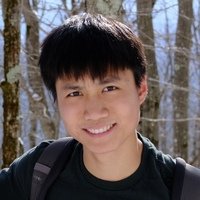
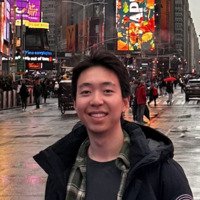
Waddle Labs was founded in 2025 by Yiding Song and Hanming Ye.
Investors · 19


How we know: the Y Combinator directory · open dataset · 5k.vc investor directory · Not right? Tell us
How we know: Y Combinator's founder network · Not right? Tell us

How we know: Y Combinator's founder network · Not right? Tell us
How we know: Y Combinator's founder network · Not right? Tell us
How we know: funding news · Not right? Tell us

How we know: Y Combinator's founder network · Not right? Tell us

How we know: Y Combinator's founder network · Not right? Tell us
How we know: funding news · Not right? Tell us
How we know: Y Combinator's founder network · Not right? Tell us
How we know: Y Combinator's founder network · Not right? Tell us
How we know: funding news · Not right? Tell us
How we know: Y Combinator's founder network · Not right? Tell us
How we know: Y Combinator's founder network · Not right? Tell us

How we know: Y Combinator's founder network · Not right? Tell us
How we know: Y Combinator's founder network · Not right? Tell us
How we know: Y Combinator's founder network · Not right? Tell us
How we know: Y Combinator's founder network · Not right? Tell us

How we know: Y Combinator's founder network · Not right? Tell us
Company profile
researched Aug 2026Waddle Labs develops an agent-based control layer for robots. Customers connect a robot to the company's API and issue a natural-language prompt; LLM agents then decompose the goal into subtasks and complete each one by viewing camera feeds, writing control code, and calling action models such as vision-language-action models (VLAs). The agent emits a program that the user can run and further iterate on through conversation with the agents, with the company stating a working policy can be produced in roughly 20 minutes.
The company frames its approach as an alternative to the two prevailing options in robot intelligence: large end-to-end VLAs or world action models, which it describes as data-hungry, hard to steer and not yet generalizing across embodiments and environments; and classical engineered approaches, which it describes as reliable and explicitly controllable but brittle and costly to rebuild for new setups. Waddle Labs positions LLM agents writing code as policy as a way to combine the generalization of the former with the speed and reliability of the latter, while retaining the ability to call action models as tools.
Stated use cases include rapid policy creation (for example, "write a program to place one microswitch inside each slot"), autonomous data generation for model training (the company reports having its agent pick and place LEGO bricks roughly a thousand times overnight and then autonomously train an ACT policy from scratch), and robotics auto-research tasks such as resetting a scene between overnight policy-tuning trials.
Founding story
Founders Yiding Song (Vincent) and Hanming Ye met at MIT's Research Science Institute, where Song worked on multimodal astrophysics models and Ye researched topology in the mathematics department. They subsequently became roommates at Harvard, working on machine learning research and robotics. Ye serves as Founder/CEO and describes an interest in how natural intelligence arises and in machines such as 3D printers and robots; Song describes an interest in systems that learn theories about the world with human-like efficiency. The company states a mission of enabling everyone to take part in building the robots it expects to exist in the future.
Business model
Waddle Labs delivers its agent system as a developer platform: robots connect through the company's API, agents run against the connected hardware, and the agents output programs the customer can execute and iterate on. A preview API is offered via sign-up on the company website or by contacting the founders directly.
Traction
The company reports internal use of its agents to create working policies in about 20 minutes, to generate training data (approximately 1,000 autonomous LEGO pick-and-place repetitions overnight followed by autonomous training of an ACT policy), and to run overnight auto-research routines. Team size is listed as two.
Latest developments
Waddle Labs is listed as an active Y Combinator Summer 2026 company and is offering preview access to its agent API.
▸Full profile — market position, technology, go-to-market, geography, history
Market position
Waddle Labs operates in the robot-control software segment, positioning its agent API against end-to-end vision-language-action and world action models on one side and classical, hand-engineered robotics stacks on the other. It describes its own product as "the Claude Code for robotics."
The company differentiates on running the code-as-policy loop as a deployed system rather than a research demonstration: robots connect via API, agents run continuously against them, and every solved task adds skills to a shared library, so programs compose and no retraining occurs between tasks. It contrasts this with prior code-writing work where programs were generated once per instruction and revision came from human corrections.
Technology
The system is built on the code-as-policy line of research, in which language models write executable robot programs. Waddle Labs structures the stack in three levels: a fixed vocabulary of platform-provided primitives (such as bounding-box perception, conversion of a detection into a point in the robot base frame, approach-until-contact trajectory generation, and scene reset); parametrized skills such as grasping, aligning and folding that the agents create and refine and that are shared in a library across agents; and per-task programs the agent composes from those skills. The company reports that a fold_grasp skill first written while flipping a package was later reused by another agent to fold a towel and a t-shirt. Because the controller is an LLM agent, the company states it works with arbitrary arms, grippers and camera setups without new data collection, performs long-horizon planning by decomposing tasks into verified stages and re-planning on failure, and scales to multiple robots by having a master agent spawn subagents. The company reports evaluating three foundation models (Opus 4.8, Fable 5 and GPT 5.6 Sol) across a suite of manipulation tasks and observing that larger models with larger thinking budgets consistently produce better policies.
Go-to-market
Access is offered through a preview API with sign-up on the company website or direct contact with the founders at founders@waddlelabs.ai. The company publishes technical research write-ups on its own site describing the agent system and its capabilities.
Robotics developers and engineers, along with manufacturing and automation companies and research laboratories seeking to program or operate robot arms without manual coding.
Geography
Based in Boston, Massachusetts, United States.
History
The company was founded in 2025 and is part of Y Combinator's Summer 2026 batch, with Ankit Gupta as primary partner. It published a launch post and a research article, "Introducing Waddle: agents that control robots," describing an agent that autonomously writes, tests and improves manipulation behavior on real hardware.
Compiled by commissioned research from 8 cited public sources — announcements, filings, and press listed under research sources below.
Key figures
latest reportedCompany-reported or press-reported figures, each dated to when it was claimed — not independently audited.
Related companies · 5




Companies working in the same space as Waddle Labs.
Timeline · 2
launches, deals, and filingsWaddle Labs is listed on Y Combinator's site as an active company in the Summer 2026 batch, based in Boston, with Ankit Gupta as primary partner.
The company published a launch post and research article introducing Waddle, an agent system that connects to robots via API and writes control code from natural-language prompts, and opened sign-ups for a preview API.
Dated company events from announcements, filings, and press; legal rows summarize public dockets and regulator releases.
Legal entities · 1
corporate structureIn the news
▸Research sources · 8
primary sources listed
- Waddle Labswaddlelabs.ai · web
8 public sources were cited for this profile; the first-party ones are listed here.
Frequently asked questions
- What does Waddle Labs do?
- Waddle Labs builds an API where LLM agents write and refine robot control code from natural-language prompts.
- Who founded Waddle Labs?
- Waddle Labs was founded by Yiding Song, Hanming Ye in 2025.
- Who are Waddle Labs's investors?
- Waddle Labs's investors include A*, Y Combinator, Zero Index, Audacious, Bain Capital Ventures, BonAngels Venture Partners, CRV (Charles River Ventures), Emergence Capital Partners and 11 more.
- Where is Waddle Labs headquartered?
- Waddle Labs is headquartered in Boston, US.