 Fundraising Fox
Volantis
13 known investors
Find your way into Volantis
Sign up to see every warm intro you have to Volantis
- Paths you didn't know you had: your email and LinkedIn already hold routes to the Volantis team. We find them for you
- 2nd- and 3rd-degree connections: the friend-of-a-friend routes that take hours to manually find through your inbox or LinkedIn
- Answers now, not in days: momentum is everything in a raise. Skip asking around whether someone knows someone
Days of research, done the moment you sign in, with every route ranked by how warm it is.
Develops optical interconnect technology using light-based communication for computing systems. The company addresses the challenge of integrating photonic communication into practical computer architectures.
Also known as Volantis Semiconductor
Founders & leadership

Investors · 13



How we know: Vibe Capital's portfolio page · the VCSheet dataset · Not right? Tell us

How we know: runtimewire.com · Not right? Tell us
How we know: runtimewire.com · Not right? Tell us
How we know: research · finance.yahoo.com · Not right? Tell us

How we know: runtimewire.com · Not right? Tell us

How we know: a partner's Signal profile · Not right? Tell us
Also in the syndicate · 4
Funding
SEC filings, press & company announcements$97M disclosed across 2 of 4 rounds · 2025–2026
- $88MSeries AOct 2026 · 4 sources
Abstract Ventures (lead), Lachy Groom (lead), John Doerr, Susa Ventures, Triatomic, VXI Capital
Source ↗ - $9MSeed RoundJun 2025 · 4 sourcesSource ↗
Source: company announcements and press reports — follow each round's link for the claim.
Company profile
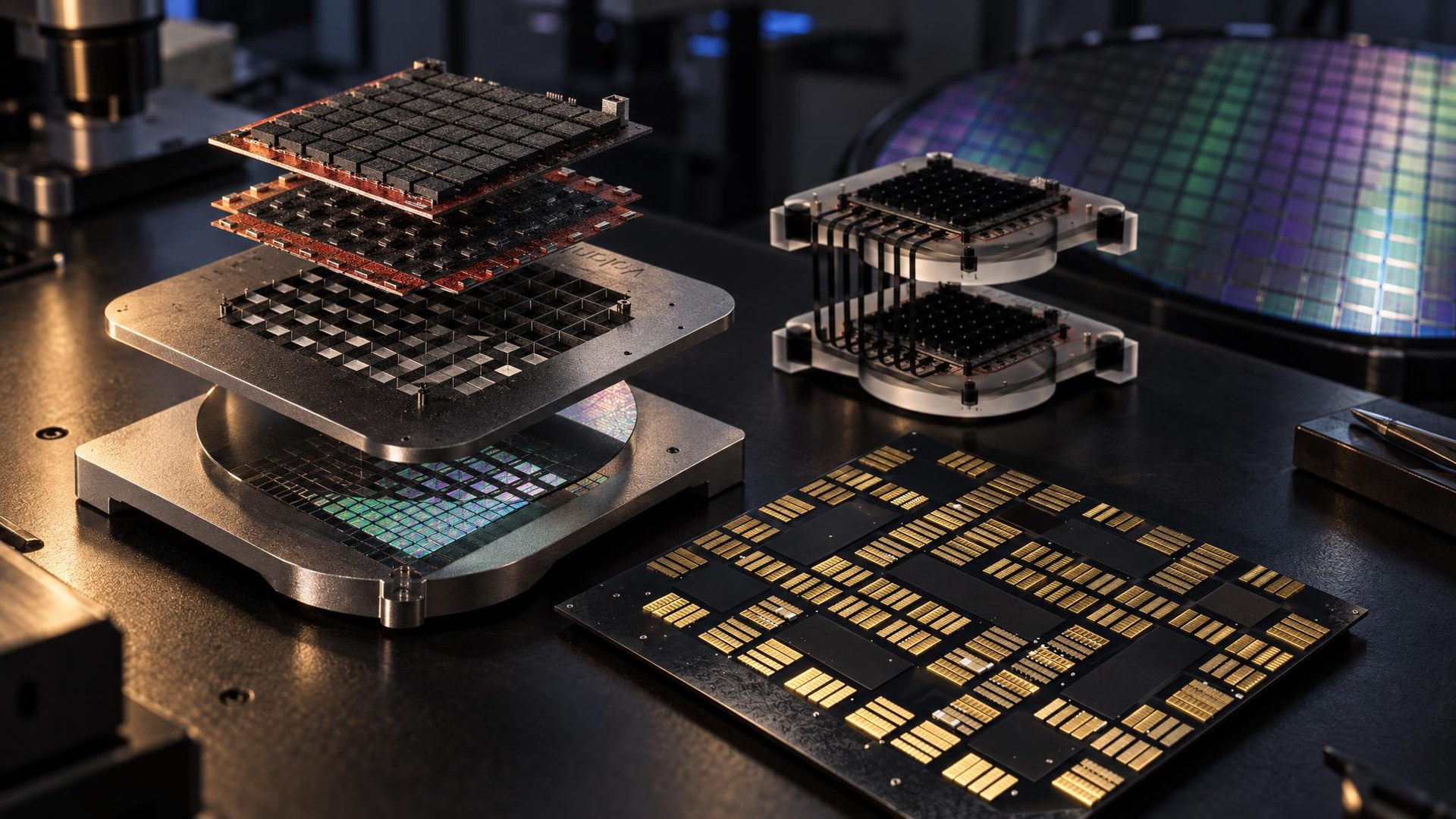
researched Aug 2026Volantis is a semiconductor company developing photonically integrated computers aimed at AI inference workloads. Its core technology replaces electrical chip interconnects with optical channels built from directly modulated lasers (vertical cavity surface-emitting lasers) coupled into densely parallel on-chip optical waveguides, combined with wafer-scale integration. The company positions this as distinct from silicon photonics, which it argues has failed to scale inside computing systems over the past two decades.
The stated design goal is to overcome memory rather than compute limits: because electrical wires reach only a few millimeters, the amount of high-speed memory that can sit next to a processor is capped. Volantis says its optical reach extends past 200mm, roughly 100x that of electrical interconnect, allowing proportionally more memory to be placed adjacent to a chip and enabling memory pools with SRAM-level bandwidth at rack-level capacity. The company describes its architecture as packing the capability of a server rack into a chip-scale package. Its product materials reference a Volantis A-1 part with 240 TB/s of memory bandwidth and 10 TB of capacity, targeting models above 10 trillion parameters.
Founded in 2022 and headquartered in San Mateo, California, Volantis emerged from stealth in June 2025. It reported working, patent-pending prototype systems built over its first two years and holds multiple pending patents on the architecture.
Founding story
Volantis was founded in 2022 by CEO Tapa Ghosh and CTO Roy Meade. Sam Altman backed the company in April 2022, before the company's public emergence. Meade was the first employee and former VP of Engineering at silicon photonics company Ayar Labs and previously led High Bandwidth Memory development at Micron.
Traction
By its June 2025 emergence from stealth, Volantis had built working, patent-pending prototype systems and held multiple pending patents. Funding was earmarked for architecture refinement, engineering hiring and early customer engagements, with pre-orders for photonic motherboards indicated for the first quarter of 2026.
Latest developments
The company announced its $9 million seed round and exit from stealth on 12 June 2025, with participation from Alex Wang of Scale AI and Trevor Blackwell of Y Combinator; Sam Altman had backed the company in April 2022. Its website lists Sam Altman, Dylan Patel and Jeff Dean among backers and states that pre-orders for its photonic motherboards begin in the first quarter of 2026.
▸Full profile — market position, technology, go-to-market, geography, history
Market position
Volantis presents itself as the first company to scale photonics inside computer chips and to solve in-computer photonics for chip communication, contrasting its directly modulated laser and wafer-scale approach with the silicon photonics methods that have dominated optical interconnect research. Its team includes engineers drawn from optical and hardware companies including Ayar Labs, Lightmatter, Marvell, Rockley, Infinera, Lumentum, Juniper and Skorpios.
Rather than silicon photonics, Volantis uses directly modulated VCSELs coupled into dense parallel waveguides with wafer-scale integration, an approach it says removes the need for fiber and extends optical reach far beyond electrical interconnect limits, allowing far larger fast-memory pools per accelerator.
Technology
Volantis integrates low-cost, low-power directly modulated lasers (VCSELs) with densely parallel on-chip optical waveguides on large substrates, using wafer-scale integration rather than silicon photonics. The approach relies on parallelism — many slow, low-power optical links operating simultaneously — to achieve high aggregate bandwidth, an argument the company compares to the parallelism advantage of GPUs. The company states it has eliminated the need for fiber, with 10x the wire density of market-leading chips, and that optical reach extends beyond 200mm versus a roughly 2–5mm limit for electrical interconnect. Claimed system-level results include 15x better performance per dollar, over 30x lower latency for trillion-parameter-plus models at scale, and 6x better tokens per watt; a simulated benchmark cites 1,590 tokens/sec/user on DeepSeek-V3.2 for a single Volantis A-1 chip versus about 50 on an NVIDIA B200.
Go-to-market
Operators of large-scale AI inference infrastructure serving very large models, including workloads above 10 trillion parameters that require high tokens-per-second per user and improved cost and energy per token.
Geography
Headquartered in San Mateo, California, United States.
History
The company was founded in 2022 and operated in stealth while building prototypes. Over roughly two years it produced working, patent-pending prototype systems validating in-computer photonics. In June 2025 it emerged from stealth alongside a $9 million seed round, saying it would use the proceeds to refine its chip architecture, grow its engineering team and begin early customer engagements. Its website indicates pre-orders for photonic motherboards were slated to open in the first quarter of 2026.
Compiled by commissioned research from 8 cited public sources — announcements, filings, and press listed under research sources below.
Key figures
latest reportedCompany-reported or press-reported figures, each dated to when it was claimed — not independently audited.
Related companies · 3



Companies working in the same space as Volantis.
Timeline · 2
launches, deals, and filingsThe San Mateo, California semiconductor startup announced a $9 million seed round with backing from Alex Wang (Scale AI) and Trevor Blackwell (Y Combinator); Sam Altman had backed the company in April 2022. Proceeds are for chip architecture refinement, engineering hiring and early customer engagements.
$9M source ↗
Volantis publicly introduced its photonic compute platform based on directly modulated lasers and wafer-scale integration, reporting working, patent-pending prototype systems.
Dated company events from announcements, filings, and press; legal rows summarize public dockets and regulator releases.
In the news
 Volantis Raises $88M Series A to Build Photonic AI Inference ...unite.ai · Oct 2026
 Volantis raises $88M to put optical memory links inside AI ...runtimewire.com · Oct 2026
 Volantis Raises $88M Series A to Demolish the AI Memory Wall ...finance.yahoo.com · Oct 2026
▸Research sources · 8
primary sources listed
- Volantisvolantissemi.ai · web
8 public sources were cited for this profile; the first-party ones are listed here.
Frequently asked questions
- What does Volantis do?
- Semiconductor startup building photonically integrated computers that use optical interconnect to attach large memory pools to AI accelerators.
- Who are Volantis's investors?
- Volantis's investors include IceNine, Unpopular Ventures, Vibe Capital, Abstract Ventures, Lachy Groom, Sam Altman, Susa Ventures, VXI Capital and 1 more.
- How much funding has Volantis raised?
- Volantis has disclosed $97M raised across 2 of its 4 known rounds.