 Fundraising Fox
Undeniable Health AI
White Plains, US · Founded 2026 · Delaware corporation · 1 known investors
Find your way into Undeniable Health AI
Sign up to see every warm intro you have to Undeniable Health AI
- Paths you didn't know you had: your email and LinkedIn already hold routes to the Undeniable Health AI team. We find them for you
- 2nd- and 3rd-degree connections: the friend-of-a-friend routes that take hours to manually find through your inbox or LinkedIn
- Answers now, not in days: momentum is everything in a raise. Skip asking around whether someone knows someone
Days of research, done the moment you sign in, with every route ranked by how warm it is.
Undeniable Health builds AI agents that handle the medical revenue cycle end to end—from charge capture and claim submission through denials, resubmissions, and payment posting—with human oversight. It is offered as a managed service for healthcare billing companies and the providers they serve, aiming to recover more revenue without adding staff.
Also known as Undeniable Health AI · Undeniable Health AI Inc.
Founders & leadership
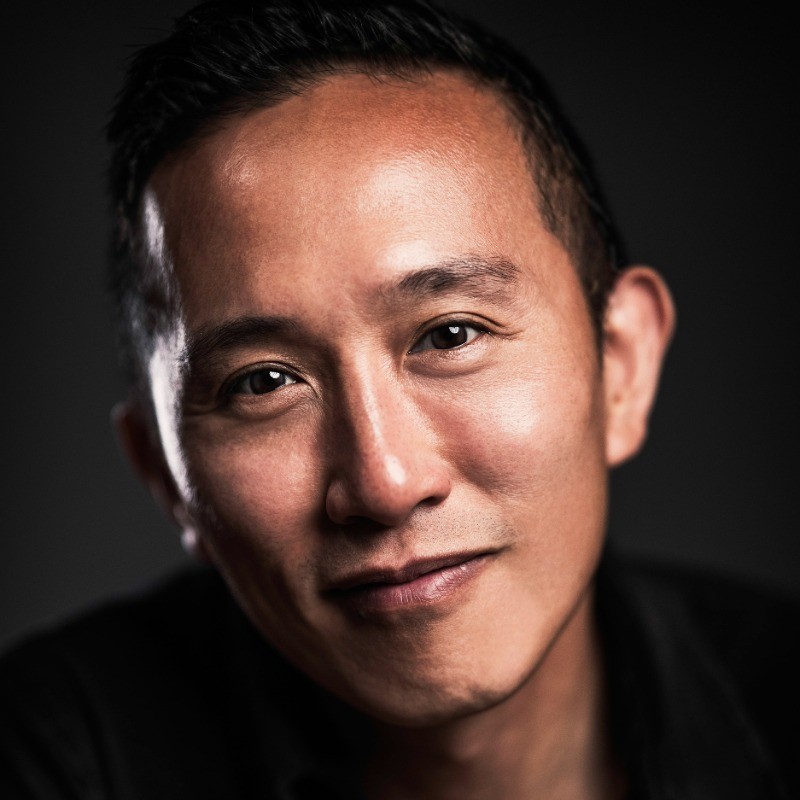
Undeniable Health AI was founded in 2026 by Alex Poon and Jason Griffith.

Investors · 1

Reported raises · per SEC filings
Form D private placements$1.1M disclosed across 2 rounds · 2025–2026
▶$600KraisedJun 2026 · 13 investors · Other TechnologyRule 506(b)
- Jason Scott GriffithExecutive Officer, Director, Promoter
- Alex Chi-Bun PoonExecutive Officer, Director, Promoter
- Offering amount
- $600K
- Amount sold
- $600K
- Minimum investment
- $10K
- First sale
- May 2026
- Incorporated
- Corporation, Delaware, 2026
- Federal exemptions
- 06b
▶$500KraisedApr 2026 · 1 investors · Other TechnologyRule 506(b)
- Alex Chi-Bun PoonExecutive Officer, Director, Promoter
- Jason Scott GriffithExecutive Officer, Director, Promoter
- Offering amount
- $500K
- Amount sold
- $500K
- Minimum investment
- $500K
- First sale
- Mar 2025
- Incorporated
- Corporation, Delaware, 2026
- Federal exemptions
- 06b
Source: SEC EDGAR Form D. Amounts as filed; amended filings shown once at their latest values.
Company profile
researched Aug 2026Undeniable Health (operating as Undeniable Health AI, legal entity Undeniable Health AI Inc.) develops AI agents marketed as "digital employees" for healthcare revenue cycle management (RCM). The agents are designed to work a claim across the full cycle rather than a single step: charge entry, claim submission, payment posting, denials and appeals, and accounts-receivable follow-up. The company positions its approach as agentic AI with human oversight, which it contrasts with RCM software that only flags issues and with AI-assisted workflows where staff still decide and execute.
The product is structured in three layers: an industry knowledge base covering denial codes, payer patterns, appeal strategies and regulatory requirements; a customer-specific layer encoding the client's systems, payers and internal rules learned during onboarding; and a reasoning engine that triages, strategizes, submits and tracks outcomes with humans retained in the loop, describing autonomy as earned rather than assumed. Marketing materials give a worked example of a coordination-of-benefits denial on a UTI test with Medicare primary and Medicare Advantage secondary, contrasting a nine-minute manual process with a 30-second automated sequence of gathering data, verifying coverage via payer portals, correcting insurance order, resubmitting and logging, then retaining the pattern as a reusable skill.
The company frames its market thesis around RCM labor economics: staffing difficulty and turnover, compounding payer rules, and denial rates it says have nearly doubled in four years. It argues that lowering the cost to work a claim from roughly $60 to $10 makes low-dollar claims previously written off worth pursuing, expanding recoverable revenue without added headcount. The website states HIPAA compliance is built into the system.
Business model
The company sells AI agents to organizations that run healthcare revenue cycle operations, both providers with in-house billing teams and outsourced billing companies. It emphasizes that clients interact with the agent as they would a new billing employee, with no new software, screens or workflow changes required for the client or the client's own customers.
Traction
The company describes an active pilot with a small number of revenue cycle partners. A named testimonial from the CEO of JAG Billing states the digital biller outperformed staff she had trained over years within a month of deployment. Two SEC Form D filings were recorded in 2026, reporting $500,000 sold in April 2026 and $600,000 in June 2026.
▸Full profile — market position, technology, go-to-market, geography, history
Market position
Positions itself at what it calls Level 3 of the RCM automation spectrum — agentic AI working claims end to end with human supervision — versus Level 1 RCM software tools that flag problems and Level 2 AI-assisted workflows, and notes that most competing tools address only one step of the cycle.
Coverage of the entire revenue cycle rather than a single step; continuous learning where each worked claim adds a permanent, reusable skill; retention of institutional payer knowledge that would otherwise leave with staff turnover; on-demand scaling for backlogs (e.g. a new client with 8,000 backlogged denials handled in days rather than a hiring cycle); and deployment without requiring new software or workflow changes.
Technology
A three-layer system combining a pre-built industry knowledge base (denial codes, payer patterns, appeal strategies, regulatory requirements), a client-specific configuration layer encoded during onboarding and retained permanently, and a reasoning engine that works claims end to end with human oversight. The agents navigate payer portals, pull patient and insurance data, correct claims, resubmit, log notes and record decision traces so handled patterns become reusable capabilities. HIPAA compliance is described as intrinsic to the system design.
Go-to-market
The company states it is working with a small number of revenue cycle partners, in-house and outsourced, in a pilot phase, and its site directs prospects to a contact/connect flow. The site features a testimonial from Gina Mattes, CEO of JAG Billing.
In-house provider revenue cycle teams and outsourced medical billing companies, including organizations managing books for multiple client practices; secondary description cites labs and billing companies.
Geography
Headquartered at 75 Midchester Ave, White Plains, New York, United States.
Compiled by commissioned research from 6 cited public sources — announcements, filings, and press listed under research sources below.
Key figures
latest reportedCompany-reported or press-reported figures, each dated to when it was claimed — not independently audited.
Timeline · 2
launches, deals, and filingsUndeniable Health AI Inc. filed a further new Form D (exemption 06b, equity only) reporting $600,000 sold.
$600K source ↗
Undeniable Health AI Inc. filed a new Form D (exemption 06b, equity only) reporting $500,000 sold.
$500K source ↗
Dated company events from announcements, filings, and press; legal rows summarize public dockets and regulator releases.
▸Research sources · 6
primary sources listed
- Undeniable Health AI Funding - Seed - White Plains | VCBackedvcbacked.co · web
6 public sources were cited for this profile; the first-party ones are listed here.
Frequently asked questions
- What does Undeniable Health AI do?
- Undeniable Health builds AI agents that work healthcare revenue cycle claims end to end, from charge capture to payment.
- Who founded Undeniable Health AI?
- Undeniable Health AI was founded by Alex Poon, Jason Griffith in 2026.
- Who are Undeniable Health AI's investors?
- Undeniable Health AI's investors include Alliance DAO (ex DeFi Alliance).
- How much funding has Undeniable Health AI raised?
- Undeniable Health AI has disclosed $1.1M raised across 2 rounds.
- Where is Undeniable Health AI headquartered?
- Undeniable Health AI is headquartered in White Plains, US.