 Fundraising Fox
The Bland Company
Entrepreneur First '24London, GB · Founded 2024 · 5 employees on LinkedIn · 6 known investors
Find your way into The Bland Company
Sign up to see every warm intro you have to The Bland Company
- Paths you didn't know you had: your email and LinkedIn already hold routes to the The Bland Company team. We find them for you
- 2nd- and 3rd-degree connections: the friend-of-a-friend routes that take hours to manually find through your inbox or LinkedIn
- Answers now, not in days: momentum is everything in a raise. Skip asking around whether someone knows someone
Days of research, done the moment you sign in, with every route ranked by how warm it is.
The Bland Company develops functional proteins—soluble, foaming, gelling, and emulsifying—made from upcycled agricultural byproducts as alternatives to egg-based ingredients for food manufacturers. Its flavor-neutral proteins target texture applications in bakery, sauces, beverages, and snacks.
Also known as Bland Company · The Bland Co
Founders & leadership
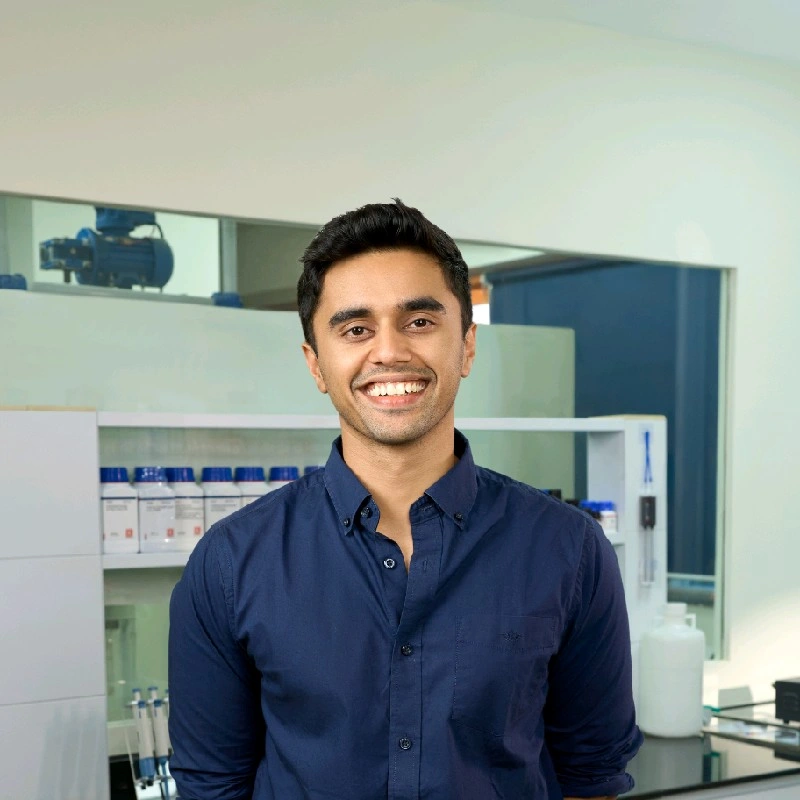
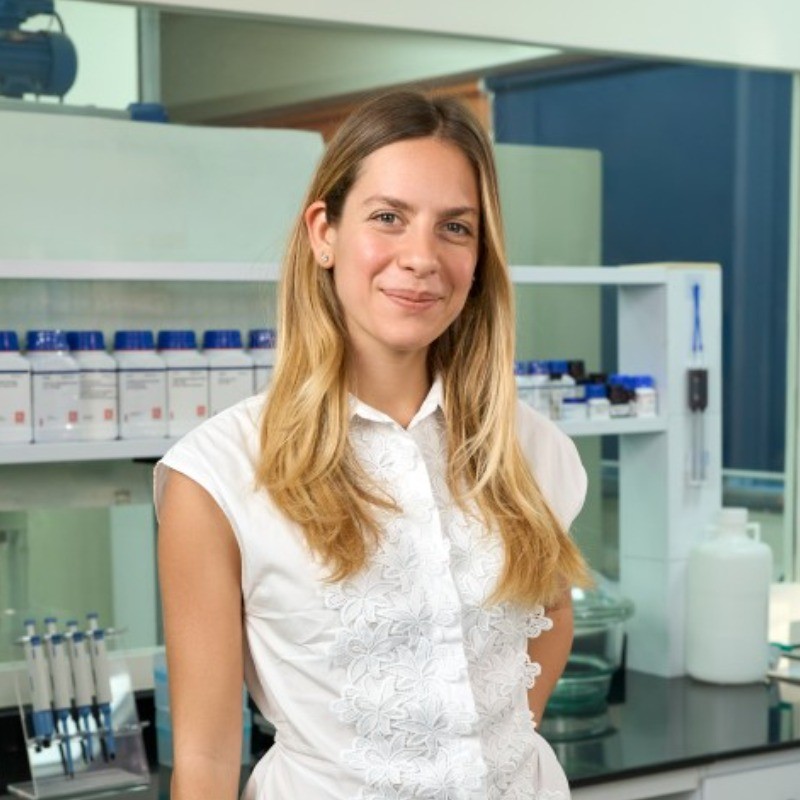
The Bland Company was founded in 2024 by Yash Khandelwal and Micol Hafez.
Investors · 6

How we know: research · startupintros.com · av.vc · Not right? Tell us
How we know: the Entrepreneur First portfolio · research · startupintros.com · open dataset · 5k.vc investor directory · Not right? Tell us
How we know: a partner's Signal profile · funding news · research · startupintros.com · initialized.com · Not right? Tell us
How we know: Transpose Platform Management's portfolio page · research · startupintros.com · Not right? Tell us


Funding
SEC filings, press & company announcements- Undisclosed amountPre-SeedFeb 2026Source ↗
Source: company announcements and press reports — follow each round's link for the claim.
Company profile
researched Aug 2026The Bland Company is a London-based food-technology and protein-science startup that uses a proprietary biochemical process to convert underused plant byproducts and agricultural side streams into functional proteins for industrial food manufacturing. Its ingredients are engineered to be soluble, foaming, gelling, binding and emulsifying while remaining flavor-neutral, positioning them as replacements for egg protein in bakery, sauces and condiments, beverages, snacks and confectionery.
The company frames the opportunity around the roughly one third of eggs that are consumed as an ingredient in food manufacturing, where dependence on poultry supply produces unstable availability, volatile pricing and food-safety concerns. Coverage of the company reports that egg prices swung two- to threefold over an 18-month period, driven by avian flu and Newcastle disease outbreaks, cage-free regulation rollouts, feed costs, climate shocks and seasonal demand, forcing manufacturers to reformulate and re-forecast. Existing alternatives are described as either underperforming or too costly: precision-fermentation egg proteins carry high capex and opex, Rubisco-based routes need expensive downstream processing, mung-bean options suit scrambled-egg formats more than baked goods, and other approaches require blends of starches and hydrocolloids alongside plant protein.
The company's platform is described as feedstock-agnostic, fractionating target proteins from cheap, abundant inputs such as rice-production and pasta-production byproducts (including rice bran) and then restructuring them to deliver animal-protein-like functionality. Reported early results include three-to-fourfold increases in solubility and significant improvements in foaming and emulsification, with first-generation ingredients said in some benchmarks to surpass egg-white performance. The process is characterized as clean-label and capital-light, involving no fermentation, bioreactors or novel equipment, and able to plug into existing plant-protein and food-manufacturing infrastructure; artificial intelligence is cited as a tool for predicting how different substrates respond to the biochemical process and for optimizing processing parameters.
Founding story
Co-founders Yash Khandelwal and Micol Hafez met at Entrepreneur First in London and started the business in 2024, motivated by the fragility of an animal-dependent food system and the belief that sustainable ingredients will only scale if they are cheaper, easier and better than incumbents. Khandelwal is described as a biochemical engineer/biochemist and founder of watermelon-seed paneer maker Funny Nani; Hafez is a biochemist and previously co-founder of women's health startup Womco. Both are characterized as repeat founders in ingredient innovation who set out to decompose food functionality to its fundamentals and rebuild it from underutilized agricultural streams.
Business model
Business-to-business ingredient supply. Upstream, the company partners with agri-commodity and finished-goods producers that generate protein-containing side streams, which it frames as converting a cost center into additional revenue streams via biorefinery models. Downstream, it intends to sell functional protein ingredients either through ingredient distributors or directly to consumer packaged goods manufacturers, slotting into existing procurement workflows. The stated long-term model is a biorefinery: one plant feedstock in, multiple high-performance functional ingredients out, serving food and potentially non-food applications, supported by an expanding library of proteins.
Sale of functional protein ingredients on a B2B basis, either via ingredient distributors or directly to consumer packaged goods manufacturers; the company emphasizes stable, year-round pricing and a path to cost parity with, or undercutting of, eggs.
Traction
Raised $2.67 million in pre-seed funding in February 2026. Reported benchmarks include three-to-fourfold solubility increases and significant foaming and emulsification gains, with first-generation ingredients said to surpass egg-white performance in some tests. The company is running pilot trials with large CPG companies in the US and Europe and working with large agri producers on rice- and pasta-production side streams. Team size is listed as 1-10 employees, with five named team members on its website.
Latest developments
In February 2026 the company announced its $2.67 million pre-seed round led by Initialized Capital with Entrepreneur First, Transpose Platform, Behind Genius Ventures, Alumni Ventures and Vento participating, to be used for hiring scientists and engineers, accelerating the protein functionalization platform and speeding commercialization of its first ingredients. It was concurrently validating its first solution for baked goods, condiments and confectionery through manufacturer pilots and progressing patent filings.
▸Full profile — market position, technology, go-to-market, geography, history, risks & controversies
Market position
An early-stage entrant in the B2B functional egg-replacement ingredient market. Sources position it against other functional egg substitutes including Revyve (yeast protein, Netherlands), MOA Foodtech (fermentation-derived, Spain), The Very Food Co (powdered aquafaba, France) and Meala Foodtech (single-ingredient pea protein, Israel), as well as broader approaches such as precision-fermentation egg proteins, Rubisco-based proteins and mung-bean formulations. Its lead investor characterizes functional proteins as a supply-chain bottleneck and eggs as the largest addressable beachhead use case with no adequate existing solution.
Stated differentiators are multi-functionality in a single ingredient (high solubility plus foaming, binding and emulsification, reducing the need for starch and hydrocolloid cocktails), flavor neutrality as a blank canvas for formulators, cost efficiency from plugging into existing infrastructure without new equipment or fermentation capacity, feedstock-agnostic sourcing from upcycled side streams that require no new crops or land, and price stability relative to eggs.
Technology
A proprietary biochemical protein-functionalization platform. Plant inputs described as cheap, abundant, overlooked and nutrient-dense are put through a fractionation step to isolate target proteins, which are then restructured to deliver animal-protein-like functionality: enhanced solubility, stronger foaming, binding, and more stable emulsions. The company describes the method as a clean-label process that, depending on the ingredient, may involve chemistry or a combination of physics and chemistry, rather than fermentation or bioreactors, and that plugs into existing plant-protein infrastructure without novel equipment. Feedstocks worked on include byproducts of rice production (including rice bran) and pasta production from producers generating tens to hundreds of thousands of tons of side streams. AI is used to model how different feedstocks respond to the process, predict which substrates yield which functional properties, and tune processing parameters. Patent applications were in progress as of February 2026.
Go-to-market
B2B ingredient sales through distributors or direct to CPG manufacturers, seeded by pilot trials and sample requests. The company is running validation trials with large manufacturers in the US and Europe, beginning with baked goods, condiments and confectionery as beachhead applications, and its website offers sample requests, product collaboration, partnership and career inquiries. It is also consulting on the regulatory treatment of its proteins, noting its source materials are already familiar to the food industry.
Industrial food manufacturers and consumer packaged goods companies that use eggs as a functional ingredient, particularly in baked goods, condiments and sauces, confectionery, beverages and snacks; also ingredient distributors and formulators, plus upstream agri-commodity and finished-goods producers that supply side streams.
Geography
Headquartered in London, United Kingdom, with pilot trials and commercial discussions with food manufacturers in the United States and Europe, and upstream side-stream sourcing relationships with large agri producers.
History
Founded in 2024 in London by Yash Khandelwal and Micol Hafez after they met at Entrepreneur First. The team subsequently expanded to include an application science lead and process development and protein scientists. In February 2026 the company announced a $2.67 million (£2 million) pre-seed round led by Initialized Capital, and it has been supported by programs including MassChallenge UK. By early 2026 it was running pilot trials with large CPG companies in the US and Europe and pursuing patent filings on its process.
Risks & controversies
The company is pre-commercial, with performance claims largely sourced from the founders and its lead investor rather than independent verification, and it is still in pilot validation with manufacturers. Regulatory treatment of its proteins is unsettled; the company reports consulting advisors on how the ingredients may be regulated. Technical disclosure is limited pending patent filings. Founders acknowledge fundraising was difficult and that cost parity with eggs remains a question, and the company faces competition from multiple funded egg-replacement approaches. Note that a similarly named California rooftop-solar and roofing firm, Bland Co., which paused operations amid debt and incentive changes, is an unrelated business.
Compiled by commissioned research from 8 cited public sources — announcements, filings, and press listed under research sources below.
Key figures
latest reportedCompany-reported or press-reported figures, each dated to when it was claimed — not independently audited.
Timeline · 4
launches, deals, and filingsThe Bland Company raised $2.67 million (reported as £2 million) in pre-seed funding led by Initialized Capital, with participation from Entrepreneur First, Transpose Platform, Behind Genius Ventures, Alumni Ventures and Vento. Proceeds are earmarked for hiring scientists and engineers, accelerating the protein functionalization platform, and commercializing its first functional ingredients.
$2.7M source ↗
Co-founder Yash Khandelwal said the company was going through a patent filing process covering its protein functionalization process and therefore limited technical disclosure.
The company reported running pilot trials with large consumer packaged goods companies in the US and Europe to validate its first egg-replacement solution for baked goods, condiments and confectionery.
The company is described as having been supported by programs such as MassChallenge UK and listed as a portfolio company of Initialized Capital.
Dated company events from announcements, filings, and press; legal rows summarize public dockets and regulator releases.
In the news
▸Research sources · 8
primary sources listed
- The Bland Companytheblandcompany.co · web
8 public sources were cited for this profile; the first-party ones are listed here.
Frequently asked questions
- What does The Bland Company do?
- London protein-science startup turning agricultural side streams into functional proteins that replace eggs in food manufacturing.
- Who founded The Bland Company?
- The Bland Company was founded by Yash Khandelwal, Micol Hafez in 2024.
- Who are The Bland Company's investors?
- The Bland Company's investors include Alumni Ventures, Entrepreneur First, Initialized Capital, Transpose Platform Management, Behind Genius Ventures, Vento.
- Where is The Bland Company headquartered?
- The Bland Company is headquartered in London, GB.