 Fundraising Fox
Tetsuwan Scientific
Entrepreneur First '24New York, US · Founded 2024 · 14 employees on LinkedIn · 13 known investors
Find your way into Tetsuwan Scientific
Each arrow is one introduction. Sign up to fill in the first one.
Ask Yash Sinha to introduce you to Théo Schäfer
You →Yash · together at ARIS →Théo

Ask Jamie Chen to introduce you to Cristian Ponce
You →Jamie · together at Carolina Fintech Hub →Cristian
Sign up to find every way you can get introduced to Tetsuwan Scientific
- Your email: who you already know at Tetsuwan Scientific, and who your contacts know
- 2nd- and 3rd-degree connections: people you know who worked, studied or invested with the Tetsuwan Scientific team
- Your LinkedIn: the connections who can make the intro for you
We rank every route by how warm it is, so you raise on warm intros instead of cold emails.
Tetsuwan operates a cloud lab and automation platform called ResearchOS that lets researchers configure, simulate, and run biology experiments from their browser without physical lab access. Users describe procedures and variables in natural language or by uploading files, and the system compiles them into executable robotic automation scripts.
Also known as Tetsuwan · Tetsuwan Scientific Inc.
Founders & leadership
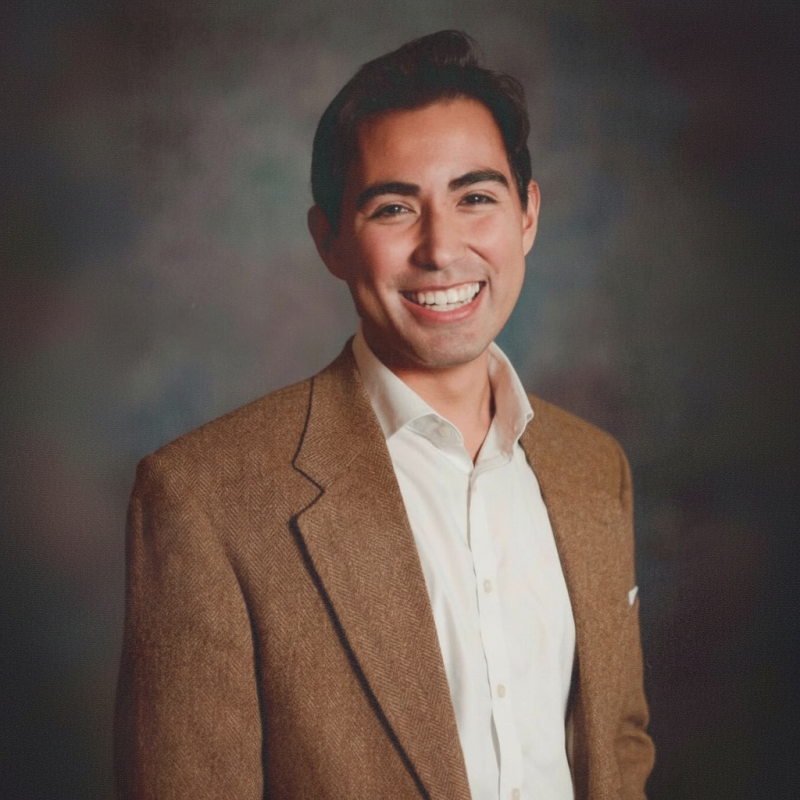
Tetsuwan Scientific was founded in 2024 by Cristian Ponce and Théo Schäfer.

Investors · 13

How we know: 2048 Ventures's portfolio page · funding news · the VCSheet dataset · research · startupintros.com · open dataset · 5k.vc investor directory · Not right? Tell us

How we know: Carbon Silicon's portfolio page · funding news · the VCSheet dataset · research · startupintros.com · Not right? Tell us
How we know: the Entrepreneur First portfolio · Not right? Tell us

How we know: research · startupintros.com · Not right? Tell us

Also in the syndicate · 7
Funding
SEC filings, press & company announcementsSource: company announcements and press reports — follow each round's link for the claim.
Company profile
researched Aug 2026Tetsuwan Scientific develops software and robotic systems intended to let researchers define and run wet-lab biology experiments without physical lab access. Its platform, ResearchOS, accepts experimental procedures expressed as uploaded files (research papers, kit manuals, informal notes) or natural-language descriptions and renders them into a visual protocol format. Users can parameterize any element of a procedure — reagents, sample numbers, dyes, treatments, instrument parameters, volumes and concentrations — either by uploading a CSV of existing plates or by querying the system in natural language. The platform then compiles the procedure and its variables into an automation script executable on a robot, and offers simulation so users can visually verify a protocol before running it. Low-level automation decisions such as liquid classes are handled automatically but remain viewable and editable.
Earlier public coverage describes the company as building "autonomous AI scientists": systems combining large language model reasoning with laboratory robotics that can evaluate experimental results and modify experiments on their own. Rather than building proprietary hardware, the company modifies lower-cost white-label lab robots and adds software and sensors to handle calibration, liquid class characterization and other physical properties. Reported robot form factor is a square glass cube rather than a humanoid. The company positions itself as adding intelligence to lab automation rather than dexterity, targeting the interface between scientists, existing lab automation tools and AI models.
The company's stated long-term aim is automating the scientific method end to end, from hypothesis generation through repeatable results, and building infrastructure described by one third-party profile as a virtual research laboratory.
Founding story
Cristian Ponce and Théo Schäfer met at a Halloween party in 2023 hosted by Entrepreneur First's U.S. program, where Ponce attended in an Indiana Jones costume. Ponce began college at 16 studying computer science at UNC Charlotte before moving into bioengineering at Caltech, working on E. coli genomics in the Wang Lab and on full-genome engineering; Schäfer holds a master's in mechanical engineering from ETH Zürich with thesis work at MIT on underwater autonomous robots, and previously built autonomous robots for extreme environments at NASA's Jet Propulsion Laboratory, including work related to exploring Jupiter's moons. The pair bonded over the drudgery of manual pipetting and lab technician work. The founding thesis initially centered on modifying lower-cost white-label lab robots; in May 2024, after watching OpenAI's multimodal product launch, Ponce tested GPT-4 on an image of a DNA gel and found it correctly identified a primer dimer and proposed conditions to prevent it, which the founders describe as the moment they concluded LLMs had scientific reasoning but no physical agency.
Business model
Tetsuwan offers a cloud lab service and automation software: customers submit experimental questions and protocols through the ResearchOS browser platform, and experiments are executed on Tetsuwan-operated robotic instrumentation, with results returned to the researcher. The company modifies lower-cost white-label lab robots rather than manufacturing bespoke hardware, which is described as reducing capital requirements and speeding deployment. Sources do not disclose pricing or contract structure.
Not disclosed in the available sources.
Traction
As of late 2024 the company reported an alpha customer (La Jolla Labs) and its first autonomous AI system operational in a rare disease gene therapeutics lab, with a team that had grown to seven people drawn from Caltech, ETH Zurich, MIT and UC Davis. Reported cumulative funding is $5.7M across two rounds per a third-party database, of which a $2.7M pre-seed is corroborated by multiple sources. No revenue, customer count or usage metrics are disclosed.
Latest developments
The company website, current as of 2026, presents ResearchOS as a browser-accessible cloud lab where researchers configure, simulate and run experiments without entering a lab. Blog activity in early 2026 covers cross-platform integration with PyLabRobot and UniteLabs, use of Claude in the wet lab, and a recap of an Autonomous Science Night event.
▸Full profile — market position, technology, go-to-market, geography, history, risks & controversies
Market position
Described in press and investor materials as among the first companies commercializing autonomous AI scientist research that emerged from 2023 academic work such as CMU's Coscientist and EPFL's ChemCrow, with earlier antecedents in Ross King's Adam and Eve robots from 1999. Its investor frames the differentiator as adding intelligence and autonomous decision-making to lab automation, in contrast to competitors emphasizing robot dexterity, workflow integration and efficiency optimization under human oversight.
Stated points of difference: an intelligence-first approach in which robots reason, adapt and self-manage rather than executing fixed workflows; automatic compilation of natural-language or document-based protocols into executable robot scripts, with all intermediate decisions inspectable and editable; protocol simulation prior to execution; and a modular architecture built on modified low-cost white-label lab robots instead of proprietary hardware.
Technology
ResearchOS ingests protocols as natural-language descriptions or uploaded documents and translates them into a structured, visual protocol representation, then compiles procedures plus parameter sweeps into robot-executable automation scripts, with an in-browser simulation layer for verification. Underlying work includes software and sensing to give robots context about physical properties such as calibration and liquid class characterization, addressing the gap between scientific intent and robotic execution. Reported use of large language models — including audio/multimodal LLMs with retrieval-augmented generation to limit hallucination — supports interpretation of scientific outputs; an early voice-activated MVP was demonstrated operating in English and Spanish. Company blog posts reference work with Claude in the wet lab and cross-platform integration via PyLabRobot and UniteLabs.
Go-to-market
Direct engagement with biotech research labs, beginning with an alpha customer (La Jolla Labs) and a deployment in a rare disease gene therapeutics lab, combined with a cloud-lab service model in which researchers send questions and receive results. The company also maintains a public blog and hosted an "Autonomous Science Night" event, and general inquiries are handled via a company email address.
Biologists and life-science researchers who need high-throughput or precision experimentation, including biotech companies. Named early users are La Jolla Labs, an RNA therapeutics biotech, and an unnamed rare disease gene therapeutics lab. Third-party coverage cites potential application areas across pharmaceuticals, biotechnology and environmental science.
Geography
Headquartered in San Francisco, California, per the company website footer and third-party profiles; investor materials reference a Bay Area office. Internal records list New York as HQ, and the coordinates in the site footer correspond to San Francisco.
History
Sources differ on the founding year: SynBioBeta and Startup Intros' narrative state 2023, while Startup Intros' quick facts state 2024. The founders met through Entrepreneur First in late 2023. A blog post dates to November 2024, coinciding with the pre-seed announcement and the first system deployment. The $2.7M pre-seed round was covered in November and December 2024. The company's website and blog remain active into 2026, with posts in January, February, March and April 2026, and the site footer lists San Francisco, CA as the location, whereas internal records list New York.
Risks & controversies
Available sources contain conflicting and unreliable third-party data: one aggregator lists founding as both 2023 and 2024, an employee range of 1001-5000 (contradicted elsewhere by 2-10 employees and a reported team of seven), and a $3M "seed" round dated April 2024 that precedes the December 2024 pre-seed, which is not corroborated by any primary or press source. Business risks noted in coverage include the historical difficulty of lab automation adoption — specialized, expensive robots requiring programming expertise, making manual work often cheaper and more precise — and competition from other AI-scientist efforts such as FutureHouse and Potato AI. No litigation or controversy is reported.
Compiled by commissioned research from 8 cited public sources — announcements, filings, and press listed under research sources below.
Key figures
latest reportedCompany-reported or press-reported figures, each dated to when it was claimed — not independently audited.
Timeline · 4
launches, deals, and filingsTetsuwan Scientific closed an oversubscribed $2.7 million pre-seed round led by 2048 Ventures, with participation from Carbon Silicon, Everywhere Ventures and angel investors including Sonia Arrison (Foresight Institute) and Eduardo Torrealba (Formlabs). Proceeds funded deployment of its first autonomous AI system and expansion of the team.
$2.7M source ↗
La Jolla Labs, a biotech working on RNA therapeutic drugs, is reported as Tetsuwan's alpha customer, using the robots to help measure and determine dosage effectiveness.
Tetsuwan announced deployment of its inaugural autonomous AI system, described as operational in a rare disease gene therapeutics lab.
A third-party database lists a $3M seed round with investors including 2048 Ventures, Jenny Fielding, Scott Hartley, Everywhere Ventures (The Fund), Impellent Ventures, Trucks Venture Capital, Volition Capital and Jason Robins. Note this listing conflicts in ordering with the December 2024 pre-seed round.
$3M source ↗
Dated company events from announcements, filings, and press; legal rows summarize public dockets and regulator releases.
▸Research sources · 8
primary sources listed
- Tetsuwan Scientifictetsuwan.com · web
8 public sources were cited for this profile; the first-party ones are listed here.
Frequently asked questions
- What does Tetsuwan Scientific do?
- Tetsuwan Scientific builds AI-driven lab robots and a browser-based cloud lab platform, ResearchOS, for life-science experiments.
- Who founded Tetsuwan Scientific?
- Tetsuwan Scientific was founded by Cristian Ponce, Théo Schäfer in 2024.
- Who are Tetsuwan Scientific's investors?
- Tetsuwan Scientific's investors include 2048 Ventures, Carbon Silicon, Entrepreneur First, Everywhere Ventures, Impellent Ventures, Volition Capital.
- Where is Tetsuwan Scientific headquartered?
- Tetsuwan Scientific is headquartered in New York, US.