 Fundraising Fox
Stacksync
YC W24San Francisco, US · Founded 2022 · 34 employees · Hiring · 13 known investors
Find your way into Stacksync
Sign up to see every warm intro you have to Stacksync
- Paths you didn't know you had: your email and LinkedIn already hold routes to the Stacksync team. We find them for you
- 2nd- and 3rd-degree connections: the friend-of-a-friend routes that take hours to manually find through your inbox or LinkedIn
- Answers now, not in days: momentum is everything in a raise. Skip asking around whether someone knows someone
Days of research, done the moment you sign in, with every route ranked by how warm it is.
Stacksync is a real-time data integration platform that syncs CRM, marketing automation, sales engagement, finance, and data warehouse systems in two-way, bidirectional workflows for revenue operations teams. It replaces reverse-ETL tools and manual reconciliation with pre-built connectors and SQL-driven automation for platforms like Salesforce, HubSpot, Outreach, and NetSuite.
Also known as Stacksync
Founders & leadership· Y Combinator alumni (W24)
Stacksync was founded in 2022 by Ruben Burdin and Alexis Favre.


Investors · 13
How we know: Y Combinator's founder network · eightcapital.com · Not right? Tell us

How we know: Kima Ventures's portfolio page · Y Combinator's founder network · Not right? Tell us

How we know: Moonfire Ventures's portfolio page · Y Combinator's founder network · Not right? Tell us

How we know: Motier Ventures's portfolio page · Y Combinator's founder network · Not right? Tell us
How we know: Y Combinator's founder network · pioneerfund.vc · open dataset · 5k.vc investor directory · Not right? Tell us

How we know: the Y Combinator directory · funding news · open dataset · 5k.vc investor directory · Not right? Tell us

How we know: Y Combinator's founder network · Not right? Tell us

How we know: Y Combinator's founder network · Not right? Tell us

How we know: the VCSheet dataset · Y Combinator's founder network · Not right? Tell us
How we know: Y Combinator's founder network · Not right? Tell us
How we know: Y Combinator's founder network · Not right? Tell us
How we know: Y Combinator's founder network · Not right? Tell us
How we know: Y Combinator's founder network · Not right? Tell us
Company profile
researched Aug 2026Stacksync provides real-time, bidirectional data synchronization between business systems such as CRMs (Salesforce, HubSpot, SAP) and databases (Postgres, Google BigQuery). Changes made in a connected CRM propagate to the database and vice versa, effectively turning the database into a read-and-write interface to CRM data that can be manipulated with SQL rather than through vendor APIs. Syncs are configured without code: users connect two applications, select the tables to sync, and map fields, a process the company states takes under five minutes.
The platform has since expanded beyond sync into what the company calls AI "Genies" — persistent agents that run cross-system business processes across more than 1,000 native integrations, including systems without APIs, which the agents operate through a browser session. Agents can be invoked from chat, email, Slack, Teams, SMS, WhatsApp or API, are model-agnostic (OpenAI, Anthropic, Google, Mistral, or bring-your-own-key), and support human-in-the-loop approval steps where a reviewer approves, edits or rejects an action before a run resumes. Governance features include feature access policies, role-based access control, tamper-evident audit logs, and SSO, SCIM and MFA. Published workflow examples span order-to-cash automation, real-time inventory sync, returns and refunds, marketplace federation, subscription billing sync and CRM customer-360 records.
Stacksync states it is certified or compliant across SOC 2 Type II, ISO 27001, HIPAA BAA, GDPR, CCPA and the Data Privacy Framework for US, EU, UK and Swiss data transfers, and offers connection options including OAuth 2, SSH tunnelling, SSL certificates, IP whitelisting, VPN gateway and VPC peering, plus alerting via email, Slack, PagerDuty and WhatsApp.
Founding story
Stacksync was founded in 2022 by Ruben Burdin (Founder/CEO), whose background is described as data movement, CRM and ERP, and Alexis Favre (Founder/CTO), focused on data movement. The company participated in Y Combinator's Winter 2024 batch. The founders framed the problem as developers finding CRM APIs difficult to navigate, with edge cases and data inconsistencies that carry business consequences, leaving business teams working in CRMs with outdated or missing data.
Business model
Stacksync sells a subscription software platform for system integration and workflow automation. Simple CRM integrations were listed as starting at $200 per month, with pay-as-you-go upgrades for large data volumes; the company also offered Y Combinator portfolio companies an 80% discount for one year, described as worth 120,000 credits. The website advertises a 14-day free trial with no credit card required, alongside white-glove deployment with implementation engineers assigned to customer projects.
Recurring subscription pricing starting at $200/month for simple CRM integrations, with usage-based (pay-as-you-go) expansion for larger data volumes.
Traction
Y Combinator lists a team size of 34 and Active status. The website cites more than 1,000 native integrations and customer case studies covering migrations from MuleSoft, Celigo, Heroku Connect, Matillion and Fivetran. Stacksync was selected by Sequin as the migration partner for its customer base ahead of Sequin's October 2025 shutdown, with typical migrations described as completing in three to five business days.
Latest developments
Stacksync's platform now centers on AI "Genies" — persistent, human-in-the-loop agents that execute cross-system processes such as converting an emailed purchase order into a NetSuite sales order — built from a prompt, callable from Slack, Teams, email, SMS, WhatsApp, chat or API, and usable with any major LLM provider. The company is hiring senior full-stack, frontend (AI product UX) and backend engineers, plus a forward-deployed sales engineer.
▸Full profile — market position, technology, go-to-market, geography, history
Market position
Positioned as an alternative to established integration and ETL vendors including MuleSoft, Celigo, Heroku Connect, Matillion and Fivetran. Sequin, which shut down its service in October 2025 following an acquisition, named Stacksync as its recommended migration path, stating it provides the same real-time two-way syncs with additional connectors (NetSuite, Shopify), sync triggers and an integrated workflow automation suite.
The company positions itself as delivering consistent, trustworthy data in real time with two-way sync configured in minutes without code, in contrast to API-based integration work. Additional differentiators cited include coverage of systems without APIs via human-like browser automation, always-running agents with human-in-the-loop approvals, and enterprise governance and security certifications.
Technology
Real-time, bidirectional synchronization between CRMs/ERPs and databases with field-level conflict rules and sync triggers, exposed through no-code setup and SQL access at the database layer. The platform includes a workflow automation suite and AI agents that execute multi-step, cross-system processes, with browser-session automation for applications that do not expose APIs. It is LLM-agnostic and can connect to customer knowledge bases such as documents, drives, wikis and public sites.
Go-to-market
Self-serve signup and free trial combined with sales-led motions (book a demo, direct scheduling with the CEO) and white-glove implementation support. The company markets migrations away from incumbent integration tools, publishing case studies for customers moving from MuleSoft, Celigo, Heroku Connect, Matillion and Fivetran, and partnered with Sequin to migrate that company's customers when Sequin shut down. Content marketing via a company blog and Y Combinator community distribution also feature.
Enterprise and mid-market teams running cross-system operational processes, including developers and business teams responsible for CRM and ERP integration. The website organizes offerings by industry vertical: e-commerce, logistics, technology, healthcare, energy, public sector, and retail/D2C.
Geography
Headquartered in San Francisco, with job listings based in San Francisco, Lausanne (Switzerland) and Munich (Germany), and remote roles across France, Germany, Switzerland, the United States, Canada, Brazil, Colombia, Argentina, Mexico, Bolivia, Portugal, Spain, the United Kingdom and the Netherlands. The company is certified under the Data Privacy Framework for US, EU, UK and Swiss data transfers.
History
Founded in 2022, Stacksync joined Y Combinator's Winter 2024 batch and launched publicly through YC with a product focused on real-time two-way CRM-database sync. In August 2025 it was named the migration partner for Sequin's customers following Sequin's acquisition and service shutdown. The product line has since broadened from synchronization into workflow automation and AI agents operating across more than 1,000 integrations.
Compiled by commissioned research from 4 cited public sources — announcements, filings, and press listed under research sources below.
Key figures
latest reportedCompany-reported or press-reported figures, each dated to when it was claimed — not independently audited.
Images

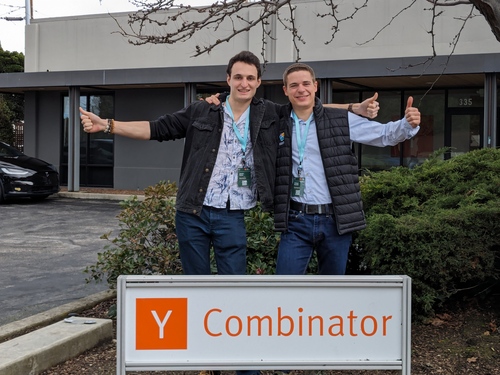
Related companies · 8








Companies working in the same space as Stacksync.
Timeline · 3
launches, deals, and filingsStacksync's platform expanded to AI agents ("Genies") that run cross-system enterprise processes with human-in-the-loop approvals, multi-channel invocation (Slack, Teams, email, SMS, WhatsApp, API, chat), LLM-agnostic model support, and browser-session automation for systems without APIs.
Sequin announced it had been acquired and would shut down services on October 23, 2025, and partnered with Stacksync to migrate customer syncs, including an integration to import Sequin sync configurations, discounts honoring existing Sequin pricing, and white-glove migration support.
Founders Ruben Burdin and Alexis Favre published a YC launch post for Stacksync's real-time, two-way sync between CRMs and databases, with no-code setup and pricing from $200/month.
Dated company events from announcements, filings, and press; legal rows summarize public dockets and regulator releases.
Legal entities · 1
corporate structureIn the news
▸Research sources · 4
primary sources listed
- Stacksync: Real-time and two-way sync between CRMs and Databases | Y Combinatorycombinator.com · web
4 public sources were cited for this profile; the first-party ones are listed here.
Frequently asked questions
- What does Stacksync do?
- Stacksync is a data integration platform providing real-time, two-way sync and AI agents across CRMs, ERPs and databases.
- Who founded Stacksync?
- Stacksync was founded by Ruben Burdin, Alexis Favre in 2022.
- Who are Stacksync's investors?
- Stacksync's investors include Eight Capital, Kima Ventures, Moonfire Ventures, Motier Ventures, Pioneer, Y Combinator, Emergence Capital Partners, Founderful and 5 more.
- Where is Stacksync headquartered?
- Stacksync is headquartered in San Francisco, US.