 Fundraising Fox
Shopify
NASDAQ: SHOPalso invests · investor profileUnicorn · $1.1BOttawa, CA · 20 known investors
Find your way into Shopify
Sign up to see every warm intro you have to Shopify
- Paths you didn't know you had: your email and LinkedIn already hold routes to the Shopify team. We find them for you
- 2nd- and 3rd-degree connections: the friend-of-a-friend routes that take hours to manually find through your inbox or LinkedIn
- Answers now, not in days: momentum is everything in a raise. Skip asking around whether someone knows someone
Days of research, done the moment you sign in, with every route ranked by how warm it is.
Shopify is a commerce platform that lets businesses build online stores, sell across multiple online and in-person channels, and manage international sales and shipping. It offers AI tools, point-of-sale hardware, and developer APIs for building agentic commerce experiences, serving merchants and brands of all sizes.
Also known as Green Receipt · Jaded Pixel · Shopify Inc.
Founders & leadership




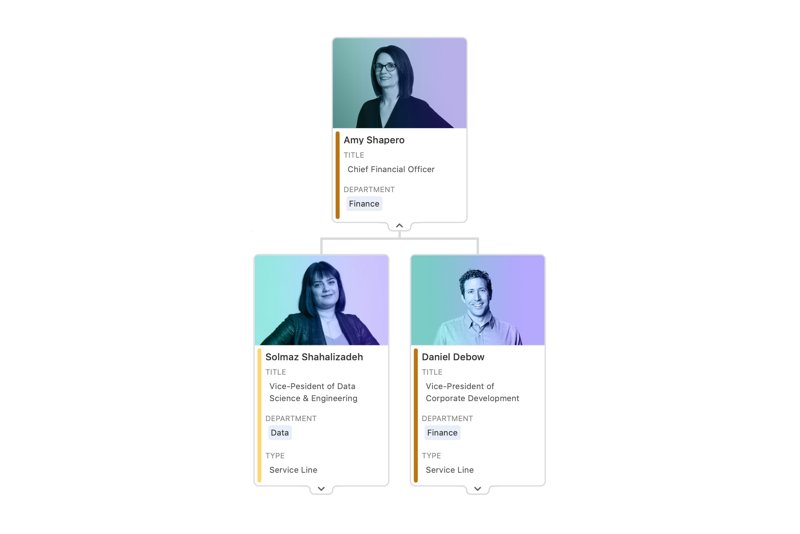
Board

Investors · 20

How we know: Bessemer Venture Partners's portfolio page · the S-1 prospectus · research · en.wikipedia.org · open dataset · 5k.vc investor directory · Not right? Tell us

How we know: Bright Pixel Capital's portfolio page · Not right? Tell us

How we know: Draft Ventures Llc's portfolio page · Not right? Tell us

How we know: Extreme Venture Partners's portfolio page · Not right? Tell us

How we know: Felicis Ventures's portfolio page · the VCSheet dataset · research · en.wikipedia.org · open dataset · 5k.vc investor directory · Not right? Tell us

How we know: FirstMark Capital's portfolio page · research · en.wikipedia.org · open dataset · 5k.vc investor directory · Not right? Tell us


How we know: open dataset · 5k.vc investor directory · Not right? Tell us
How we know: OMERS Ventures's portfolio page · the VCSheet dataset · Not right? Tell us

How we know: Runa Capital's portfolio page · Not right? Tell us

How we know: Venture Ontario's portfolio page · Not right? Tell us


Also in the syndicate · 1
Reported raises · per SEC filings
Form D private placements$237M disclosed across 2 of 7 rounds · 2010–2019
▶$167MraisedOct 2019 · 26 investors · Other TechnologyRule 506(b)
- John PhillipsDirector
- Harley FinkelsteinExecutive Officer
- Amy ShaperoExecutive Officer
- Craig MillerExecutive Officer
- Jeff WeiserExecutive Officer
- Joseph FrascaExecutive Officer
- Jeremy LevineDirector
- Jean-Michel LemieuxExecutive Officer
- Brittany ForsythExecutive Officer
- Colleen JohnstonDirector
- Gail GoodmanDirector
- Robert AsheDirector
- Tobias LutkeExecutive Officer, Director
- Offering amount
- $167M
- Amount sold
- $167M
- First sale
- Oct 2019
- Incorporated
- Corporation, Canada (federal Level)
- Federal exemptions
- 06b
▶$70MraisedJan 2014 · 14 investors · Other TechnologyRule 506(b)
- Harley FinkelsteinExecutive Officer
- Daniel WeinandExecutive Officer
- John H PhillipsDirector
- Tobias LutkeExecutive Officer, Director
- Cody FauserExecutive Officer
- Jeremy LevineDirector
- Russ JonesExecutive Officer
- Trevor OelschigDirector
- Offering amount
- $70M
- Amount sold
- $70M
- First sale
- Oct 2013
- Incorporated
- Corporation, Canada (federal Level)
- Federal exemptions
- 06b
Source: SEC EDGAR Form D. Amounts as filed; amended filings shown once at their latest values.
Valuation · disclosed
Disclosed eventsSource: SEC prospectus filings, and round valuations the company or its investors disclosed — follow each entry's link for the claim.
Company profile
researched Aug 2026Spently was a Toronto-based software company that turned transactional email — principally e-receipts — into a marketing channel for merchants. Its platform let retail, e-commerce and point-of-sale companies replace plain-text email receipts with branded, customizable messages containing logos, imagery, advertisements, special offers, social media links and rewards.
Merchants signed up for an account, selected their point-of-sale system, added retail locations and online stores, and edited receipt templates on a per-location basis without writing code. A dashboard reported on campaign performance, including who opened receipts and who redeemed the deals contained in them. The company described itself as a plug-and-play, value-add application layered on top of merchants' existing commerce and POS systems rather than a replacement for them.
The product grew out of an earlier consumer-oriented concept: a cloud-based receipt storage tool. Co-founder Vincent Panepinto said the team identified receipt storage as a genuine consumer pain point but chose not to compete with mobile wallet apps, instead finding a niche serving merchants that also generated revenue.
Founding story
Co-founder and CEO Nicholas Wiktorczyk studied at the University of Western Ontario, graduating with a major in philosophy, then enrolled in Humber College's two-year post-graduate global business management program. While at Humber he and co-founder Vincent Panepinto won a competition in 2011 for the idea, then named Green Receipt; the $8,000 prize provided validation and seed capital to develop the technology. The pair built a business plan in their first year and pursued the venture as part of their internship, using it to engage with Toronto's startup community. Wiktorczyk has said the company likely would not have started without the grant.
Business model
Spently sold a subscription SaaS product to merchants, priced according to the number of transactions processed, starting at $15 per month for up to 500 transactions, with custom enterprise plans for larger customers. Distribution depended on integrations with commerce and point-of-sale platforms, and the company planned to open an API so third parties such as loyalty providers could embed their offers into digital receipts.
Recurring subscription fees from merchants, tiered by transaction volume, beginning at $15 per month for up to 500 transactions, with custom enterprise pricing.
Traction
At launch the company had partnered with Shopify, reaching a base of over 30,000 merchants with the integration in testing among several of them; five MINDBODY Online merchant customers were using the product; and integrations were being tested or discussed with LightSpeed, Stripe and Vend. Disclosed capital consisted of an $8,000 competition prize and $100,000 from angel investor Jim Waters.
Latest developments
The most recent available sourcing describes the company's public launch, its Shopify partnership, POS integration work with LightSpeed, Stripe, Vend and MINDBODY Online, $100,000 in angel funding from Jim Waters, and planned features including an open API and customer segmentation. No later developments are documented in the supplied sources.
▸Full profile — market position, technology, go-to-market, geography, history, risks & controversies
Market position
Spently positioned itself as a small, early-stage value-add application in the digital receipt and transactional-messaging space, competing for merchant attention against receipt features already bundled into payment and POS products from Square and LevelUp and against retailers' own digital receipt programs, while partnering with platforms such as Shopify, LightSpeed, Vend, Stripe and MINDBODY Online for distribution.
Spently sought to differentiate from other digital-receipt offerings — including those bundled with point-of-sale and mobile payment systems such as Square and LevelUp, and in-house programs at retailers such as Gap — by adding branding customization, offers and rewards features and campaign analytics, rather than simply reproducing a paper receipt in electronic form. The company also emphasized that its solution required no coding and worked alongside merchants' existing POS systems, offering an entry point into online loyalty and payments without a full platform migration.
Technology
A hosted, no-code dashboard for designing and managing branded email receipts by location and store, integrated with third-party point-of-sale and e-commerce systems, with campaign analytics covering open and redemption rates. A public API for third-party providers, such as loyalty programs adding offers to digital receipts, and customer segmentation for targeted receipts were planned but not shipped as of the source reporting.
Go-to-market
Spently went to market chiefly through partnerships and integrations with commerce and point-of-sale platforms, which gave it access to their merchant bases. Its Shopify partnership exposed the product to more than 30,000 Shopify merchants, and it was in testing or discussions with LightSpeed, Stripe, Vend and MINDBODY Online. Merchants self-served through a web dashboard with no implementation work required.
Small businesses were the stated primary target, alongside brick-and-mortar retailers, e-commerce merchants and the customers of point-of-sale system vendors; enterprise plans were also offered.
Geography
Toronto, Ontario, Canada, per contemporaneous coverage; internal records list Ottawa, Canada as headquarters.
History
The company originated from a student business plan competition win at Humber College in 2011 under the name Green Receipt. It initially built a cloud-based receipt storage tool for consumers, then pivoted to a merchant-facing product after concluding that the consumer mobile-wallet space (occupied by players such as Lemon and Google Wallet) was not where it wanted to compete. Spently entered closed beta in August and launched publicly the following period, by which time it had partnered with Shopify, secured five MINDBODY Online merchant customers, and raised $100,000 from angel investor Jim Waters. Roadmap items at launch included an open API and customer segmentation for targeted receipts.
Risks & controversies
The sources note a crowded digital-receipt landscape in which point-of-sale and mobile payment providers (Square, LevelUp) and large retailers already offered email receipts, creating competitive pressure on a standalone receipt-marketing tool. No controversies are reported in the supplied material.
Compiled by commissioned research from 13 cited public sources — announcements, filings, and press listed under research sources below.
Key figures
latest reportedCompany-reported or press-reported figures, each dated to when it was claimed — not independently audited.
Timeline · 24
launches, deals, and filingsShopify announced an integration with Snapchat for its merchants.
Shopify and email marketing platform Mailchimp ended an integration agreement over disputes involving customer privacy and data collection.
Shopify announced the launch of Shopify Studios, a full-service television and film content and production house.
Shopify opened its first flagship location in Los Angeles, a physical space for business owners offering classes, coworking space, a support bar and workshops.
Shopify announced plans to expand office space in Toronto's King West neighbourhood in 2022 as part of The Well complex, jointly owned by Allied Properties REIT and RioCan REIT.
Shopify announced Arrive, a mobile application to help customers track packages from Shopify merchants and other e-commerce websites.
Shopify introduced a Bluetooth-enabled chip and swipe card reader for brick-and-mortar retail, and announced Shopify Pay, a one-click accelerated checkout exclusive to merchants using Shopify Payments.
Shopify announced an integration with Amazon enabling merchants to sell on Amazon from their Shopify stores.
Shopify launched Frenzy, a mobile app aimed at improving flash sales.
Shopify partnered with Paystack, allowing Nigerian online retailers to accept payments from customers worldwide.
Shopify launched the Shopify Plus Partners Program to connect agencies with growing e-commerce businesses.
Shopify announced Shopify Capital, a cash advance product initially piloted with US merchants, providing advances on future earnings processed through its payment gateway.
Amazon.com closed its Amazon Webstore service for merchants and selected Shopify as the preferred migration provider.
Shopify went public via an IPO on May 21, 2015, raising more than $131 million. Shares trade on the TSX and Nasdaq under the ticker SHOP.
$131M source ↗
Shopify released Shopify Plus, a tier for large e-commerce businesses requiring additional features and support.
Shopify launched Shopify Payments in partnership with Stripe, letting merchants accept payments without a third-party gateway, and announced a point-of-sale system for in-person selling.
Spently partnered with Shopify to make its product available to Shopify's base of over 30,000 merchants; the integration was being tested by several merchants at the time of launch.
After entering closed beta in August, Spently publicly launched its platform allowing brick-and-mortar and ecommerce merchants to send branded, customized email receipts with offers and deals, managed through a dashboard with campaign tracking.
Spently, then called Green Receipt, won the Humber Venture Fund business plan competition, receiving an $8,000 prize that the founders credit with enabling them to start the company.
$8K source ↗
Shopify launched a free iOS mobile app allowing store owners to view and manage their stores from mobile devices.
Shopify started its Build-A-Business competition, where participants create a business on its platform; winners received cash prizes and mentorship from entrepreneurs including Richard Branson and Eric Ries.
Shopify launched an API platform and App Store allowing third-party developers to build applications for Shopify stores and sell them on the App Store.
The founders of Snowdevil, an online snowboarding equipment store launched in 2004, turned the underlying software into a commerce platform and launched it as Shopify in June 2006. The company was initially called Jaded Pixel before adopting the Shopify name.
Dated company events from announcements, filings, and press; legal rows summarize public dockets and regulator releases.
Legal entities · 1
corporate structureIn the news


▸Research sources · 13
primary sources listed
- Nicholas Wiktorczyk: Co-founder and CEO, Spently - NOW Magazinenowtoronto.com · web
- Shopifyshopify.ca · web
13 public sources were cited for this profile; the first-party ones are listed here.
Frequently asked questions
- What does Shopify do?
- Toronto startup turning merchants' email receipts into branded, trackable marketing and rewards campaigns.
- Who founded Shopify?
- Shopify was founded by Daniel Weinand, Scott Lake, Tobias Lütke.
- Who are Shopify's investors?
- Shopify's investors include Bessemer Venture Partners, Bright Pixel Capital, Data Tech, Draft Ventures Llc, Extreme Venture Partners, Extreme Venture Partners LLP, Felicis Ventures, FirstMark Capital and 11 more.
- How much funding has Shopify raised?
- Shopify has disclosed $237M raised across 2 of its 7 known rounds.
- Where is Shopify headquartered?
- Shopify is headquartered in Ottawa, CA.