 Fundraising Fox
Qualcomm
NASDAQ: QCOMventure arm · Qualcomm VenturesSan Diego, US · Founded 1985 · Public
Find your way into Qualcomm
Sign up to see every warm intro you have to Qualcomm
- Paths you didn't know you had: your email and LinkedIn already hold routes to the Qualcomm team. We find them for you
- 2nd- and 3rd-degree connections: the friend-of-a-friend routes that take hours to manually find through your inbox or LinkedIn
- Answers now, not in days: momentum is everything in a raise. Skip asking around whether someone knows someone
Days of research, done the moment you sign in, with every route ranked by how warm it is.
Qualcomm designs the Snapdragon mobile processors and modems and licenses the CDMA and 5G patents behind most smartphones. Founded in San Diego in 1985, it is listed on Nasdaq as QCOM.
Also known as QCOM · Qualcomm Incorporated
Founders & leadership
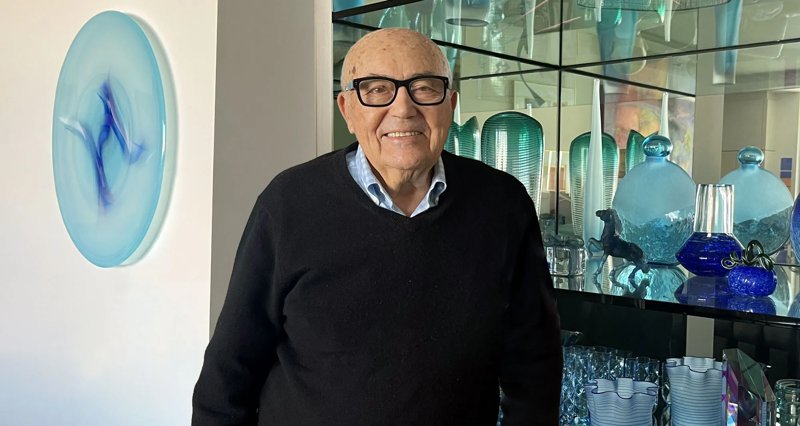
Qualcomm was founded in 1985 by Irwin Jacobs and Andrew Viterbi.

_(54916855494)_(cropped).jpg/250px-Cristiano_Amon_(President_&_CEOQualcomm)_(54916855494)_(cropped).jpg?utm_source=en.wikipedia.org&utm_campaign=parser&utm_content=thumbnail)

Company profile
researched Aug 2026Qualcomm Incorporated is an American multinational technology corporation headquartered in San Diego, California. It develops and designs technologies for global communications and computing, including mobile networks, smart devices and semiconductors such as mobile processors and artificial intelligence chips. The company holds essential patents for global mobile communication standards including 5G, 4G, CDMA2000, TD-SCDMA and WCDMA.
Product lines include CDMA/WCDMA chipsets, Snapdragon system-on-chip processors, the Dragonwing line aimed at industrial and enterprise embedded AI, edge computing and connectivity applications, plus BREW, OmniTRACS, MediaFLO, QChat, mirasol displays, uiOne, Gobi and Qizx. Qualcomm operates largely under a fabless manufacturing model, and its Snapdragon processors are used in smartphones and other smart devices by multiple manufacturers. Subsidiaries include Airgo Networks, CSR plc, Ikanos Communications, Nuvia, Qualcomm Atheros, SiRF and Arduino. Recent expansion areas include embedded artificial intelligence, automotive, Internet of Things, augmented reality and virtual reality.
As of fiscal 2025 the company reported revenue of $44.28 billion, operating income of $12.36 billion, net income of $5.541 billion, total assets of $50.14 billion and total equity of $21.21 billion, with about 52,000 employees. Cristiano Amon serves as CEO and Mark D. McLaughlin as chairman.
Founding story
Qualcomm was established on July 1, 1985 by seven former Linkabit employees led by Irwin Jacobs; other co-founders were Andrew Viterbi, Franklin Antonio, Adelia Coffman, Andrew Cohen, Klein Gilhousen and Harvey White. The name was derived from "Quality Communications." Jacobs and Viterbi were both former electrical engineering professors who had co-founded Linkabit in 1968 with Leonard Kleinrock, a consulting firm focused on advanced digital communication technologies primarily for government and defense customers; Linkabit was sold to M/A-COM in 1980 and the pair departed in 1985. At Qualcomm, Jacobs became CEO and Viterbi CTO. The company began as a contract research and development center largely serving government and defense projects before shifting toward CDMA research, which it argued offered greater capacity and efficiency than the then industry-preferred TDMA.
Business model
Qualcomm combines licensing of standard-essential wireless patents with sales of semiconductor products designed in-house and manufactured by third parties under a fabless model. In 2000, 39 percent of sales came from CDMA technology, followed by licensing at 22 percent, wireless at 22 percent and other products at 17 percent. Following a 1998-1999 restructuring, the company divested its base station and handset manufacturing businesses to concentrate on higher-margin patents, chipsets, technology development and licensing.
Revenue derives from licensing standard-essential wireless patents and from sales of semiconductor products including chipsets and system-on-chips, supplemented historically by systems such as Omnitracs. Fiscal 2025 revenue was $44.28 billion.
Traction
Fiscal 2025 results included $44.28 billion in revenue, $12.36 billion operating income and $5.541 billion net income, with roughly 52,000 employees. At its June 2026 investor day Qualcomm raised fiscal 2029 targets to $40 billion in non-handset revenue, roughly double its prior goal, including more than $15 billion from data center, with handsets projected to supply about a third of chip revenue.
Latest developments
Qualcomm announced a definitive agreement on June 21, 2026 to acquire AI infrastructure company Modular, disclosed the deal on June 24, 2026, and closed it on July 29, 2026 in an all-stock transaction under which Qualcomm expects to issue up to 19.2 million common shares as a private placement to Modular equity holders. Modular co-founder and CEO Chris Lattner became executive vice president of advanced AI software and platforms, with Mojo, MAX and Modular Cloud continuing as products supported across CPUs, GPUs, NPUs and custom silicon, including hardware Qualcomm does not manufacture. Separately, in November 2024 Bloomberg reported that Qualcomm's interest in a full acquisition of Intel had cooled amid financial and regulatory concerns, with the company instead considering acquiring parts of Intel's business.
▸Full profile — market position, technology, go-to-market, geography, history, risks & controversies
Market position
Qualcomm is a major force in the semiconductor industry and a leader in wireless communication standards, with Snapdragon processors widely used across smartphones and other smart devices, particularly in the Android ecosystem, and a large standard-essential patent portfolio spanning CDMA through 5G. A 2025 report highlighted the company's strength in 'true value' 5G patents. Its scale attracted a rejected $103 billion (later raised to $121 billion) takeover approach from Broadcom, and in 2024 Qualcomm was reported as a potential acquirer of Intel. Positioning in AI accelerators is set against peers including Nvidia and AMD.
Technology
Qualcomm's core technology is code-division multiple access (CDMA), which assigns unique codes so multiple users can share the same frequency band simultaneously, and its successors in 3G, 4G and 5G cellular standards. The company holds standard-essential patents for 5G, 4G, CDMA2000, TD-SCDMA and WCDMA. Its semiconductor portfolio includes the Snapdragon system-on-chip family integrating CPU, GPU and other components; the Scorpion mobile CPU announced in 2005; the first Snapdragon SoC shipments in 2007; a first single-chip mobile phone launched in 1999; a first 5G modem chip announced in 2016 with a prototype demonstrated in 2017 and first 5G antennas in 2018; and millimeter wave and MIMO work. The Dragonwing line targets embedded AI, edge computing and advanced connectivity. Through the Modular acquisition Qualcomm owns the Mojo systems programming language, the MAX inference serving framework and Modular Cloud, a platform for running models across CPUs, GPUs, NPUs and custom silicon without per-accelerator code rewrites.
Go-to-market
Handset and smart device manufacturers licensing patents and buying chipsets, cellular network operators and carriers, and increasingly automotive, robotics, industrial edge, IoT, PC and data center customers. Early Omnitracs customers were trucking companies, including Schneider National.
Geography
Headquartered in San Diego, California, serving customers worldwide, with offices established in Europe, Asia Pacific and the Americas around 2000. By 2001, 65 percent of revenue came from outside the United States, with 35 percent from South Korea.
History
Qualcomm merged with Omninet in 1988 and raised $3.5 million to produce the Omnitracs two-way mobile satellite communications system for trucking companies. Headcount grew from eight employees in 1986 to 620 in 1991, and 1989 revenue reached $32 million, half of it from an Omnitracs contract with Schneider National. Omnitracs profits funded CDMA research; the company designed its first CDMA cellular base station in 1990, signed an agreement with Korea's ETRI in 1991 that preceded Korea adopting CDMA as a national standard, began manufacturing CDMA phones, base stations and chips in 1992, and agreed in May 1993 to supply 36,000 CDMA phones to US West. Operating at a loss through the early 1990s, Qualcomm filed an IPO in September 1991 raising $68 million and raised a further $486 million in 1995 through the sale of 11.5 million shares to fund mass manufacturing. Revenue was $383 million in 1995 and $814 million in 1996. A 1998 restructuring cut 700 jobs and spun off the base station and handset manufacturing businesses; the base station division had been losing $400 million a year. By 2000 the company had 6,300 employees, $3.2 billion in revenue and $670 million in profit, with offices established in Europe, Asia Pacific and the Americas; by 2001, 65 percent of revenue came from outside the United States, 35 percent from South Korea. Paul E. Jacobs became CEO in 2005, refocusing R&D toward the Internet of Things, and Qualcomm acquired Flarion Technologies, an OFDMA wireless broadband developer, the same year. Steven Mollenkopf was named successor in December 2013, broadening focus to automotive, wearables, PCs and data centers. Qualcomm agreed in October 2016 to acquire NXP Semiconductors for $47 billion, gaining U.S. antitrust approval in April 2017 with some standard-essential patents excluded, but the deal ultimately fell through. Broadcom made a $103 billion unsolicited offer for Qualcomm, which was rejected, then pursued a hostile takeover raising its offer to $121 billion. Cristiano Amon became CEO in 2021.
Risks & controversies
Qualcomm has faced legal and regulatory disputes in several countries over patent licensing and competition practices, including antitrust cases brought by authorities in the United States, the European Union and Asia, with penalties reported in China, Europe, Korea and Taiwan, and litigation with manufacturers including Apple. The adoption of CDMA as a 2G standard in North America led to disputes over pricing and access to essential patents. Commentators have questioned the sustainability of its patent enforcement strategy and the degree of diversification away from mobile patents. The planned $47 billion NXP acquisition, though cleared by U.S. antitrust regulators, ultimately collapsed amid U.S.-China trade tensions, and Broadcom's hostile takeover attempt was investigated by regulators. Reported obstacles to an Intel acquisition included Intel's rumored debt of up to $50 billion and expected regulatory scrutiny.
Compiled by commissioned research from 6 cited public sources — announcements, filings, and press listed under research sources below.
Key figures
latest reportedCompany-reported or press-reported figures, each dated to when it was claimed — not independently audited.
Founder mafia
The Qualcomm mafia →142 people who came through Qualcomm went on to found or lead other companies.












Acquisitions · 3
Early investors' stakes continue via these dealsWireless LAN chipsets (ATHR); acquired by Qualcomm in 2011.
Mirasol interferometric modulation display technology for mobile devices (acquired by Qualcomm).
Acquired by Qualcomm (Gabriel II exit).
Timeline · 19
launches, deals, and filingsAnnounced June 24, 2026 under a definitive agreement signed June 21, 2026; Qualcomm expects to issue up to 19.2 million common shares as a private placement to Modular equity holders. Modular CEO Chris Lattner became EVP of advanced AI software and platforms, and Mojo, MAX and Modular Cloud continue as products.
Qualcomm raised fiscal 2029 targets to $40 billion in non-handset revenue, including more than $15 billion from data center, with handsets projected at about a third of chip revenue.
Bloomberg reported that Qualcomm scaled back talks on acquiring Intel over financial and regulatory concerns, including Intel's rumored debt of up to $50 billion, and was instead considering acquiring part of Intel's business.
Broadcom made a $103 billion offer to acquire Qualcomm, which Qualcomm rejected; Broadcom attempted a hostile takeover and raised its offer to $121 billion. The potential acquisition was investigated by regulators.
$103B source ↗
U.S. antitrust regulators approved the deal in April 2017 with some standard-essential patents excluded; the acquisition ultimately fell through amid U.S.-China trade tensions.
$47B source ↗
Mollenkopf said he would expand focus to wireless technology for cars, wearables and other new markets; he took the role in 2014.
Flarion developed wireless broadband Orthogonal Frequency Division Multiple Access (OFDMA) technology.
Succeeded founder Irwin Jacobs and refocused R&D toward Internet of Things projects.
Base station and cell-phone manufacturing businesses were spun off to focus on higher-margin patents and chipsets; the base station division had been losing $400 million a year.
First large-scale manufacturing project for the company.
Agreement with Korea's ETRI preceded Korea adopting CDMA as its national standard.
Qualcomm merged with / acquired Omninet and raised $3.5 million to produce and market the Omnitracs satellite communications system for trucking companies.
$3.5M source ↗
Irwin Jacobs, Andrew Viterbi, Franklin Antonio, Adelia Coffman, Andrew Cohen, Klein Gilhousen and Harvey White founded the company as a contract R&D center for government and defense projects; the name derives from 'Quality Communications.'
Dated company events from announcements, filings, and press; legal rows summarize public dockets and regulator releases.
▸Research sources · 6
primary sources listed
- Qualcomm - Wikipediaen.wikipedia.org · web
6 public sources were cited for this profile; the first-party ones are listed here.
Frequently asked questions
- What does Qualcomm do?
- American semiconductor and wireless technology company behind CDMA, 5G patents and Snapdragon processors.
- Who founded Qualcomm?
- Qualcomm was founded by Irwin Jacobs, Andrew Viterbi in 1985.
- Is Qualcomm publicly traded?
- Yes — Qualcomm trades on NASDAQ under the ticker QCOM.
- Where is Qualcomm headquartered?
- Qualcomm is headquartered in San Diego, US.