 Fundraising Fox
Proxima Fusion
Unicorn · $2.7BMunich, DE · Founded 2023 · 178 employees on LinkedIn · 31 known investors
Find your way into Proxima Fusion
Sign up to see every warm intro you have to Proxima Fusion
- Paths you didn't know you had: your email and LinkedIn already hold routes to the Proxima Fusion team. We find them for you
- 2nd- and 3rd-degree connections: the friend-of-a-friend routes that take hours to manually find through your inbox or LinkedIn
- Answers now, not in days: momentum is everything in a raise. Skip asking around whether someone knows someone
Days of research, done the moment you sign in, with every route ranked by how warm it is.
Proxima develops stellarator fusion power plants designed to deliver clean, grid-ready electricity. The company builds on stellarator research to commercialize fusion energy for global power generation.
Also known as Proxima Fusion GmbH
Founders & leadership
Proxima Fusion was founded in 2023 by Dr. Francesco Sciortino, Dr. Lucio Milanese, Dr. Jorrit Lion, Martin Kubie, and Jonathan Schilling.


Investors · 31

How we know: Balderton Capital's portfolio page · a partner's Signal profile · the VCSheet dataset · research · proximafusion.com · open dataset · 5k.vc investor directory · Not right? Tell us
How we know: Bayern Kapital's portfolio page · press coverage · research · proximafusion.com · open dataset · 5k.vc investor directory · Not right? Tell us

How we know: Burda Principal Investments's portfolio page · press coverage · research · proximafusion.com · open dataset · 5k.vc investor directory · Not right? Tell us

How we know: Cherry Ventures's portfolio page · a partner's Signal profile · press coverage · research · proximafusion.com · open dataset · 5k.vc investor directory · Not right? Tell us

How we know: open dataset · 5k.vc investor directory · Not right? Tell us

How we know: press coverage · the VCSheet dataset · research · proximafusion.com · open dataset · 5k.vc investor directory · Not right? Tell us
How we know: High Tech Gruenderfonds's portfolio page · open dataset · 5k.vc investor directory · Not right? Tell us
How we know: Leitmotif's portfolio page · press coverage · research · proximafusion.com · Not right? Tell us

How we know: Lightspeed Venture Partners's portfolio page · press coverage · research · proximafusion.com · open dataset · 5k.vc investor directory · Not right? Tell us

How we know: a partner's Signal profile · Not right? Tell us
How we know: Teampact.ventures's portfolio page · Not right? Tell us

How we know: Utum [x]'s portfolio page · Not right? Tell us

How we know: UVC Partners's portfolio page · press coverage · the VCSheet dataset · research · proximafusion.com · open dataset · 5k.vc investor directory · Not right? Tell us


How we know: press coverage · research · proximafusion.com · Not right? Tell us
How we know: open dataset · 5k.vc investor directory · Not right? Tell us
How we know: open dataset · 5k.vc investor directory · Not right? Tell us
How we know: research · proximafusion.com · Not right? Tell us

How we know: a partner's Signal profile · open dataset · 5k.vc investor directory · Not right? Tell us
How we know: press coverage · research · proximafusion.com · Not right? Tell us

How we know: a partner's Signal profile · press coverage · the VCSheet dataset · research · proximafusion.com · open dataset · 5k.vc investor directory · Not right? Tell us
Also in the syndicate · 10
Funding
SEC filings, press & company announcements$468M disclosed across 1 of 3 rounds · 2025–2026
- $468MraisedJul 2026 · 8 sources
East X Ventures (lead), XTX Ventures (lead), Balderton, Bayern Kapital, Brevan Howard Macro Venture, Burda Principal Investments, CDP Venture Capital, Cherry Ventures, DST Global Partners, DTCF, EIC Fund, Elaia, Google, KfW Capital, Leitmotif, Lightspeed, Plural, redalpine, RWE, SPRIND, UVC Partners
Source ↗
Source: company announcements and press reports — follow each round's link for the claim.
Valuation · disclosed
Disclosed eventsSource: SEC prospectus filings, and round valuations the company or its investors disclosed — follow each entry's link for the claim.
Company profile
researched Aug 2026Proxima Fusion is a fusion energy company headquartered in Munich, Germany, developing commercial fusion power plants based on quasi-isodynamic (QI) stellarators using high-temperature superconducting (HTS) magnets. It was the first spin-out from the Max Planck Institute for Plasma Physics (IPP) and builds on the Wendelstein 7-X (W7-X) stellarator programme, working closely with IPP and the Karlsruhe Institute of Technology.
The company's roadmap runs from Stellaris, a peer-reviewed first-of-a-kind commercial stellarator power plant concept published in Fusion Engineering and Design, to the Stellarator Model Coil (SMC), a non-planar HTS demonstration magnet targeted for completion in 2027, then Alpha, a net-energy demonstration stellarator planned for the early 2030s near Munich, and finally a Stellaris power plant intended to deliver fusion electricity to the grid later in the 2030s. Alpha is being pursued in partnership with the state of Bavaria, IPP and RWE, and is supported by the Alpha Alliance, a consortium of more than 50 industrial partners, together with an Industrial Development Board.
Proxima employs around 200 people across engineering, science and operations, with staff recruited from institutions and companies including IPP, MIT, Harvard, Stanford, Cambridge, TUM, EPFL, KIT, SpaceX, Tesla, McLaren and Google X. It operates from Munich with additional offices in Zurich and Oxford, and is pursuing a vertical integration strategy covering HTS cable and magnet production.
Founding story
Proxima Fusion spun out of the Max Planck Institute for Plasma Physics in 2023, the institute's first spin-out. CEO Francesco Sciortino studied at Imperial College and EPFL, completed a PhD in plasma physics at MIT, and coordinated European tokamak research at IPP before shifting to stellarators after 2022 breakthroughs; co-founders include Lucio Milanese (MIT PhD, previously McKinsey senior advisor), Jorrit Lion and Jonathan Schilling (both IPP doctoral researchers), and Martin Kubie (previously McLaren Racing and Wing).
Business model
Proxima is a pre-revenue deep-tech developer financed by venture and strategic equity plus public grants, with a staged hardware roadmap (model coil, demonstrator, power plant) intended to lead to commercial fusion electricity generation. It has raised more than €650 million ($740 million) in under three years, including €95 million in public grants, and is pursuing vertical integration of HTS cable and magnet manufacturing.
Traction
Headcount grew from about 100 employees in September 2025 to roughly 200 in July 2026. The company has secured more than €650 million ($740 million) in total, including €95 million in public grants, published its Stellaris concept in Fusion Engineering and Design, placed industrial purchase orders for HTS magnet hardware, assembled an Alpha Alliance of more than 50 industrial partners, and secured a Bavarian public funding commitment of €400 million toward its roadmap.
Latest developments
On 7 July 2026 Proxima announced a €411 million ($468 million) round at a €2.4 billion ($2.7 billion) valuation, led by XTX Ventures and East X Ventures with RWE and Google as strategic investors; RWE invested €25 million. Proceeds are directed at completing the Stellarator Model Coil, expanding HTS cable and magnet production, and building Alpha near Munich. On 23 July 2026 Ahmed Diallo joined as Head of Global Partnerships, and the company is hiring across engineering, manufacturing and operations at its German, Swiss and UK sites.
▸Full profile — market position, technology, go-to-market, geography, history, risks & controversies
Market position
The company describes itself as Europe's leading and best-funded stellarator/fusion company, positioned against tokamak- and laser-based fusion approaches and framed by investors and press as a European entrant in a race with US and Chinese fusion developers.
Proxima's stated differentiators are its direct lineage from the record-breaking W7-X stellarator at the Max Planck IPP as that institute's first spin-out, its focus on QI-HTS stellarators rather than tokamaks, its simulation-driven and AI-assisted engineering approach, and Stellaris as a peer-reviewed, fully integrated power plant design.
Technology
The company develops quasi-isodynamic stellarators combined with high-temperature superconducting magnets. In QI configurations toroidal plasma currents cancel to zero, which the company states eliminates current-driven instabilities and disruption risk found in tokamaks, while the island divertor heat-exhaust concept demonstrated on W7-AS and W7-X provides exhaust handling. Design work uses StarFinder, a cloud-based stellarator optimization and design framework, alongside simulation- and ML-driven engineering and rapid prototyping. Stellaris, the company's power plant concept, integrates electromagnetic, structural, thermal and neutronics simulations in a single coherent design and uses stronger HTS-enabled magnetic fields to reduce device size relative to earlier stellarator concepts.
Go-to-market
Ultimately electricity markets and utilities: the company works with German energy company RWE on siting a first stellarator fusion power plant at the former nuclear fission site in Gundremmingen, Bavaria.
Geography
Headquartered in Munich, Germany (Flößergasse 2, 81369 München), with offices in Zurich, Switzerland and Oxford, United Kingdom; the Alpha demonstrator is planned near Munich/Garching, Germany, and a first commercial plant site is contemplated at Gundremmingen, Bavaria.
History
W7-X, completed in 2015 by IPP, provided the scientific basis; Proxima spun out of IPP in 2023. In 2024-early 2025 the company published the peer-reviewed Stellaris power plant concept. In September 2025 it extended its Series A by €15 million to €200 million total funding and placed large-scale purchase orders for HTS tape, structural support plates for the Stellarator Model Coil, an in-house cable manufacturing line, and full-size dummy coils and prototype vacuum vessel sections. In 2026 it signed a Memorandum of Understanding with the Free State of Bavaria, RWE and IPP, and in July 2026 announced a €411 million round at a €2.4 billion valuation.
Risks & controversies
Commercial timelines are long and unproven: the roadmap depends on completing the SMC in 2027, demonstrating net energy with Alpha in the early 2030s, and building a grid-connected plant later in the 2030s. Trade commentary places the integrated power plant effort at roughly TRL 3-6 and notes that financing the step to a commercial plant would be a major undertaking, and that the company's mid-2030s grid claims remain to be substantiated. Management has also said part of expected future funding is anticipated from Germany's federal government and the EU.
Compiled by commissioned research from 8 cited public sources — announcements, filings, and press listed under research sources below.
Key figures
latest reportedCompany-reported or press-reported figures, each dated to when it was claimed — not independently audited.
Related companies · 4




Companies working in the same space as Proxima Fusion.
Timeline · 8
launches, deals, and filingsDiallo joined Proxima Fusion with more than two decades of experience in fusion as a research physicist and as a leader shaping U.S. federal fusion programs.
Round led by XTX Ventures and East X Ventures with RWE and Google as strategic investors; RWE invested €25 million. Proceeds fund the Stellarator Model Coil, HTS cable and magnet production expansion, and the Alpha demonstrator.
$468M source ↗
RWE and Proxima agreed to partner on building the first stellarator fusion power plant on the site of a former nuclear fission power plant in Gundremmingen, Bavaria; RWE subsequently became an investor.
Signed approximately three months before the July 2026 round; the Alpha demonstrator project is led by Proxima in partnership with the state of Bavaria, IPP and RWE, with a €400 million public funding commitment from Bavaria toward the roadmap.
Orders for HTS tape supply, manufacturing of structural support plates for the Stellarator Model Coil, an in-house cable manufacturing line, and full-size dummy coils and prototype vacuum vessel sections.
Proxima announced a €15 million Series A extension with new investors CDP Venture Capital, the European Innovation Council Fund and Brevan Howard Macro Venture Fund, bringing total funding to €200 million ($230M).
$17.3M source ↗
Proxima and partners published Stellaris, a peer-reviewed first-of-a-kind commercial stellarator fusion power plant design, in Fusion Engineering and Design.
Proxima Fusion spun out of IPP in 2023 as the institute's first-ever spin-out, to build fusion power plants using QI-HTS stellarators.
Dated company events from announcements, filings, and press; legal rows summarize public dockets and regulator releases.
In the news
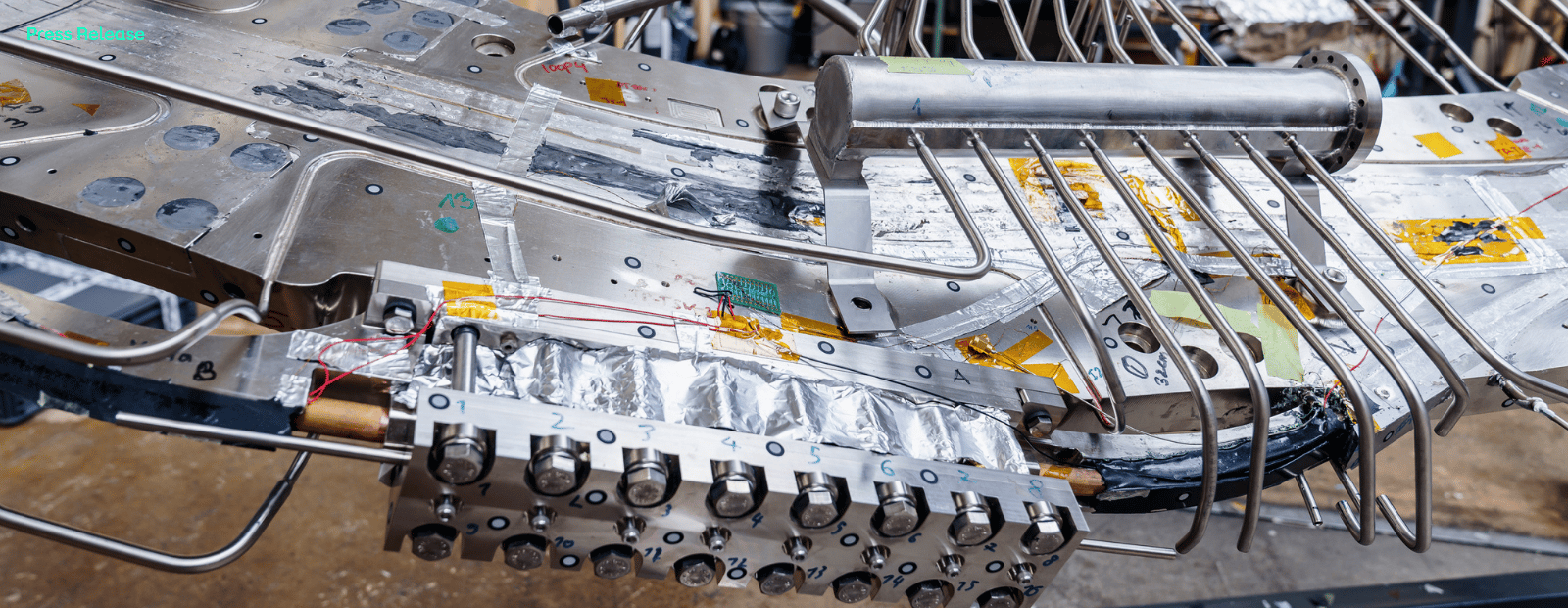 Proxima Fusion Raises €411M to Build Europe's Commercial Fusion Championproximafusion.com · Aug 2026
▸Research sources · 8
primary sources listed
- Proxima Fusionproximafusion.com · web
8 public sources were cited for this profile; the first-party ones are listed here.
Frequently asked questions
- What does Proxima Fusion do?
- Munich-based fusion company developing QI-HTS stellarator power plants, spun out of the Max Planck Institute for Plasma Physics.
- Who founded Proxima Fusion?
- Proxima Fusion was founded by Dr. Francesco Sciortino, Dr. Lucio Milanese, Dr. Jorrit Lion, Martin Kubie, Jonathan Schilling in 2023.
- Who are Proxima Fusion's investors?
- Proxima Fusion's investors include Balderton Capital, Bayern Kapital, Burda Principal Investments, Cherry Ventures, DeepTech & Climate Fonds, Elaia, High Tech Gruenderfonds, Leitmotif and 13 more.
- How much funding has Proxima Fusion raised?
- Proxima Fusion has disclosed $468M raised across 1 of its 3 known rounds.
- Where is Proxima Fusion headquartered?
- Proxima Fusion is headquartered in Munich, DE.