 Fundraising Fox
Pangram Labs
Brooklyn, US · Founded 2023 · 24 employees on LinkedIn · 5 known investors
Find your way into Pangram Labs
Sign up to see every warm intro you have to Pangram Labs
- Paths you didn't know you had: your email and LinkedIn already hold routes to the Pangram Labs team. We find them for you
- 2nd- and 3rd-degree connections: the friend-of-a-friend routes that take hours to manually find through your inbox or LinkedIn
- Answers now, not in days: momentum is everything in a raise. Skip asking around whether someone knows someone
Days of research, done the moment you sign in, with every route ranked by how warm it is.
Pangram Labs builds AI-detection models to identify AI-generated text and mitigate issues caused by generative AI, such as AI-generated spam. Its most recent product is the Pangram 4 model.
Also known as Checkfor.ai · Pangram · Pangram Labs Inc.
Founders & leadership
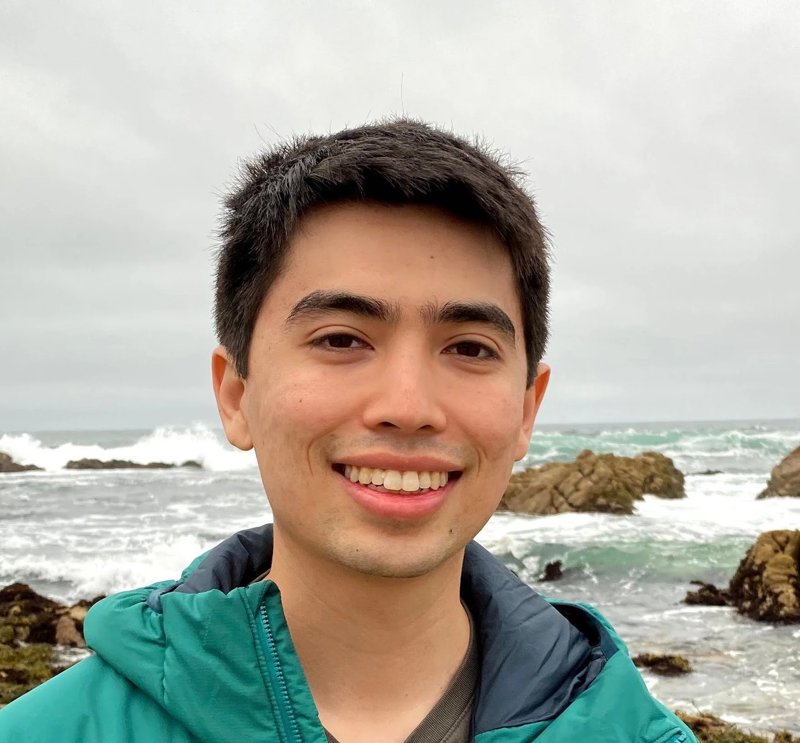
Pangram Labs was founded in 2023 by Bradley and Max Spero.

Investors · 5
How we know: Menlo Ventures's portfolio page · funding news · siliconangle.com · research · en.wikipedia.org · open dataset · 5k.vc investor directory · Not right? Tell us

How we know: ScOp Venture Capital's portfolio page · funding news · press coverage · the VCSheet dataset · research · en.wikipedia.org · Not right? Tell us
How we know: funding news · siliconangle.com · research · en.wikipedia.org · open dataset · 5k.vc investor directory · Not right? Tell us

How we know: funding news · siliconangle.com · research · en.wikipedia.org · Not right? Tell us

How we know: funding news · siliconangle.com · the VCSheet dataset · research · en.wikipedia.org · Not right? Tell us
Funding
SEC filings, press & company announcements$9M disclosed across 1 of 3 rounds · 2025–2026
- $9MraisedJul 2026 · 2 sources
Menlo Ventures (lead), Cadenza, Haystack, ScOp Venture Capital, Script Capital
Source ↗
Source: company announcements and press reports — follow each round's link for the claim.
Company profile
researched Aug 2026Pangram Labs is an AI research lab whose software estimates whether a passage of text was written fully by an AI model, written with AI assistance, or written entirely by a human. The core product is a transformer-based classifier trained on a mixture of human-written documents and LLM-generated text matched to the human samples on topic, length and tone; the company contrasts this approach with detectors that rely on statistical measures such as perplexity and burstiness. Longer documents are split into sections and classified individually so the tool can report what proportion of a document appears AI-generated, and it highlights segments that appear AI-edited rather than fully AI-written. The product also includes a plagiarism checker, supports more than 20 languages, and accepts PDF, DOCX and RTF uploads in batches of up to 100 files.
The company first shipped in October 2023 under the name Checkfor.ai and rebranded to Pangram in 2024. Successive model releases include Pangram 3 (December 2025), which added partial-AI categorization, and Pangram 4 (July 2026), which the company says improves handling of mixed human-AI content and robustness against "humanizer" tools; alongside Pangram 4 the company opened a research preview of an AI image detection model that targets output from generators including GPT Image, Gemini Nano Banana, Midjourney, FLUX and Grok Imagine, plus video models such as Kling, Seedance, Veo and Wan.
Distribution spans a web app, a Chrome extension that scores text inline on X, LinkedIn, Substack, Reddit and Medium and can replay Google Docs writing history, an API for developers, and integrations with Canvas and Google Classroom. Substack added an AI detection feature powered by Pangram in July 2026, and the NewsGuard browser extension integrated it in March 2026.
Founding story
Founded in 2023 in Brooklyn, New York, by AI researchers previously at Tesla and Google: Max Spero (CEO) and Bradley Emi (CTO). The product launched on October 23, 2023.
Business model
Freemium software sold to consumers and institutions: a free tier with a daily word quota, a self-serve paid subscription, and enterprise/institutional contracts and platform integrations, with detection also offered via API and browser extension.
Subscription pricing on the website (free tier of 2,000 words per day; a $20-per-month tier providing 300,000 words per month plus AI plagiarism detection as of August 2026), alongside contracts with universities, publishers and platforms, and in-app purchases through the browser extension.
Traction
Monthly users grew from about 2,700 in June 2025 to about 120,000 in June 2026, with annual revenue up roughly 35x over the same period. Customers and partners include Substack, NewsGuard and Quora, plus contracts with universities and publishers; the Chrome extension reports about 20,000 users and a 4.8 rating from 20 reviews. Approximately 20 employees on record.
Latest developments
In July 2026 Pangram Labs announced $9 million in funding led by Menlo Ventures with Haystack, ScOp Venture Capital, Script Capital and Cadenza participating, bringing total capital raised to nearly $13 million. It simultaneously released Pangram 4, its latest text detection model, and opened a public research preview of an AI image detector. Substack launched a Pangram-powered AI detection feature the same month, and the Chrome extension was last updated in August 2026.
▸Full profile — market position, technology, go-to-market, geography, history, risks & controversies
Market position
Positioned as an accuracy-led alternative to incumbent AI detectors such as GPTZero, Originality.ai, Copyleaks and Turnitin. Independent academic studies at the University of Chicago, the University of Maryland (with UMass Amherst and Microsoft) and Vrije Universiteit Brussel ranked Pangram ahead of the other tools tested, including on AI text processed through humanizers and on master's theses.
Claims of substantially lower false positive rates than competing detectors (roughly 1 in 10,000 to 1 in 24,000), section-level attribution that separates AI-assisted from fully AI-generated writing, robustness to humanizer tools, multilingual coverage, and third-party academic validation rather than open-source or off-the-shelf LLM-based classification.
Technology
A proprietary classifier: a transformer-based neural network trained on known-human text (including material predating 2021) paired with synthetic text generated to match human samples, using diverse datasets, hard negative mining and active learning rather than perplexity/burstiness heuristics. Documents are segmented and scored individually to distinguish fully AI, AI-assisted and human writing. The company benchmarks against 26 named models and reports a false positive rate of 0.0041% (about 1 in 24,000 documents) for Pangram 4 in internal testing, and 99.5% accuracy for the image model in internal benchmarks.
Go-to-market
Self-serve free trial and paid subscriptions on pangram.com plus a Chrome extension (around 20,000 users), combined with enterprise sales to institutions and embedded partnerships with platforms such as Substack and NewsGuard. The company publishes benchmarks and a model card and cites third-party academic evaluations as evidence of accuracy.
Universities, schools and teachers; publishers, media organizations and journalists; content moderation teams and online platforms; enterprises, law firms, recruiters and developers; and individual consumers.
Geography
Headquartered in Brooklyn, New York, United States, serving universities, schools and enterprises internationally with detection across more than 20 languages.
History
Launched in October 2023 under the name Checkfor.ai and rebranded to Pangram in 2024. The company raised seed funding in 2025 in a round led by ScOp Venture Capital, released Pangram 3 in December 2025 with partial-AI classification, and in July 2026 closed a $9 million round led by Menlo Ventures before launching Pangram 4 and an AI image detection research preview.
Risks & controversies
AI detection is widely regarded as a probabilistic signal rather than proof, and several institutions have restricted or discontinued detector use; MIT Sloan and the Mozilla Foundation have highlighted high error rates and bias against non-native English speakers in the category generally. Pangram's accuracy claims rest largely on internal benchmarks, a technical white paper and a small number of favorable third-party studies. Reported failure modes include misclassifying AI text that imitates specific authors (about 10% per Epoch AI), poor performance on rhyming, repetitive or archaic AI text (an adversarial set assembled by researcher Alexios Mantzarlis was labelled human 86% of the time), degraded accuracy on newer models and humanized text, higher AI scores after light "AI polishing," and difficulty separating partly from wholly AI-generated documents. The tool has featured in high-profile AI-use accusations: Wall Street Journal editor James Taranto called it a "defamation machine" after three of his writers' articles were flagged, and commentators in Slate and The Atlantic have criticized the resulting "callout" culture and the reputational risk of errors. The New York Times said in August 2026 that Pangram excels at text but is not reliable for AI images.
Compiled by commissioned research from 8 cited public sources — announcements, filings, and press listed under research sources below.
Key figures
latest reportedCompany-reported or press-reported figures, each dated to when it was claimed — not independently audited.
Founder mafia
2 people who came through Pangram Labs went on to found or lead other companies.


Related companies · 5





Companies working in the same space as Pangram Labs.
Timeline · 7
launches, deals, and filingsRound brings total raised to almost $13 million; proceeds earmarked for text detection accuracy and expansion into new modalities starting with images.
$9M source ↗
Pangram 4 text model with a stated internal false positive rate of 0.0041% and improved handling of AI-assisted and humanized text; image detector released as a public research preview at 99.5% internal benchmark accuracy.
First release of the AI text detection software, originally under the name Checkfor.ai.
Dated company events from announcements, filings, and press; legal rows summarize public dockets and regulator releases.
▸Research sources · 8
primary sources listed
- Pangram Labspangram.com · web
8 public sources were cited for this profile; the first-party ones are listed here.
Frequently asked questions
- What does Pangram Labs do?
- Pangram Labs develops classifier-based detection software that identifies AI-generated text and images.
- Who founded Pangram Labs?
- Pangram Labs was founded by Bradley, Max Spero in 2023.
- Who are Pangram Labs's investors?
- Pangram Labs's investors include Menlo Ventures, ScOp Venture Capital, Cadenza, Haystack, Script Capital.
- How much funding has Pangram Labs raised?
- Pangram Labs has disclosed $9M raised across 1 of its 3 known rounds.
- Where is Pangram Labs headquartered?
- Pangram Labs is headquartered in Brooklyn, US.