 Fundraising Fox
OpenArt
San Francisco, US · Founded 2022 · 241 employees on LinkedIn · 7 known investors
Find your way into OpenArt
Sign up to see every warm intro you have to OpenArt
- Paths you didn't know you had: your email and LinkedIn already hold routes to the OpenArt team. We find them for you
- 2nd- and 3rd-degree connections: the friend-of-a-friend routes that take hours to manually find through your inbox or LinkedIn
- Answers now, not in days: momentum is everything in a raise. Skip asking around whether someone knows someone
Days of research, done the moment you sign in, with every route ranked by how warm it is.
OpenArt Worlds is an AI tool that turns a single image or text prompt into a navigable 3D environment, letting users place characters, objects, and lighting and control camera angles. It targets filmmakers, game designers, social media creators, and architects, with export to 3D Gaussian Splat format for tools like Blender and Unreal Engine.
Also known as OpenArt AI
Founders & leadership
OpenArt was founded in 2022 by Coco Mao.
Investors · 7

How we know: Basis Set Ventures's portfolio page · funding news · the VCSheet dataset · research · sacra.com · open dataset · 5k.vc investor directory · Not right? Tell us

How we know: Canaan Partners's portfolio page · research · sacra.com · Not right? Tell us
How we know: CapitalOven's portfolio page · Not right? Tell us
How we know: funding news · research · sacra.com · Not right? Tell us
How we know: FELIX CAPITAL's portfolio page · open dataset · 5k.vc investor directory · Not right? Tell us
How we know: a partner's Signal profile · Not right? Tell us
Funding
SEC filings, press & company announcements- Undisclosed amountSeries AJan 2026Source ↗
Source: company announcements and press reports — follow each round's link for the claim.
Company profile
researched Aug 2026OpenArt operates a browser-based AI creation platform that combines image, video, audio, character and 3D environment generation in a single workspace. Users can generate video from text or reference images at up to 4K and up to 15 seconds per clip, generate and edit images in the same canvas (erase, expand, background swap, restyle, upscale to 4K), build reusable characters from reference images or text briefs for consistency across scenes, produce voiceovers in more than 30 languages with lip sync, add music and sound effects, and generate navigable persistent 3D worlds that can be exported to specialist 3D tools. A chat-driven tool called OpenArt Director handles storyboard layout and shot-by-shot refinement for multi-scene projects, and an MCP/CLI integration lets users generate assets from inside their own AI agents.
The platform aggregates third-party foundation models rather than relying on a single in-house model, exposing video models including Sora 2, Google Veo 3/3.1, Kling 3.0, ByteDance Seedance, WAN, LTX, Pixverse, MiniMax Hailuo and Gemini Omni Flash, and image models including GPT Image 2, Google Nano Banana Pro, Seedream 5.0 and Qwen Image. Preconfigured templates target specific output formats such as short films, music videos, UGC and product ads, film trailers, branding ads, explainers, micro dramas and social clips. Additional utilities include Smart Shot, motion sync, lip sync, video dubbing into 10 languages, VFX masking, relighting, background replacement, image upscaling and character swap.
Earlier iterations of the product were positioned as a platform for AI art enthusiasts built around Stable Diffusion-era generation, prompt sharing and community discovery, with model and character training, sketch-to-image, and educational resources including a ComfyUI academy. Sacra reports the company originally launched as a "Pinterest for AI-generated images and prompts" before evolving into a canvas-based creation and editing tool.
Founding story
OpenArt was founded in 2022 by Coco Mao (CEO) and John Qiao (CTO), both former Google employees, and initially launched as a Pinterest-style destination for AI-generated images and prompts before becoming a canvas-based creation and editing platform. The company's About page describes it as a San Francisco startup founded by ex-Googlers and generative-art enthusiasts, motivated by making art creation accessible beyond trained specialists using technologies such as Stable Diffusion.
Business model
OpenArt sells credit-based subscriptions billed in USD, with a free entry tier and paid plans; Sacra reports three tiers — Essential at $7/month for 4,000 credits, Advanced at $14.50/month for 12,000 credits and Infinite at $28/month for 24,000 credits. Generation actions consume credits at rates that vary by model or tool, and extra credits are sold as add-ons available only to active subscribers, with unused add-on credits rolling over while base monthly credits reset. Higher tiers add parallel generations, custom model fine-tuning and more extensive editing features. A Team plan offers centralized billing and shared assets and models, and the site also markets an enterprise offering. Annual billing is discounted, and refunds are not offered under a stated strict cancellation policy.
Recurring subscription revenue from tiered monthly and annual plans plus one-off/recurring credit add-on purchases; payments accepted via most debit and credit cards, Amazon Pay, Link and Cash App.
Traction
Sacra estimates OpenArt reached $70M ARR in 2025, up from $20M in June 2025 and roughly 7x the $10.5M reported at the end of 2024, with 8M monthly active users, a team of 20, about $3.5M of revenue per employee, and profitability. The company's homepage states the platform is used by more than 10 million creators, brands and studios. Cumulative disclosed funding is $35M.
Latest developments
In January 2026 OpenArt announced a $30M Series A led by Canaan, with Basis Set Ventures and DCM participating, to extend its creative stack toward AI-native virtual characters and storytelling for entertainment and advertising and persistent character-based IP. Recent product additions listed on the site include Seedance 2.5 support with 30-second videos and frame-level editing, Gemini Omni 1.1 with up to 4K output and clip extension, Wan 3.0, MiniMax H3, GPT Image 2.0, multi-language video dubbing with preserved lip sync, OpenArt Worlds, OpenArt VFX, video relighting and background replacement, an Agent Ori assistant, and MCP/CLI access for agent-based generation.
▸Full profile — market position, technology, go-to-market, geography, history, risks & controversies
Market position
OpenArt competes in consumer and prosumer generative visual media, a market extending from image generation into video. Sacra positions it against canvas-based image platforms such as Ideogram, Craiyon and Playground AI, premium and professional suites such as Midjourney and Runway, and foundation-model providers including Stability AI and OpenAI's DALL-E. Its stated differentiators are breadth of modality coverage in one workspace and simplicity for non-technical users. Reported scale includes an estimated $70M ARR in 2025 and 8M monthly active users with a 20-person team, while the company's own site claims more than 10 million creators, brands and studios.
Consolidation of image, video, voice, music, character and 3D world creation in a single canvas, with multiple competing third-party models selectable per generation rather than one proprietary model; character and world persistence for consistency across shots; and low-friction pre-built workflows (sketch-to-image, upscaling, face replacement, templates for ad and film formats) that avoid prompt engineering for non-technical users.
Technology
The platform orchestrates external third-party generative models across modalities — video (Sora 2, Veo 3/3.1, Kling 3.0, Seedance 2.0/2.5, WAN, LTX, MiniMax H3, Gemini Omni Flash, Pixverse), image (GPT Image 2, Nano Banana Pro, Seedream 5.0, Grok Imagine, Qwen Image) and 3D — alongside its own workflow layer. Sacra reports over 100 fine-tuned models and roughly 15 pre-built workflows that remove the need for prompt engineering, and notes that open-source models from Stability AI underpin parts of OpenArt's technology. Proprietary layers include character training for identity consistency, model training for styles, OpenArt Worlds for persistent navigable 3D scene generation, Director for storyboard and shot-level control, motion reference and camera-angle controls, relighting, VFX masking, and audio tooling with voice cloning, multilingual voiceover and lip sync. Outputs include 4K video and WAV/MP3 audio; the service runs in desktop and mobile browsers.
Go-to-market
Self-serve, product-led acquisition through a free tier and paid subscription upgrades. The company relies heavily on SEO, publishing use-case-specific landing pages (for example an "AI fantasy generator" page) to capture organic search demand; Sacra notes this made OpenArt a top-10 result for "AI art generator." Community channels including Discord, tutorials, blog posts and prompt libraries support onboarding and retention, and an MCP/CLI integration extends distribution into third-party agent workflows.
Solo creators, hobbyists, small and medium businesses, brands, agencies and studios producing marketing and entertainment content; early traction came from hobbyists and small businesses making RPG tabletop art, book illustrations, posters and concept art, with later positioning toward creators of short films, music videos, UGC and product ads, micro dramas and social content, plus team and enterprise buyers.
Geography
Headquartered in San Francisco, United States, serving users globally through a browser-based product; subscriptions are billed in USD with no country-specific pricing, and multilingual output is supported with voiceovers in 30+ languages and video dubbing into 10 languages.
History
Founded in 2022 in San Francisco as a prompt- and image-sharing community for AI art, OpenArt raised a $5M seed round in 2023 backed by Basis Set Ventures and DCM Ventures. It found early product-market fit with hobbyists and small businesses making RPG art, illustrations, posters and concept art, then broadened into general image generation and editing with character and model training, and subsequently into video, audio and 3D world generation with tools such as Director, Worlds, VFX, relighting and dubbing. In January 2026 the company announced a $30M Series A led by Canaan with Basis Set Ventures and DCM participating, bringing total funding to $35M. Other investors named include Felix Capital and Hat-trick Capital.
Risks & controversies
The About page states that images shown under Discovery are uploaded directly by users and that image search results may include images crawled from the internet, with a take-down request form provided, indicating exposure to copyright and content-rights claims. The help center documents a strict no-refund cancellation policy, a minimum 10% processing fee on exceptional refunds, and non-rollover of base monthly credits. The platform depends on third-party foundation models from ByteDance, Google, OpenAI, Kuaishou, MiniMax and others for core generation capability, and markets tools such as AI Celebrity Generator and character swap that involve likeness generation. Revenue, user and headcount figures above are third-party estimates rather than company-disclosed financials.
Compiled by commissioned research from 8 cited public sources — announcements, filings, and press listed under research sources below.
Key figures
latest reportedCompany-reported or press-reported figures, each dated to when it was claimed — not independently audited.
Founder mafia
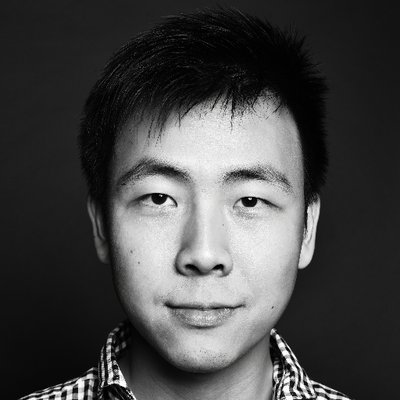
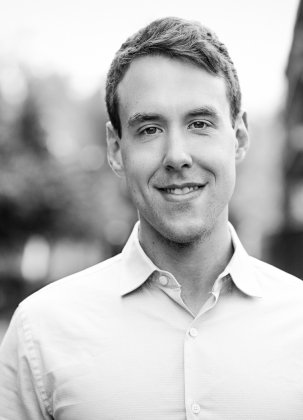
3 people who came through OpenArt went on to found or lead other companies.
Timeline · 6
launches, deals, and filingsOpenArt announced a $30M Series A led by Canaan with participation from Basis Set Ventures and DCM, to build out its creative stack for AI-native virtual characters and storytelling across entertainment and advertising.
$30M source ↗
Additions include masked-region VFX regeneration, video relighting to match a reference look, background replacement, and dubbing video into 10 languages with lip sync preserved.
Tool for laying out storyboards and shaping individual shots through natural-language chat for multi-scene video projects.
Interface for generating images and video from inside a user's AI agent workflow.
Feature that generates persistent, navigable 3D environments from a prompt or reference images, allowing characters and props to be placed inside and the environment exported to external 3D tools.
Dated company events from announcements, filings, and press; legal rows summarize public dockets and regulator releases.
In the news
▸Research sources · 8
primary sources listed
- OpenArtopenart.ai · web
8 public sources were cited for this profile; the first-party ones are listed here.
Frequently asked questions
- What does OpenArt do?
- OpenArt is a San Francisco AI creation platform for generating and editing images, video, audio, characters and 3D worlds.
- Who founded OpenArt?
- OpenArt was founded by Coco Mao in 2022.
- Who are OpenArt's investors?
- OpenArt's investors include Basis Set Ventures, Canaan Partners, CapitalOven, DCM Ventures, FELIX CAPITAL, South Quad, Costanoa Ventures.
- Where is OpenArt headquartered?
- OpenArt is headquartered in San Francisco, US.