 Fundraising Fox
NCX
13 known investors
Find your way into NCX
Sign up to see every warm intro you have to NCX
- Paths you didn't know you had: your email and LinkedIn already hold routes to the NCX team. We find them for you
- 2nd- and 3rd-degree connections: the friend-of-a-friend routes that take hours to manually find through your inbox or LinkedIn
- Answers now, not in days: momentum is everything in a raise. Skip asking around whether someone knows someone
Days of research, done the moment you sign in, with every route ranked by how warm it is.
NCX provides forestry analytics, market access, and expert guidance to family forest owners across the United States, helping them navigate timber sales, carbon credit programs, and conservation opportunities. It offers free tools to assess land potential and connects landowners with foresters to unlock value from their property.
Also known as Natural Capital Exchange · SilviaTerra
Founders & leadership
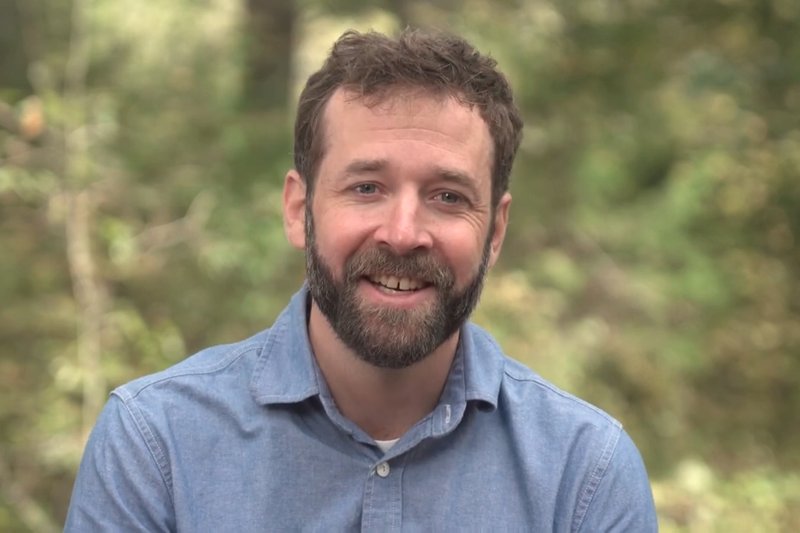

Investors · 13
How we know: Alpha Edison's portfolio page · the VCSheet dataset · Not right? Tell us

How we know: the VCSheet dataset · open dataset · 5k.vc investor directory · Not right? Tell us

How we know: Energize Capital's portfolio page · a partner's Signal profile · funding news · ncx.com · open dataset · 5k.vc investor directory · Not right? Tell us

How we know: Scribble Ventures's portfolio page · ncx.com · the VCSheet dataset · research · ncx.com · Not right? Tell us

How we know: Version One Ventures's portfolio page · Not right? Tell us

How we know: ncx.com · research · ncx.com · Not right? Tell us
How we know: ncx.com · research · ncx.com · open dataset · 5k.vc investor directory · Not right? Tell us

How we know: the VCSheet dataset · Not right? Tell us
How we know: ncx.com · research · ncx.com · Not right? Tell us
Also in the syndicate · 2
Funding
SEC filings, press & company announcements$50M disclosed across 1 of 4 rounds · 2019–2022
- Undisclosed amountSeries-BMar 2022
Energize Ventures (lead), J.P. Morgan, TIME Ventures
Source ↗ - $50MSeries BMar 2022 · 2 sources
Energize Ventures (lead), Clearvision Ventures, Dalus Capital, Intercontinental Exchange (ICE), J.P. Morgan, Scribble Ventures, TIME Ventures
Source ↗
Source: company announcements and press reports — follow each round's link for the claim.
Company profile
researched Aug 2026NCX, formerly known as SilviaTerra and also referred to as the Natural Capital Exchange, is a US company that helps landowners understand and monetize the natural capital value of their property, including timber, carbon, wildlife habitat, renewable energy and water. Landowners create a free account, upload property details and receive an automated assessment that curates a list of programs they qualify for, along with a free consultation with an NCX representative. A programs marketplace lets owners compare payouts and requirements, ask questions of a landowner community, and request calls with program partners to negotiate terms and complete enrollment.
Earlier, NCX operated as a science-driven forest carbon marketplace: it used satellite imagery and machine learning to build a high-resolution forest inventory of the United States (Basemap), then connected forest landowners who deferred timber harvest with corporate buyers of the resulting carbon credits, taking a percentage of the purchase price. Buyers included Microsoft, Rubicon, South Pole, Incyte and Patch. In 2023 the company stepped back from developing its own forest carbon projects and narrowed its focus to helping landowners discover, evaluate and compare natural capital opportunities and connect with third-party project developers and forestry service providers.
The company's current consumer-facing product, LandBook, is a guided conversational tool that helps a landowner record the history of their property, their wishes for it, and practical details such as contacts, plans and boundaries, producing a first-person letter and organized record that can be shared with heirs or future stewards by email. LandBook is positioned as a record rather than a legal or estate-planning document, is private until the owner chooses to send it, and is included at no cost with an NCX account.
Founding story
Co-founders Zack Parisa and Max Nova met as forestry students at Yale about a dozen years before 2022. They spent over a decade working with institutional landowners on natural capital markets and trade-offs between timber income, carbon sequestration and wildlife habitat, initially selling satellite- and machine-learning-derived forest inventory data to federal agencies such as the US Forest Service and conservation groups such as The Nature Conservancy, then built NCX to extend those tools and market access to smaller landowners.
Business model
NCX provides free analytics tools to any US landowner to assess their land and explore program options, then charges for paid implementation services when a landowner acts on opportunities such as timber harvests or conservation programs. In its earlier carbon marketplace model, NCX earned a percentage of the purchase price of carbon offsets transacted between landowners and corporate buyers.
Freemium: free land assessment, program marketplace and LandBook, with revenue from paid implementation services; historically a commission on carbon credit sales through the marketplace.
Traction
The company reports more than 40,000 landowners served, over 30 million acres analyzed and more than $20 million in payments facilitated to landowners. In the exchange's first year, 2,470 landowners with 4.3 million collective acres across 39 states participated, producing 1.13 million MTCO2e of expected climate impact. Headcount grew from 10 to 50 in the year before March 2022, with a stated plan to reach 100 by the end of 2022, followed by layoffs in 2022 and a further 40% team reduction affecting 15 employees in the subsequent announcement.
Latest developments
NCX now markets LandBook, a guided tool that produces a first-person letter and organized property record for heirs, included free with an NCX account and explicitly not a legal or estate-planning product, with content kept private until the owner shares it and not used to train third-party AI models. The company reports cumulative figures of 40,000+ landowners, 30 million+ acres analyzed and $20 million+ in landowner payments.
▸Full profile — market position, technology, go-to-market, geography, history, risks & controversies
Market position
NCX positions itself as an unbiased intermediary for the more than 290 million acres held by US family forest owners, a group it describes as lacking the in-house forestry expertise, software and market access available to large timber companies. It set a record in 2021 for the largest forest carbon project by acreage in the contiguous United States with its first program cycle, and operated in a voluntary carbon market that exceeded $1 billion in 2021, up from $473 million in 2020 and $320 million in 2019.
Free, professional-grade property analytics for smallholders; remote-sensing-based measurement that removes the cost of manual tree counting that had excluded small owners (in McKean County, Pennsylvania only four of about 19,000 landowners, covering 5% of acreage, were paid for forest carbon before NCX); and a stated stance of unbiased advice after exiting project development to avoid conflicts with the developers it refers landowners to.
Technology
Satellite and remote-sensing imagery combined with machine learning to produce a high-resolution forest inventory of the United States, known as Basemap, prototyped with Microsoft's planetary computer after acceptance into Microsoft's AI for Earth program in 2018. The platform assesses an uploaded property in under five minutes to match it to eligible programs, and repeated satellite measurements at the start and end of a contract year verified carbon performance. LandBook applies guided-conversation software to generate a written record grounded in the owner's property data.
Go-to-market
Direct online self-service sign-up for a free landowner account, followed by consultations with NCX representatives and foresters; an educational Learning Hub for landowner content; and a marketplace that routes landowners to program partners and project developers. On the buyer side NCX previously sold carbon credits directly to corporations.
Family forest owners and other private landowners across the United States, from roughly 40-acre parcels to multi-thousand-acre properties; historically also corporate carbon credit buyers pursuing net-zero goals, plus federal agencies and conservation groups that bought forest inventory data, and project developers and forestry service providers.
Geography
United States-focused, serving landowners across at least 39 states, with San Francisco given as the datelined location of its Series B announcement; the 2022 financing was intended to support expansion outside the United States.
History
Operating first as SilviaTerra, the company sold forest inventory data to government and conservation buyers. In 2018 it was accepted into Microsoft's AI for Earth program and used Microsoft's planetary computer to build Basemap, then launched a pilot in Pennsylvania paying landowners to defer timber harvest. Rebranded NCX, it ran its first program cycle in 2021, described as the largest forest carbon project by acreage in the contiguous US, and raised a $50 million Series B announced in March 2022, bringing total funding to $74.4 million. After layoffs in 2022, a further restructuring cut 40% of staff and refocused the company on landowner-facing data, program discovery and referrals rather than developing carbon projects itself. The current product emphasis is the LandBook land-legacy record.
Risks & controversies
NCX operated in the unregulated voluntary carbon offset market, which coverage notes has been used by companies for greenwashing; its CEO has publicly said forest carbon project design and measurement have often failed to deliver real climate impact. Carbon contracts were one-year, trust-based commitments verified by satellite measurement, and the economics could be unfavorable for landowners: a property worth roughly $10,000 in a timber harvest might yield about $600 per year in carbon payments, roughly 17 years to break even. The company also conducted two rounds of layoffs, including a 40% staff reduction, citing a market that did not evolve as quickly as expected, and it exited its own carbon project development business.
Compiled by commissioned research from 8 cited public sources — announcements, filings, and press listed under research sources below.
Key figures
latest reportedCompany-reported or press-reported figures, each dated to when it was claimed — not independently audited.
Timeline · 6
launches, deals, and filingsNCX offers LandBook, a guided conversation tool that produces a first-person letter plus an organized record of contacts, plans and boundaries that landowners can share with heirs; it is included free with an NCX account.
NCX reduced its team by 40%, affecting 15 employees, and narrowed its focus to helping landowners discover, evaluate and compare natural capital programs, stepping back from developing its own forest carbon projects and instead connecting landowners with third-party project developers and service providers.
NCX announced a $50 million Series B led by Energize Ventures, with J.P. Morgan, Intercontinental Exchange, Dalus Capital, Clearvision Ventures and follow-on from Scribble Ventures and TIME Ventures. Proceeds were earmarked for expansion outside the US and new natural capital markets.
$50M source ↗
Energize Ventures partner Katie McClain joined the NCX board of directors in connection with the Series B.
NCX reported that in 2021 its first program cycle was the largest forest carbon project by acreage in the contiguous United States.
NCX was accepted into Microsoft's AI for Earth program and used Microsoft's planetary computer to prototype and build Basemap, a high-resolution forest inventory of the United States.
Dated company events from announcements, filings, and press; legal rows summarize public dockets and regulator releases.
In the news
▸Research sources · 8
primary sources listed
- NCXncx.com · web
8 public sources were cited for this profile; the first-party ones are listed here.
Frequently asked questions
- What does NCX do?
- NCX gives US family forest owners data tools, market access and forester guidance to earn income from timber, carbon and conservation.
- Who founded NCX?
- NCX was founded by Zack Parisa, Max Nova.
- Who are NCX's investors?
- NCX's investors include Alpha Edison, Climactic, Energize Capital, HAWKTAIL, Scribble Ventures, Third Derivative, Version One Ventures, Clearvision Ventures and 3 more.
- How much funding has NCX raised?
- NCX has disclosed $50M raised across 1 of its 4 known rounds.