 Fundraising Fox
Motorola Solutions
NYSE: MSIIncorporated in Delaware · Public · 4 known investors
Find your way into Motorola Solutions
Sign up to see every warm intro you have to Motorola Solutions
- Paths you didn't know you had: your email and LinkedIn already hold routes to the Motorola Solutions team. We find them for you
- 2nd- and 3rd-degree connections: the friend-of-a-friend routes that take hours to manually find through your inbox or LinkedIn
- Answers now, not in days: momentum is everything in a raise. Skip asking around whether someone knows someone
Days of research, done the moment you sign in, with every route ranked by how warm it is.
Motorola Solutions designs and sells mission-critical safety and security technology systems—including mobile radio networks, video surveillance and access control, and command center software—to public safety agencies, government, defense, and enterprise customers such as schools, hospitals, and businesses across more than 100 countries.
Also known as Galvin Manufacturing Corporation · Motorola Solutions, Inc. · Motorola, Inc. · MSI
Founders & leadership


Investors · 4

How we know: Bonfire Ventures's portfolio page · Not right? Tell us

How we know: Cerity Partners Ventures's portfolio page · Not right? Tell us
Company profile
researched Aug 2026Motorola Solutions, Inc. is an American technology company headquartered in the Heller International Building in Chicago, Illinois, that provides safety and security products and services. It was formed on January 4, 2011, when Motorola, Inc. split into two companies, and is the legal successor to Motorola, Inc.; the former company's mobile phone division was spun off separately as Motorola Mobility, now part of Lenovo. The company trades on the NYSE under the symbol MSI and is a component of the S&P 500.
Its offerings fall into three primary categories: critical communications land mobile radio (LMR) devices and networks; command center technologies that connect voice, video and data feeds; and video security including devices, AI-powered analytics and management tools. It also provides managed services and support through a global network of operations centers. Subsidiaries include Airwave Solutions, Avigilon and Pelco. Reporting is organized into two segments, Products and Systems Integration, and Software and Services.
For 2025 the company reported revenue of US$11.7 billion, operating income of US$3.0 billion, net income of US$2.2 billion, total assets of US$19.4 billion, total equity of US$2.4 billion and 23,000 employees. Greg Brown serves as chairman and CEO.
Founding story
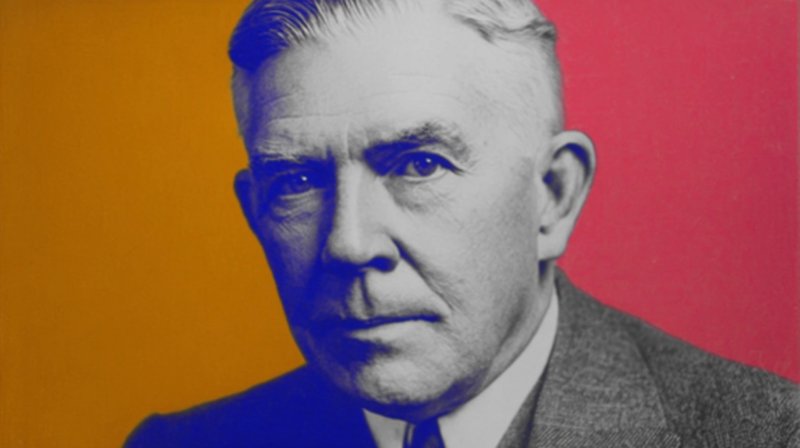
The predecessor business was founded on September 25, 1928 in Chicago, Illinois, by brothers Paul Galvin and Joseph Galvin as Galvin Manufacturing Corporation, at 847 West Harrison Street, to make a battery eliminator allowing battery-powered radios to run on household current. Paul Galvin coined the name "Motorola" for the company's car radio by combining "motor" with the "ola" suffix from "Victrola"; the first Motorola-branded radio was sold on June 23, 1930 to Herbert C. Wall of Fort Wayne, Indiana, for $30. Galvin Manufacturing began selling car-radio receivers to police departments and municipalities in November 1930, and the company was renamed Motorola, Inc. in 1947.
Business model
Motorola Solutions sells mission-critical communications hardware and networks alongside software and recurring services. Its Products and Systems Integration segment covers LMR/P25 systems and devices, body-worn and fixed video, and integration work, while its Software and Services segment covers command center software, video security software, managed and support services, and multi-year service contracts such as five-year LMR services awards and P25 service renewals. Orders accumulate into a reported backlog, which stood at $14.1 billion at the end of Q3 2024 and a record $15.7 billion at the end of Q1 2026.
Revenue comes from product and systems sales (radios, devices, video hardware, network systems) and from software, subscriptions and multi-year managed and support service contracts, including national network operation such as the Airwave network in Great Britain. Software and Services grew 18% year over year in Q1 2026 while Products and Systems Integration grew 1%.
Traction
Q3 2024 sales were $2.8 billion, up 9% year over year, with GAAP EPS of $3.29, non-GAAP EPS of $3.74, GAAP operating margin of 25.5%, operating cash flow of $759 million and free cash flow of $702 million. Q1 2026 sales were $2.7 billion, up 7%, with GAAP EPS of $2.18, non-GAAP EPS of $3.37, GAAP operating margin of 19.3%, non-GAAP operating margin of 28.8%, operating cash flow of $451 million and record Q1 backlog of $15.7 billion. Full-year 2026 revenue guidance was raised to approximately $12.8 billion with non-GAAP EPS of $16.87-$16.99.
Latest developments
In Q1 2026 (reported May 7, 2026) the company posted sales of $2.7 billion, up 7%, and a record Q1 backlog of $15.7 billion, and raised full-year 2026 guidance to approximately $12.8 billion of revenue. It closed the acquisitions of Exacom, a provider of cloud-native voice and multimedia recording and logging for mission-critical communications, and Hyper, a provider of conversational agentic AI for handling non-emergency calls in PSAPs, for a combined $90 million net of cash acquired, and signed a definitive agreement to buy Bell Canada's LMR networks services business for CAD $675 million (approximately $500 million), expected to close in the fourth quarter of 2026. It repaid $200 million of the $1.5 billion term loans issued to fund the Silvus acquisition, leaving $1.3 billion outstanding, and recorded an increase to the contingent Silvus earnout. In 2025 generative AI was integrated into CommandCentral.
▸Full profile — market position, technology, go-to-market, geography, history, risks & controversies
Market position
Motorola Solutions is a large publicly traded supplier of mission-critical communications, command center software and video security, with 2025 revenue of US$11.7 billion and a backlog of $15.7 billion as of Q1 2026. Its long-standing position in public safety radio dates to the sale of Motorola car-radio receivers to Illinois police departments and municipalities beginning in November 1930.
The company combines mission-critical LMR and P25 networks with command center software and video security under one portfolio, adding AI-driven analytics and cloud-native software through acquisitions, and operates national-scale public safety networks such as Airwave in Great Britain. Its products are judged on uptime, range, interoperability and audio clarity in high-stress emergency conditions.
Technology
Core technologies include P25 and mission-critical LMR voice systems, public safety LTE devices (the LEX700 handheld launched in 2012 combined rugged hardware with public safety LTE, cellular, IP and P25 connectivity), broadband push-to-talk, private LTE and 5G networks, video security cameras with AI-powered analytics, license plate recognition and image analytics, cloud-native voice and multimedia recording, conversational agentic AI for non-emergency call handling in PSAPs, and CommandCentral command center software, into which generative AI was integrated in 2025.
Go-to-market
The company sells directly to government and enterprise customers through large competitively awarded contracts, statewide and federal system orders, and multi-year service renewals, supported by a global network of operations centers for managed and support services. It has also expanded capability and market reach through frequent acquisitions of software, video and analytics companies.
Public safety agencies (police, fire, rescue, ambulance), federal, state, local and international governments, and commercial enterprises. Named customers and awards include the U.S. Navy, the U.S. Federal Government, South Carolina's statewide network, the State of Utah, Maricopa County Sheriff's Office, Denver, Anne Arundel County, the Minnesota Department of Transportation, São Paulo State Government and Paraíba (Brazil), Duke Energy, and more than 300 emergency and public service agencies served by Airwave across England, Scotland and Wales.
Geography
Headquartered in Chicago, Illinois, with operations serving North America and international markets. Airwave Solutions operates the public safety radio network in England, Scotland and Wales; other referenced activity spans Canada (Bell Canada LMR services business, Avigilon), Brazil, North Africa, and Germany, supported by a global network of operations centers.
History
Motorola, Inc. built its research program with FM radio and semiconductor pioneer Dan Noble, produced the hand-held AM SCR-536 radio during World War II, went public in 1943, and was renamed Motorola, Inc. in 1947. A Motorola transceiver carried Neil Armstrong's words from the Moon in 1969; the company demonstrated the first hand-held portable telephone in 1973 under Martin Cooper and introduced the DynaTAC as the first commercial handheld cellular phone in 1983. It also produced microprocessors including the MC6800 (1974) and MC68000 (1980). After losing $4.3 billion from 2007 to 2009, Motorola split on January 4, 2011 into Motorola Solutions (its legal successor, focused on public safety and enterprise security) and Motorola Mobility.
Since the split, Motorola Solutions sold its networks business unit to Nokia Siemens Networks for $975 million in cash (with about 6,900 employees transferring) after settling a trade secrets dispute with Huawei in April 2011, and sold its Enterprise business - including assets of Symbol Technologies and Psion - to Zebra Technologies for $3.45 billion in cash in 2014, transferring roughly 4,500 employees. In August 2015 it received a $1 billion investment from Silver Lake Partners, which was granted two board seats. Acquisitions have included Twisted Pair Solutions (2014), Emergency CallWorks (February 2015), PublicEngines (April 2015), Airwave Solutions (February 2016), Spillman Technologies (November 2016), Interexport SA (March 2017), Kodiak Networks (August 2017), Avigilon and Airbus DS Communications' North American assets (March 2018), VaaS International Holdings (January 2019), Avtec (March 2019), WatchGuard (July 2019), Pelco (2020), Rave Mobile Safety (2022), Noggin (2024), Exacom and Hyper (2026), plus Silvus.
Risks & controversies
In October 2021 the UK Competition and Markets Authority opened a market investigation into the Mobile Radio Network Services market covering Airwave; in 2023 the CMA imposed a legal order implementing a prospective price control (the "Airwave Charge Control"). The Competition Appeal Tribunal dismissed the company's appeal on December 22, 2023, and on February 13, 2024 the company applied to the UK Court of Appeal to hear an appeal of that judgment. The Airwave Charge Control and exit from the Emergency Services Network contract reduced UK Software and Services revenue. In April 2011 Motorola Solutions settled a trade secrets dispute with Huawei Technologies. Since February 2025 U.S. trade actions have imposed new and increased tariffs on imported goods, contributing to an evolving tariff landscape. Historical challenges cited include the Iridium satellite project failure, which followed roughly $5 billion of investment and led to bankruptcy proceedings, and loss of smartphone market share.
Compiled by commissioned research from 7 cited public sources — announcements, filings, and press listed under research sources below.
Key figures
latest reportedCompany-reported or press-reported figures, each dated to when it was claimed — not independently audited.
Founder mafia
The Motorola Solutions mafia →6 people who came through Motorola Solutions went on to found or lead other companies.






Acquisitions · 1
Early investors' stakes continue via these dealsD-Fend Solutions develops radio frequency and cyber-takeover technology to address counter-drone and air defense challenges. The company partners with organizations in the UAS, cybersecurity, and defense sectors to deploy its flagship platform.
▸Research sources · 7
primary sources listed
- History - Motorola Solutions USA - Motorola Solutionsmotorolasolutions.com · web
7 public sources were cited for this profile; the first-party ones are listed here.
Frequently asked questions
- What does Motorola Solutions do?
- Chicago-based public company supplying land mobile radio, video security and command center software to public safety agencies and enterprises.
- Who founded Motorola Solutions?
- Motorola Solutions was founded by Paul Galvin, Joseph Galvin.
- Who are Motorola Solutions's investors?
- Motorola Solutions's investors include Bonfire Ventures, Cerity Partners Ventures, Silver Lake Partners, Verizon Ventures.
- Is Motorola Solutions publicly traded?
- Yes — Motorola Solutions trades on NYSE under the ticker MSI.