 Fundraising Fox
Lingo.dev
YC F24San Francisco, US · Founded 2024 · 7 employees · Hiring · 6 known investors
Find your way into Lingo.dev
Sign up to see every warm intro you have to Lingo.dev
- Paths you didn't know you had: your email and LinkedIn already hold routes to the Lingo.dev team. We find them for you
- 2nd- and 3rd-degree connections: the friend-of-a-friend routes that take hours to manually find through your inbox or LinkedIn
- Answers now, not in days: momentum is everything in a raise. Skip asking around whether someone knows someone
Days of research, done the moment you sign in, with every route ranked by how warm it is.
Lingo.dev provides translation APIs that teams configure with custom glossaries, brand guidelines, language preferences, and quality metrics, retaining context across requests to handle localization at scale for companies like Mistral and Solana.
Also known as Replexica, Inc. · Replexica · lingodotdev
Founders & leadership· Y Combinator alumni (F24)
Lingo.dev was founded in 2024 by Max Prilutskiy and Veronica Prilutskaya.


Investors · 6

How we know: funding news · research · techcrunch.com · initialized.com · Y Combinator's founder network · Not right? Tell us

How we know: Moonfire Ventures's portfolio page · Y Combinator's founder network · Not right? Tell us
How we know: Transpose Platform Management's portfolio page · Y Combinator's founder network · Not right? Tell us

How we know: the Y Combinator directory · funding news · research · techcrunch.com · open dataset · 5k.vc investor directory · Not right? Tell us
How we know: Y Combinator's founder network · Not right? Tell us
Also in the syndicate · 1
Funding
SEC filings, press & company announcements- Undisclosed amountSeedFeb 2025 · 2 sources
Initialized Capital (lead), angel investors, Y Combinator
Source ↗
Source: company announcements and press reports — follow each round's link for the claim.
The YC application· Fall 2024 batch
Alumni Q&A
- How did your company get started? (i.e., How did the founders meet? How did you come up with the idea? How did you decide to be a founder?)
- Founders Veronica and Max met at work eight years ago; Veronica's background is in data science and AI, while Max led a frontend team at Typeform. Having shipped software at startups and enterprises and bootstrapped a SaaS with customers in over 100 countries, they observed that people accountable for localization often could not read the languages they were responsible for, and built Lingo.dev to treat this as a measurement problem rather than a workflow one.
- How did you decide to apply to Y Combinator? What was your experience applying, going through the batch, and fundraising at demo day?
- After landing early customers including Cal.com, the founders applied to top accelerators and chose Y Combinator, citing its record of backing companies at an early stage. During and after the batch they raised $4.2M from Y Combinator, Initialized Capital, and the founders of Supabase and Dependabot.
- How have you kept in touch with the YC community and continued to use YC resources & programs since the batch ended?
- The founders attend YC events, stay active in the private network, and advise other founders on localization and international expansion.
- What's the history of your company from getting started until the present day? What were the big inflection points?
- Founded in December 2023 after winning an AI product competition at Cornell Tech, the company went full-time in February 2024. Its first product translated software on every commit, but the founders pivoted to build a platform around localization managers and engineers, adding localization engines, quality scoring, native integrations, and native-speaker proofreading. To date over 300M words have been processed for teams including Mistral, Solana, SoSafe, and Cal.com; the company is SOC 2 Type II compliant and has raised $4.2M.
- What is the core problem you are solving? Why is this a big problem? What made you decide to work on it?
- The company addresses the gap where teams release software in many languages but the people accountable cannot read most of them, and translation output arrives without a reliable quality measure. Lingo.dev scores every translation before it goes live using standard metrics or user-defined criteria, attributes each low score to a cause (model, translation rule, or missing glossary term), and uses native-speaker corrections to tune its localization engine over time.
- What is your long-term vision? If you truly succeed, what will be different about the world?
- The founders aim to make translation quality a measured quantity rather than an opinion, so teams can report the quality of a given language, how it changed over time, and why, the way they report uptime. The goal is for products to launch in every customer language at the same time as English with owners able to prove the results.
Summarized from the founders' answers on their Y Combinator profile.
Company profile
researched Aug 2026Lingo.dev is a developer-focused localization platform built around what the company calls a "localization engine": a stateful translation API that a team creates once and configures with a glossary, brand voice rules, locale-specific conventions, a ranked chain of model providers with automatic fallback, and AI reviewers that score output per quality dimension. Engines are called from backend code, a CLI, CI/CD pipelines, or an MCP server, and the persisted configuration is attached to every request so terminology remains consistent across locales and releases.
The platform's asynchronous pipeline runs six configurable steps with per-locale failure isolation: LLM source refinement (resolving ambiguous references, normalizing concatenated strings, flagging placeholder issues), context enrichment via cosine similarity over vector embeddings that matches source terms to glossary entries and injects brand voice and locale rules, LLM translation, optional human post-editing by a network of qualified translators managed behind the API, an independent LLM post-review producing boolean tag-preservation checks and percentage fluency scores, and delivery via HMAC-signed webhooks or WebSocket streaming. The company describes an approach it terms retrieval augmented localization (RAL), in which only changed content is re-localized while matching glossary context is retrieved per request; a controlled evaluation across multiple LLM providers and languages on terminology-dense content, scored with GEMBA-MQM against official human reference translations and tested with a paired Wilcoxon signed-rank test with Holm-Bonferroni correction, reported 17-45% fewer terminology errors over 42,000+ paired quality judgments.
Open-source tooling published under the Apache-2.0 license on GitHub includes a CLI that localizes JSON, YAML, markdown, CSV and PO files with a lockfile that tracks already-translated content, a GitHub Action plus GitLab CI/CD and Bitbucket Pipelines support for continuous localization, an MCP server that gives AI coding assistants framework-specific i18n knowledge for Next.js, React Router and TanStack Start, and an early-alpha build-time compiler for React (Next.js App Router and Vite + React) that generates localized variants without translation keys or t() functions. Users can default to a Lingo.dev engine or bring their own LLM from providers including OpenAI, Anthropic, Google, Mistral, OpenRouter and Ollama.
Founding story
Co-founders Veronica Prilutskaya and Max Prilutskiy met six years before the company's YC launch while working together. Prilutskaya has an AI, machine learning and data science background; Prilutskiy has a software engineering background and previously led a frontend team at a European unicorn. Both encountered localization problems firsthand at startups and enterprises and while bootstrapping a SaaS with customers in over 20 countries; they had earlier sold a SaaS startup, Notionlytics, to an undisclosed buyer. Their stated mission is for software to become multilingual from day one with minimal effort.
Business model
Lingo.dev sells localization infrastructure to software teams: customers create and configure localization engines on the platform and consume them through APIs, a CLI, CI/CD integrations and an MCP server. Open-source client tooling on GitHub connects to the commercial platform, and an optional human post-editing layer using the company's network of translators is offered behind the same API. Prospective users can create an engine self-serve or book a demo.
Paid use of the hosted localization engineering platform by software teams, with open-source tooling distributed free under Apache-2.0 as the entry point; an optional human post-editing service is offered as a configurable pipeline step. Specific pricing is not stated in the sources, and the CEO declined to share financial metrics.
Traction
The platform reports over 368 million words processed and states its infrastructure sits behind 200M+ translated words for customers including Mistral, Solana, SoSafe and Cal.com; at the time of its YC launch the figure was 3M+ words. The open-source repository has 5.4k stars and 815 forks across 1,922 commits, with documentation localized into more than 25 languages. Team size is listed as 7 by Y Combinator, while February 2025 coverage cited three employees.
Latest developments
The website shows a weekly shipping cadence, with a recent release enabling translation of Zendesk Help Centers, and reports over 368 million words processed on the platform. The company has published research on retrieval augmented localization and offers an early-alpha build-time compiler for React. Earlier stated roadmap items included using screenshots of application UIs to extract additional context, broader integrations with the modern development stack, more sophisticated brand voice controls, and applied AI research on gender-specific language.
▸Full profile — market position, technology, go-to-market, geography, history, risks & controversies
Market position
Positioned as localization infrastructure for developers rather than a translation vendor or agency workflow, and characterized in press coverage as a "Stripe for app localization." It enters a language-technology market that includes general tools such as Google Translate and ChatGPT and business-facing providers such as DeepL and ElevenLabs, which have reached billion-dollar valuations. The company states its infrastructure sits behind more than 200 million translated words for teams including Mistral, Solana, SoSafe and Cal.com.
Rather than sending each translation request out to an external vendor or a stateless model call, Lingo.dev keeps configuration inside the product so that glossary, brand voice and locale rules are attached to every request, which the company presents as preventing terminology drift between releases. It couples this with published, statistically tested evaluation of retrieval augmented localization, per-dimension automated quality scoring across models for locales no one on staff reads, optional human post-editing behind the API, and developer-native delivery through API, CLI, CI/CD, MCP and a build-time React compiler.
Technology
The core primitive is a stateful translation API whose persisted state includes per-locale-pair glossaries matched by semantic similarity, brand voice and formality profiles, locale conventions for formats and punctuation, ranked model chains with fallback, and independent AI reviewers. Retrieval augmented localization decomposes input, runs similarity search against the glossary and injects only matching terms at inference time, keeping context windows small. Multiple LLM providers (including Anthropic and OpenAI) are orchestrated so that model choice can be tuned by prompt performance or latency requirements. The earlier engine treated code as a structured data format, analyzing UI placement and inferring element purpose, and supports MessageFormat for pluralization and gender-specific phrasing, with context awareness derived from whole localization files.
Go-to-market
Distribution is developer-led: an open-source monorepo on GitHub (5.4k stars, 815 forks) containing the CLI, GitHub Action, MCP server and React compiler funnels users to the hosted platform, supported by a Discord community and multilingual documentation. The website offers self-serve engine creation alongside a demo booking path, and customer stories, published research and third-party endorsements (including from Y Combinator group partner Pete Koomen and Supabase CEO Paul Copplestone) are used as proof points. In the earlier Replexica phase, the product delivered automated pull requests with translations directly into engineering workflows.
Engineering and product teams at software companies that need multilingual products, from small startups to large enterprises. Named customers include Mistral AI, Solana, Cal.com, SoSafe, Captions AI and Papermark; one referenced team automated 36 languages and another localized software into 41 languages.
Geography
Headquartered in San Francisco after relocating from Barcelona, where the company was originally founded. Its product targets international deployment, and its own documentation is published in more than 25 languages.
History
The founders began work on the foundations of the company in 2023, with the first prototype built at a Cornell University hackathon, which produced its first paying customers. The company was founded in Barcelona in December 2023 as Replexica, joined Y Combinator's Fall 2024 batch (primary partner Pete Koomen), rebranded to Lingo.dev in December 2024 and moved its formal home to San Francisco. It closed a $4.2 million seed round in December 2024, announced publicly in February 2025.
Risks & controversies
Coverage notes the product does not yet cover all aspects of localization: cultural differences in colors and symbols are not directly addressed, and metric/imperial conversions must still be handled by developers at the code level. LLM-based processing raises data-privacy considerations, which the company addresses by focusing on front-end interface and marketing content and stating that it does not expect personal data to be sent to it. The team is deliberately small, and the React compiler remains in early alpha.
Compiled by commissioned research from 7 cited public sources — announcements, filings, and press listed under research sources below.
Key figures
latest reportedCompany-reported or press-reported figures, each dated to when it was claimed — not independently audited.
Images
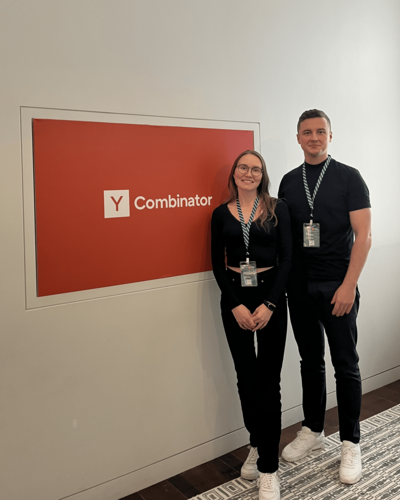
Founder mafia
2 people who came through Lingo.dev went on to found or lead other companies.
Related companies · 9






Companies working in the same space as Lingo.dev.
Timeline · 6
launches, deals, and filingsThe company disclosed a USD 4.2 million seed round led by Initialized Capital with participation from Y Combinator and a number of angel investors; Slator reports the round closed in December 2024.
$4.2M source ↗
TechCrunch describes the platform's translation memories, style-guide-based brand voice configuration, MessageFormat support, a 'context awareness' feature analyzing whole localization files, and a recently released experimental beta feature for idioms, with UI-screenshot-based context extraction in development.
Build-time React localization that detects translatable strings and generates localized variants without translation keys, JSON files, or t() functions; supports Next.js App Router and Vite + React.
The company rebranded from Replexica to Lingo.dev in December 2024 and moved from Barcelona to San Francisco.
The company joined Y Combinator's Fall 2024 program; its primary partner is Pete Koomen.
Lingo.dev was founded in Barcelona in December 2023 under the name Replexica; the first prototype had been developed at a Cornell University hackathon, which led to its first paying customers.
Dated company events from announcements, filings, and press; legal rows summarize public dockets and regulator releases.
Legal entities · 1
corporate structureIn the news
▸Research sources · 7
primary sources listed
- Lingo.devlingo.dev · web
7 public sources were cited for this profile; the first-party ones are listed here.
Frequently asked questions
- What does Lingo.dev do?
- Lingo.dev is a localization engineering platform offering stateful translation APIs configured with glossaries, brand voice and model chains.
- Who founded Lingo.dev?
- Lingo.dev was founded by Max Prilutskiy, Veronica Prilutskaya in 2024.
- Who are Lingo.dev's investors?
- Lingo.dev's investors include Initialized Capital, Moonfire Ventures, Transpose Platform Management, Y Combinator, Tekedia Capital.
- Where is Lingo.dev headquartered?
- Lingo.dev is headquartered in San Francisco, US.