 Fundraising Fox
Lightdash
YC S20London, GB · Founded 2020 · 23 employees · Hiring · 34 known investors
Find your way into Lightdash
Sign up to see every warm intro you have to Lightdash
- Paths you didn't know you had: your email and LinkedIn already hold routes to the Lightdash team. We find them for you
- 2nd- and 3rd-degree connections: the friend-of-a-friend routes that take hours to manually find through your inbox or LinkedIn
- Answers now, not in days: momentum is everything in a raise. Skip asking around whether someone knows someone
Days of research, done the moment you sign in, with every route ranked by how warm it is.
Lightdash is an open-source business intelligence tool that natively supports dbt metrics and analytics workflows. It provides dashboarding, analytics engineering capabilities, and AI-powered analysis features for data teams.
Also known as Telescope Technologies Inc. · Hubble · Telescope Technology Limited
Founders & leadership· Y Combinator alumni (S20)
Lightdash was founded in 2020 by Hamzah Chaudhary and Oliver Laslett.


Investors · 34

How we know: funding news · siliconangle.com · research · lightdash.com · open dataset · 5k.vc investor directory · Y Combinator's founder network · Not right? Tell us

How we know: Moonfire Ventures's portfolio page · a partner's Signal profile · research · lightdash.com · Y Combinator's founder network · Not right? Tell us

How we know: Outlier Grove's portfolio page · Not right? Tell us

How we know: the Y Combinator directory · siliconangle.com · research · lightdash.com · open dataset · 5k.vc investor directory · Not right? Tell us
How we know: Y Combinator's founder network · Not right? Tell us
How we know: Y Combinator's founder network · Not right? Tell us

How we know: Y Combinator's founder network · Not right? Tell us
How we know: Y Combinator's founder network · Not right? Tell us

How we know: Y Combinator's founder network · Not right? Tell us

How we know: open dataset · 5k.vc investor directory · Not right? Tell us
How we know: lightdash.com · Not right? Tell us
How we know: Y Combinator's founder network · Not right? Tell us
Also in the syndicate · 22
Funding
SEC filings, press & company announcements$11M disclosed across 1 of 3 rounds · 2022–2024
- $11MSeries AOct 2024 · 4 sources
Accel (lead), Michael Grinich, Moonfire Ventures, Operator Partners, Shopify Ventures, Shuo Wang, Y Combinator
Source ↗
Source: company announcements and press reports — follow each round's link for the claim.
Company profile
researched Aug 2026Lightdash is a business intelligence platform built on top of dbt (data build tool). Data teams point Lightdash at an existing dbt project, and the metrics and business logic defined there become the semantic layer for exploration, dashboards and reporting. The platform positions itself as both front end and back end: non-technical users such as marketing or finance staff explore data through a visual explorer UI without writing SQL, while technical users define business logic, build customised workflows and manage charts and dashboards as code. Lineage links every data asset back to its definition, and access is controlled through roles, permissions and row-level security.
The product is distributed as an open-source project that teams can self-host, alongside Lightdash Cloud, a fully managed offering. Cloud plans add scheduled reports and alerting, a metrics catalog, usage analytics, smart caching and pre-aggregates, AI agents and MCP support, embedding via iframe and a React SDK, and enterprise controls including SSO/SAML/SCIM 2.0, custom roles, SOC 2 compliance with HIPAA/BAA support, and cloud or on-premise deployment. Lightdash connects to warehouses including BigQuery, Snowflake, Redshift, Databricks, Postgres, Trino, ClickHouse, Athena and DuckDB, syncs with GitHub, GitLab, Azure DevOps and Bitbucket, and integrates with Slack, Teams and Google Sheets.
A significant part of the roadmap is conversational analytics. The AI Analyst, launched in 2024, lets teams ask questions of their data in natural language and receive charts, spreadsheets or dashboards, scoped so each sub-team (for example finance or marketing) only accesses data relevant to it. It runs on the same API and semantic layer as the core product and relies largely on metadata such as metric titles and descriptions rather than raw customer data; customers can choose their LLM provider, including OpenAI or Anthropic, or bring their own model.
Founding story
The founders, both data practitioners, were frustrated by the BI layer of the modern data stack. Hamzah Chaudhary had been a director of product management at an insurtech company, and Oliver Laslett was a machine learning engineer in fintech with a PhD in computational physics. The company went through Y Combinator's Summer 2020 batch under the name Hubble, originally running tests against customers' data warehouses to detect data quality issues. Finding those metrics were most useful when embedded in BI tools, Chaudhary pivoted the product and brand to Lightdash in 2021, beginning work in May 2021 on an open-source tool to visualise dbt projects and hold business logic in dbt.
Business model
Open-core: the self-hosted open-source edition is free and supported only through a community Slack channel, while revenue comes from Lightdash Cloud subscriptions and enterprise agreements. Cloud Pro is listed at $3,000 per month with unlimited users rather than per-seat pricing; Enterprise pricing is negotiated and adds advanced security, deployment flexibility, SLAs and dedicated success support. Add-ons are priced separately, including embedding (pay-as-you-go at $0.05 per load after the first 1,000, or $790 per month for 100,000 loads per Embed Worker), data apps, AI agents at custom pricing, and a HIPAA BAA at $490 per month.
Subscription software: recurring monthly fees for the hosted Cloud Pro tier and custom-priced Enterprise contracts, supplemented by usage-based and add-on charges for embedding, data apps and compliance options.
Traction
By October 2024 the company reported that usage had grown more than 50x over two years, with two queries answered per second and over 80% of daily active users coming from outside the data team. More than 5,000 teams were self-hosting the open-source product, and revenue had grown seven-fold in under twelve months. At the seed announcement in October 2022, a query ran roughly every 30 seconds and customers included Beauty Pie, Accenture, Warner Media and Chief. Y Combinator lists a team size of 23; TechCrunch reported 13 employees split between Europe and the US in October 2024.
Latest developments
Following the Series A, Lightdash made the AI Analyst generally available on Lightdash Cloud and outlined a Data Catalog feature, further integrations and hiring across engineering, marketing, analytics engineering and sales in the US and Europe. In 2025 it launched dashboards as code and a React SDK, opened a London headquarters and put AI Agents into private beta. Current product documentation and pricing describe conversational analytics, AI agents with MCP support, autopilot, a self-improving semantic layer, custom data apps, pre-aggregates and embedding add-ons, with recent blog posts covering a MotherDuck integration.
▸Full profile — market position, technology, go-to-market, geography, history, risks & controversies
Market position
Lightdash describes itself and is described in press coverage as an open-source alternative to Google's Looker, and as an open-source BI platform purpose-built for the modern data stack and dbt. Coverage frames self-serve BI as an approximately $32 billion market opportunity in which legacy platforms silo data and business logic and demand SQL skills. Lightdash's investor Accel characterises the company's approach as making data teams more productive rather than removing them from the workflow.
Native dbt integration and an open semantic layer keep metric definitions in a single source of truth, and the open-source core allows teams to trial and self-host without procurement or infosec review. Pricing is not per seat, with unlimited users on every tier. The developer workflow applies software-engineering practices to analytics, including version control and dashboards-as-code, while the AI Analyst inherits the existing permission and governance model instead of running through a separate query engine.
Technology
Lightdash compiles an organisation's dbt project into a governed semantic layer that drives exploration, dashboards and custom data apps. Charts and dashboards can be managed as code with Git sync, and the platform exposes an API, webhooks, an embedding SDK and MCP support, including an unauthenticated MCP endpoint for querying its documentation. Performance features include smart caching and pre-aggregates. The AI layer reuses the existing query engine and semantic definitions rather than introducing a separate engine, operating mainly on metadata and supporting customer-selected LLM providers.
Go-to-market
Bottom-up, developer-led distribution: the open-source repository and a public Slack community act as the top of funnel, with self-hosted deployments often converting to the paid cloud product as teams scale or need managed infrastructure and security features. A 21-day free trial starting from the first dbt project compile requires no payment details. The company supplements this with automated and hands-on migration tooling from incumbent BI tools, guided onboarding and training sessions, Lightdash University learning resources, a live demo, a blog and newsletter, and a startup programme offered directly and through accelerators and investors. Enterprise motion includes dedicated account management, priority SLAs and on-site migration assistance.
Data teams and analytics engineers at companies already using dbt, plus the wider business users they serve; Lightdash states that dbt is a prerequisite. Named users span consumer brands, media and large enterprise software, including Beauty Pie, Hypebeast, Morning Brew, Workday, Accenture, Warner Media and Chief. Self-hosted open-source adoption skews toward hobbyists, smaller teams and larger organisations running proofs of concept before procurement.
Geography
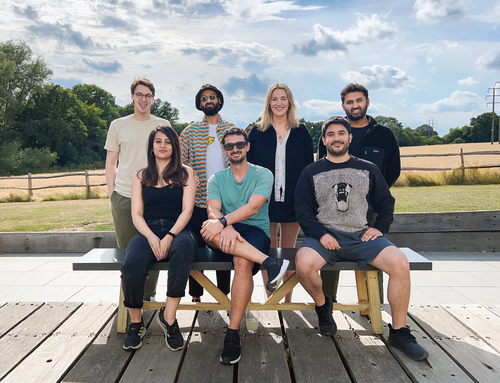
Headquartered in London, United Kingdom, with a London HQ opened in June 2025; Y Combinator lists London as the company location, while one funding report describes the company as founded in San Francisco. Staff are distributed across Europe and the United States, and open engineering roles are advertised as remote across more than 20 European countries and the US. Lightdash Cloud runs on Google Cloud with servers in Europe and North America; Cloud Pro customers choose a European or North American deployment and Enterprise customers can request other regions. Team offsites have been held in Barcelona, the English countryside, Chamonix, Porto and Switzerland.
History
The first Lightdash commit was pushed to GitHub in April 2021, and the open-source BI tool launched on Hacker News in June 2021. In December 2021 Lightdash became the first BI tool to natively support dbt metrics. Lightdash Cloud entered private beta in January 2022, the Slack community launched in June 2022, and in October 2022 the company disclosed $8.4M in funding (a $6M round led by Accel plus a previously unannounced $2.4M round led by Moonfire Ventures) alongside the public beta of Lightdash Cloud. Cloud reached public beta in January 2023 and general availability in January 2024, followed by embedding in public beta in February 2024 and the AI Analyst in private beta in July 2024. An $11M Series A led by Accel was announced in October 2024. In 2025 the company shipped dashboards as code in January, a React SDK in February, and in June opened its London HQ and launched AI Agents in private beta.
Risks & controversies
Lightdash requires an existing dbt project to function, which narrows its addressable market to teams that have adopted dbt. The open-core model means core BI capabilities are freely self-hostable, and the company competes against established BI vendors such as Looker. Reported employee counts differ between sources (13 in October 2024 press coverage versus 23 on the Y Combinator profile), and the company's stated founding location and year vary across sources.
Compiled by commissioned research from 8 cited public sources — announcements, filings, and press listed under research sources below.
Key figures
latest reportedCompany-reported or press-reported figures, each dated to when it was claimed — not independently audited.
Images
Related companies · 10









Companies working in the same space as Lightdash.
Timeline · 17
launches, deals, and filingsSeries A funding to accelerate product development, add technical features and expand developer teams in the US and Europe.
$11M source ↗
Context-specific AI analyst service allowing sub-teams such as finance, marketing or HR to query their own data in natural language and receive curated insights; powered by the existing Lightdash semantic layer and API with customer-selected LLM providers.
Lightdash announced $8.4M raised, comprising a $6M round led by Accel and a previously unannounced $2.4M round led by Moonfire Ventures with Y Combinator and angel investors participating.
$8.4M source ↗
Public beta launch of Lightdash Cloud, the fully managed offering of the open-source product.
The company, which graduated from Y Combinator's Summer 2020 batch as Hubble with a data-quality testing product, pivoted its product and brand to Lightdash in 2021.
Dated company events from announcements, filings, and press; legal rows summarize public dockets and regulator releases.
Legal entities · 2
corporate structureCompanies House · registry record
View on Companies House ↗- Registered name
- LIGHTDASH LTD
- Company number
- 16029755
- Status
- Dissolved
- Company type
- Private limited company
- Incorporated
- 21 Oct 2024
- Dissolved
- 11 Mar 2025
- Registered office
- 16029755 - COMPANIES HOUSE DEFAULT ADDRESS, Cardiff, CF14 8LH
- Nature of business (SIC)
- 47640 — Retail sale of sports goods, fishing gear, camping goods, boats and bicycles
Current officers
- Monika Jarkova — director, appointed 21 Oct 2024
Source: Companies House public register · retrieved 24 Jul 2026. Contains public sector information licensed under the Open Government Licence v3.0.
In the news
▸Research sources · 8
primary sources listed
- Welcome to Lightdash - Lightdashdocs.lightdash.com · web
8 public sources were cited for this profile; the first-party ones are listed here.
Frequently asked questions
- What does Lightdash do?
- Lightdash is an open-source, dbt-native business intelligence platform with cloud hosting, embedding and AI analyst features.
- Who founded Lightdash?
- Lightdash was founded by Hamzah Chaudhary, Oliver Laslett in 2020.
- Who are Lightdash's investors?
- Lightdash's investors include Accel, Moonfire Ventures, Outlier Grove, Y Combinator, Accuro Trustees, Charles Delingpole, Foresite Capital, Illusian and 4 more.
- How much funding has Lightdash raised?
- Lightdash has disclosed $11M raised across 1 of its 3 known rounds.
- Where is Lightdash headquartered?
- Lightdash is headquartered in London, GB.