Fundraising Fox

Interaxon

Toronto · 58 employees on LinkedIn · 7 known investors

Find your way into Interaxon

81 people in our graph share verified history with the Interaxon team — schools, employers, funds. One of them is your warm intro.

Asanka Jayasuriyaunlockedknows Chris Aimone · together at University of Toronto (overlapped)
×9knows the team · via University of Toronto
knows the team · via Interaxon
knows the team · via University of Toronto - University College

Muse is a brain-sensing wearable platform that combines EEG and fNIRS technology to help users improve sleep, manage stress, and enhance cognitive performance through real-time neurofeedback. The company serves consumers seeking measurable mental health and brain training tools backed by clinical research.

Also known as InteraXon · InteraXon Inc. · Muse

Founders & leadership

AGAriel Garten
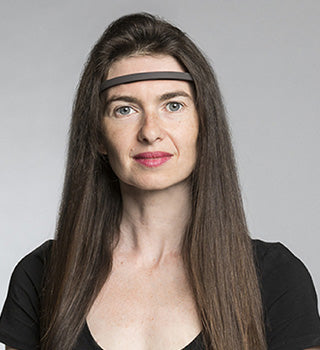
Ariel GarteninCo-founder and Chief Evangelism OfficerAriel Garten studied neuroscience at the University of Toronto and conducted research at the Krembil Neuroscience Centre on Parkinson's disease and neurogenesis, while also working in brain-computer interface technology since 2003. She co-founded Interaxon in 2009 to commercialize brain-sensing technology, and previously trained as a therapist and fashion designer.
CAChris Aimone
Chris AimoneinCo-founder and Chief Innovation OfficerChris Aimone co-founded Interaxon (Muse), a brain-sensing wearable platform that uses EEG and fNIRS technology for neurofeedback. He brings background in art, design, and architecture, and spent a decade collaborating with Dr. Steve Mann on wearable technology, brain-computer interfaces, and augmented reality research.
TCTrevor Coleman
Trevor ColemaninCo-founder
DL
Derek LukeExecutive

Board

JW
Jason WongBoard director
SP
Sid PaquetteBoard director

Investors · 7

Also in the syndicate · 2

BDC CapitalleadExport Development Canadalead

Reported raises · per SEC filings

Form D private placements

$23.5M disclosed across 4 of 5 rounds · 2015–2022

$1.3MraisedFeb 2018 · 2 investors · Other Technology
Rule 506(b)
Officers, directors & promoters on the filing
  • Ariel GartenExecutive Officer
  • Trevor ColemanExecutive Officer, Director
  • Christopher AimoneExecutive Officer
  • Wael MohamedDirector
  • Sid PaquetteDirector
  • Derek LukeExecutive Officer, Director
Offering amount
$1.3M
Amount sold
$1.3M
First sale
Jan 2018
Incorporated
Corporation, Ontario, Canada
Federal exemptions
06b
Full filing on SEC EDGAR ↗
$10.1MraisedNov 2017 · 6 investors · Other Technology
Rule 506(b)
Officers, directors & promoters on the filing
  • Chris AimoneExecutive Officer
  • Wael MohammedDirector
  • Trevor ColemanExecutive Officer, Director
  • Ariel GartenExecutive Officer
  • Sid PaquetteDirector
  • Derek LukeExecutive Officer, Director
Offering amount
$10.1M
Amount sold
$10.1M
Minimum investment
$50K
First sale
Oct 2017
Incorporated
Corporation, Ontario, Canada
Federal exemptions
06b
Full filing on SEC EDGAR ↗
$1.5MraisedOct 2016 · 7 investors · Other Technology
Rule 506(b)
Officers, directors & promoters on the filing
  • Ariel GartenExecutive Officer, Director
  • Chris AimoneExecutive Officer
  • Derek LukeExecutive Officer
  • Jason WongDirector
  • Sid PaquetteDirector
  • Trevor ColemanExecutive Officer, Director
Offering amount
$2M
Amount sold
$1.5M
Minimum investment
$25K
First sale
Sep 2016
Incorporated
Corporation, Ontario, Canada
Federal exemptions
06b
Full filing on SEC EDGAR ↗
$10.6MraisedSep 2015 · 51 investors · Other Technology
Rule 506(c)
Officers, directors & promoters on the filing
  • Trevor ColemanExecutive Officer, Director
  • Chris AimoneDirector
  • Kent ThextonDirector
  • Ariel GartenExecutive Officer, Director
  • Jason WongDirector
Offering amount
$12.7M
Amount sold
$10.6M
Minimum investment
$1K
Proceeds to insiders
$300K
First sale
Apr 2015
Incorporated
Corporation, Ontario, Canada
Federal exemptions
06c
Full filing on SEC EDGAR ↗

Source: SEC EDGAR Form D. Amounts as filed; amended filings shown once at their latest values.

Company profile

researched Aug 2026

InteraXon is a Toronto, Ontario neurotechnology company that develops the Muse brain-sensing headband and its companion mobile applications. The device measures brain activity through electroencephalography (EEG) sensors and translates the signal into real-time audio feedback delivered through headphones, so that relaxed brain states are represented by calmer sounds (such as tweeting birds) and more active states by storm sounds. The headband connects to iOS and Android apps over Bluetooth, and the app provides guided meditation content, session scoring based on time spent in calm, neutral or active states, streaks, historical graphs and gamified rewards.

The current product line comprises Muse 2, which adds heart rate, breath and body-movement tracking to EEG, and Muse S Athena, which combines EEG with functional near-infrared spectroscopy (fNIRS) to measure oxygen flow to the prefrontal cortex, plus PPG and accelerometer sensing. Feature sets are organized around focus (EEG biofeedback, Calm Score, Alpha Peak), mental "strength"/endurance (fNIRS-based Strength Sessions and Brain Recharge Score) and sleep (Sleep Assist, Deep Sleep Boost, Smart Wakeup). A paid Premium tier adds an AI coach called Enso, cognitive-performance tracking, a Brain Recovery Score, more than 500 guided sessions and real-time biofeedback through external audio apps.

Beyond the consumer market, Muse hardware is used as a compact EEG system by research labs; the company cites over 200 peer-reviewed publications and more than 1,000 research labs. Third-party tools built on the headband's Bluetooth Low Energy protocol — including Petal Metrics and the open-source MuseLSL library — provide raw sensor access, Lab Streaming Layer synchronization, Open Sound Control streaming to environments such as TouchDesigner, Max/MSP, Unity and Unreal Engine, and CSV export for analysis in Python, MATLAB and R.

Founding story

The founders' early work centered on brainwave-sensing sensors commercialized out of research with Steve Mann at the University of Toronto, but initial applications lacked a clear use case. While Trevor Coleman and Chris Aimone were building a "cognitive wizard game" that rewarded intuitive play, Aimone proposed using the sensors to measure that state of mind — suggesting "rumble strips for meditation" — which redirected the company toward a meditation headband. InteraXon retooled the hardware and built the Muse app; Ariel Garten's TED talks and a 2013 appearance at South by Southwest brought in backers including Chade-Meng Tan and Ashton Kutcher.

Business model

InteraXon sells Muse headbands direct to consumers through its own online store and, historically, through retailers, and layers a recurring software subscription on top of the hardware. The Muse Premium subscription is priced at $49.99 per year standalone, or bundled with a device for an additional $45; devices are also sold on their own (Muse 2 at $249.99, Muse S Athena at $474.99). The 2018 acquisition of the Meditation Studio app was described by the company as a step to expand its direct-to-consumer SaaS offering and scale subscription revenue.

Revenue comes from hardware sales of the Muse headbands and from annual Premium software subscriptions sold standalone or bundled with devices, following the company's stated strategy of scaling recurring SaaS revenue after acquiring the Meditation Studio app.

Traction

Reported traction includes more than 500,000 users worldwide, over 200 peer-reviewed publications and more than 1,000 research labs using the hardware, and adoption by institutions including NASA for astronaut training. The company reported $3.5 million in Muse revenue in the second half of 2014 and 56 employees in 2015, and was named to Deloitte's 2019 Technology Fast 500 on the strength of revenue growth from the Muse 2 launch and the Meditation Studio acquisition. A 2021 study led by Western University, Cambridge Brain Science, Hatch and Interaxon using Muse S EEG-sleep support technology reported a 20% improvement on the Pittsburgh Sleep Quality Index relative to controls.

Latest developments

The March 2025 launch of Muse S Athena introduced combined EEG and fNIRS sensing, and the current storefront bundles a one-year Premium subscription with the device, unlocking the Enso AI coach, Alpha Peak, Brain Recovery Score, Smart Wakeup, Deep Sleep Boost and Strength Sessions.

Full profile — market position, technology, go-to-market, geography, history, risks & controversies

Market position

Muse is positioned in the consumer brain-health and mindfulness wearable segment alongside competing devices; a 2015 profile named Insight as a competing wearable, and a medical-startup directory lists Oura Health, Butterfly Health Network and Enable Injections as comparables. The company reports adoption by more than 500,000 users and by research institutions and labs worldwide, and its low-cost, quick-setup EEG hardware has become an entry point for academic neuroscience and brain-computer interface prototyping.

The company emphasizes real-time EEG biofeedback rather than stimulation — unlike devices that claim to alter brainwaves, Muse reports brain state back to the user — and the Muse S Athena is described as the first consumer headband to combine EEG with fNIRS for hybrid brain activity and blood-flow monitoring. Other differentiators cited include validated sleep staging against polysomnography, a large peer-reviewed research base, an open third-party developer ecosystem for raw data access, and the combination of a deep guided-meditation content library with biofeedback following the Meditation Studio acquisition.

Technology

Muse uses dry EEG sensors placed across the forehead and behind the ears to capture brainwave activity, with the Muse S Athena model adding functional near-infrared spectroscopy to measure prefrontal blood oxygenation, plus photoplethysmography and accelerometry for heart rate, breath and movement. Signal processing algorithms convert the raw EEG into real-time audio biofeedback and derived scores such as Calm Score, Alpha Peak, Brain Recharge/Recovery Score and sleep staging, which the company states reaches 88-96% accuracy relative to polysomnography. An AI coach, Enso, converts the collected brain data into user-facing guidance. Published work has shown the headband can quantify event-related potentials including N200, P300 and reward positivity, and peer-reviewed validation has assessed its accuracy for spectral analysis and frontal alpha asymmetry.

Go-to-market

InteraXon sells directly through its regionalized online store, which ships to markets across North America, Latin America and the Caribbean, the Middle East, Asia-Pacific and Europe, and runs promotional bundle discounts. Historically the device was also distributed through retailers including Best Buy, Indigo and Fry's. Marketing has relied on founder visibility (TED talks and appearances such as South by Southwest), endorsements from practitioners, published research and institutional adoption, and a content/blog and newsletter program.

Consumers seeking meditation, stress reduction, focus training and sleep improvement — earlier positioning targeted a 30-60 year-old and 35-45 year-old audience wanting to improve cognitive skills and reduce stress — together with academic and institutional researchers who use the headband as a portable EEG system. The company has also pitched Muse into corporate wellness, health care and sports markets.

Geography

Headquartered in Toronto, Ontario, Canada, where marketing and R&D are conducted, with headband manufacturing in China. The online store serves the United States, Canada, the United Kingdom, Germany, France, Spain, Italy, Switzerland and the rest of Europe, Argentina, Chile and the rest of Latin America and the Caribbean, Israel, the United Arab Emirates and the rest of the Middle East, and Thailand, Japan, Singapore, Australia, New Zealand and the rest of Asia and Oceania.

History

Development of the Muse product began in 2003, drawing on sensor research associated with University of Toronto wearables pioneer Steve Mann. InteraXon was founded in 2007 in Toronto by Ariel Garten, Trevor Coleman and Chris Aimone. After several financing rounds, Muse launched publicly in May 2014. The company acquired the Meditation Studio app in July 2018 and launched Muse 2 in October 2018, adding heart rate, breath and movement sensing; it was recognized in Deloitte's 2019 Technology Fast 500. A $9.5 million Series C in August 2022 led by BDC Capital and Export Development Canada funded brain-health platform research and accessibility work, alongside a 2022 VR SDK collaboration, and preceded the March 2025 introduction of the EEG+fNIRS Muse S Athena headband.

Risks & controversies

Press coverage has questioned whether brain-sensing meditation wearables are a durable category or a fad, noting the churn in consumer wearables generally. Reported funding and company figures vary substantially across third-party aggregators, and the Wikipedia entry on the product carries an editorial notice flagging promotional content in its third-party software integration section.

Compiled by commissioned research from 8 cited public sources — announcements, filings, and press listed under research sources below.

Key figures

latest reported
Cumulative capital raised across two financing rounds since 2013Aug 2015$17.2M
EmployeesAug 201556 employees
Guided sessions in Muse PremiumJan 2026500 sessions
Muse 2 price (device only)Jan 2026$249.99
Muse Premium subscription priceJan 2026$49.99
Muse S Athena price (device only)Jan 2026$474.99
Peer-reviewed publications using MuseJan 2026200 publications
Research labs using MuseJan 20261,000 labs
Revenue from Muse, second half of 2014Dec 2014$3.5M
Sleep staging accuracy vs polysomnography (Muse S Athena)Jan 202688-96%
Users worldwideJan 2026500,000 users

Company-reported or press-reported figures, each dated to when it was claimed — not independently audited.

Competitors · 4

by search overlap

Companies competing with Interaxon for the same Google search keywords, organic and paid, via search-intersection analysis.

Timeline · 6

launches, deals, and filings
Mar 2025
Introduction of Muse S Athena

Muse S Athena is described as the first consumer headband combining EEG with functional near-infrared spectroscopy (fNIRS) for hybrid brain activity and blood flow monitoring.

source ↗

Jan 2022
VR SDK collaboration to integrate Muse sensors into virtual reality

source ↗

Jan 2019
Named to Deloitte's 2019 Technology Fast 500

Interaxon was included in Deloitte's Technology Fast 500 ranking of the fastest growing technology, media, telecommunications, life sciences and energy tech companies in North America; the company attributed its revenue growth to the Muse 2 launch and the Meditation Studio app acquisition.

source ↗

Oct 2018
Launch of Muse 2

Muse 2 added measurement of heart rate, breath and body movement alongside brain activity.

source ↗

Jul 2018
Acquired the Meditation Studio app

Interaxon acquired the Meditation Studio app, adding an existing subscriber base, 700+ meditations and 60+ teachers, expanding its direct-to-consumer SaaS offering.

source ↗

May 2014
Muse EEG headband released to the public

InteraXon released the first Muse brain-activity sensing headband, with four EEG sensors and a companion mobile app converting EEG signals into audio feedback. Development of the product began in 2003.

source ↗

Dated company events from announcements, filings, and press; legal rows summarize public dockets and regulator releases.

Research sources · 8

primary sources listed

8 public sources were cited for this profile; the first-party ones are listed here.

Frequently asked questions

What does Interaxon do?
Toronto-based InteraXon makes Muse, an EEG (and fNIRS) brain-sensing headband for meditation, focus training and sleep.
Who founded Interaxon?
Interaxon was founded by Ariel Garten, Chris Aimone, Trevor Coleman.
Who are Interaxon's investors?
Interaxon's investors include Ff Venture Capital, Innovative Solutions Canada, Iter Investments, New Ground Ventures, OMERS Ventures.
How much funding has Interaxon raised?
Interaxon has disclosed $23.5M raised across 4 of its 5 known rounds.
Where is Interaxon headquartered?
Interaxon is headquartered in Toronto.