 Fundraising Fox
Granza Bio
YC W24San Francisco, US · Founded 2024 · 8 employees · 22 known investors
Find your way into Granza Bio
Sign up to see every warm intro you have to Granza Bio
- Paths you didn't know you had: your email and LinkedIn already hold routes to the Granza Bio team. We find them for you
- 2nd- and 3rd-degree connections: the friend-of-a-friend routes that take hours to manually find through your inbox or LinkedIn
- Answers now, not in days: momentum is everything in a raise. Skip asking around whether someone knows someone
Days of research, done the moment you sign in, with every route ranked by how warm it is.
Granza Bio develops immunotherapy treatments leveraging naturally-occurring attack particles that are released from cytotoxic immune cells to target diseases including cancers, autoimmunity, and infections.
Also known as Zyme Therapeutics · Granza Bio Corporation
Founders & leadership· Y Combinator alumni (W24)
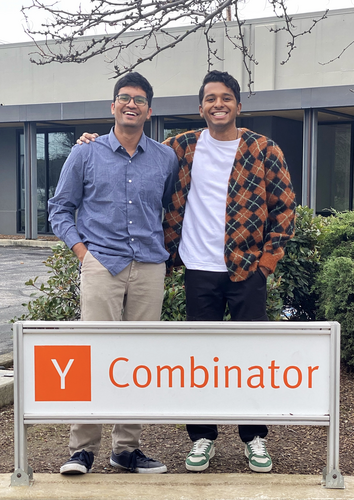
Granza Bio was founded in 2024 by Prof. Dustin, Ashwin Nandakumar, and Ashwin Jainarayanan.


Investors · 22

How we know: Felicis Ventures's portfolio page · a partner's Signal profile · funding news · press coverage · research · biospace.com · open dataset · 5k.vc investor directory · Y Combinator's founder network · Not right? Tell us

How we know: Metaplanet's portfolio page · the VCSheet dataset · research · biospace.com · Y Combinator's founder network · Not right? Tell us
How we know: the VCSheet dataset · Not right? Tell us
How we know: Y Combinator's founder network · pioneerfund.vc · open dataset · 5k.vc investor directory · Not right? Tell us
How we know: research · biospace.com · Y Combinator's founder network · Not right? Tell us

How we know: the Y Combinator directory · press coverage · research · startupintros.com · open dataset · 5k.vc investor directory · Not right? Tell us
How we know: research · biospace.com · Y Combinator's founder network · Not right? Tell us
How we know: research · biospace.com · Y Combinator's founder network · Not right? Tell us

How we know: a partner's Signal profile · the VCSheet dataset · open dataset · 5k.vc investor directory · Y Combinator's founder network · Not right? Tell us
How we know: research · startupintros.com · Not right? Tell us
How we know: the VCSheet dataset · research · biospace.com · Y Combinator's founder network · Not right? Tell us
Also in the syndicate · 11
Funding
SEC filings, press & company announcements$7M disclosed across 1 of 3 rounds · 2024
Source: company announcements and press reports — follow each round's link for the claim.
The YC application· Winter 2024 batch
Inside YC Startups: Granza Bio (Cancer Treatment), Fume (AI Software Engineer), and 9 more | EP 3
Matt Joseph
Company profile
researched Aug 2026Granza Bio is a biotechnology company developing programmable therapeutics for the immune system, based on the discovery of "attack particles" — autonomous killing entities released by cytotoxic immune cells that carry effector proteins such as granzymes and perforins. The discovery originated in the laboratory of co-founder Prof. Michael Dustin, Professor of Molecular Immunology at the University of Oxford and director of research at the Kennedy Institute of Rheumatology. The company positions attack particles as combining the potency of cellular therapies with the off-the-shelf handling of antibody-based drugs, and describes an approach of re-arming exhausted immune cells with newly programmed ammunition.
A central element of the company's work is a delivery platform: a library of engineered precision "shells" designed to encapsulate and direct therapeutic cargo to specific tissues. The platform is described as addressing three problems — carrying varied cargo types (RNAs, proteins, attack particles), reaching a range of tissue sites, and avoiding immunological activation triggered by the delivery vehicle itself — and more broadly the challenges of tropism, immunogenicity and stability. A third-party directory profile adds that the vehicles are designed from non-immunogenic proteins equipped with a targeting receptor and are claimed to offer higher stability than conventional lipid nanoparticles.
In its Y Combinator launch materials, the company reported cancer-killing efficacy for attack particles in brain, ovarian, lung and skin cancer contexts, engineering to spare healthy cells, capability to cross the blood-brain barrier, and suitability for a platform approach spanning cancers, autoimmune diseases and infections. These claims are company-stated and are not accompanied in the available sources by clinical data.
Founding story
The company was founded in 2024 by researchers from the University of Oxford: Dr. Ashwin Nandakumar (CEO), who holds a DPhil in Oncology from Oxford, worked as a Cancer Research UK post-doctoral researcher at Oxford and the Institute of Cancer Research in London, and has set up oncology clinical trials; Dr. Ashwin Jainarayanan (CSO), a Clarendon Scholar with a DPhil in Interdisciplinary Bioscience and research experience on immune-cell-derived attack particles; and Prof. Michael Dustin, whose Oxford lab discovered attack particles. The founders state that after identifying the therapeutic potential of attack particles they found they lacked an effective system for packaging and delivering them to specific tissues, which led to the development of the engineered delivery shell platform.
Business model
Sources describe a therapeutics/platform biotechnology model: developing a proprietary delivery shell platform plus a lead candidate based on attack particles. The company invites partnership and licensing inquiries, indicating openness to partnered or licensed use of the delivery platform alongside internal drug development. No pricing, revenue or commercial terms are disclosed in the sources.
Not disclosed in the available sources; the company is at a pre-clinical/discovery stage with venture funding and solicits partnership and licensing enquiries.
Traction
Traction reported in the sources is financial and organisational rather than clinical: an oversubscribed $7.14M seed round closed in July 2024 led by Felicis and Refactor with Y Combinator and numerous angels; participation in the YC Winter 2024 batch; and a team size of eight. One directory lists cumulative funding of $7.5M across two rounds. No clinical trials, revenue or partnership agreements are documented.
Latest developments
The most recent documented development in the sources is the July 2024 announcement of the $7.14M seed financing to advance delivery of cancer treatments and genetic medicines, alongside the company's Y Combinator Winter 2024 listing, which continued to show the company as active with eight employees.
▸Full profile — market position, technology, go-to-market, geography, history, risks & controversies
Market position
Granza Bio is an early-stage, seed-funded company positioned at the intersection of synthetic biology, immuno-oncology and drug delivery. Sources frame its differentiation against existing immunotherapy and CAR-T cell therapies, which the company describes as effective in some patients but associated with toxicity to healthy tissue, and against conventional lipid nanoparticle delivery on stability grounds. No market share, revenue or comparative competitive data appear in the sources.
Stated differentiators are: a delivery shell platform that simultaneously addresses cargo versatility, tissue tropism, immunogenicity and stability; use of naturally occurring attack particles as an off-the-shelf alternative to cell therapy; claimed sparing of healthy cells and reduced toxicity; blood-brain-barrier penetration; and a founding team spanning fundamental immunology, oncology clinical trial experience and manufacturing scale-up.
Technology
The core technology combines immune-derived "attack particles" — vesicular killing entities released by cytotoxic immune cells containing granzymes and perforins — with engineered protein delivery shells. The shells are described as being built from non-immunogenic proteins with targeting receptors to achieve organ-specific tropism, able to carry proteins, DNA, RNA and attack particles, and engineered to avoid immune activation by the vehicle. Company materials claim high stability, straightforward manufacturability, targeting specificity that spares healthy cells, and the ability to cross the blood-brain barrier.
Go-to-market
Sources indicate a research-stage go-to-market centred on platform development, participation in the Y Combinator Winter 2024 batch and an accompanying public launch post, press outreach around its seed financing, and an invitation for partnership and licensing discussions via company email addresses.
Ultimately patients with cancers, autoimmune disorders and infections, reached via healthcare providers; near-term counterparties include pharmaceutical and genetic-medicine partners interested in the delivery platform for licensing or partnership.
Geography
Headquartered in San Francisco, California, with scientific origins and founder affiliations at the University of Oxford and the Kennedy Institute of Rheumatology in the United Kingdom; the Institute of Cancer Research in London also features in a founder's background.
History
Granza Bio was founded in 2024 out of the University of Oxford and joined Y Combinator's Winter 2024 batch, with Jared Friedman as primary partner. A directory source lists a $500K seed round dated February 2024 involving Pioneer Fund, Romulus Capital and Y Combinator. On 10 July 2024 the company announced the close of an oversubscribed $7.14M seed round led by Felicis and Refactor. The company is headquartered in San Francisco and operates as Granza Bio Corporation.
Risks & controversies
No controversies are reported in the sources. Risk-relevant context: the company is pre-clinical, with efficacy and safety claims drawn from company launch materials rather than published clinical results; funding figures differ slightly between sources ($7.14M in the company press release versus $7.5M total across two rounds in a third-party directory, whose investor list also diverges substantially from the press release). One retrieved source about acquired-and-shut-down startups contains no mention of Granza Bio and was disregarded.
Compiled by commissioned research from 8 cited public sources — announcements, filings, and press listed under research sources below.
Key figures
latest reportedCompany-reported or press-reported figures, each dated to when it was claimed — not independently audited.
Images
Related companies · 7




Companies working in the same space as Granza Bio.
Timeline · 4
launches, deals, and filingsGranza Bio announced the close of an oversubscribed $7.14M seed round led by Felicis and Refactor, with Y Combinator, Metaplanet, Zeno Ventures, Ritual Capital, Pioneer Fund, Oxford Angel Fund, North South Ventures and multiple angel investors participating. Proceeds are directed at advancing its therapeutic delivery platform for cancer treatments and genetic medicines.
$7.1M source ↗
A startup directory lists a $500K seed round with participation from Pioneer Fund, Romulus Capital and Y Combinator.
$500K source ↗
CSO Ashwin Jainarayanan was reported as recently selected as a Schmidt Science Fellow at the time of the seed announcement.
Granza Bio took part in Y Combinator's Winter 2024 batch, with Jared Friedman listed as primary partner, and published a YC launch post describing its cancer-targeting attack particles.
Dated company events from announcements, filings, and press; legal rows summarize public dockets and regulator releases.
Legal entities · 1
corporate structureIn the news
▸Research sources · 8
primary sources listed
- Granza Biogranzabio.com · web
8 public sources were cited for this profile; the first-party ones are listed here.
Frequently asked questions
- What does Granza Bio do?
- Oxford-spinout biotech building a delivery-shell platform for immune-derived "attack particles" targeting cancer and autoimmunity.
- Who founded Granza Bio?
- Granza Bio was founded by Prof. Dustin, Ashwin Nandakumar, Ashwin Jainarayanan in 2024.
- Who are Granza Bio's investors?
- Granza Bio's investors include Felicis Ventures, Metaplanet, Oxonian Ventures, Pioneer, Ritual Capital, Y Combinator, North South Ventures, Oxford Angel Fund and 3 more.
- How much funding has Granza Bio raised?
- Granza Bio has disclosed $7M raised across 1 of its 3 known rounds.
- Where is Granza Bio headquartered?
- Granza Bio is headquartered in San Francisco, US.