 Fundraising Fox
Geodnet
10 known investors
Find your way into Geodnet
Each arrow is one introduction. Sign up to fill in the first one.
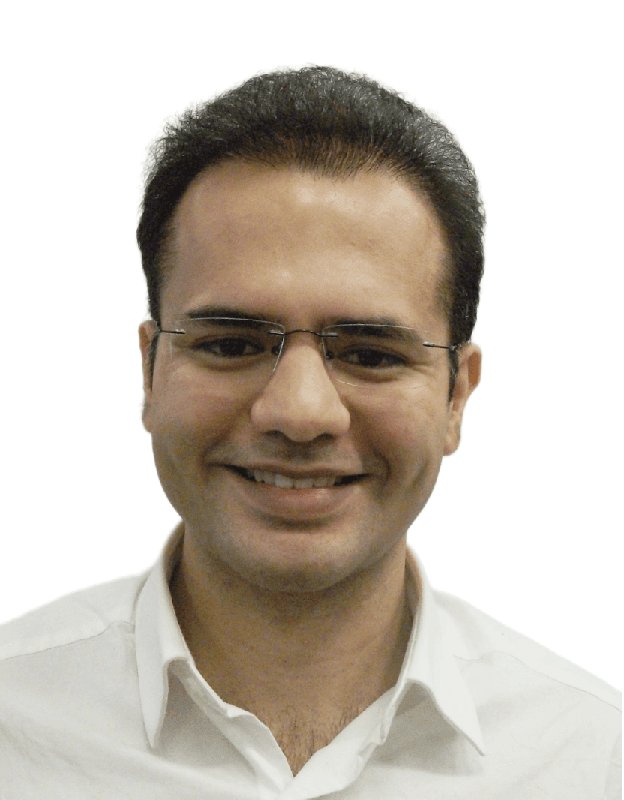
Ask Amit Mehra to introduce you to David Chen
You →Amit · together at Geodnet →David
Sign up to find every way you can get introduced to Geodnet
- Your email: who you already know at Geodnet, and who your contacts know
- 2nd- and 3rd-degree connections: people you know who worked, studied or invested with the Geodnet team
- Your LinkedIn: the connections who can make the intro for you
We rank every route by how warm it is, so you raise on warm intros instead of cold emails.
GEODNET operates a decentralized network of GNSS satellite reference stations ("Satellite Miners") that deliver centimeter-level RTK correction data to robots and devices, correcting GPS navigation errors. It also sells consumer and industrial positioning hardware and location-based crypto reward apps built on its proof-of-location technology.
Also known as GEODNET · GEODNET Foundation · Global Earth Observation Decentralized Network
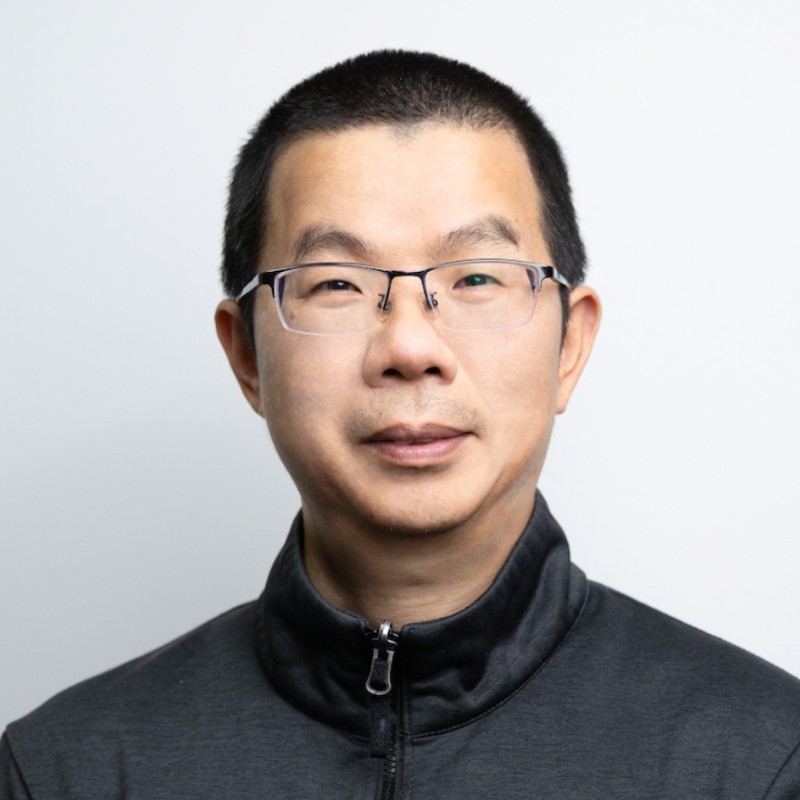
Founders & leadership
Investors · 10

How we know: Borderless Venture's portfolio page · Not right? Tell us
How we know: G1 Ventures's portfolio page · Not right? Tell us

How we know: Multicoin Capital's portfolio page · a partner's Signal profile · funding news · ainvest.com · Not right? Tell us
How we know: the VCSheet dataset · Not right? Tell us
How we know: Parafi General Fund's portfolio page · Not right? Tell us
How we know: funding news · Not right? Tell us
How we know: funding news · Not right? Tell us
How we know: funding news · Not right? Tell us
Company profile
researched Aug 2026GEODNET (Global Earth Observation Decentralized Network) operates a permissionless network of GNSS base stations that collect satellite correction and space weather data worldwide. The stations feed a real-time kinematic (RTK) correction service that enables centimeter-level positioning for drones, autonomous vehicles, robotics, surveying and mapping applications. Station hosts purchase certified hardware — referred to as Satellite Reference Stations or miners — install and register them on the project console, connect a wallet, and earn GEOD tokens for contributing data and uptime.
The project frames the correction problem around three GNSS error sources: clock error, orbit error and ionospheric (space weather) error, with the ionospheric component described as the fastest-changing and least predictable. GEODNET's stated approach is to reach the reference-station density traditionally considered impractical (roughly one station every 20 kilometers) by using token incentives rather than centrally funded infrastructure. Data quality is enforced through protocol requirements: hardware must be certified with capabilities such as triple-frequency, multi-constellation reception, and stations sign their data so consumers can verify it is authentically generated rather than relayed.
Beyond the core correction network, GEODNET offers consumer and field hardware including GEO-PULSE, a car navigation device paired with a Quest App through which users complete tasks to earn GEOD tokens and rewards from partner projects such as IoTeX, and GEO-MEASURE. Reward mechanics include full rewards for miners placed in an empty hex, a Location NFT for the first station sustaining a 98% score for 30 days (which avoids reward splitting), and additional rewards through staking and SuperHexes.
Founding story
Yudan Yi, previously one of the original developers of Topcon's Topnet correction network, worked on one of the largest public correction networks in China before returning to the United States, where he met Mike Horton. The two studied blockchain approaches, including the decentralized wireless project Helium, as a way to fund dense reference-station coverage, then connected with David Chen, a blockchain expert who had been working on similar ideas. The three formed GEODNET in 2021.
Business model
GEODNET sells or certifies GNSS reference station hardware that third-party operators deploy at their own cost, and monetizes the resulting correction data through RTK services and API-based GNSS access for enterprises and developers. Token incentives substitute for capital expenditure on network build-out: operators are compensated in GEOD tokens for contributing data and uptime, while data customers pay for corrections.
Revenue is generated from real-world data services — RTK corrections for precision mapping and surveying, device position verification for IoT and mobility applications, and API-based GNSS enterprise integrations. The project states that 80% of its data revenue is used to buy back and permanently burn GEOD tokens, reducing token supply. The website reports an annual recurring revenue figure alongside network coverage statistics.
Traction
The website publishes live network metrics for deployed miners, countries covered, RTK data usage and current annual recurring revenue, and describes thousands of active GNSS stations worldwide. Enterprise use is cited across surveying, drones, agriculture and autonomous navigation, with industry partners consuming the RTK network.
Latest developments
GEO-PULSE and GEO-MEASURE were named 2026 CES Innovation Award honorees. GEO-PULSE is paired with a Quest App offering token-reward tasks with partner projects such as IoTeX, with additional gaming features indicated as planned.
▸Full profile — market position, technology, go-to-market, geography, history
Market position
GEODNET positions itself as a decentralized alternative to conventional, centrally operated CORS and commercial correction networks, describing itself as the largest decentralized GNSS network and a spatial intelligence platform for physical AI. It cites enterprise adoption in surveying, drones, agriculture and autonomous navigation, and recognition as a 2026 CES Innovation Award honoree for GEO-PULSE and GEO-MEASURE.
Compared with free public correction casters, where users have no visibility into receiver quality, siting or persistence, GEODNET enforces certified hardware capabilities, signed data and incentive-backed uptime requirements, aiming to deliver survey-grade reliability from a permissionless network. Compared with traditional networks that use sparse base stations plus heavier modeling and rover-side requirements, GEODNET pursues high station density funded by token rewards.
Technology
The network consists of GNSS base stations that gather satellite correction and space weather data and stream RTK corrections capable of centimeter- to sub-centimeter-level accuracy. Station hardware must be certified to meet requirements including triple-frequency, multi-constellation reception, and stations cryptographically sign their observations so that data authenticity and non-relay status can be verified. A blockchain-based protocol with a proof-of-accuracy mechanism governs token distribution to station operators. GEOD tokens are issued on Polygon and Solana. Consumer products include the GEO-PULSE navigation device offering lane-level precision, and GEO-MEASURE.
Go-to-market
Growth is driven by recruiting independent station hosts who buy hardware and earn GEOD, expanding coverage hex by hex, combined with direct sale of correction data and API access to industry partners. Consumer-facing distribution includes hardware sales and a Quest App with token-reward tasks tied to partner projects. Tokens are accessible through exchanges and decentralized venues including Gate, MEXC, Uniswap, Raydium and Jupiter.
Surveyors, drone pilots and mapping firms; precision agriculture operators; autonomous vehicle, robotics and physical-AI developers; IoT networks and mobility applications; enterprise developers and platforms consuming GNSS APIs; and, on the supply side, individuals and businesses hosting base stations. Customer testimonials reference rural counties and users seeking survey-grade GNSS without building their own CORS networks or paying recurring subscription fees.
Geography
The GEODNET Foundation is established in Singapore, and the founding team is based in Silicon Valley. Stations are deployed across multiple countries, with the site publishing live counts of miners and countries covered.
History
GEODNET was formed in 2021 by Mike A. Horton, Yudan Yi and David Chen. The GEODNET Foundation, a non-profit organization established in Singapore, initiated the project and coordinates the network, uniting miners, end-users and developers. Horton previously co-founded Crossbow Technology, a MEMS sensor systems company sold to Moog Aerospace in 2011 for close to $50M, and is co-founder and CTO of Anello Photonics. David Chen, a blockchain developer since 2013, previously co-founded Jingtum and MOAC. Yudan Yi holds a Ph.D. in geodesy from The Ohio State University and previously worked at Aceinna, Qianxun SI and Topcon Positioning Systems.
Compiled by commissioned research from 5 cited public sources — announcements, filings, and press listed under research sources below.
Key figures
latest reportedCompany-reported or press-reported figures, each dated to when it was claimed — not independently audited.
Timeline · 3
launches, deals, and filingsGEODNET products GEO-PULSE and GEO-MEASURE recognized as 2026 CES Innovation Award honorees.
GEO-PULSE Quest App users can earn rewards from partner projects including IoTeX.
GEODNET offers GEO-PULSE, a car navigation device providing lane-level precision, paired with a Quest App through which users complete tasks to earn GEOD tokens and rewards from partner projects such as IoTeX.
Dated company events from announcements, filings, and press; legal rows summarize public dockets and regulator releases.
▸Research sources · 5
primary sources listed
- Geodnetgeodnet.com · web
5 public sources were cited for this profile; the first-party ones are listed here.
Frequently asked questions
- What does Geodnet do?
- GEODNET runs a decentralized, token-incentivized network of GNSS reference stations delivering centimeter-level RTK corrections.
- Who founded Geodnet?
- Geodnet was founded by Mike, David Chen.
- Who are Geodnet's investors?
- Geodnet's investors include Borderless Venture, G1 Ventures, Multicoin Capital, NIV, ParaFi Capital, Parafi General Fund, Reverie, CoinFund and 2 more.