 Fundraising Fox
Faraday Pharmaceuticals
DefunctSeattle, US · Founded 2013 · Delaware corporation · 3 known investors
Find your way into Faraday Pharmaceuticals
Sign up to see every warm intro you have to Faraday Pharmaceuticals
- Paths you didn't know you had: your email and LinkedIn already hold routes to the Faraday Pharmaceuticals team. We find them for you
- 2nd- and 3rd-degree connections: the friend-of-a-friend routes that take hours to manually find through your inbox or LinkedIn
- Answers now, not in days: momentum is everything in a raise. Skip asking around whether someone knows someone
Days of research, done the moment you sign in, with every route ranked by how warm it is.
Seattle biotech that developed FDY-5301 for cardiac and skeletal muscle injury; ceased operations in February 2026.
Also known as Faraday Pharmaceuticals, Inc.
Founders & leadership
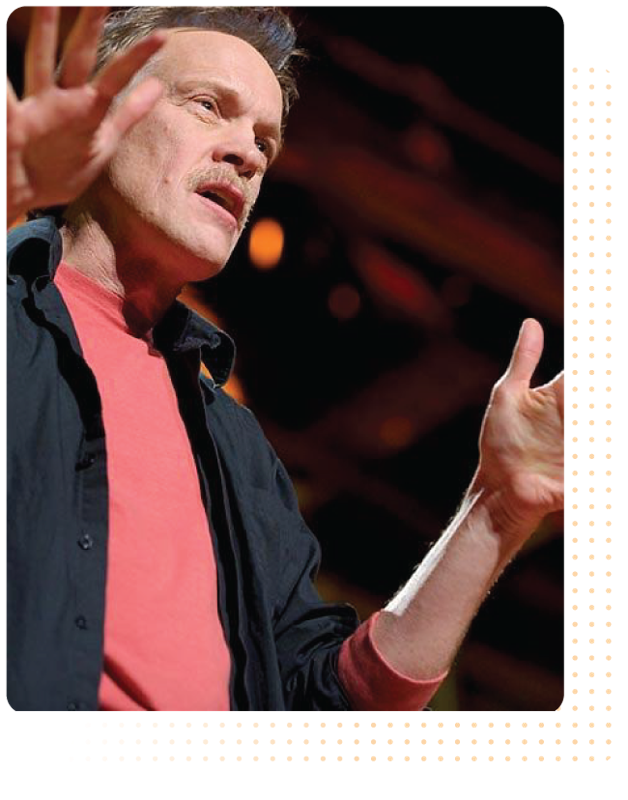
Faraday Pharmaceuticals was founded in 2013 by Mark Roth.
Board
Investors · 3

How we know: ARCH Venture Partners's portfolio page · board seat on SEC Form D · funding news · the VCSheet dataset · open dataset · 5k.vc investor directory · Not right? Tell us

Reported raises · per SEC filings
Form D private placements$115.5M disclosed across 4 rounds · 2014–2022
▶$52.8MraisedNov 2022 · 3 investors · PharmaceuticalsRule 506(b)
- Simon TullochExecutive Officer
- Brian BlackmanExecutive Officer
- Patrick RockExecutive Officer
- Steven GillisDirector
- Stephen HillExecutive Officer, Director
- Terrance McGuireDirector
- Lawrence GozlanDirector
- Mark RothDirector, Promoter
- Ronald KierpaExecutive Officer
- Offering amount
- $102.8M
- Amount sold
- $52.8M
- First sale
- Oct 2022
- Incorporated
- Corporation, Delaware
- Federal exemptions
- 06b
▶$25.1MraisedSep 2019 · 8 investors · PharmaceuticalsRule 506(b)
- Lawrence GozlanDirector
- Brian BlackmanExecutive Officer
- Simon TullochExecutive Officer
- Thomas KingDirector
- Steven GillisDirector
- Mark RothDirector, Promoter
- Stephen HillExecutive Officer, Director
- Offering amount
- $30.1M
- Amount sold
- $25.1M
- First sale
- Aug 2019
- Incorporated
- Corporation, Delaware
- Federal exemptions
- 06b
▶$5MraisedMar 2019 · 7 investors · PharmaceuticalsRule 506(b)
- Steven GillisDirector
- Thomas KingDirector
- Mark RothDirector, Promoter
- Brian BlackmanExecutive Officer
- Stephen HillExecutive Officer, Director
- Simon TullochExecutive Officer
- Offering amount
- $10M
- Amount sold
- $5M
- First sale
- Mar 2019
- Incorporated
- Corporation, Delaware
- Federal exemptions
- 06b
▶$32.6MraisedFeb 2017 · 11 investors · PharmaceuticalsRule 506(b)
- Thomas KingDirector
- Brian BlackmanExecutive Officer
- Paulina HillDirector
- Simon TullochExecutive Officer
- Steven GillisExecutive Officer, Director, Promoter
- Mark RothExecutive Officer, Director, Promoter
- Stephen HillExecutive Officer, Director
- Offering amount
- $32.8M
- Amount sold
- $32.6M
- First sale
- Jul 2014
- Incorporated
- Corporation, Delaware, 2013
- Federal exemptions
- 06b
Source: SEC EDGAR Form D. Amounts as filed; amended filings shown once at their latest values.
Company profile
researched Aug 2026Faraday Pharmaceuticals, Inc. was a Seattle, Washington–based clinical-stage biotechnology company focused on reducing damage to cardiac and skeletal muscle following acute critical illness, with the stated goal of improving patients' quality of life after such events [0][1]. Its work centered on drugs to prevent and treat cardiac and skeletal muscle loss [1]. Third-party pipeline databases classify the company under cardiovascular diseases, nervous system diseases and endocrinology/metabolic disease, with small-molecule drugs as its principal modality [2].
The company's lead asset was FDY-5301, an intravenous formulation containing sodium iodide, an inorganic halide and elemental reducing agent described as acting as a catalytic anti-peroxidant to limit ischemia-reperfusion injury [2]. FDY-5301 reached Phase 3 for acute myocardial infarction; other indications listed include musculoskeletal diseases (inactive) [2]. Faraday is also listed as an active organization on S-oxprenolol, a beta-adrenoceptor antagonist at preclinical stage for amyotrophic lateral sclerosis, originated by Actimed Therapeutics, and is associated in the same database with espindolol [2].
Four clinical trials are associated with the company, including the completed Phase 2A study NCT03470441 in STEMI patients undergoing PCI (started October 2017), the terminated Phase 2 study NCT04430283 in ICU-acquired weakness among major trauma patients (started September 2021), and the completed Phase 3 study NCT04837001 in anterior STEMI patients undergoing primary PCI (started May 2022) [2].
Business model
Faraday operated as a clinical-stage drug developer, advancing proprietary small-molecule candidates through company-sponsored clinical trials rather than selling a marketed product; no revenue-generating commercial operations are described in the sources [0][2].
Traction
FDY-5301 advanced through a 120-patient Phase 2 trial randomized at 20 primary PCI centers, in which the drug was delivered before reopening of the infarct-related artery in 97% of participants, no significant increase in the primary cardiac arrhythmia safety endpoint was observed, and exploratory MRI endpoints at three months showed median final infarct size of 8.5% with 2.0 mg/kg FDY-5301 versus 14.9% with placebo and LV ejection fractions of 63.2% versus 53.9% (the study was not powered for statistical significance) [2]. Results were published in the International Journal of Cardiology in January 2022 [2]. The subsequent Phase 3 trial in anterior STEMI completed in late 2025 but did not meet its primary or secondary endpoints [1].
Latest developments
In February 2026 Faraday announced it had ceased operations and was winding down the business, following the late-2025 Phase 3 failure of FDY-5301, which missed both primary and secondary endpoints in anterior STEMI patients undergoing primary PCI. BioSpace listed the company among six biotechs that shut down or began winding down in the first quarter of 2026. Former CEO Steve Hill became interim CEO of Bitterroot Bio in February 2026. [1]
▸Full profile — market position, technology, go-to-market, geography, risks & controversies
Market position
Faraday was a small private biotech (company size listed as 11–50 or 10–50 employees) working in an area where, according to the Phase 2 publication, no effective therapies exist to limit ischemia-reperfusion injury in STEMI patients [1][2]. Funding-database listings place it among funded biotechnology startups in Seattle, Washington [0].
Technology
The company's lead compound FDY-5301 is an intravenous sodium iodide formulation intended to limit ischemia-reperfusion injury, which is driven by rapid tissue reoxygenation and generation of reactive oxygen species; iodide is described as a ubiquitous inorganic halide and elemental reducing agent that can act as a catalytic anti-peroxidant. In a Phase 2 trial, intravenous administration raised plasma iodide levels roughly 1,000-fold within two minutes. Preclinical work published in Critical Care Medicine in 2018 tested whether iodide reduced heart damage after acute myocardial infarction in rats and pigs. A separate listed asset, S-oxprenolol, is a beta-adrenoceptor antagonist at preclinical stage. [2]
Go-to-market
Patients with acute critical illness at risk of cardiac and skeletal muscle damage, specifically ST-elevation myocardial infarction patients undergoing primary percutaneous coronary intervention and major trauma ICU patients at risk of intensive care unit–acquired weakness, together with the hospitals and interventional cardiology centers treating them [0][2].
Geography
Headquartered in Seattle, Washington, United States; its Phase 2 trial randomized patients across 20 primary PCI centers, with investigators and authors based in multiple countries [0][1][2].
Risks & controversies
The company's central risk materialized when its sole late-stage asset, FDY-5301, failed to meet primary or secondary endpoints in Phase 3, leading to the wind-down of the business; an earlier Phase 2 trial in ICU-acquired weakness was terminated [1][2]. The Phase 2A myocardial infarction study was not powered to detect statistical significance on its exploratory efficacy endpoints [2].
Compiled by commissioned research from 4 cited public sources — announcements, filings, and press listed under research sources below.
Key figures
latest reportedCompany-reported or press-reported figures, each dated to when it was claimed — not independently audited.
Related companies · 1

Companies working in the same space as Faraday Pharmaceuticals.
Timeline · 6
launches, deals, and filingsFaraday announced it had ceased operations and was winding down. The closure followed the failure of lead candidate FDY-5301 in a Phase 3 study. Former CEO Steve Hill subsequently became interim CEO of Bitterroot Bio.
FDY-5301 completed a Phase 3 study late in 2025 assessing its effect on cardiovascular mortality and acute heart failure events in patients with anterior ST-elevation myocardial infarction undergoing an artery-opening procedure; the trial failed to meet its primary or secondary endpoints.
$52.8M source ↗
Faraday-sponsored Phase 3, randomized, double-blind, placebo-controlled, multicenter study of intravenous FDY-5301 in patients with anterior STEMI undergoing pPCI; listed as completed.
Phase 2, randomized, double-blind, placebo-controlled study of intravenous FDY-5301 for prevention and treatment of ICU-acquired weakness in major trauma patients; status listed as terminated.
Phase 2A, randomized, double-blind, placebo-controlled, multi-center study of three dose levels of intravenous FDY-5301 versus placebo in STEMI patients undergoing PCI; completed, with results published in the International Journal of Cardiology in January 2022.
Dated company events from announcements, filings, and press; legal rows summarize public dockets and regulator releases.
Legal entities · 1
corporate structureIn the news
▸Research sources · 4
primary sources listed
- Faraday Pharmaceuticals Funding | FundedIQfundediq.co · web
4 public sources were cited for this profile; the first-party ones are listed here.
Frequently asked questions
- What does Faraday Pharmaceuticals do?
- Seattle biotech that developed FDY-5301 for cardiac and skeletal muscle injury; ceased operations in February 2026.
- Who founded Faraday Pharmaceuticals?
- Faraday Pharmaceuticals was founded by Mark Roth in 2013.
- Who are Faraday Pharmaceuticals's investors?
- Faraday Pharmaceuticals's investors include ARCH Venture Partners, OUP (Osage University Partners), Polaris Partners.
- How much funding has Faraday Pharmaceuticals raised?
- Faraday Pharmaceuticals has disclosed $115.5M raised across 4 rounds.
- Where is Faraday Pharmaceuticals headquartered?
- Faraday Pharmaceuticals is headquartered in Seattle, US.