Exa Labs
Unicorn · $2.2BSan Francisco, US · Founded 2021 · Delaware corporation · 12 known investors
Find your way into Exa Labs
402 people in our graph share verified history with the Exa Labs team — schools, employers, funds. One of them is your warm intro.

AI-native web search and research infrastructure providing neural retrieval, page contents, structured extraction, monitoring and research-agent APIs to developers and enterprises.
Founders & leadership
Exa Labs was founded in 2021 by Jeffrey Wang, William (Will) Bryk, and Jeffrey (Jeff) Wang.


Board

Investors · 12





Also in the syndicate · 4
Funding
SEC filings, press & company announcements$602M disclosed across 4 of 8 rounds · 2021–2026
- $250MSeries CJun 2026
a16z (lead)
Source ↗ - Undisclosed amountSeries CMay 2026Source ↗
- $250MraisedMay 2026 · 3 sources
Andreessen Horowitz (lead)
Source ↗
▶$81.4MraisedMar 2026 · 29 investors · Other TechnologyRule 506(b)
- Guru ChahalDirector
- Peter FentonDirector
- Jeffrey WangDirector
- William BrykExecutive Officer, Director
- Offering amount
- $92M
- Amount sold
- $81.4M
- First sale
- Aug 2025
- Incorporated
- Corporation, Delaware, 2021
- Federal exemptions
- 06b
▶$20.6MraisedMar 2025 · 66 investors · Other TechnologyRule 506(b)
- Jeffrey WangExecutive Officer, Director
- William BrykExecutive Officer, Director
- Guru ChahalDirector
- Offering amount
- $20.6M
- Amount sold
- $20.6M
- First sale
- May 2024
- Incorporated
- Corporation, Delaware, 2021
- Federal exemptions
- 06b
Source: SEC EDGAR Form D. Amounts as filed; amended filings shown once at their latest values.
Valuation · disclosed
Disclosed eventsSource: SEC prospectus filings, and round valuations the company or its investors disclosed — follow each entry's link for the claim.
Company profile
researched Aug 2026Exa Labs Inc. was founded in San Francisco in 2021 as Metaphor Systems by Harvard classmates and close friends William (Will) Bryk and Jeffrey (Jeff) Wang. Bryk studied computer science and physics, did machine-learning research, led Harvard's robotics club and worked as a software engineer at conversational-AI company Cresta; Wang studied computer science and philosophy and worked at Plaid from 2019 to 2022. They entered Y Combinator's Summer 2021 batch with the belief that transformer-based semantic retrieval could produce a better search engine than keyword/ad-optimized Google. The founders bought and assembled a GPU cluster, built crawlers, an index and vector-database infrastructure, and launched their first search product in November 2022—two weeks before ChatGPT. Requests from early AI-app builders for API access changed the primary market from a human search experience to search infrastructure for LLMs and agents. Metaphor rebranded as Exa in early 2024. Exa's central claim is that AI systems require full page content, structured data, lower latency, higher recall and controllable domain/time/category filters rather than a consumer results page optimized for clicks and advertising. It crawls and indexes the web itself instead of simply wrapping Google/Bing, trains specialized embedding/retrieval/highlight models and offers different compute/latency tradeoffs. By May 2026 Exa said its crawlers tracked more than 500bn URLs, more than 5,000 companies and 400,000 developers used the service, and customer logos included Cursor, Cognition, HubSpot, OpenRouter, Monday.com and Sarvam; customers also include private-equity, consulting and Fortune 500 organizations, but those broader claims are not customer-level audited disclosures. Current products include Search API modes from Instant/Fast/Auto to Deep/Deep Reasoning; Contents API for crawling, full text, highlights and structured extraction; Exa Agent for multi-step cited web research and structured outputs; Websets/entity indexes for comprehensive people/company/list building and enrichment; Monitors for recurring change detection; an Answer endpoint; MCP/connectors and more than 50 integrations; and Exa Connect for external data providers. Google Cloud launched Grounding with Exa in private preview and listed the Exa Agent in Gemini Enterprise's Agent Marketplace in April 2026. Search infrastructure is usage priced: current Search with contents is $7 per 1,000 requests, Contents starts at $1 per 1,000 pages per content type, Deep costs $12 per 1,000 and Deep Reasoning $15 per 1,000. Agent effort tiers run from $0.012 minimal to $1.00 xhigh per request. New users receive $20 initial credits and $10 monthly; enterprise contracts add custom QPS/concurrency, up to 1,000 results, SSO, SLA, support, zero-data-retention and HIPAA arrangements. This aligns incentives with retrieval quality rather than ads, while also making gross margin sensitive to crawling, model inference and egress. Funding is four economic rounds totaling $357m on announced figures: an approximately $5m seed including YC and Pioneer-era backers; a $17m Series A announced July 16, 2024 led by Lightspeed's Guru Chahal with NVentures and YC, taking cumulative funding to $22m; an $85m Series B on September 3, 2025 led by Benchmark at a $700m post-money valuation with Lightspeed, YC and NVentures, after which Peter Fenton joined the board; and a $250m Series C on May 20, 2026 led by Andreessen Horowitz at a $2.2bn post-money valuation, with Benchmark, Lightspeed, YC and angels reported. Sarah Wang/a16z reportedly joined the board. SEC/secondary share-class data show closings split across preferred subseries and amounts around $352.96m actually sold, which should not be mistaken for additional rounds; announced headline total is used because the 2024 and 2026 company rounds are defined that way. The legacy database's $101.95m captured only two Form D floors and missed the entire Series C. Capital will expand next-generation search models, infrastructure for hundreds of thousands of searches per second and global go-to-market. The company reported 75 people on YC's current profile and around 100-120 in Series C-era secondary coverage; the reliable bounded range is 51-200. Marcus Holm, formerly president of LaunchDarkly, joined as chief revenue officer in May 2026. No audited revenue, ARR, margin, burn or profitability has been disclosed. A secondary estimate of roughly $10m ARR in September 2025 is plausible but not primary enough to store as fact. Competitive providers include Google/Bing search APIs, Brave Search, Perplexity, Tavily, You.com, Parallel, SerpAPI, Diffbot, Firecrawl, Apify and internal crawling/RAG stacks. Exa differentiates through a proprietary web-scale index, semantic/neural search, purpose-built code/people/company/scholarly indexes, latency modes, full content/highlights and enterprise ZDR rather than consumer answers/ads. Its benchmarks show strong accuracy/latency and token reductions, but they are company-selected evaluations; definitions, query sets, caching, freshness and competitors' configuration can materially affect results. Building an independent search engine is capital- and operations-intensive: crawling hundreds of billions of URLs requires continuous compute/storage/network spend and defenses against spam, poisoning, malicious pages and adversarial SEO. Results can be stale, incomplete, biased, unsafe or wrong; full-page extraction and research synthesis can reproduce copyrighted or paywalled material, hallucinate attribution or reveal personal data. Web scraping law, publisher robots/opt-out rules, contract, trespass, copyright/database rights and privacy regimes are evolving globally. Exa says services often return public data and offers privacy rights, SOC 2 Type II and optional ZDR/HIPAA controls, but public people/company indexes and Websets create GDPR/CCPA accuracy, deletion, purpose-limitation and profiling exposure. Query logs can reveal confidential strategies unless ZDR is contracted. Exa was not named in the 2024 TollBit allegations about specified AI scrapers and no material Exa-specific lawsuit, regulator action or confirmed breach was found in the manual review; industry litigation involving Perplexity/SerpAPI and publishers is a forward risk, not evidence of Exa misconduct. Dependence on GPU/cloud capacity and partnerships, rapidly improving incumbents, customer concentration among AI coding vendors, price compression and a $2.2bn valuation far ahead of disclosed financials are material commercial risks. Its mission language—'perfect search,' agents searching 1,000x Google and search needs reaching extraordinary scale—is strategic aspiration, not a forecast to treat as a metric. Key diligence gaps are actual revenue/ARR and margins, index coverage/freshness by region/language, crawl compliance and licensing policy, customer concentration/retention, benchmark reproducibility, board/cap table and the exact sold amount/syndicate of the Series C.
Founding story
Harvard friends Bryk and Wang believed search quality and information access would shape civilization, entered YC S21 and spent years building a transformer-era search engine before demand existed. ChatGPT launched two weeks after their first public engine and redirected them toward an API for AI agents.
Business model
Developer and enterprise AI infrastructure: proprietary web search/indexing, content extraction, structured entity data, monitoring and research agents delivered through usage-based APIs and enterprise contracts.
Pay-as-you-go per search/page/agent run plus enterprise minimums/custom commitments for QPS, concurrency, result volume, ZDR, SSO, HIPAA, support and SLAs; no ads or consumer subscription dependence.
Traction
Company reports 5,000+ companies and 400,000+ developers by May 2026, 500bn+ URLs tracked, and production use by Cursor, Cognition, HubSpot, OpenRouter and Monday.com. Team about 75 on YC, with later estimates near 100-120. Benchmarks and 20x/94% token-efficiency claims are first-party and methodology-dependent; financial scale is undisclosed.
Latest developments
After a $250m Series C at $2.2bn in May 2026, Exa launched its Agent API in June and a scholarly-publication search update in July; it is scaling infrastructure toward hundreds of thousands of searches per second and global GTM. Google Cloud added Exa grounding and Gemini Enterprise marketplace distribution in April.
▸Full profile — market position, technology, go-to-market, geography, history, ownership, risks & controversies
Market position
One of the best-funded independent AI-native search infrastructure providers, valued at $2.2bn and embedded in major agent/coding products, but competing against search incumbents, specialized APIs and fast-moving agent research vendors.
Own index and retrieval stack rather than a wrapper; AI-oriented full content and structured outputs; semantic/complex long-tail retrieval; specialized vertical indexes; latency-to-quality spectrum from sub-200ms to high-compute research; enterprise ZDR and custom controls.
Technology
Independent web crawlers and 500bn+ URL tracking; web-scale lexical/neural/embedding indexes and proprietary vector databases; specialized code, people, company and scholarly retrieval models; page extraction/highlights/summaries; query planning and model fusion; structured outputs with field-level grounding; latency-selectable API serving.
Go-to-market
Self-serve API with free credits and extensive docs/SDKs/integrations; developer community/MCP distribution; benchmark-led technical marketing; enterprise direct sales; platform partnerships such as Google Cloud; specialized customer solutions and global GTM under a new CRO.
AI application and agent developers, coding assistants, enterprise copilots, research/consulting and private-equity teams, GTM/data enrichment tools, financial research and organizations needing fresh web grounding.
AI-native startups; developer tools and coding agents; enterprise platforms; Fortune 500; consulting/private equity/finance; sales and recruiting data products; research and scholarly applications.
Geography
Headquartered in San Francisco, serving developers and enterprises globally; company announced worldwide hiring and secondary coverage reports APAC/Singapore expansion, but the San Francisco office is the only primary-verified headquarters.
History
Founded/YC as Metaphor Systems in 2021; first engine Nov 2022; pivoted to AI search API in early 2023; rebranded Exa in 2024 and raised Lightspeed Series A; Benchmark Series B/Exa 2.0 in 2025; Google Cloud partnership, a16z Series C, Exa Agent and specialized scholarly search in 2026.
Ownership
Privately held by founders/employees and investors including Y Combinator, Pioneer-era seed funds, Lightspeed, NVentures/NVIDIA, Benchmark and Andreessen Horowitz. Exact cap table is private; headline Series B and C post-money dilution is approximately 12% and 11% respectively before option/secondary effects.
Risks & controversies
Web-scale crawling and full-content extraction face copyright, database-right, robots/opt-out, website-contract and privacy challenges; laws are unsettled and publisher litigation against adjacent AI-search companies raises sector risk. People/company indexes can contain incorrect or sensitive public data and trigger GDPR/CCPA rights. Results and agent syntheses can be stale, incomplete, poisoned, biased or hallucinated; company benchmarks are self-selected. Query logs can expose confidential research absent ZDR. Crawling/index serving is capital intensive with GPU/cloud, storage and bandwidth risk. Incumbents can bundle search/grounding, API price pressure can compress margins, and AI/coding customer concentration is possible. No material Exa-specific filed litigation, enforcement or confirmed breach found.
Compiled by commissioned research from 20 cited public sources — announcements, filings, and press listed under research sources below.
Key figures
latest reportedCompany-reported or press-reported figures, each dated to when it was claimed — not independently audited.
Customers & partners
Named customers · 5
Partnerships · 2
Relationships the company or its partners disclosed publicly — case studies, joint announcements, press.
Pricing
as listed Aug 2026Public list pricing as researched from the company's own pricing pages; negotiated and enterprise terms vary.
Timeline · 7
launches, deals, and filingsManual review covered copyright/web crawling, robots/terms, privacy/data brokerage, security, patents, employment and investor disputes. Industry cases involving Perplexity, SerpAPI and publishers are not attributed to Exa.
N/A · No company-specific action found. Legal exposure remains meaningful as Exa independently crawls and returns public web/person/company data at scale. source ↗
Released effort-scaled multi-tool research API with citations and structured outputs.
Exa grounding entered private preview and Exa Agent joined Gemini Enterprise marketplace.
Company adopted Exa name as it focused on AI search infrastructure.
Public engine appeared roughly two weeks before ChatGPT and generated requests for API access.
Bryk and Wang began building transformer-native web search.
Dated company events from announcements, filings, and press; legal rows summarize public dockets and regulator releases.
Legal entities · 2
corporate structureIn the news
 Agentic web search infrastructure startup Keenable raises $26M - SiliconANGLEsiliconangle.com · Aug 2026
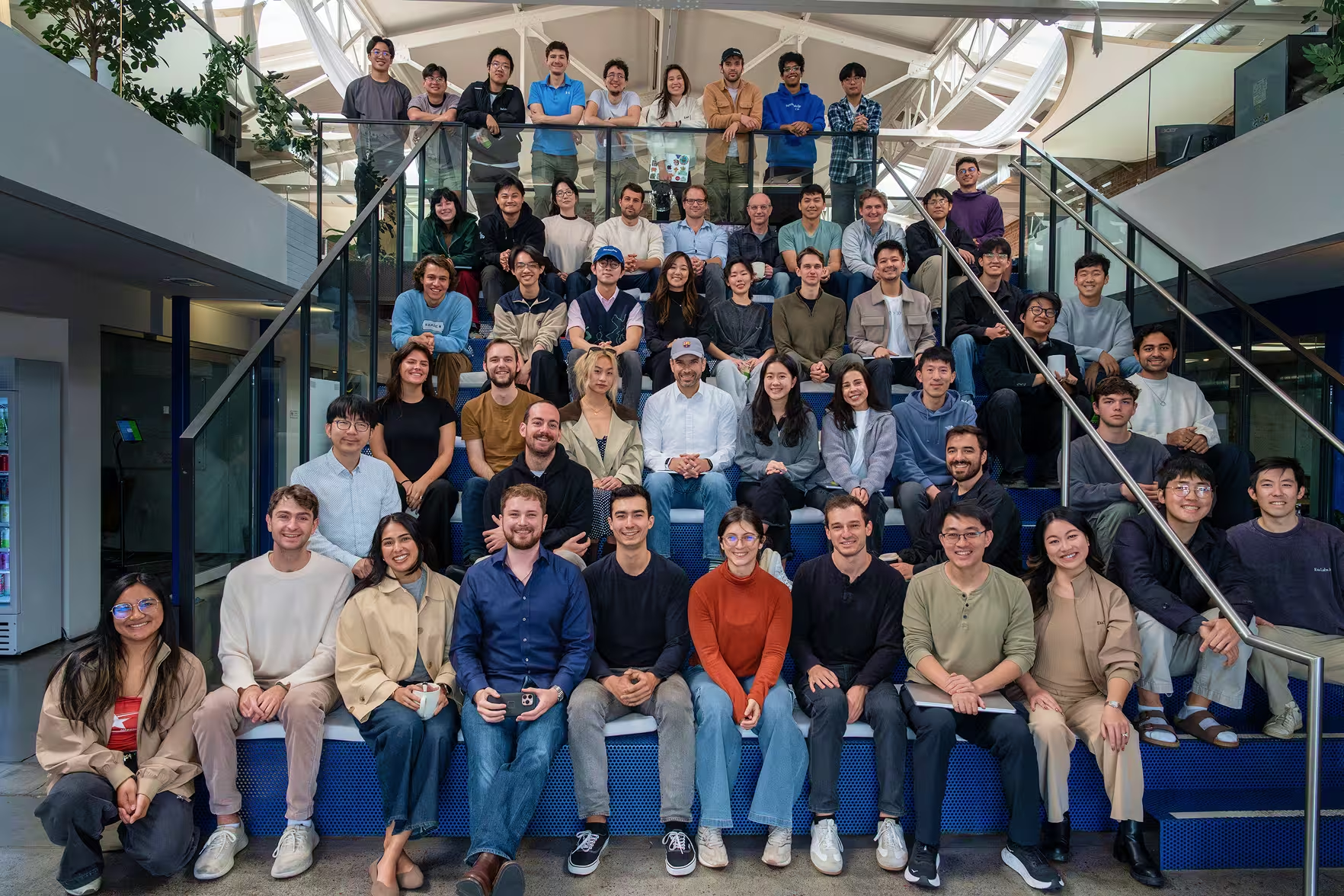 AI Search Engine Exa Raises $250M Series Cexa.ai · Jun 2026
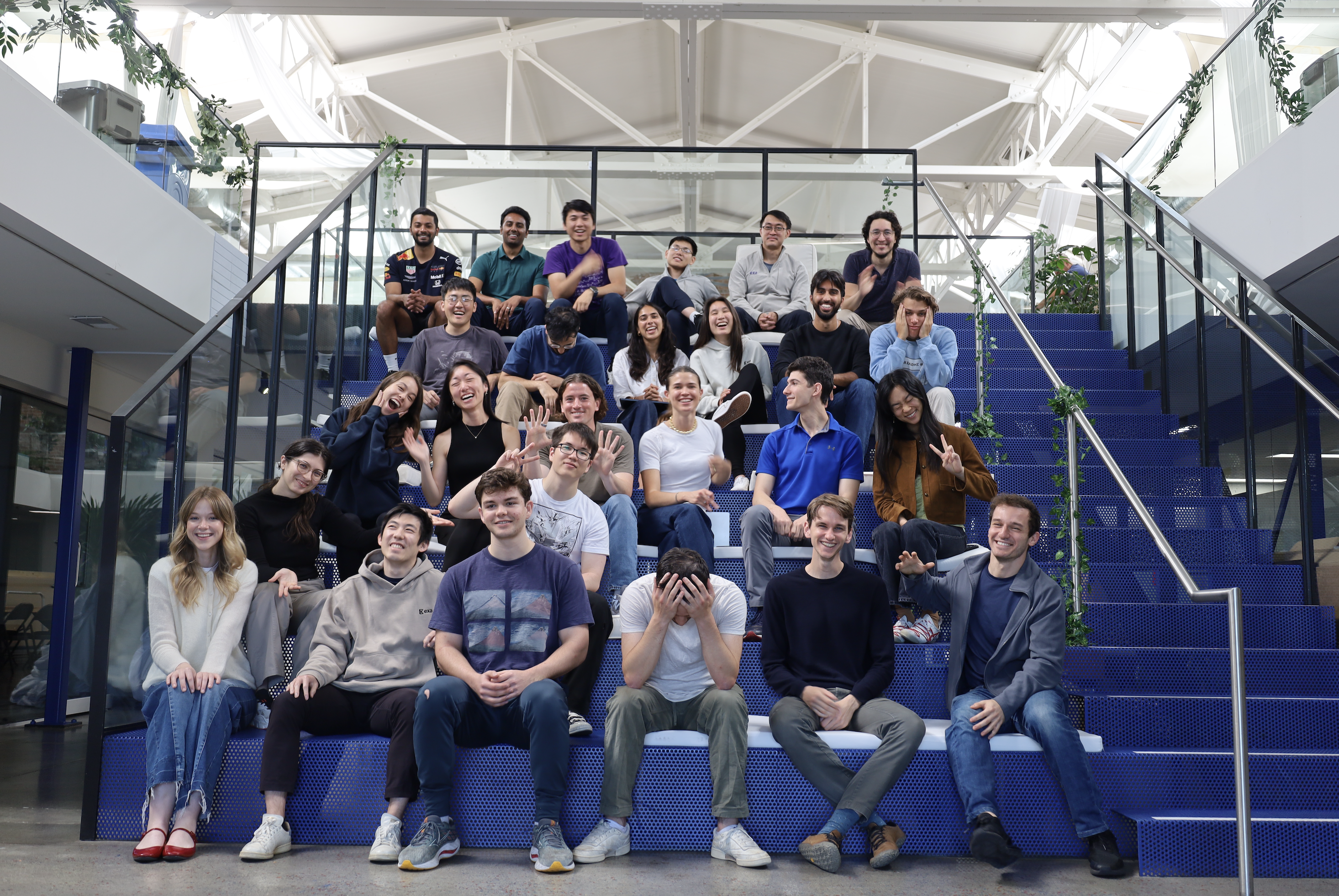 Exa, 35 person startup building a new search engine, raises $85M Series Bexa.ai · Sep 2025
▸Research sources · 20
primary sources listed
- ExaExa Labs Inc. · company website
- Exa API pricingExa Labs Inc. · official pricing
- ExaY Combinator · accelerator profile
- Exa Search APIExa · product and benchmark page
- Exa Trust CenterExa · security compliance portal
- Privacy PolicyExa Labs Inc. · privacy policy
- Enterprise securityExa · security documentation
- Introducing Exa AgentExa · product release
- Exa raises $250m Series CExa · company funding release
- Investing in ExaAndreessen Horowitz · lead investor thesis
- Exa and Google PartnershipExa · partnership release
- Introducing Exa DeepExa · product release
20 public sources were cited for this profile; the first-party ones are listed here.
Frequently asked questions
- What does Exa Labs do?
- AI-native web search and research infrastructure providing neural retrieval, page contents, structured extraction, monitoring and research-agent APIs to developers and enterprises.
- Who founded Exa Labs?
- Exa Labs was founded by Jeffrey Wang, William (Will) Bryk, Jeffrey (Jeff) Wang in 2021.
- Who are Exa Labs's investors?
- Exa Labs's investors include Haystack, NVentures, Soma Capital, WndrCo, Y Combinator, Andreessen Horowitz, Benchmark, Lightspeed Venture Partners.
- How much funding has Exa Labs raised?
- Exa Labs has disclosed $602M raised across 4 of its 8 known rounds.
- Where is Exa Labs headquartered?
- Exa Labs is headquartered in San Francisco, US.