 Fundraising Fox
Find your way into CoreOS
Sign up to see every warm intro you have to CoreOS
- Paths you didn't know you had: your email and LinkedIn already hold routes to the CoreOS team. We find them for you
- 2nd- and 3rd-degree connections: the friend-of-a-friend routes that take hours to manually find through your inbox or LinkedIn
- Answers now, not in days: momentum is everything in a raise. Skip asking around whether someone knows someone
Days of research, done the moment you sign in, with every route ranked by how warm it is.
Acquired by Red Hat January 2018 · terms undisclosed
CoreOS developed container-focused infrastructure software, including the lightweight Container Linux operating system, the etcd distributed key-value store, and the Tectonic Kubernetes platform. Acquired by Red Hat in 2018, with its technology folded into OpenShift.
Also known as Container Linux · CoreOS Linux · CoreOS Linux (formerly) · CoreOS, Inc.
Founders & leadership· Y Combinator alumni (S13)
CoreOS was founded in 2012 by Alex Polvi and Brandon Philips.







Board

Investors · 13

How we know: GV (Google Ventures)'s portfolio page · board seat on SEC Form D · techcrunch.com · research · techcrunch.com · open dataset · 5k.vc investor directory · Y Combinator's founder network · Not right? Tell us

How we know: Intel Capital's portfolio page · Y Combinator's founder network · Not right? Tell us

How we know: Kleiner Perkins's portfolio page · board seat on SEC Form D · techcrunch.com · research · techcrunch.com · Y Combinator's founder network · Not right? Tell us

How we know: Work-Bench's portfolio page · Y Combinator's founder network · Not right? Tell us

How we know: the Y Combinator directory · open dataset · 5k.vc investor directory · Not right? Tell us

How we know: techcrunch.com · research · techcrunch.com · Y Combinator's founder network · Not right? Tell us

How we know: funding news · techcrunch.com · Y Combinator's founder network · Not right? Tell us
How we know: Y Combinator's founder network · Not right? Tell us
.png)
How we know: techcrunch.com · research · techcrunch.com · open dataset · 5k.vc investor directory · Y Combinator's founder network · Not right? Tell us
How we know: Y Combinator's founder network · Not right? Tell us

How we know: funding news · techcrunch.com · Y Combinator's founder network · Not right? Tell us

How we know: Y Combinator's founder network · Not right? Tell us
Also in the syndicate · 1
Reported raises · per SEC filings
Form D private placements$31.2M disclosed across 2 of 5 rounds · 2013–2016
▶$23.2MraisedMay 2016 · 9 investors · OtherRule 506(b)
- Alex PolviExecutive Officer, Director
- Dave MunichielloDirector
- Michael AbbottDirector
- Brandon PhilipsDirector
- Offering amount
- $31M
- Amount sold
- $23.2M
- First sale
- Apr 2016
- Incorporated
- Corporation, Delaware, 2012
- Federal exemptions
- 06b
▶$8MraisedJun 2014 · 12 investors · Other TechnologyRule 506(b)
- Alex PolviExecutive Officer, Director
- Brandon PhilipsDirector
- Michael AbbottDirector
- Offering amount
- $8M
- Amount sold
- $8M
- First sale
- Jun 2014
- Incorporated
- Corporation, Delaware, 2012
- Federal exemptions
- 06b
Source: SEC EDGAR Form D. Amounts as filed; amended filings shown once at their latest values.
Company profile
researched Aug 2026CoreOS was an open source infrastructure software company whose products targeted the operation of containerized applications at scale. Its best-known project was Container Linux (originally CoreOS Linux), a lightweight Linux distribution first released on October 3, 2013 that provided only the minimal functionality needed to run applications inside software containers, along with built-in mechanisms for service discovery and configuration sharing. Container Linux shared a common software development kit foundation with Gentoo Linux, ChromeOS and ChromiumOS, used systemd as its init system, shipped no package manager (all payload applications ran in containers), and applied operating system updates via a dual-partition "FastPatch" scheme with a reboot manager called locksmith and an update-distribution mechanism derived from Google's open source Omaha project.
Beyond the operating system, CoreOS produced etcd, a distributed data store used by Kubernetes; rkt (initially released as Rocket) in December 2014 as an alternative container runtime implementing the app container (appc) specification and application container image (ACI) format that CoreOS created and positioned as input to the Open Container Initiative; CoreUpdate, a web dashboard and HTTP API for managing cluster-wide updates; CoreOS Tectonic, an enterprise-ready Kubernetes platform offering automated operations and portability across private and public clouds; and CoreOS Quay, a container registry offering. In November 2016 the company introduced Operators, a pattern for streamlining Kubernetes container management.
Following Red Hat's acquisition, the CoreOS name continues as a Red Hat-associated open source project building minimal container-optimized operating systems — Fedora CoreOS and RHEL CoreOS — using OCI containers as the transport and delivery mechanism for operating system content. Container Linux itself reached end-of-life, announced May 26, 2020, with Fedora CoreOS and RHEL CoreOS named as replacements (Flatcar Container Linux is also listed as a successor).
Founding story
Alex Polvi and Brandon Philips, friends since college, started CoreOS in 2013 through Y Combinator (Summer 2013 batch) after observing how difficult it was to keep systems current. Their core thesis was automated operations — automating updates and other tasks that burn out operations teams. Container Linux was developed primarily by Alex Polvi, Brandon Philips and Michael Marineau.
Business model
CoreOS developed open source infrastructure projects and monetized through commercial, enterprise-oriented products layered on top of them, including the Tectonic Kubernetes platform, the Quay container registry and the CoreUpdate management dashboard. The company described a strategy analogous to cloud providers: establish core platform capabilities and then build additional products that run on the platform.
Paid enterprise products and services around its open source stack (Tectonic Kubernetes platform, Quay registry, CoreUpdate), with the underlying components distributed as open source under the Apache License 2.0.
Traction
Y Combinator lists a team size of 150. etcd became the distributed data store for Kubernetes, and the company's technologies were described as award-winning and as enabling broad adoption of containerized applications. The GitHub organization hosts 274 repositories, with widely used projects such as Ignition (974 stars), coreos-assembler (392), Butane (332), coreos-installer (244) and bootupd (194).
Latest developments
Red Hat completed the absorption of CoreOS into its portfolio; the coreos.com domain now resolves to Red Hat OpenShift material and Red Hat maintains a page describing what CoreOS was. Container Linux reached end-of-life in 2020 (final release 2512.3.0 on May 22, 2020), and the CoreOS project continues under Red Hat as Fedora CoreOS and RHEL CoreOS, with repositories actively updated through 2026.
▸Full profile — market position, technology, go-to-market, geography, history, risks & controversies
Market position
CoreOS was described by Red Hat as an innovator and leader in Kubernetes and container-native solutions and was an early popularizer of lightweight, container-optimized Linux operating systems. Its founders were early to recognize Kubernetes' potential, and etcd became the distributed data store underpinning Kubernetes. Red Hat framed the acquisition as complementary to its existing Kubernetes and container portfolio, including OpenShift.
Container Linux dispensed with a traditional package manager and required all applications to run in containers, combining a minimal image with automatic, atomic dual-partition updates, signed boot partitions, easy rollbacks and cluster-aware reboot coordination. CoreOS also authored its own container specification (appc/ACI) and runtime (rkt) as vendor-neutral alternatives, and coupled the OS with etcd and the Tectonic Kubernetes platform for an integrated stack.
Technology
Container-optimized Linux operating systems and distributed systems tooling: Container Linux (Gentoo/ChromeOS-derived SDK lineage, systemd-based, no package manager, read-only /usr, auto-resizing root filesystem), dual-partition FastPatch updates with locksmith reboot coordination and Omaha-based update distribution, etcd distributed key-value data store, rkt container runtime with the appc specification and ACI image format, Ignition first-boot installer and configuration tool, coreos-installer, coreos-assembler, bootupd and Butane in the ongoing project repositories. Components are written substantially in Go and Rust and licensed under Apache License 2.0.
Go-to-market
Open source community adoption and project stewardship (GitHub projects, Discourse forums, Matrix channel) combined with direct enterprise sales; after the 2016 Series B, the company said it would expand sales and marketing teams in the U.S. and Europe to engage buyers of its paid products.
Operators of clustered server infrastructure — from open source users to enterprises seeking supported solutions — deploying containerized applications across private, public and hybrid/multicloud environments.
Geography
Headquartered in San Francisco, with stated plans to grow its team in the United States and Europe.
History
CoreOS participated in Y Combinator's Summer 2013 batch and released CoreOS Linux (later Container Linux) on October 3, 2013. It released rkt as an alternative to Docker in December 2014 and created the appc specification and ACI image format, which it positioned relative to the Open Container Initiative announced in June 2015. GV led an add-on to the company's Series A and then led a $28 million Series B in May 2016, bringing total capital raised to $48 million; GV general partner Dave Munichiello joined the board. In November 2016 CoreOS introduced Operators for Kubernetes management. Red Hat announced a definitive agreement to acquire CoreOS for $250 million on January 30, 2018. Container Linux was declared end-of-life on May 26, 2020, superseded by Fedora CoreOS and RHEL CoreOS.
Risks & controversies
The founders retrospectively said they would have grown and spent more slowly given that the category and Kubernetes ecosystem were still nascent, noting that much of what was built had to be rebuilt. The company's flagship Container Linux distribution was ultimately discontinued, and its rkt/appc container format competed with Docker and the later Open Container Initiative standard.
Compiled by commissioned research from 8 cited public sources — announcements, filings, and press listed under research sources below.
Key figures
latest reportedCompany-reported or press-reported figures, each dated to when it was claimed — not independently audited.
Images
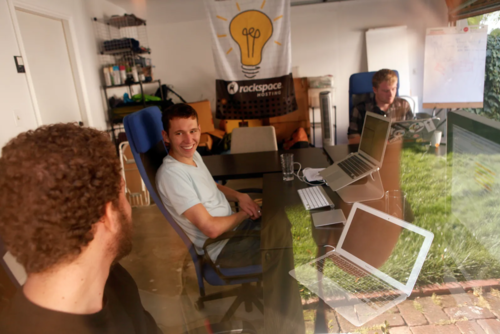
Founder mafia
3 people who came through CoreOS went on to found or lead other companies.
Related companies · 5




Companies working in the same space as CoreOS.
Timeline · 7
launches, deals, and filingsThe CoreOS team announced end-of-life for Container Linux, offering Fedora CoreOS and RHEL CoreOS as replacements. Final release 2512.3.0 shipped May 22, 2020.
Red Hat, Inc. announced a definitive agreement to acquire CoreOS, Inc., a Kubernetes and container-native software company, for a purchase price of $250 million, subject to non-material closing adjustments. Red Hat cited CoreOS Tectonic, CoreOS Quay and the company's container-optimized Linux work as complementary to its Kubernetes and OpenShift portfolio.
$250M source ↗
CoreOS introduced Operators to streamline Kubernetes container management, as reported by TechCrunch.
CoreOS announced a $28 million Series B round led by GV, with participation from Accel, Fuel Capital, Kleiner Perkins Caufield & Byers and the Y Combinator Continuity Fund, bringing total funding to $48 million. GV general partner Dave Munichiello took a board seat. Proceeds were earmarked for team growth, including sales and marketing, in the U.S. and Europe.
$28M source ↗
CoreOS released and began supporting rkt, initially named Rocket, as an alternative to Docker, providing a standardized application container image format (ACI), a container runtime environment definition and a protocol for discovering and retrieving container images, implementing the appc specification.
First release of the container-optimized, cluster-oriented Linux distribution developed primarily by Alex Polvi, Brandon Philips and Michael Marineau.
CoreOS was founded by Alex Polvi and Brandon Philips and went through Y Combinator's Summer 2013 batch.
Dated company events from announcements, filings, and press; legal rows summarize public dockets and regulator releases.
Legal entities · 2
corporate structureIn the news
▸Research sources · 8
primary sources listed
- CoreOScoreos.com · web
8 public sources were cited for this profile; the first-party ones are listed here.
Frequently asked questions
- What does CoreOS do?
- CoreOS built container-focused infrastructure software, including Container Linux, etcd and the Tectonic Kubernetes platform; acquired by Red Hat.
- Who founded CoreOS?
- CoreOS was founded by Alex Polvi, Brandon Philips in 2012.
- Who are CoreOS's investors?
- CoreOS's investors include GV (Google Ventures), Intel Capital, Kleiner Perkins, Work-Bench, Y Combinator, Accel, Andreessen Horowitz, Avalon Ventures Management, Llc and 4 more.
- How much funding has CoreOS raised?
- CoreOS has disclosed $31.2M raised across 2 of its 5 known rounds.
- Who acquired CoreOS?
- CoreOS was acquired by Red Hat.
- Where is CoreOS headquartered?
- CoreOS is headquartered in San Francisco, US.