 Fundraising Fox
Chipiron
Entrepreneur First '20Paris, FR · Founded 2020 · 8 known investors
Find your way into Chipiron
1,240 people in our graph share verified history with the Chipiron team — schools, employers, funds. One of them is your warm intro.

Chipiron develops a low-field MRI system using a patented cryogenic ultrasensitive detection system and AI-based noise cancellation and image reconstruction, aiming to acquire MRI signals in open environments without a Faraday cage. Its technology includes a breast-dedicated imaging sequence designed for clinically relevant scan times.
Founders & leadership
Chipiron was founded in 2020 by Evan Kervella and Dimitri Labat.
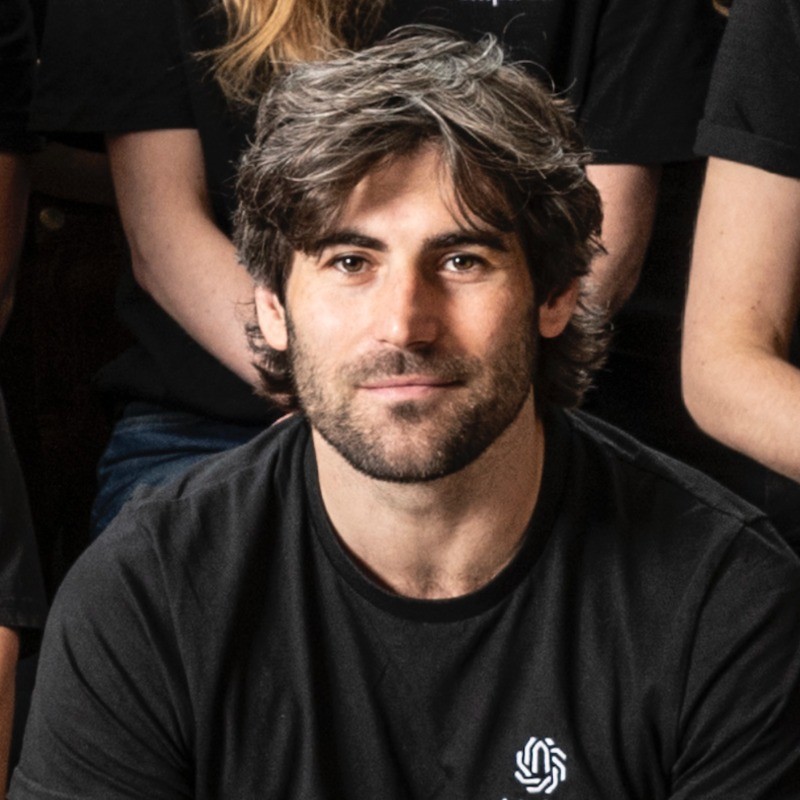
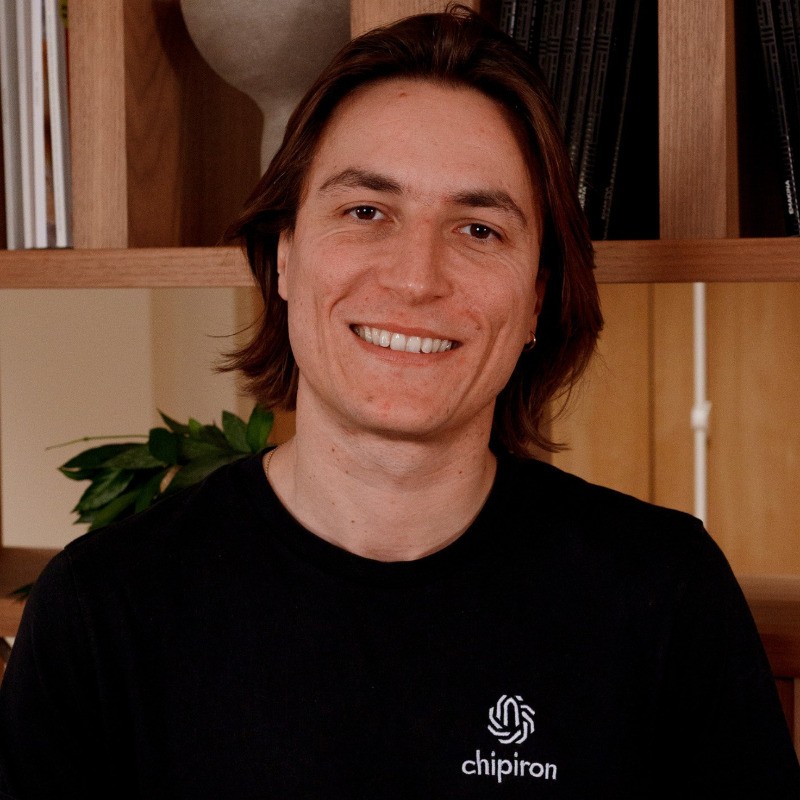
Investors · 8

How we know: the Entrepreneur First portfolio · Not right? Tell us

Also in the syndicate · 5
Funding
SEC filings, press & company announcements- Undisclosed amountSeries AMay 2025Source ↗
- Undisclosed amountSeries AApr 2025
Blast (lead), EIC Fund, iXcore
Source ↗
Source: company announcements and press reports — follow each round's link for the claim.
Company profile
researched Aug 2026Chipiron is a Paris-based medical imaging company designing, manufacturing and commercializing a new generation of compact, low-cost MRI machines. The system operates at ultra-low magnetic fields — described on the company website as below 30 mT and in one funding report as below 10 mT — with the stated aim of producing an open, full-body scanner that requires no shielded room and no helium, while keeping clinical image quality. Positioning materials state the ambition of increasing MRI accessibility roughly 100-fold and making MRI as routine as X-ray or blood sampling, with an initial mission focus on breast cancer screening and image-guided therapy.
The technology stack combines four elements: a patented cryogenic ultrasensitive detection system said to acquire MRI signal in an open environment and improve signal-to-noise ratio up to 10x versus room-temperature detection chains; linear and non-linear active AI noise-cancellation; a magnet and gradient design with a small footprint that removes the need for a Faraday cage; and an unconventional low-field AI reconstruction approach including a breast-dedicated sequence intended to compress ultra-low-field acquisitions into clinically relevant scan times. The underlying sensing approach originates from SQUID (superconducting quantum interference device) research, from which the company also draws its name — "chipiron" being a small squid.
The company is pre-commercial. Its published roadmap targets first in-vivo images on a full-body in-house system in December 2025, hardware integration and validation for an investigational device in June 2026, design verification in November 2026, installation at a study site in May 2027, end of clinical investigation in November 2027, FDA submission in March 2028 and 510(k) clearance in August 2028. Following its Series A, management said clinical investigations in hospitals would begin in 2026 and first FDA and European authorizations were expected within three to five years.
Founding story
Co-founders Dimitri Labat, a condensed-matter theory PhD (thesis defended in 2018 at Université Paris Cité) who had worked at the Banque de France, and Evan Kervella met through Entrepreneur First while looking for a physics technology to commercialize. They converged on SQUID superconducting sensors applied to MRI, reasoning that highly sensitive detectors permit good imaging at small magnetic fields and therefore cheaper, smaller machines. The company name comes from "chipiron", a small squid, referencing the SQUID acronym.
Business model
Chipiron designs, manufactures and intends to market MRI hardware; the company states it builds machines for deployment in hospitals and clinics. No pricing or contractual model is disclosed in the sources beyond the emphasis on low cost relative to conventional MRI.
Traction
Traction is technical and non-commercial: first images were produced in Q4 2023 and published in white paper v3 (April 2024), with further 2024 images in white paper v4 (March 2025). The roadmap targets first in-vivo images on a full-body in-house system in December 2025 and clinical trials from 2026. Cumulative disclosed funding is reported at over $22 million as of the Series A and $25.8 million in later third-party listings, including substantial non-dilutive support from France 2030, Bpifrance and the EIC Accelerator.
Latest developments
In April 2025 Chipiron closed a $17 million Series A led by Blast (with EIC Fund, iXcore, France2030, EIC Accelerator and Bpifrance) to complete R&D, build its first ultra-low-field clinical prototypes and start clinical trials in 2026. It won VivaTech's Innovation of the Year in June 2025, was featured on a TechCrunch podcast in September 2025, and is recruiting for analog electronics and regulatory affairs/quality assurance roles. TechCrunch listed cumulative money raised at $25.8 million as of September 2025.
▸Full profile — market position, technology, go-to-market, geography, history, risks & controversies
Market position
Chipiron is an early-stage entrant in accessible/portable MRI, positioning its system as a complement that expands access rather than a replacement for existing high-field machines. Third-party listings name Neko Health, Aidoc and Lunit as comparable companies. It has been recognized in France as "Medtech of the Year" by France Biotech, as an Innovator of the Year by Le Point, and won first place out of 600 startups at VivaTech 2025.
Compared with conventional MRI, the stated differentiators are the absence of a shielded room and of helium, a much smaller footprint and lower cost, an open architecture, and compatibility with patients who have implants such as pacemakers. Technically, the patented cryogenic detection chain claiming up to 10x SNR gain over room-temperature detection, combined with AI noise cancellation and low-field reconstruction, is presented as what makes ultra-low-field imaging clinically usable.
Technology
Ultra-low-field MRI (<30 mT per company site; <10 mT per one funding report) built on a patented cryogenic ultrasensitive detection chain derived from SQUID sensors, delivering up to 10x SNR improvement over room-temperature detection; AI-based linear and non-linear active noise cancellation; optimized low-footprint magnet and gradient design that removes the Faraday-cage requirement; and AI-based low-field reconstruction with a breast-dedicated acquisition sequence. The design requires no helium and no shielded room.
Go-to-market
The company plans hospital-deployable prototypes followed by clinical investigation at a study site, then regulatory clearance (FDA 510(k) and European authorization) before commercial launch; management has said it particularly targets the U.S. healthcare market. Visibility is built through awards (VivaTech, France Biotech), published technical white papers and media appearances.
Hospitals and clinical study sites are the first stated deployment targets, with the company aiming at the U.S. healthcare market in particular. Clinical use cases highlighted include breast cancer screening and patient populations poorly served by conventional MRI, such as people with pacemakers or other implants, claustrophobic, obese, elderly and restless pediatric patients.
Geography
Headquarters and laboratory ("the Ark", 400 m²) are in the 19th arrondissement of Paris, France; the team began work in a laboratory at ESPCI. The company states an intent to deploy worldwide, with particular focus on the U.S. market, and describes an international team.
History
Founded in 2020, Chipiron was supported by Bpifrance through the French Tech Emergence scheme and by the Agoranov and PC'Up deeptech incubators, and initially raised over €1 million from business angels and first investor Entrepreneur First, working out of a laboratory at ESPCI. A $1.1 million pre-seed followed in 2021 and a $2.7 million seed in 2023. Recognition accumulated in 2024 (Le Point Innovator of the Year, France Biotech Medtech of the Year) alongside a €3.6 million France 2030 non-dilutive award and selection for the EIC Accelerator (€2.5 million grant plus €15 million equity). In April 2025 the company closed a $17 million Series A led by Blast, and in June 2025 won the VivaTech Innovation of the Year award.
Risks & controversies
The company is pre-revenue and pre-clearance: its own roadmap places FDA 510(k) clearance in August 2028, contingent on hardware validation, design verification and a clinical investigation that has not yet begun. Sources also report differing specifications for the operating field strength (<30 mT on the company website versus <10 mT in a funding report) and differing cumulative funding totals (over $22 million versus $25.8 million). An earlier interview referenced a goal of marketing by 2025, which has since shifted.
Compiled by commissioned research from 8 cited public sources — announcements, filings, and press listed under research sources below.
Key figures
latest reportedCompany-reported or press-reported figures, each dated to when it was claimed — not independently audited.
Founder mafia
2 people who came through Chipiron went on to found or lead other companies.
Timeline · 11
launches, deals, and filingsChipiron appeared on TechCrunch's flagship podcast in an episode titled "Rethinking MRI access, not replacing old machines".
Chipiron placed first out of 600 startups and was awarded "Innovation of the Year" at VivaTech 2025 by TechCrunch.
Chipiron closed a $17 million Series A led by Blast, with participation from the EIC Fund, iXcore, France2030, EIC Accelerator and Bpifrance, to complete R&D, build first clinical prototypes and launch clinical trials.
$17M source ↗
Revised and shortened white paper version 4, including images produced in 2024.
Chipiron was selected to receive €2.5 million in grants and €15 million in equity investment from the European Innovation Council Accelerator.
Chipiron was awarded a €3.6 million non-dilutive investment under France 2030 as an Innovator in Medical Imaging.
Chipiron was awarded "Medtech of the Year" by the French association France Biotech.
White paper v3 published, including the company's first images produced in Q4 2023.
Chipiron's founders received the "Innovator of the Year" distinction from French magazine Le Point.
French magazine Challenges included Chipiron in its list of 100 startups in which to invest in 2022.
Dated company events from announcements, filings, and press; legal rows summarize public dockets and regulator releases.
In the news
▸Research sources · 8
primary sources listed
- Chipironchipiron.co · web
8 public sources were cited for this profile; the first-party ones are listed here.
Frequently asked questions
- What does Chipiron do?
- French developer of a compact ultra-low-field MRI scanner using cryogenic SQUID detection and AI reconstruction.
- Who founded Chipiron?
- Chipiron was founded by Evan Kervella, Dimitri Labat in 2020.
- Who are Chipiron's investors?
- Chipiron's investors include Entrepreneur First, Unruly Capital, Bpifrance.
- Where is Chipiron headquartered?
- Chipiron is headquartered in Paris, FR.