 Fundraising Fox
小鹏汽车 (XPeng)
2,486 employees on LinkedIn · Public · 20 known investors
Find your way into 小鹏汽车 (XPeng)
Sign up to see every warm intro you have to 小鹏汽车 (XPeng)
- Paths you didn't know you had: your email and LinkedIn already hold routes to the 小鹏汽车 (XPeng) team. We find them for you
- 2nd- and 3rd-degree connections: the friend-of-a-friend routes that take hours to manually find through your inbox or LinkedIn
- Answers now, not in days: momentum is everything in a raise. Skip asking around whether someone knows someone
Days of research, done the moment you sign in, with every route ranked by how warm it is.
XPENG develops smart electric vehicles, including AI-powered SUVs and coupes, along with related mobility technology spanning road and air travel. The company positions its products around driver experience and intelligent, connected mobility.
Also known as Guangzhou Xiaopeng Motors Technology Co., Ltd. · Xiaopeng Motors · XPENG · XPeng Motors · 小鹏汽车
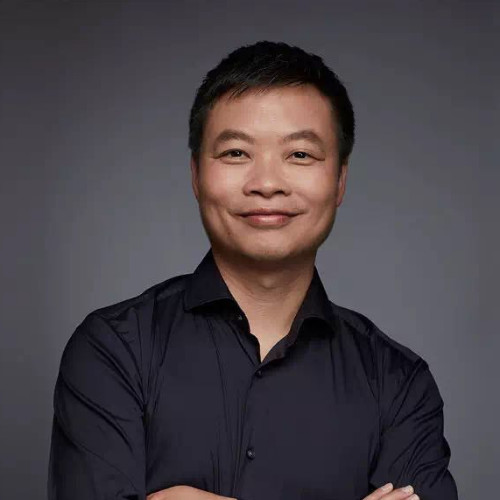
Founders & leadership
Investors · 20

How we know: research · en.wikipedia.org · Not right? Tell us
How we know: East West Ventures EWV's portfolio page · Not right? Tell us

How we know: Primavera Venture Management Limited's portfolio page · Not right? Tell us
How we know: Shunwei Capital's portfolio page · Not right? Tell us
How we know: Welight Capital's portfolio page · Not right? Tell us

How we know: research · theaiinsider.tech · Not right? Tell us
How we know: research · en.wikipedia.org · Not right? Tell us


Also in the syndicate · 8
Valuation · disclosed
Disclosed eventsSource: SEC prospectus filings, and round valuations the company or its investors disclosed — follow each entry's link for the claim.
Company profile
researched Aug 2026Guangzhou Xiaopeng Motors Technology Co., Ltd., trading as XPeng Motors and commonly known as XPeng, is a Chinese electric vehicle manufacturer headquartered in Guangzhou, Guangdong, with additional offices in Mountain View, California and Munich, Germany. The company describes itself as a global AI mobility technology company and develops technologies in-house, including full-stack advanced driver-assistance systems, an in-car intelligent operating system, powertrain systems and vehicle electronic/electrical architecture. Its shares trade on the New York Stock Exchange (XPEV) and the Hong Kong Stock Exchange (9868). Products span battery electric SUVs and sedans — the G3, P7, P5, G6, G7, G9, GX, X9 and the mass-market MONA M03 — with the flying-car subsidiary AeroHT/HT Aero as an adjacent business line.
Alongside vehicles, XPeng has built a robotics business centred on the IRON general-purpose humanoid robot. IRON is a bipedal platform with 76 degrees of freedom across the body, including 21 per hand, a fully enclosed flexible lattice structure, and three in-house Turing AI chips providing up to 2,250 TOPS of effective compute, enabling on-device operation of the company's physical AI foundation model. XPeng says it develops the robot's design, actuators, chips, controllers, motion modules, dexterous hands, software and AI controls internally, and intends to apply automotive-grade quality standards and its EV manufacturing base to robot production. IRON is slated to enter volume production by the end of 2026, with initial deployment in XPeng stores and campuses, followed by an official launch and large-scale deliveries to retail and service-sector customers in China and overseas in 2027, with monthly capacity scalable to several thousand units.
Founding story
XPeng was co-founded in August 2014 in Guangzhou as Guangzhou Xiaopeng Motors Technology Co., Ltd. by Xia Heng (Henry Xia) and He Tao, former senior GAC Group executives with automotive technology and R&D backgrounds, together with He Xiaopeng and Yang Chunlei. He Xiaopeng — co-founder of UCWeb, which Alibaba acquired in June 2014 for $4.3 billion — provided core early backing and gave the brand its name, and initial supporters also included Xiaomi founder Lei Jun and investors such as Li Xueling, Fu Sheng, Wu Xiaoguang and Zhang Ying. The company's early work focused on motors, batteries, electronic control systems and centre-display touchscreens, and its stated goal was to build networked cars in China combining electrification, intelligence, connectivity and autonomous driving. He Xiaopeng left Alibaba in August 2017 and joined XPeng as full-time chairman later that month.
Business model
XPeng designs, manufactures and sells battery electric passenger vehicles directly and through partners, with revenue from vehicle sales supplemented by software and driver-assistance features delivered via over-the-air updates, plus a self-operated charging network. The company pursues full-stack in-house development across chips, foundation models, software and hardware, and is extending the same model into humanoid robotics, where management expects each IRON unit's lifetime revenue and gross margin — combining hardware sales with recurring revenue from software and AI capability upgrades — to exceed the auto business's per-vehicle average price and margin. A flying-car unit (AeroHT/HT Aero) is a further product line, with first mass production of a split flying car targeted for 2026.
Vehicle sales are the primary revenue source, with additional monetisation through software and AI capability upgrades and, in robotics, planned hardware sales plus recurring software revenue.
Traction
XPeng delivered 429,445 vehicles in 2025, up 126% year over year, with revenue of RMB 76.72 billion, full-year gross margin of 18.9%, and its first positive quarterly net profit of RMB 0.38 billion in Q4 2025. Q1 2026 brought 62,682 deliveries, revenue of RMB 13.03 billion, 20.6% gross margin, 12.1% vehicle margin and a net loss of RMB 1.78 billion; monthly deliveries were 31,011 in April 2026 and 32,158 in May 2026. In Q2 2026 the company delivered 103,300 vehicles (65% quarter-over-quarter growth) with revenue of RMB 19.74 billion and 20.7% gross margin, targeting 60,000 deliveries in a single month in Q4. Robotics headcount exceeded 1,000 people drawn from vehicle, AI and supply chain divisions.
Latest developments
On 24 August 2026 XPeng announced that its robotics business (Pengxing) completed its first external equity financing of more than $900 million at a post-money valuation above $6.3 billion, led by IDG Capital with Gaorong Ventures participating and Tencent and Alibaba as strategic investors; XPeng retains control and continues consolidating the unit. Disclosed structure included XPeng's Pengxing entity subscribing 98.6752 million Series A preferred shares for $200 million, external investors subscribing 296 million Series A preferred shares for $600 million, and executive subscribers buying 49.3376 million ordinary shares for $100 million plus warrants for up to 247 million ordinary shares at a $500 million total exercise price. Proceeds are earmarked for hardware and software R&D, physical AI model training iteration, high-quality data collection, end-to-end mass production facilities, employee incentives and global commercial expansion. IRON is to enter volume production by the end of 2026 and launch commercially in 2027.
▸Full profile — market position, technology, go-to-market, geography, history, risks & controversies
Market position
XPeng is one of the Chinese EV startups that reached significant production and sales volumes, delivering 429,445 vehicles in 2025 and reaching 60 countries and regions. Its core vehicle business faces intensifying competition from domestic Chinese manufacturers and from Tesla in both domestic and overseas markets, and its shares fell 51.24% over the twelve months to late August 2026. In robotics, XPeng describes its August 2026 raise as the largest single-round private financing to date in China's embodied AI/physical AI industry; IDG Capital characterised XPeng's humanoid robot as representing the leading level of China's humanoid robotics industry with the capability to compete with overseas leaders, and He Xiaopeng said XPeng Robotics may be the only Chinese robotics firm with a fully self-developed system spanning design, hardware and chips, software and AI, data and control, and quality and manufacturing.
The company positions itself on full-stack in-house R&D — ADAS, in-car operating system, powertrain, E/E architecture, Turing AI chips and physical AI foundation models — and on software-first product design in which the vehicle functions as a computing platform improved through over-the-air updates. In robotics, it argues that combining edge AI processors, physical AI foundation models and complete robotic systems with automotive-grade quality standards and existing EV manufacturing scale enables mass production rather than demonstrations, and that IRON's human-like form aids data collection and operation in environments built for people.
Technology
XPeng develops full-stack advanced driver-assistance systems, an in-car intelligent operating system, powertrain systems and vehicle electronic/electrical architecture in house, and uses over-the-air software updates to add features post-sale. It has built in-house Turing AI chips, a physical world/physical AI foundation model and supporting AI infrastructure over roughly 12 years, and migrated its automotive Vision-Language-Action model to robotics. The IRON humanoid combines 76 body degrees of freedom (21 per hand), an enclosed flexible lattice structure, self-developed actuators, controllers, motion modules and dexterous hands, and three Turing chips delivering up to 2,250 TOPS, allowing the physical AI foundation model to run on-device for low-latency, locally processed autonomous task execution. The P5 was equipped with lidar for ADAS, and US subsidiary XMotors.ai has held California DMV autonomous vehicle testing permits.
Go-to-market
XPeng sells through a physical sales network that comprised 733 stores across 256 cities as of 31 March 2026, supported by a self-operated charging network of 3,455 stations including 2,398 ultra-fast charging stations. Internationally, it began exporting the P7 to Norway in August 2021 and works with local partners, including a September 2024 partnership with the Salvador Caetano Group for European expansion, and it announced a partnership with ACCESS Europe in in-car infotainment in June 2023.
Retail buyers of smart electric vehicles in China and export markets, spanning mass-market models such as the MONA M03 (about RMB 119,800) and higher-end G9 and X9 products. For robotics, initial IRON deployments are internal — XPeng stores and campuses — before external customers in the retail and service sectors in China and overseas from 2027.
Geography
Headquartered in Guangzhou, Guangdong, with offices in Mountain View, California and Munich, Germany, and showrooms in cities including Shenzhen and Beijing. By the end of 2025 XPeng said its global footprint covered 60 countries and regions; overseas deliveries reached 45,008 vehicles in 2025 and exceeded 20,000 units in Q2 2026, with overseas markets contributing 25% of first-half 2026 revenue. Planned robot deliveries cover both China and overseas markets.
History
XPeng released a beta prototype of its G3 intelligent electric mini-SUV in Beijing in September 2016 and started G3 production in November 2018, launching it at CES in Las Vegas in December 2018. The P7 sedan premiered at Auto Shanghai in April 2019 and began customer deliveries in June 2020; the P5 followed in September 2021 as, per Wikipedia, the first production car equipped with lidar for ADAS. Early financing included three Series A+ rounds completed in 2017, a $350 million round from Alibaba and Foxconn reported in January 2018, US$400 million in November 2019 (with Xiaomi joining as a strategic investor), US$500 million in July 2020 from investors including Aspex, Coatue, Hillhouse Capital and Sequoia Capital China, US$400 million in August 2020 from Alibaba, the Qatar Investment Authority and Mubadala, a US$1.5 billion NYSE IPO on 27 August 2020, a Hong Kong listing in 2021, and US$76.9 million from Guangdong Yuecai Investment Holdings in March 2021. Subsidiary HT Aero announced $500 million in funding for a flying car in October 2021. Volkswagen invested about $700 million for roughly a 4.99% stake in 2023, and in August 2023 XPeng agreed to acquire DiDi's autonomous driving technology unit for $744 million in shares. The G9 launch in 2022 drew criticism for confusing pricing and trim structure. In robotics, XPeng entered the field in 2020 by acquiring Dogotix, initially working on quadrupeds before pivoting to bipedal humanoids and migrating its automotive VLA model to robotics; the first-generation IRON was unveiled at the end of 2024, and He Xiaopeng personally took over as CEO of the robotics business in June 2026.
Risks & controversies
XPeng's core vehicle business faces intensifying competition from Chinese domestic manufacturers and from Tesla at home and abroad, and its shares declined 51.24% in the twelve months to late August 2026 and 7.22% on the day of the robotics funding announcement. The company reported operating and net losses for 2025 (operating income of −RMB 2.77 billion, net income of −RMB 1.14 billion) and a RMB 1.78 billion net loss in Q1 2026. The 2022 G9 launch was criticised for unclear pricing and trim structure, damaging brand confidence in a market where buyers switch brands quickly. XMotors.ai's California autonomous vehicle testing permit was revoked in February 2020 for failure to submit a disengagement report before being reissued in March 2020. The scale of the robotics raise has also prompted questions about the company's strategic balance between robotics and automotive, and the robotics valuation exceeds the market's pricing of the parent. Full exercise of investor subscriptions, incentives and warrants would dilute XPeng Group's stake in the Pengxing robotics entity from 81.97% to 68.41%.
Compiled by commissioned research from 8 cited public sources — announcements, filings, and press listed under research sources below.
Timeline · 15
launches, deals, and filingsXPeng's robotics business completed its first external equity financing of more than $900 million at a post-money valuation exceeding $6.3 billion (about RMB 43 billion), led by IDG Capital with Gaorong Ventures participating and Tencent and Alibaba as strategic investors. XPeng described it as the largest single-round private capital raise to date in China's embodied AI industry and retains controlling ownership, continuing to consolidate the unit.
$900M source ↗
Since June 2026, He Xiaopeng has personally served as CEO of XPeng's robotics business, assembling a team of over 1,000 people from the vehicle, AI and supply chain divisions.
XPeng officially unveiled its first-generation humanoid robot, IRON, at the end of 2024.
XPeng agreed to acquire the autonomous driving technology unit of Beijing-based ride-hailing company DiDi in exchange for $744 million worth of shares.
$744M source ↗
XPeng subsidiary HT Aero announced $500 million in funding and unveiled a flying car design with a planned 2024 launch.
$500M source ↗
XPeng launched the P5, described as the first production car equipped with lidar sensors for advanced driver-assistance systems.
XPeng began exporting its flagship P7 sedan, entering Norway as its first international market.
XPeng listed in Hong Kong in 2021, adding to its NYSE listing and improving funding flexibility and visibility.
XPeng raised US$1.5 billion in a NYSE IPO; shares rose more than 40% on the first day of trading.
$1.5B source ↗
The California DMV revoked XMotors.ai's self-driving test permit in February 2020 over a missing disengagement report; XPeng Motors received a renewed Autonomous Vehicles Testing Permit in March 2020.
XPeng entered the robotics field in 2020 through the acquisition of Dogotix, initially focusing on quadruped robots before pivoting to bipedal humanoids.
The four-door P7 electric sedan premiered at the 2019 Auto Shanghai show, with customer deliveries starting in June 2020.
XPeng began production of its first model, the G3 SUV, and launched it in December 2018 at CES in Las Vegas.
Dated company events from announcements, filings, and press; legal rows summarize public dockets and regulator releases.
▸Research sources · 8
primary sources listed
- XPeng's Robotics Unit Raises Over US$900M in Funding with US$6.3 billion Valuation Ahead of Humanoid Robot Productiontheaiinsider.tech · web
8 public sources were cited for this profile; the first-party ones are listed here.
Frequently asked questions
- What does 小鹏汽车 (XPeng) do?
- Chinese electric vehicle maker XPeng builds smart EVs, in-house driver-assistance tech, flying cars and IRON humanoid robots.
- Who founded 小鹏汽车 (XPeng)?
- 小鹏汽车 (XPeng) was founded by Xiaopeng He.
- Who are 小鹏汽车 (XPeng)'s investors?
- 小鹏汽车 (XPeng)'s investors include Coatue Management, East West Ventures EWV, Granite Asia, Primavera Venture Management Limited, Shunwei Capital, Welight Capital, Alibaba Group, Gaorong Ventures and 4 more.